On this page
TOOLS FOR THIS GUIDE
Work with BPC-157
The guide name carries across. Amounts, dates and instructions remain yours to enter; opening a tool saves nothing.
Worked examples: calculations, records and source checks
Fictional arithmetic, unrelated to a recommended amount of BPC-157: 10 mg (10,000 mcg) in a final 2 mL is 5 mg/mL (5,000 mcg/mL). A target mass of 0.25 mg (250 mcg) corresponds to 0.05 mL, or 5 U-100 syringe markings. Biological IU cannot be inferred from these inputs. Neither the mass nor the liquid is a preparation recommendation.
Open the arithmetic example- Supply example: two 10 mg (10,000 mcg) vials start at 20 mg (20,000 mcg). Four recorded entries of 0.25 mg (250 mcg) leave a theoretical 19 mg (19,000 mcg), before losses or expiry. Skipped entries do not deduct stock.
- Measurement example: enter “Sleep duration”, “7.5”, “hours” and the date. Keep the same unit and note changing conditions. A trend does not prove a treatment effect.
- Source example: record “rat study” when rats were studied, even when the headline describes recovery. Keep the exact paper and its limitations.
The planner accepts mg and mcg. Biological IU/USP units, sprays, drops and variable mixtures need product-specific instructions; they cannot be inferred from a generic mass calculator. For stacks, record each known ingredient separately.
FDA: why concentration and unit errors matterEvidence & source checks
What did a small human symptom report actually measure?
Eleven of twelve BPC-157-only respondents reported improved knee pain. This was subjective follow-up, not a controlled demonstration of tissue repair or treatment efficacy.
Limit: Very small sample, retrospective recall and no control group.
What to verify before filling a plan
- Identity and formulation: match the name, sequence or active ingredient, route and strength. A related molecule or branded medicine is not automatically equivalent.
- Instruction source: obtain the actual amount, frequency and duration from qualified medical instructions. A community table or trial protocol does not establish an individual regimen.
- Units and product details: keep mass, liquid volume and biological activity units separate. Record batch, storage and discard instructions from the actual product; the tools cannot determine sterility or stability.
- Review and follow-up: list medicines and supplements, unresolved interactions and questions. Agree on relevant observations and actions with a qualified professional; normal measurements do not prove safety.
Selected source context, not a systematic review or medical approval. Study cards checked 24 November 2026; guide source notes checked 25 November 2026. Research references and citations appear below.
Guide summary
REFERENCE SUMMARY- Compound
- BPC-157 (Body Protection Compound 157)
- Class
- Synthetic 15-amino-acid pentadecapeptide
- Common format
- Lyophilized 10 mg (10,000 mcg) vial; oral capsule
- Regulatory status
- Not FDA-approved; removed from 503A Category 2 April 22, 2026
BPC-157 Quick Start
Looking into BPC-157 for a dog? Read our BPC-157 research in dogs section for the canine studies and their limits. The amounts and calculator on this general protocol page are not veterinary dosing instructions.
BPC-157 stands for Body Protection Compound 157. It is a synthetic 15-amino-acid peptide derived from a sequence first identified in human gastric juice in the 1990s. Researchers most often study it in animal models of tendon, ligament, gut, and vessel injury.
BPC-157 research planning splits into two main formats. The most common is subcutaneous injection from a reconstituted vial. The peptide is also unusually stable in stomach acid for a peptide, so an oral capsule format exists and is sometimes used in gut-focused research planning. This page treats both formats as research-context references, not personal use guidance.
- Routes studied
- Community examples commonly describe SubQ use. Published animal and small human studies use different routes and do not validate these examples.
- Schedule shape
- Community examples use one or two daily doses. Human trials have not established a subcutaneous schedule.
- Measurement
- Use vial concentration math and U-100 insulin syringe units for injectable format.
- Supplies basics
- BAC water, U-100 insulin syringes, alcohol swabs, and a refrigerated storage spot.
- Research status
- Mostly preclinical evidence; not FDA-approved as of June 2026.
Disclaimer
This page is an educational research reference and is not medical advice. It does not diagnose, treat, or prescribe. Speak with a licensed clinician before starting any peptide protocol.
Use this page for dose steps, vial mixing, timing, and supplies. For the bigger research picture, read the BPC-157 research guide on how it works, key studies, safety notes, and common comparisons.
BPC-157 Dosing Protocol & Schedule
BPC-157 has been studied in two main research formats. Choose the tab that matches the format being researched. The numbers shown are unvalidated community examples, not doses established by animal studies or human clinical trials.
BPC-157 Protocol Formats
Choose the format you are researching to see route-specific notes.
Open a format reference below.
Injectable format reference
Reconstituted lyophilized vial, drawn into a U-100 insulin syringe.
The table records community subcutaneous examples. He et al. (2022) measured rapid elimination after IM or IV dosing in rats and dogs. Those findings do not establish a human subcutaneous dose, dosing interval, or safe maximum.
Community subcutaneous examples: not clinically validated
| Example | Per-dose range | Frequency | Daily total |
|---|---|---|---|
| Example A | ~250 mcg (0.25 mg) | Once daily | 250 mcg/day (0.25 mg/day) |
| Example B | ~250 mcg (0.25 mg) | Twice daily | 500 mcg/day (0.5 mg/day) |
| Example C | ~500 mcg (0.5 mg) | Twice daily | 1,000 mcg/day (1 mg/day) |
These examples are not validated human regimens and do not establish a safe maximum. The two-person IV pilot by Lee and Burgess (2025) used a different route and cannot validate these subcutaneous amounts.
Community cycle examples
| Approach | Duration | Review point | Evidence context |
|---|---|---|---|
| Standard | 4-6 weeks | Week 4 | General research planning |
| Extended | 6-8 weeks | Week 6 | Unvalidated community duration |
| Long | 8-12 weeks | Week 8 | Unvalidated community duration |
Off periods of 2-4 weeks appear in community reports. Trials have not established that these durations or breaks improve safety or benefit.
Oral format reference
Oral or capsule format. BPC-157 is unusually stable in human gastric juice.
Sikiric et al. (Current Pharmaceutical Design, 2011) reported that BPC-157 remains stable in human gastric juice for more than 24 hours, which is unusual for a peptide. This is the basis for oral and capsule research formats, especially in gut-focused models.
Community oral examples mention 250-500 mcg (0.25-0.5 mg) once or twice daily. Human oral bioavailability and dose-finding evidence do not establish that these amounts are appropriate or equivalent to subcutaneous doses.
Format note
Products sold as capsules are not FDA-approved BPC-157 drugs. Capsule potency depends on the manufacturer and is not standardized. Verify any product against a third-party Certificate of Analysis.
Evidence boundary
BPC-157 has no published human Phase 2 or Phase 3 dose-finding trial. The displayed schedules are community examples, not human doses derived from animal protocols. Use this page as research context, not as a treatment plan.
BPC-157 Supplies Needed
Affiliate disclosure: University of Peptide may earn a commission when you use eligible supplier links, at no extra cost to you. The numbers below assume the illustrative community example of 250 mcg (0.25 mg) twice daily from 10 mg (10,000 mcg) vials reconstituted with 2 mL bacteriostatic water.
Recommended Supply
Choose your region
Use discount code PEPPAL at Peptide Partners checkout. See why we love Peptide Partners.
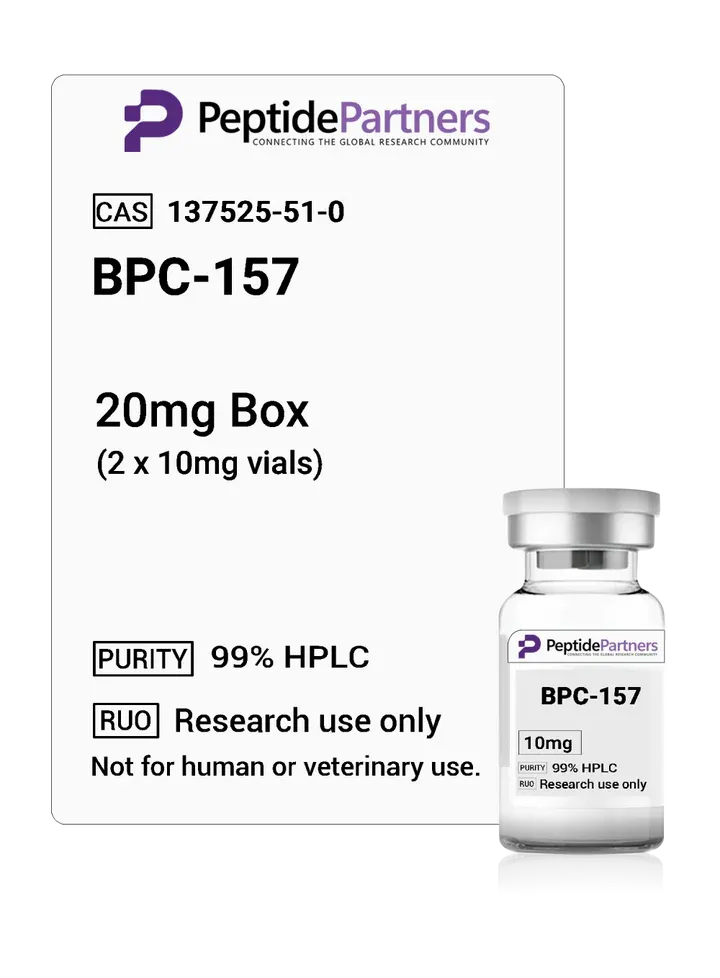
BPC-157 (10mg (10,000 mcg) vials)

Pharmacy Grade BPC-157

Pharmacy Grade BPC-157 Capsules

At-Home Blood Test
Research Supplies
Peptide Vials
Math assumes 10 mg (10,000 mcg) vials reconstituted with 2 mL BAC water (concentration 5,000 mcg/mL (5 mg/mL)). At 250 mcg (0.25 mg) twice daily, one 10 mg (10,000 mcg) vial covers roughly 20 days.
| Cycle length | Planning note |
|---|---|
4 weeks 2 x 10 mg (10,000 mcg) vials | 56 doses needed at 250 mcg (0.25 mg) 2x/day; round up for priming losses. |
6-8 weeks 3 x 10 mg (10,000 mcg) vials | 6 weeks: 84 doses needed; three vials cover 120 doses before losses.; 8 weeks: 112 doses needed; three vials give a small margin. |
12 weeks 5 x 10 mg (10,000 mcg) vials | 168 doses needed; build in margin for storage limits. |
Insulin Syringes (U-100)
Use 0.3 mL / 30-unit syringes for small daily draws. At 5,000 mcg/mL (5 mg/mL), 250 mcg (0.25 mg) = 0.05 mL = 5 units.
| Cycle length | Planning note |
|---|---|
4 weeks 56 syringes | 1 syringe per injection; recommend 1 x 100-count box. |
6 weeks 84 syringes | 1 syringe per injection; recommend 1 x 100-count box. |
8 weeks 112 syringes | Recommend 2 x 100-count boxes. |
12 weeks 168 syringes | Recommend 2 x 100-count boxes. |
Bacteriostatic Water
Volume-only example: 2 mL per vial. Bottle counts below compare total volume only. The manufacturer’s post-opening discard period may require additional bottles.
| Cycle length | Planning note |
|---|---|
4-12 weeks 1 x 10 mL bottle | 4 weeks: 2 vials use 4 mL total, before losses and discard-related waste.; 6 weeks: 3 vials use 6 mL total, before losses and discard-related waste.; 8 weeks: 3 vials use 6 mL total, before losses and discard-related waste.; 12 weeks: 5 vials use 10 mL total. One bottle is a volume-only minimum, not a 12-week use window. |
Vial and water counts are theoretical mass/volume minima before losses. They do not establish that an opened bottle or mixed vial remains usable across the stated weeks. Product-specific discard dates may increase counts. Math assumes 10 mg (10,000 mcg) vials and 2 mL per vial.
Companion Supplies & Routine Support
BPC-157 Reconstitution Guide
BPC-157 ships as a freeze-dried (lyophilized) powder. Reconstitution mixes that powder with bacteriostatic water (BAC water) to create an injectable solution. The amount of BAC water added sets the final concentration, which sets the draw volume per dose.
10 mg (10,000 mcg) Vial Reconstitution
| BAC water added | Concentration | 250 mcg (0.25 mg) dose volume | 500 mcg (0.5 mg) dose volume | Doses per vial at 250 mcg (0.25 mg) |
|---|---|---|---|---|
| 2 mL | 5,000 mcg/mL (5 mg/mL) | 0.05 mL = 5 units | 0.10 mL = 10 units | 40 |
| 3 mL | 3,333 mcg/mL (3.333 mg/mL) | 0.075 mL = ~7.5 units | 0.15 mL = 15 units | 40 |
Units shown are U-100 insulin syringe units (where 100 units = 1.0 mL). The 2 mL option is the default assumption used throughout this page; larger volumes make small draws easier to read.
An illustrated reading aid for the product instructions. Confirm the exact formulation, diluent and handling method first. A research-only vial is not an approved medicine.
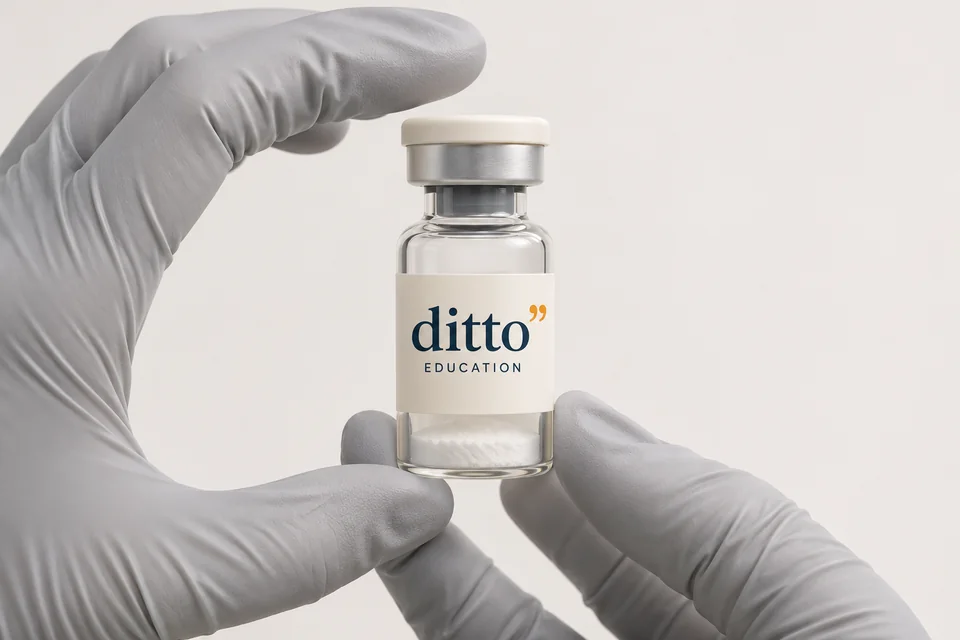
Check the exact product
Read the label, formulation, vial content, expiry and preparation instructions. Check the vial and closure for damage. Appearance alone cannot establish identity, purity or sterility.
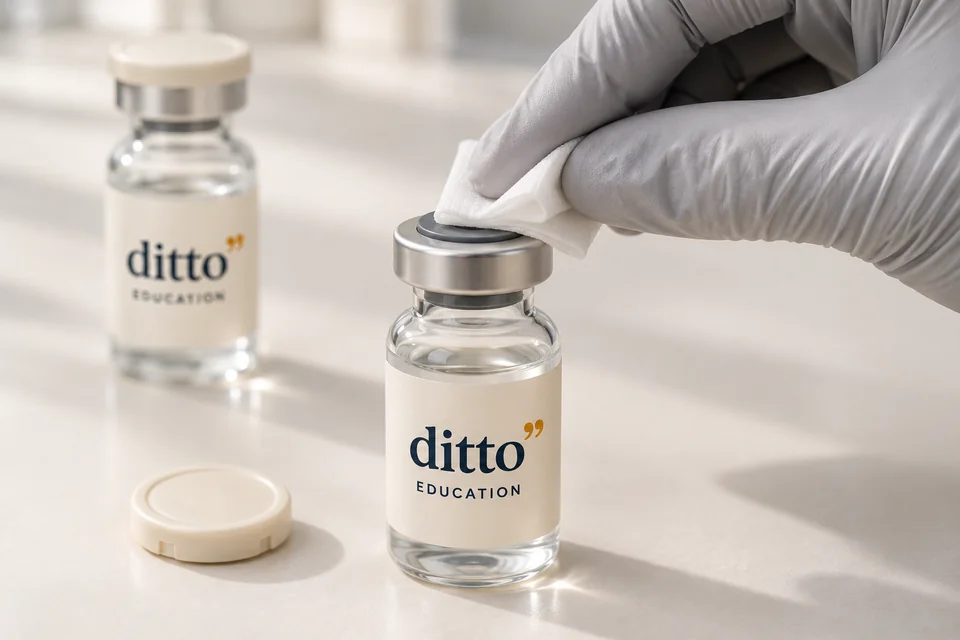
Clean the stopper
If the product instructions call for vial access, disinfect the exposed rubber stopper with a fresh alcohol swab and let it dry. Avoid touching it afterward; use sterile equipment for each access.
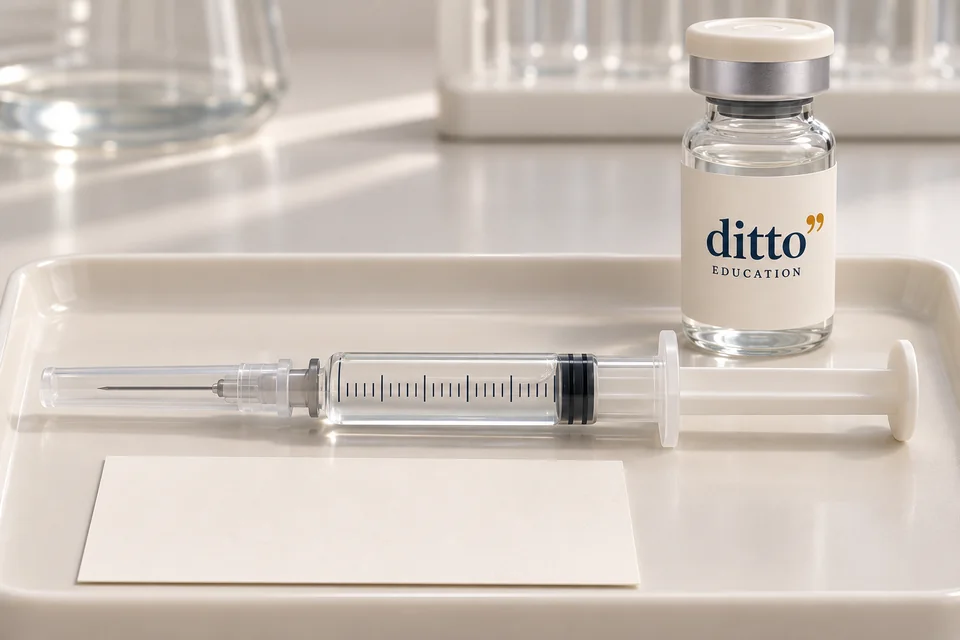
Measure the specified diluent
Confirm the diluent type and volume in the product instructions. Measure that volume using the correct syringe scale. A concentration calculation cannot establish that a diluent is compatible.
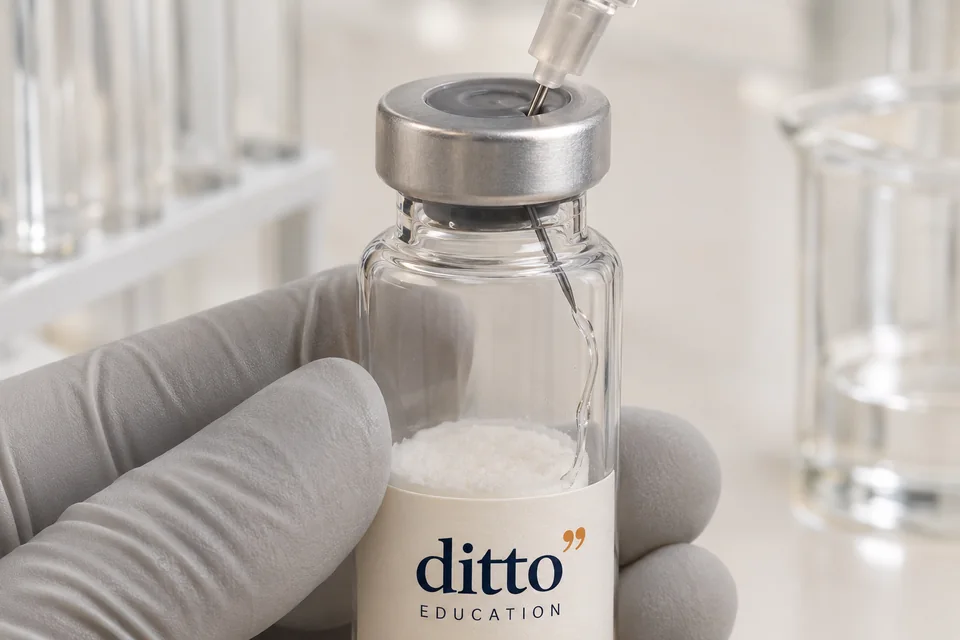
Add as instructed
Follow the product-specific addition method. Where slow addition along the vial wall is specified, keep the flow gentle. Do not infer a preparation method from a dose table or combine separate compounds in one vial.
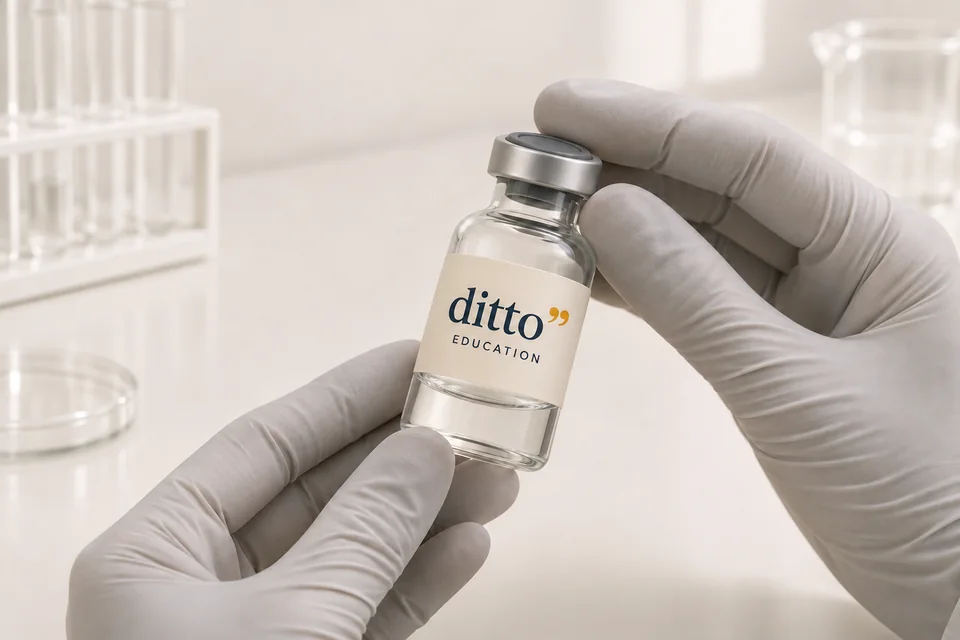
Mix and inspect
Use the mixing method specified for the product; some require gentle swirling rather than shaking. Compare the appearance with the instructions. Do not use a preparation with unexpected particles, discoloration or suspected contamination.
Mix and inspect
Use the mixing method specified for the product; some require gentle swirling rather than shaking. Compare the appearance with the instructions. Do not use a preparation with unexpected particles, discoloration or suspected contamination.
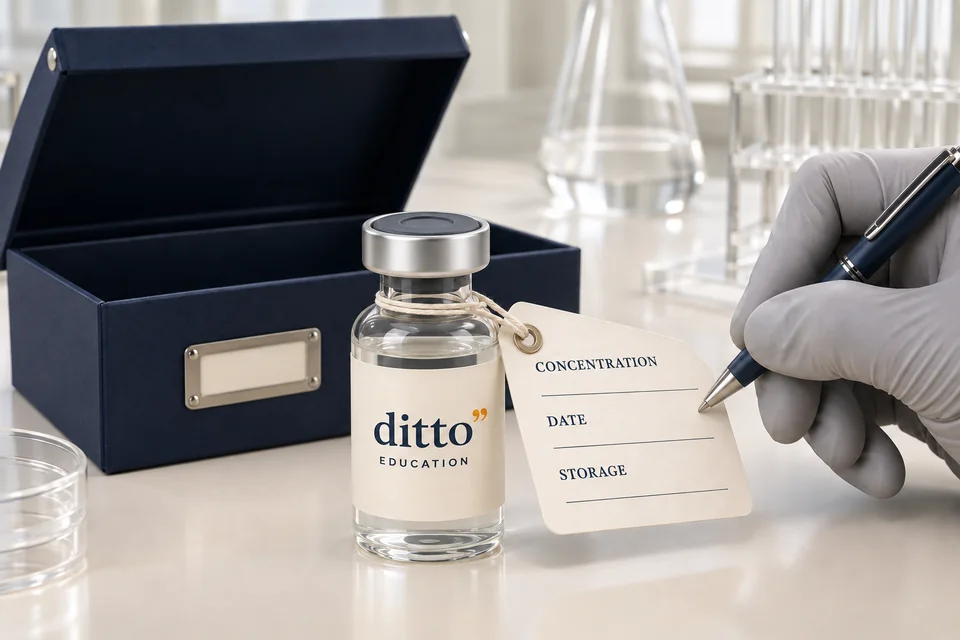
Record and store
Record the preparation date and calculated concentration in mg/mL and mcg/mL. Follow the exact storage conditions and discard time on the product instructions. There is no universal refrigerated shelf life for all peptides.
AI-generated educational scenes with Ditto-inspired concept labels; not photographs of supplied products. CDC preparation and equipment principles · Check your calculation
Calculator
Use a research-context reconstitution calculator to confirm draw volumes any time you change vial size or BAC water volume. Always confirm against the supplier label.
BPC-157 Dosage Chart
This BPC-157 dosage chart summarizes common community-derived research-planning ranges from ~250 mcg (0.25 mg) once daily up to ~500 mcg (0.5 mg) twice daily, with route and context shown side by side.
 UNIVERSITY OF PEPTIDE · RESEARCH REFERENCE
BPC-157 Dosage Chart
| Approach | Duration | Review point | Evidence context |
|---|---|---|---|
| Standard | 4-6 weeks | Week 4 | General research planning |
| Extended | 6-8 weeks | Week 6 | Unvalidated community duration |
| Long | 8-12 weeks | Week 8 | Unvalidated community duration |
How BPC-157 Works
In plain English, animal studies suggest BPC-157 helps damaged tissue grow new blood supply and signals cells to migrate into injured areas. This makes it a recurring research tool for tendon, gut, and vessel-injury models. The technical details follow.
BPC-157 has been reported to upregulate VEGFR2 (vascular endothelial growth factor receptor 2) and activate the Akt-eNOS pathway, which raises nitric oxide production in blood-vessel walls (Hsieh et al., Journal of Molecular Medicine, 2017; Hsieh et al., Scientific Reports, 2020). The downstream effect is more dilated vessels and improved local blood flow in injury models.
Other reported mechanisms include activation of FAK-paxillin complexes (which help cells migrate and attach to surfaces during wound healing), JAK-2 signaling, and ERK1/2 pathway activity (Sikiric et al., Current Neuropharmacology, 2016; Vukojevic et al., Neural Regeneration Research, 2022). These are preclinical findings, not human clinical proofs.
Angiogenesis
Promotes new blood vessel formation in animal models. This is the central mechanism most reviews focus on.
Cell migration
Reported to support fibroblast and endothelial cell migration into injured tissue.
Inflammation balance
Animal data report downregulation of NF-kB and Nos2 in injury settings.
Open question
Whether the same mechanisms are clinically meaningful in humans is not yet established.
Who BPC-157 Is For and Who Should Avoid It
Because BPC-157 is not FDA-approved and human safety data is limited, eligibility decisions should always involve a licensed clinician. The points below summarize categories where caution is most consistently flagged in reviews and regulator notices.
Active or prior cancer
BPC-157 promotes angiogenesis in animal models. Because tumor growth also depends on new blood vessels, several reviews describe this as a theoretical concern that has not been resolved in humans (Sehgal et al., Pharmaceuticals, 2025).
Pregnancy and lactation
No published human reproductive or lactation safety data exists.
Competitive or tested athletes
BPC-157 has been on the World Anti-Doping Agency Prohibited List under category S0 since 2022 and remains on the 2026 list. Use of BPC-157 will result in an anti-doping rule violation.
Anyone on blood-pressure-active medications
BPC-157 affects nitric oxide signaling in animal models. Anyone on medications that act on nitric oxide or vascular tone should review with a clinician.
Anyone seeking a regulated medical treatment
BPC-157 is not an FDA-approved drug. As of April 22, 2026, it was removed from FDA Category 2, and BPC-157-related substances appeared on the July 23, 2026 PCAC agenda. FDA staff recommended against inclusion; this is not a verified committee vote or final agency action.
BPC-157 Side Effects & Safety
Reported side effects fall into three buckets: directly observed effects in pilot studies, theoretical risks based on mechanism, and route-specific issues.
Observed in pilot human work
A 2025 IV infusion pilot of BPC-157 in two adults at 10 mg (10,000 mcg) and 20 mg (20,000 mcg) reported no adverse effects on cardiac, hepatic, renal, thyroid, or glucose biomarkers (Lee et al., Alternative Therapies in Health and Medicine, 2025). A 2024 pilot in interstitial cystitis and a 2021 case series in knee pain reported it as well-tolerated within those small samples.
Theoretical mechanism risk
The same pathway that supports tissue repair (angiogenesis) also supports tumor growth. Reviews flag this as an unresolved question, especially in patients with current or prior cancer (Sehgal et al., Pharmaceuticals, 2025).
Injection-site reactions
Mild redness or small bumps at the injection site are the most commonly reported short-term issues in community usage. Site rotation is the standard answer.
Blood pressure
BPC-157 affects nitric oxide signaling, which influences vessel tone. Anyone monitoring blood pressure should track readings during a research cycle.
Quality control risk
Most BPC-157 sold in the U.S. is research-use grey-market material. Contamination, mis-dosing, and degradation are real practical risks separate from the molecule itself.
BPC-157 Timeline & What to Monitor
Most preclinical work measures injury-model endpoints over days to weeks rather than longer windows. Human pilot studies have measured short-term symptom reports and basic safety labs; they have not measured long-term outcomes.
Timeline reference points (research planning)
| Timeframe | Commonly tracked | Notes |
|---|---|---|
| Days 1-7 | Acute pain reports, injection-site response | Anti-doping rule violation begins immediately for tested athletes. |
| Weeks 1-2 | Range-of-motion and functional self-report in case series | Reflects symptom-level changes, not structural healing. |
| Weeks 4-6 | Tendon and ligament endpoints in animal models | Rodent tendon papers commonly assess at this window. |
| Weeks 6-12 | Extended-cycle community reports | No human RCT covers this duration. |
These reference points come from preclinical literature and small pilots. They are not predictions of personal outcomes.
Reasonable markers to track during a research cycle include a basic metabolic panel, complete blood count, and blood pressure. None of these is a peptide-specific test. The 2025 IV pilot measured cardiac, hepatic, renal, thyroid, and glucose biomarkers and reported no abnormalities (Lee et al., 2025), which gives a sense of what those investigators considered worth checking.
BPC-157 Clinical Evidence Context
Direct human evidence for BPC-157 is limited to a small number of pilot studies. Animal evidence is much larger and has been the basis for almost all of the published mechanism work.
Human pilot evidence
Three small pilots: a 12-patient knee-pain case series (Lee & Padgett, Alternative Therapies in Health and Medicine, 2021); a 12-woman interstitial cystitis pilot (Lee, Walker & Ayadi, 2024); and a two-adult IV safety pilot at 10 mg (10,000 mcg) and 20 mg (20,000 mcg) (Lee & Burgess, 2025). These small studies used different routes and cannot establish a general safety profile.
Systematic review (sports medicine)
Vasireddi et al. published a 2025 systematic review on BPC-157 in orthopedic sports medicine (HSS Journal). It concluded that human evidence remains insufficient to support clinical recommendations.
Mechanism literature
Multiple peer-reviewed papers describe VEGFR2 activation, eNOS/NO signaling, and tendon-cell behavior in cultured cells and rodent models (Chang et al., Journal of Applied Physiology, 2011; Hsieh et al., 2017; Hsieh et al., 2020).
Pharmacokinetics
He et al. (Frontiers in Pharmacology, 2022) reported pharmacokinetics and tissue distribution in rats and dogs, including a rapid plasma half-life under 30 minutes after IM or IV dosing.
Regulatory toxicology
Xu et al. (Regulatory Toxicology and Pharmacology, 2020) reported a preclinical safety package designed to support potential drug development.
Open question
No published Phase 2 or Phase 3 human RCT exists. The community-derived planning ranges should not be read as clinically validated doses.
BPC-157 Storage & Handling
Storage Reference
| State | Storage | Notes |
|---|---|---|
| Lyophilized (powder form) | -4F (-20C) long-term; refrigerator short-term | Follow supplier label; powder is more stable than reconstituted solution. |
| Reconstituted (liquid form) | 35.6-46.4F (2-8C) | No general validated beyond-use period is established here. Refrigeration or a clear appearance does not prove sterility or stability. |
| Appearance after recon | Clear, colorless solution | Cloudy or particulate solutions should not be used. |
A product-specific, validated storage and discard instruction is needed. A purity certificate alone does not establish post-mixing stability.
BPC-157 Protocol Mistakes & Troubleshooting
Cloudy vial after reconstitution
Do not use it. Cloudiness can mean contamination, agitation damage, or product issues. Discard and replace.
Wrong BAC water volume
Check the actual concentration on the supplier label and recalculate dose volume before drawing. The published vial math on this page assumes 10 mg (10,000 mcg) vials.
Missed scheduled dose
Community protocols generally do not double up after a missed dose; dosing resumes at the next scheduled time.
Persistent injection-site reaction
Rotating sites within and between abdomen quadrants, with a fresh syringe and swab per session, is the commonly reported approach. Persistent or expanding reactions warrant clinician review.
Storage mistake (left out overnight)
Treat as compromised and discard. Reconstituted peptides are not designed for room-temperature storage.
Confused about route
If you are unsure whether to use injectable or oral material, stop and review the supplier label. Capsules and reconstituted vials are not interchangeable on a milligram-for-milligram basis.
Severe or unexplained symptoms
Stop the protocol and seek qualified medical care. This page cannot replace clinician evaluation.
BPC-157 Regulatory Status
BPC-157 is not an FDA-approved drug for any indication. As of October 14, 2026, advisory review and FDA approval remain different questions.
FDA 503A Category 2 (April 2026)
On April 15, 2026, the FDA published a 503A bulks list update. Effective April 22, 2026, BPC-157 was removed from Category 2 (the bulks substances list flagged as raising significant safety concerns). The reason given was withdrawal of the original Category 2 nominations, not a positive safety determination.
PCAC review (July 2026)
BPC-157-related substances were on the July 23, 2026 PCAC agenda. The FDA presentation recommended against inclusion on the 503A bulks list. That presentation does not establish the committee vote or final agency action; removal from Category 2 is not FDA approval.
WADA prohibited substance
BPC-157 has been on the World Anti-Doping Agency Prohibited List under category S0 (non-approved substances) since 2022 and remains on the 2026 list.
International scheduling
Australia's Therapeutic Goods Administration (interim decision, April 2024) and New Zealand's Medsafe (Medicines Classification Committee, June 2025) have moved to schedule BPC-157 as a prescription-only medicine, despite its unavailability through legitimate prescription.
Branded approval status
There is no FDA-approved branded BPC-157 product. Compounded preparations are not the same as FDA-approved drugs.
BPC-157 vs TB-500 vs Wolverine Stack
BPC-157 and TB-500 are often discussed together in the informal Wolverine stack, but they are different compounds.
Compound Comparison
| Feature | BPC-157 | TB-500 |
|---|---|---|
| Class | 15-amino-acid synthetic pentadecapeptide | Synthetic 7-amino-acid fragment of thymosin beta-4 (Ac-LKKTETQ) |
| Common research focus | Tendon, gut, vessel models; gut-stable for oral research | Cell migration; soft-tissue and muscle models |
| Most common research route | SubQ; oral capsules also used | SubQ; longer dose intervals than BPC-157 |
| Half-life pattern | Short plasma half-life (<30 min) in animal PK studies | Human fragment half-life and optimal interval are not established |
| Combined references | Often paired with TB-500 in community planning ('Wolverine stack') | Same pairing |
| Regulatory status | Removed from FDA Category 2 April 22, 2026; not approved | Also removed from FDA Category 2 April 22, 2026; not approved |
For the combined research planning context, see the Wolverine Stack guide.
BPC-157 Blood Tests & Monitoring
BPC-157 is usually discussed for tissue repair, gut, tendon, and injury research. Labs may help review general health, but they do not directly prove local tissue healing.
Blood test markers to discuss with a clinician
| Marker | Why it matters | Timing |
|---|---|---|
| CBC with differential | Screens blood-cell patterns that may flag infection, anemia, or immune changes before interpreting repair symptoms. | Baseline |
| Comprehensive metabolic panel (CMP) | Reviews liver enzymes, kidney markers, electrolytes, and glucose in one broad safety panel. | Baseline |
| CRP | May help track broader inflammation when injury, gut symptoms, or systemic inflammation are part of the picture. | Optional |
| ESR | Adds a slower-moving inflammation marker that may be useful when symptoms are chronic. | Optional |
| Urinalysis | Can add basic kidney and hydration context when there are urinary symptoms or kidney concerns. | Optional |
Monitoring guidance is pathway-based because BPC-157 lacks established human clinical lab-monitoring standards.
At-home blood test option
Easy at home option to monitor core metrics during research cycles.
Beyond Whoosh
Pharmacy Grade BPC-157
Prescription-grade peptide care through Beyond Whoosh. Whoosh prescribes after a clinician reviews your eligibility.
Beyond Whoosh
Pharmacy Grade BPC-157 Capsules
Prescription-grade BPC-157 capsules through Beyond Whoosh. Whoosh prescribes after a clinician reviews your eligibility.
Simple timing framework
- Baseline
- Discuss baseline labs before starting, especially if there is active injury, gut symptoms, infection concern, liver disease, kidney disease, or medication use.
- Follow-up
- Repeat broad markers after 6-12 weeks if symptoms change, inflammation is part of the context, or the protocol continues.
- Longer term
- For recurring injury protocols, review trends every 3-6 months with a clinician.
How to interpret the labs
- Routine labs may look normal even when a tendon, ligament, or gut issue is still present.
- Medication use, infection risk, imaging, and physical exam findings matter more than labs alone.
- Avoid presenting symptom improvement as proof of tissue regeneration.
Do not wait for routine labs
Fever, spreading redness, severe wound pain, or drainage needs medical review. Sudden chest pain, shortness of breath, or one-sided leg swelling should not be treated as routine soreness.
FAQ
Q1: What is BPC-157?
BPC-157 is a synthetic 15-amino-acid peptide. The sequence was identified from a protein found in human gastric juice in the 1990s. It is most often studied in animal models of tendon, gut, and vessel injury, and is not an FDA-approved drug.
Q2: What does BPC-157 do?
In animal studies, BPC-157 supports new blood vessel growth, helps cells migrate into injury sites, and balances inflammation. The most consistently reported pathway involves VEGFR2 and the Akt-eNOS nitric oxide cascade. Translation to humans has not been confirmed in large clinical trials.
Q3: Is BPC-157 FDA-approved?
No. BPC-157 is not an FDA-approved drug. On April 15, 2026, the FDA announced the removal of BPC-157 from its 503A Category 2 list, effective April 22, 2026, because the original nominations were withdrawn. BPC-157-related substances were on the July 23, 2026 PCAC agenda. The FDA presentation recommended against inclusion; a presentation is not a committee vote or final FDA action.
Q4: Why is BPC-157 banned by WADA?
The World Anti-Doping Agency added BPC-157 to its Prohibited List under category S0 (non-approved substances) in 2022. WADA bans substances that lack regulatory approval for human use even if they are not specifically performance-enhancing. BPC-157 remains on the 2026 Prohibited List.
Q5: How is BPC-157 commonly dosed in research planning?
The table records community examples of 250 mcg (0.25 mg) once daily (250 mcg/day (0.25 mg/day)), 250 mcg (0.25 mg) twice daily (500 mcg/day (0.5 mg/day)), and 500 mcg (0.5 mg) twice daily (1,000 mcg/day (1 mg/day)). These are not clinically validated doses or a safe maximum. Animal IM/IV studies and small human pilots do not validate these subcutaneous schedules.
Q6: Can BPC-157 be taken orally?
Yes, in research-context terms. BPC-157 is unusually stable in human gastric juice for a peptide, which is why oral and capsule formats appear in research planning, especially for gut models. Human studies have not established oral-to-injectable dose equivalence. Products sold as capsules are not FDA-approved BPC-157 drugs.
Q7: How is BPC-157 reconstituted?
A 10 mg (10,000 mcg) vial reconstituted with 2 mL bacteriostatic water yields 5,000 mcg/mL (5 mg/mL). At that concentration, 250 mcg (0.25 mg) equals 0.05 mL, or 5 units on a U-100 insulin syringe. A 500 mcg (0.5 mg) draw equals 0.10 mL, or 10 units. Always confirm against the supplier label.
Q8: What are the main side effects of BPC-157?
Anecdotal reports mention injection-site redness or small bumps. Theoretical concerns include angiogenesis-related risk in patients with current or prior cancer, and effects on nitric oxide signaling that could matter for blood pressure. Human safety evidence is limited, and community reports cannot establish the frequency of adverse effects.
Q9: Is BPC-157 dangerous?
Small pilot studies cannot establish safety. Community reports cannot reliably measure adverse-effect rates. The honest summary is that long-term human safety data is missing and the angiogenesis mechanism is an unresolved theoretical concern. Quality control of grey-market material is also a real practical risk, separate from the molecule itself.
Q10: How does BPC-157 compare to TB-500?
BPC-157 is a 15-amino-acid pentadecapeptide most often studied in tendon, gut, and vessel models. TB-500 is a synthetic fragment of Thymosin Beta-4, more often studied in cell-migration and soft-tissue models. They are sometimes referenced together in informal 'Wolverine stack' planning. They are not interchangeable. See the Wolverine Stack guide for combined research-planning context.
Q11: How long is a typical BPC-157 research cycle?
Community examples include 4-6, 6-8, or 8-12 weeks, sometimes with 2-4 weeks off. Human trials have not established these durations, matched them to specific tissue injuries, or shown that breaks improve safety or benefit.
Q12: Is this BPC-157 page medical advice?
No. This page is an educational research reference. It does not diagnose, treat, or prescribe. Speak with a licensed clinician before starting any peptide protocol, and review the regulatory status section before assuming legal availability.
Sources & Research
- Chang CH, Tsai WC, Lin MS, Hsu YH, Pang JH The promoting effect of pentadecapeptide BPC 157 on tendon healing involves tendon outgrowth, cell survival, and cell migration. Journal of Applied Physiology (2011)
- Hsieh MJ, Liu HT, Wang CN, et al. Therapeutic potential of pro-angiogenic BPC157 is associated with VEGFR2 activation and up-regulation. Journal of Molecular Medicine (2017)
- Hsieh MJ, Lee CH, Chueh HY, et al. Modulatory effects of BPC 157 on vasomotor tone and the Src-Cav-1-eNOS signaling pathway in rats. Scientific Reports (2020)
- He L, Feng D, Guo H, et al. Pharmacokinetics, distribution, metabolism, and excretion of body-protective compound 157 in rats and dogs. Frontiers in Pharmacology (2022)
- Sikiric P, Seiwerth S, Rucman R, et al. Stable gastric pentadecapeptide BPC 157: novel therapy in gastrointestinal tract. Current Pharmaceutical Design (2011)
- Vukojevic J, Milavic M, Perovic D, et al. Pentadecapeptide BPC 157 and the central nervous system. Neural Regeneration Research (2022)
- Vasireddi N, Hahamyan H, Salata MJ, et al. Emerging Use of BPC-157 in Orthopaedic Sports Medicine: A Systematic Review. HSS Journal (2025)
- Lee E, Padgett B Intra-Articular Injection of BPC 157 for Multiple Types of Knee Pain. Alternative Therapies in Health and Medicine (2021)
- Lee E, Walker C, Ayadi B Effect of BPC-157 on Symptoms in Patients with Interstitial Cystitis: A Pilot Study. Alternative Therapies in Health and Medicine (2024)
- Lee E, Burgess K Safety of Intravenous Infusion of BPC157 in Humans: A Pilot Study. Alternative Therapies in Health and Medicine (2025)
- Xu C, Sun L, Ren F, et al. Preclinical safety evaluation of body protective compound-157, a potential drug for treating various wounds. Regulatory Toxicology and Pharmacology (2020)
- Józwiak M, Bauer M, Kamysz W, Kleczkowska P Multifunctionality and Possible Medical Application of the BPC 157 Peptide—Literature and Patent Review. Pharmaceuticals (2025)
- U.S. Food and Drug Administration Updated 503A bulk drug substances list (Category 2 revision, effective April 22, 2026). FDA.gov (2026)
- U.S. Food and Drug Administration July 23, 2026 PCAC FDA presentations: BPC-157-related substances. FDA (2026)
- World Anti-Doping Agency World Anti-Doping Code International Standard Prohibited List 2026. WADA (2026)
Related Dosing Protocols
Reconstitution calculator
Enter your own values. This tool calculates quantities, not a recommended dose.
Check the concentration
Changing the unit keeps the entered mass equivalent. 1 milligram (mg) = 1,000 micrograms (mcg). This tool does not choose a target amount.
Biological IU (optional, product-specific)
Only enter a potency explicitly stated as IU per mg on the exact product label or reference. Do not enter the 100 from a U-100 syringe. No factor is assumed for any peptide.
Your result will appear here
Enter the mass, final solution volume and target mass, or load a fictional example.
Assumes accurate masses, final solution volume and even distribution. Blend arithmetic does not establish whether substances can be mixed. Read the formulas and assumptions.
Study findings, reported examples and supplier statements have different levels of evidence. Follow the citations and check the formulation, population and date before interpreting a number.
Editorial standards and corrections