On this page
TOOLS FOR THIS GUIDE
Work with GHK-Cu
The guide name carries across. Amounts, dates and instructions remain yours to enter; opening a tool saves nothing.
Worked examples: calculations, records and source checks
Fictional arithmetic, unrelated to a recommended amount of GHK-Cu: 10 mg (10,000 mcg) in a final 2 mL is 5 mg/mL (5,000 mcg/mL). A target mass of 0.25 mg (250 mcg) corresponds to 0.05 mL, or 5 U-100 syringe markings. Biological IU cannot be inferred from these inputs. Neither the mass nor the liquid is a preparation recommendation.
Open the arithmetic example- Supply example: two 10 mg (10,000 mcg) vials start at 20 mg (20,000 mcg). Four recorded entries of 0.25 mg (250 mcg) leave a theoretical 19 mg (19,000 mcg), before losses or expiry. Skipped entries do not deduct stock.
- Measurement example: enter “Sleep duration”, “7.5”, “hours” and the date. Keep the same unit and note changing conditions. A trend does not prove a treatment effect.
- Source example: record “rat study” when rats were studied, even when the headline describes recovery. Keep the exact paper and its limitations.
The planner accepts mg and mcg. Biological IU/USP units, sprays, drops and variable mixtures need product-specific instructions; they cannot be inferred from a generic mass calculator. For stacks, record each known ingredient separately.
FDA: why concentration and unit errors matterEvidence & source checks
Check the identity: Copper-complex GHK-Cu. Bare GHK does not establish that a product contains the copper complex.
Did the copper complex alter wound-matrix measurements in an animal model?
GHK-Cu increased collagen, total protein, DNA and other matrix components in the wound chambers. Collagen-related messenger RNA increased, while TGF-beta messenger RNA did not.
Limit: These were biochemical measurements in rat wounds, not human cosmetic or recovery outcomes.
What to verify before filling a plan
- Identity and formulation: match the name, sequence or active ingredient, route and strength. A related molecule or branded medicine is not automatically equivalent.
- Instruction source: obtain the actual amount, frequency and duration from qualified medical instructions. A community table or trial protocol does not establish an individual regimen.
- Units and product details: keep mass, liquid volume and biological activity units separate. Record batch, storage and discard instructions from the actual product; the tools cannot determine sterility or stability.
- Review and follow-up: list medicines and supplements, unresolved interactions and questions. Agree on relevant observations and actions with a qualified professional; normal measurements do not prove safety.
Selected source context, not a systematic review or medical approval. Study cards checked 24 November 2026; guide source notes checked 25 November 2026. Research references and citations appear below.
Guide summary
REFERENCE SUMMARY- Compound
- GHK-Cu (copper tripeptide)
- Class
- Copper-binding tripeptide
- Common format
- Injectable SubQ and topical
- Regulatory status
- Not FDA-approved
GHK-Cu Quick Start
GHK-Cu (glycyl-L-histidyl-L-lysine copper) is a small copper-binding peptide that occurs naturally in human plasma. Levels are roughly 200 ng/mL around age 20 and fall to about 80 ng/mL by age 60. That decline is part of why GHK-Cu became a target for skin, hair, and wound-healing research.
Most clinical evidence is topical. Most community use is split between Free research tools and subcutaneous injection. This guide covers both routes side by side so the math, supplies, and evidence boundaries stay separate instead of blurring together.
- Routes
- Subcutaneous (SubQ) injection and topical formulations are the two main research-use routes.
- Evidence limit
- No validated human injection regimen is established. Topical concentrations depend on the exact finished product.
- Measure
- For injectable formats, vial size and reconstitution volume drive every draw calculation.
- Supplies
- Plan vials, BAC water, U-100 insulin syringes, and alcohol swabs by cycle length.
- Status
- Not FDA-approved. A compounding-list change is not drug approval or proof of safety.
Disclaimer
This page is an educational research reference and is not medical advice. Dosing context describes common community-derived research planning, not a personal protocol. Speak with a qualified clinician before any peptide use.
Use this page for GHK-Cu dosing, vial math, and handling. Want the wider science view? Read the GHK-Cu evidence guide. It covers copper peptide biology, research, safety, and comparisons.
GHK-Cu Dosing Protocol & Schedule
Injection and topical use have different evidence and formulation requirements. A topical percentage cannot be converted into a systemic dose or used to establish injection safety.
GHK-Cu Evidence by Route
Route-specific examples and evidence limits.
Open a format reference below.
Injectable format reference
Unvalidated community examples, not an approved regimen.
The following are illustrative descriptions of community use, not a validated protocol or a safe range. The cited topical trials and preclinical studies cannot determine a human subcutaneous dose, maximum, frequency, or cycle.
Illustrative injectable examples, not clinically validated
| Example | Amount per administration | Frequency | Weekly total | Duration |
|---|---|---|---|---|
| A | 1 mg (1,000 mcg) | 5 days/week | 5 mg/week (5,000 mcg/week) | 4 weeks |
| B | 1–1.5 mg (1,000–1,500 mcg) | Daily | 7–10.5 mg/week (7,000–10,500 mcg/week) | 4–6 weeks |
| C | 1.5–2 mg (1,500–2,000 mcg) | Daily | 10.5–14 mg/week (10,500–14,000 mcg/week) | 6–8 weeks |
These are alternative examples, not required stages. None establishes a safe maximum. The supplies section uses a separate fixed 1-mg daily inventory example.
Community descriptions sometimes include 2–4 weeks off. Clinical evidence has not established whether breaks reduce risk or improve outcomes.
Topical format reference
Finished-product evidence and concentration arithmetic.
Topical evidence is specific to the formulation, concentration, delivery vehicle, skin condition, and study. The sources here do not establish a universal 1–3% facial or scalp regimen. Follow the exact finished product’s directions and seek clinician advice for injured skin or use after a procedure.
Percent-by-weight arithmetic, not a formulation recommendation
| Concentration example | GHK-Cu mass | Total finished product mass |
|---|---|---|
| 1% w/w | 10 mg (10,000 mcg) | 1 g |
| 2% w/w | 20 mg (20,000 mcg) | 1 g |
| 3% w/w | 30 mg (30,000 mcg) | 1 g |
These numbers explain concentration only. They do not establish appropriate product strengths, application frequency, efficacy, or safety.
The Miller 2006 post-laser study had 13 completers. It found no significant objective between-group difference in wrinkle or skin-quality outcomes, although patient satisfaction improved. This narrow result does not validate a general cosmetic protocol or injection.
Evidence boundary
The Leyden 2002 conference report is described indirectly in a 2015 review; the original report is not linked. The 2023 NEEL item is a company press release about a small topical study. Neither establishes injectable efficacy, a systemic dose, or long-term safety.
GHK-Cu Supplies Needed
This is a separate inventory example at a fixed 1 mg (1,000 mcg) once daily from 50 mg (50,000 mcg) vials / 2 mL water (25 mg/mL (25,000 mcg/mL); 1 mg (1,000 mcg) = 0.04 mL = 4 U-100 units). Vial counts are theoretical mass-only minima. These longer inventory horizons do not extend the injection examples or establish a usable life. The linked product’s vial size may differ; check its label.
Recommended Supply
Choose your region
Use discount code SAVE10 at Peptira checkout. See why we love Peptira.
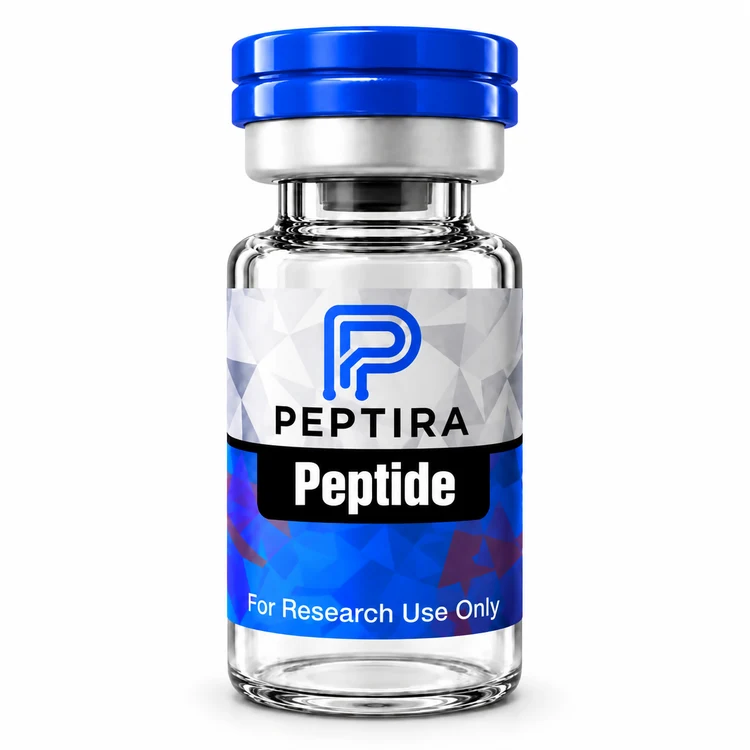
GHK-Cu

Pharmacy Grade GHK-Cu

Pharmacy Grade Topical GHK-Cu

At-Home Blood Test
Research Supplies
Peptide Vials (Injectable)
50 mg (50,000 mcg) / 1 mg (1,000 mcg) = 50 theoretical portions before losses. This does not mean an opened vial can be used for 50 days. Product-specific discard timing can increase the required vial count.
| Cycle length | Planning note |
|---|---|
4-6 weeks 1 vial, mass-only minimum | 4 weeks: 28 administrations = 28 mg (28,000 mcg) before losses and discard.; 6 weeks: 42 administrations = 42 mg (42,000 mcg) before losses and discard. |
8-12 weeks 2 vials, mass-only minimum | 8 weeks: 56 administrations = 56 mg (56,000 mcg) before losses and discard.; 12 weeks: 84 administrations = 84 mg (84,000 mcg) before losses and discard. |
Insulin Syringes (U-100)
Use 0.3 mL / 30-unit syringes for clean 4-unit (1 mg (1,000 mcg)) draws. One syringe per injection.
| Cycle length | Planning note |
|---|---|
4 weeks 28 syringes | 1 syringe per daily injection. |
6 weeks 42 syringes | Most retail boxes are 100-count; one box covers 6-8 weeks. |
8 weeks 56 syringes | 1 box of 100 leaves headroom for losses. |
12 weeks 84 syringes | Still within a single 100-count box; round up for spoiled draws. |
Bacteriostatic Water
This calculation uses 2 mL per 50 mg (50,000 mcg) vial. Water volumes follow mass-only vial minima. Discarded peptide or opened-water bottles may increase the requirement.
| Cycle length | Planning note |
|---|---|
4-6 weeks 2 mL total water | For 1 vial; bottle count depends on the manufacturer’s post-opening discard period. |
8-12 weeks 4 mL total water | For 2 vials; bottle count depends on the manufacturer’s post-opening discard period. |
Allow separately for losses, extra single-use supplies, and product-specific discard dates. Mass-only vial and water minima do not determine how long opened products remain usable. Topical-only use does not need this injection inventory.
Companion Supplies & Routine Support
GHK-Cu Reconstitution Guide
The table below is concentration arithmetic. It does not establish that a research powder is suitable for injection or that adding it to a cream creates a safe, stable topical product.
Common Vial Sizes and Concentrations
| Vial size | BAC water | Concentration | 1 mg (1,000 mcg) draw (U-100) |
|---|---|---|---|
| 50 mg (50,000 mcg) | 2.0 mL | 25.0 mg/mL (25,000 mcg/mL) | 0.04 mL = 4 units |
| 50 mg (50,000 mcg) | 2.5 mL | 20.0 mg/mL (20,000 mcg/mL) | 0.05 mL = 5 units |
| 100 mg (100,000 mcg) | 3.0 mL | 33.3 mg/mL (33,300 mcg/mL) | 0.03 mL = 3 units |
| 100 mg (100,000 mcg) | 5.0 mL | 20.0 mg/mL (20,000 mcg/mL) | 0.05 mL = 5 units |
Pick a reconstitution volume that produces a draw you can read cleanly on a U-100 syringe.
Standard Reconstitution Steps
An illustrated reading aid for the product instructions. Confirm the exact formulation, diluent and handling method first. A research-only vial is not an approved medicine.
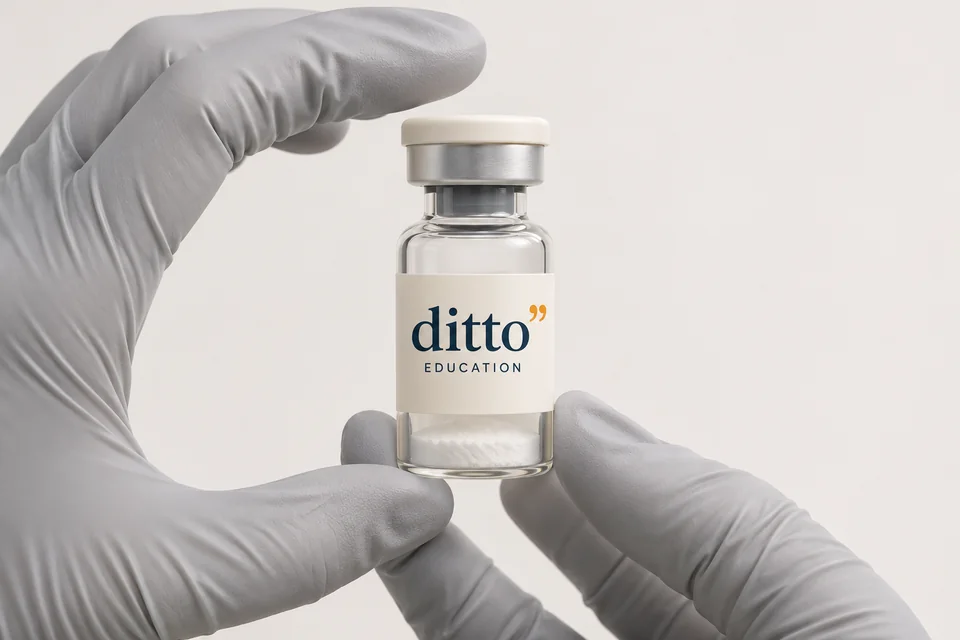
Check the exact product
Read the label, formulation, vial content, expiry and preparation instructions. Check the vial and closure for damage. Appearance alone cannot establish identity, purity or sterility.
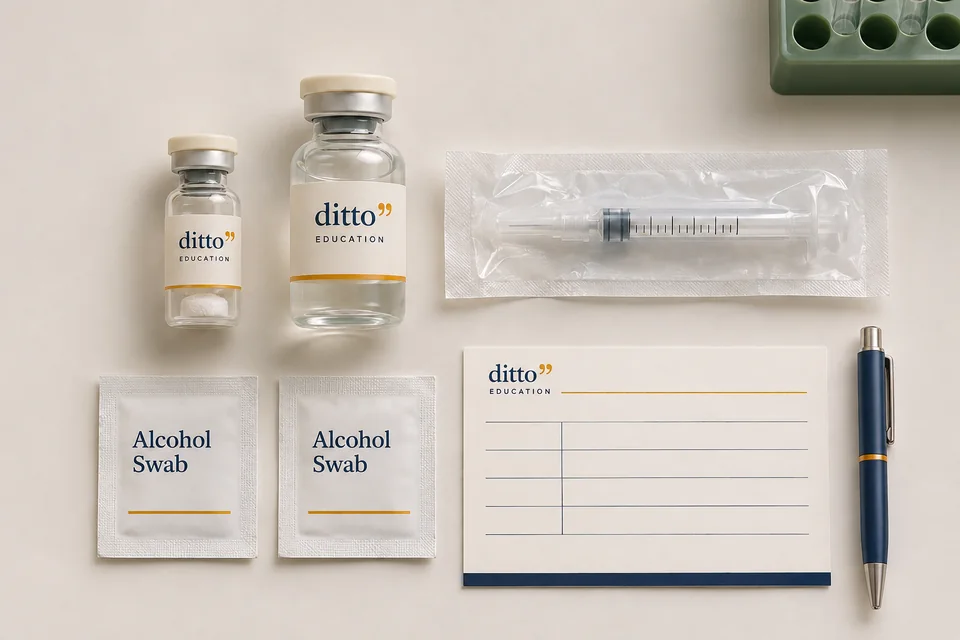
Prepare a clean workspace
Use a clean work area, clean hands and the supplies specified for the product. Check that disposable equipment is unopened and in date. Research-only materials are not medicines for human use.

Clean the stopper
If the product instructions call for vial access, disinfect the exposed rubber stopper with a fresh alcohol swab and let it dry. Avoid touching it afterward; use sterile equipment for each access.

Measure the specified diluent
Confirm the diluent type and volume in the product instructions. Measure that volume using the correct syringe scale. A concentration calculation cannot establish that a diluent is compatible.

Add as instructed
Follow the product-specific addition method. Where slow addition along the vial wall is specified, keep the flow gentle. Do not infer a preparation method from a dose table or combine separate compounds in one vial.

Mix and inspect
Use the mixing method specified for the product; some require gentle swirling rather than shaking. Compare the appearance with the instructions. Do not use a preparation with unexpected particles, discoloration or suspected contamination.

Record and store
Record the preparation date and calculated concentration in mg/mL and mcg/mL. Follow the exact storage conditions and discard time on the product instructions. There is no universal refrigerated shelf life for all peptides.
AI-generated educational scenes with Ditto-inspired concept labels; not photographs of supplied products. CDC preparation and equipment principles · Check your calculation
Topical mixing note
A 1% w/w formulation contains 10 mg (10,000 mcg) GHK-Cu per 1 g of total finished product. Added solution contributes to that final weight. At 20 mg/mL (20,000 mcg/mL), 0.5 mL contains 10 mg (10,000 mcg), but adding it to 1 g of base does not make a 1% final product. A pharmacist must calculate the complete formulation, including final mass, vehicle, preservation, and stability.
If you want the math handled for you, use the University of Peptide calculator.
GHK-Cu Dosage Chart
This chart matches the three alternative injectable examples in the schedule table. The amounts are per administration, and frequency determines the weekly total. They are unvalidated community examples, not a titration plan or safe range.
 UNIVERSITY OF PEPTIDE · RESEARCH REFERENCE
GHK-Cu Dosage Chart
| Example | Amount per administration | Frequency | Weekly total | Duration |
|---|---|---|---|---|
| A | 1 mg (1,000 mcg) | 5 days/week | 5 mg/week (5,000 mcg/week) | 4 weeks |
| B | 1–1.5 mg (1,000–1,500 mcg) | Daily | 7–10.5 mg/week (7,000–10,500 mcg/week) | 4–6 weeks |
| C | 1.5–2 mg (1,500–2,000 mcg) | Daily | 10.5–14 mg/week (10,500–14,000 mcg/week) | 6–8 weeks |
How GHK-Cu Works
GHK-Cu does two things at once. It carries copper into cells where copper-dependent enzymes need it, and the GHK fragment itself acts as a signaling peptide that influences gene expression in fibroblasts and other tissue cells. That dual role is part of why the research base touches so many systems: skin, hair follicles, wound beds, lung, gut, and bone in animal and cell models.
Cell and animal studies have examined collagen-related signaling, decorin, and enzymes involved in tissue remodeling. Reviews also describe gene-expression analyses. These mechanistic observations do not demonstrate clinical rejuvenation or establish an injectable benefit.
Most of this mechanism work uses cell or animal models. Human topical studies are limited and formulation-specific. They do not establish systemic injection benefits.
Who GHK-Cu Is For and Who Should Avoid It
GHK-Cu is discussed for skin, hair, and tissue-repair uses, but evidence and risk differ by route and finished product. No validated injectable benefit-risk profile is established.
Groups that should avoid or seek clinician guidance first
Pregnancy and breastfeeding: GHK-Cu has not been adequately studied in pregnancy or lactation. Avoid both injectable and topical use in these populations without clinician oversight.
Active cancer or untreated solid tumors: GHK-Cu modulates angiogenesis and gene expression. Effects in active malignancy are not well characterized, and most clinicians treat this as an exclusion until more data exists.
Wilson's disease or other copper-handling disorders: GHK-Cu delivers bioavailable copper. Anyone with a known copper metabolism disorder should not use GHK-Cu.
Allergy to copper: rare but possible. Test small topical patches before broader application.
Active skin infection at the application or injection site: defer use until the area is healed.
GHK-Cu Side Effects & Safety
Topical studies are limited and product-specific. Injectable human safety data are limited; anecdotal reports cannot establish a low rate of serious adverse effects.
Topical effects
Redness, tingling, dryness, or irritation can occur with topical products. This page establishes no concentration threshold below which irritation is unlikely. Assess the finished formulation and seek advice if a reaction persists.
Injectable effects
Injection-site redness, swelling, or pain may occur. FDA identifies limited human safety data and potential immunogenicity risks related to aggregation and peptide impurities. The frequency of systemic harms cannot be estimated from user reports.
Theoretical risks
Long-term systemic risks remain uncertain. Mechanistic concerns about copper handling and tissue signaling are not proof of a specific clinical harm, and they do not establish that cycling or off-periods prevent harm.
Quality-control risk
A batch-matched certificate of analysis can report selected quality tests. It does not establish sterility, stability after mixing, FDA approval, or safety for human injection.
GHK-Cu Timeline & What to Monitor
There is no validated timeline for injectable skin, hair, or wound benefits. A community cycle length does not predict when a benefit should appear.
A 2015 review describes 12-week cosmetic studies reported by Leyden and colleagues in 2002. The original conference report is not linked here. A 2023 company press release describes a collagen-density change after three months of topical NEEL gel use. Full methods, comparator details, and peer-reviewed results are needed to assess that claim.
These reports are not proof that another topical product or an injection will produce the same result. Consistent photos may document changes, but do not establish treatment efficacy or safety.
GHK-Cu Clinical Evidence Context
Evidence must be separated by route, formulation, and study design. Small topical studies and reviews do not establish a safe human injection regimen.
Miller et al. 2006: small topical trial
A randomized post-laser skin-care study had 13 completers. Objective wrinkle and skin-quality outcomes did not differ significantly between groups; patient satisfaction improved. The result is specific to that setting.
Leyden et al. 2002: indirect citation
A 2015 Pickart review describes a conference report on copper-peptide facial cream. The original report is not directly linked, so its formulation, concentration, and detailed methods should not be treated as independently verified here.
NEEL gel 2023: company-reported result
Yuvan’s press release describes a small topical study and a collagen-density change. It is not a full peer-reviewed clinical report; IRB approval alone does not establish study quality, efficacy, or equivalence to other GHK-Cu products.
Cell and animal findings
Reviews summarize gene-expression and tissue-repair findings from preclinical models. These results do not establish systemic benefits or dose selection in humans.
Injection evidence gap
The sources do not establish an effective human injectable dose, safe maximum, cycle, or long-term safety profile for cosmetic, hair, or wound use.
GHK-Cu Storage & Handling
Storage conditions and expiry must come from validated data for the exact product, formulation, container, and handling conditions.
GHK-Cu storage evidence
| Material | Required information | Limit |
|---|---|---|
| Unmixed powder | Product-specific storage and expiry data | No generic months-to-years shelf life is established here. |
| Reconstituted material | Validated temperature, stability and beyond-use date | No universal 28-day or 2–4-week use period is established. |
| Frozen material | Product-specific freezing and thawing validation | Freezing or aliquoting does not establish a safe extended life. |
| Opened bacteriostatic water | Manufacturer’s post-opening discard instructions | Bottle count depends on time as well as volume. |
No product-specific stability study is cited here. Refrigeration, a clear appearance, or the presence of benzyl alcohol does not establish sterility, potency, or a safe use period. Vial-yield arithmetic cannot determine a discard date.
Finished topical products follow their own labeled storage instructions; compounded products need the responsible pharmacist’s beyond-use date. A visible blue tint does not establish potency or sterility.
GHK-Cu Protocol Mistakes & Troubleshooting
Reconstituted solution looks very dark or cloudy
A faint blue tint from copper is expected. Cloudiness or unusual particulates suggests poor reconstitution, contamination, or a quality issue. Discard and review supplier COA before reordering.
Topical product is causing irritation
Stop using a topical product that causes a persistent reaction and seek clinical advice before continuing.
Injection site stays red or sore
Persistent injection-site reactions can indicate technique issues, contamination, or sensitivity — this warrants stopping and consulting a clinician.
Missed dose
This page does not provide missed-dose guidance — any questions about an existing regimen should go to a qualified clinician.
Wrong BAC water volume
Recalculate concentration using total mg divided by total mL and verify the label. Correct math does not establish whether the product is suitable for use.
Storage mistake (left out at room temp)
Use product-specific stability information to assess a temperature excursion. This page cannot establish whether a warm vial remains usable.
Persistent or unusual symptoms
Stop use and seek qualified medical care for any unusual systemic symptoms, allergic reactions, or persistent injection-site issues.
GHK-Cu Regulatory Status
GHK-Cu is not an FDA-approved drug. A product marketed as a cosmetic has a different regulatory purpose from an injectable drug; cosmetic use does not establish injection approval or safety.
The FDA safety-risk page lists injectable GHK-Cu among nominated substances whose nominations were withdrawn. FDA identifies potential immunogenicity from aggregation or peptide impurities and limited human safety data. Withdrawal of a nomination is not FDA approval or a finding that a substance is safe.
Compounding eligibility and anti-doping obligations require current, product-specific review. An absence from a named list is not proof that an injectable research substance is permitted for an athlete. Consult the relevant regulator or anti-doping organization.
GHK-Cu vs Topical Cosmetic Copper Peptides vs the GLOW Stack
GHK-Cu is often confused with the cosmetic ingredient "copper peptides" or with the GLOW stack, but the three are not interchangeable.
GHK-Cu vs Adjacent Categories
| Format | What it is | Evidence base | Typical use |
|---|---|---|---|
| Topical GHK-Cu (cosmetic) | Copper Tripeptide-1 in serums and creams | Limited product-specific studies; indirect conference report and company release | Daily anti-aging skincare |
| Injectable GHK-Cu (research-use) | Reconstituted vial, SubQ injection | Mostly preclinical; community use | Unvalidated examples; no established regimen |
| GLOW stack (community blend) | GHK-Cu + BPC-157 + TB-500 in one vial | Compound-level only; no direct stack RCT | Combined skin/recovery research |
| Generic "copper peptides" (cosmetics) | Various copper-binding peptides, not all GHK-based | Mixed; depends on specific peptide | Anti-aging skincare |
Use this table to anchor the discussion you want to have. "Copper peptides" is a category, not a specific compound.
GHK-Cu Blood Tests & Monitoring
GHK-Cu is a copper peptide often discussed in skin, hair, wound, and tissue-repair research. Monitoring focuses on broad health markers, with copper-specific labs reserved for repeated or higher systemic exposure contexts.
Blood test markers to discuss with a clinician
| Marker | Why it matters | Timing |
|---|---|---|
| CBC with differential | Screens anemia, white-cell patterns, and platelet changes that may matter when reviewing systemic health. | Baseline |
| Comprehensive metabolic panel (CMP) | Reviews liver and kidney markers, which matter for systemic exposure and copper handling context. | Baseline |
| Copper and ceruloplasmin | Adds copper-status context when repeated high-exposure copper peptide use is being discussed. | Optional |
| CRP | May help frame systemic inflammation when wound, skin, or connective-tissue symptoms are part of the protocol. | Optional |
Monitoring guidance is pathway-based, with copper and liver context added for repeated systemic exposure discussions.
At-home blood test option
Easy at home option to monitor core metrics during research cycles.
Beyond Whoosh
Pharmacy Grade GHK-Cu
Prescription-grade peptide care through Beyond Whoosh. Whoosh prescribes after a clinician reviews your eligibility.
Beyond Whoosh
Pharmacy Grade Topical GHK-Cu
Prescription-grade topical GHK-Cu through Beyond Whoosh. Whoosh prescribes after a clinician reviews your eligibility.
Simple timing framework
- Baseline
- Discuss baseline labs before repeated systemic use, especially with liver disease, copper metabolism concerns, anemia, or supplement stacking.
- Follow-up
- Repeat broad labs after 8-12 weeks if systemic use continues or symptoms change.
- Longer term
- For longer repeated exposure, copper-related labs may be reviewed periodically with a clinician.
How to interpret the labs
- Topical and systemic exposure contexts should not be treated the same.
- Copper labs are context-specific and are not needed for every casual skin-care discussion.
- Liver history, anemia, supplements, and copper exposure from other sources matter when interpreting results.
Do not wait for routine labs
Jaundice, severe abdominal pain, neurologic symptoms, or unexplained anemia should be reviewed medically. Allergic reactions or severe skin irritation should not be handled as routine monitoring.
FAQ
Q1: What is GHK-Cu?
GHK-Cu is a small peptide made of three amino acids (glycine, histidine, lysine) bound to a copper ion. It occurs naturally in human plasma and was first isolated in 1973 by Loren Pickart. Plasma levels decline with age, which is part of why it became a research target for skin, hair, and wound healing.
Q2: Is GHK-Cu FDA-approved?
No. GHK-Cu is not an FDA-approved drug. Cosmetic use and changes to compounding nominations do not establish approval or injectable safety. FDA identifies limited human injectable safety data and potential immunogenicity risks.
Q3: What is the typical GHK-Cu dosage?
There is no validated human injectable dose or safe maximum established here. The table contains three alternative community examples: 1 mg (1,000 mcg) five days weekly for four weeks; 1–1.5 mg (1,000–1,500 mcg) daily for four to six weeks; or 1.5–2 mg (1,500–2,000 mcg) daily for six to eight weeks. They are not recommendations. Topical strengths must be assessed for the exact finished product.
Q4: Is GHK-Cu better topical or injectable?
Human evidence is mostly topical and remains limited and product-specific. The Leyden 2002 conference report is cited indirectly through a review; the NEEL gel result is a company press release. A small post-laser trial found no significant objective skin-quality benefit between groups. None of these sources validates injection.
Q5: How is GHK-Cu reconstituted?
A common pattern is a 50 mg (50,000 mcg) vial reconstituted with 2.0 mL bacteriostatic water, producing 25 mg/mL (25,000 mcg/mL). A 1 mg (1,000 mcg) dose then equals 0.04 mL, or 4 units on a U-100 insulin syringe. Adjust BAC water volume to make the draw easy to read on your syringe.
Q6: What are the main side effects of GHK-Cu?
Topical products can cause local irritation. Injectable safety is poorly characterized, and user reports cannot establish how common systemic harms are. FDA identifies potential immunogenicity and peptide-impurity risks; no safe injection range is established.
Q7: How long does it take to see results from GHK-Cu?
No validated injectable benefit timeline is established. Some topical reports assessed outcomes around 12 weeks, but study duration is not a promise of benefit. The NEEL gel item is a company report, and the Leyden report is cited indirectly.
Q8: Can GHK-Cu be combined with BPC-157 and TB-500?
GHK-Cu, BPC-157, and TB-500 are commonly combined in the GLOW stack, an informal community blend. No direct stack RCT has evaluated the combination in humans. Compound-level evidence does not automatically validate the blend.
Q9: What is the GLOW stack?
The GLOW stack is a community-derived blend of GHK-Cu, BPC-157, and TB-500 used for combined skin and recovery research. It is not an FDA-approved product and has not been studied as a fixed-ratio combination in human trials.
Q10: Who should avoid GHK-Cu?
GHK-Cu should be avoided during pregnancy or breastfeeding, in active cancer or untreated solid tumors, in Wilson's disease or other copper-handling disorders, and in known copper allergy. Anyone with a serious medical condition should speak with a qualified clinician before considering use.
Q11: Is GHK-Cu medical advice?
No. This page is an educational research reference. Dosing context describes common community-derived research planning, not a personal protocol. Speak with a qualified clinician before any peptide use.
Sources & Research
- Miller TR, Wagner JD, Baack BR, Eisbach KJ. Effects of topical copper tripeptide complex on CO2 laser-resurfaced skin. Archives of Facial Plastic Surgery (2006)
- Pickart L, Margolina A. Regenerative and Protective Actions of the GHK-Cu Peptide in the Light of the New Gene Data. International Journal of Molecular Sciences (2018)
- Pickart L, Vasquez-Soltero JM, Margolina A. GHK Peptide as a Natural Modulator of Multiple Cellular Pathways in Skin Regeneration. BioMed Research International (2015)
- Pickart L, Vasquez-Soltero JM, Margolina A. The Human Tripeptide GHK-Cu in Prevention of Oxidative Stress and Degenerative Conditions of Aging: Implications for Cognitive Health. Oxidative Medicine and Cellular Longevity (2012)
- Pickart L, Margolina A. GHK-Cu may Prevent Oxidative Stress in Skin by Regulating Copper and Modifying Expression of Numerous Antioxidant Genes. Cosmetics (MDPI) (2015)
- Leyden J, Stephens T, Finkey M, Appa Y, Barkovic S. Skin Care Benefits of Copper Peptide Containing Facial Cream (2002 conference report, described in Pickart et al. 2015; original report not directly linked). Indirect citation via BioMed Research International review (2002)
- Yuvan Research Inc. Epigenetic mechanisms activated by GHK-Cu increase skin collagen density in clinical trial (company press release, not a full peer-reviewed report). Yuvan Research company press release via EurekAlert! (2023)
- Wikipedia contributors. Copper peptide GHK-Cu. Wikipedia (2026)
- Lin Z, Tang Q, Wu W, et al. Exploring the beneficial effects of GHK-Cu on an experimental model of colitis and the underlying mechanisms. Frontiers in Pharmacology (2025)
- U.S. Food and Drug Administration. Certain Bulk Drug Substances for Use in Compounding that May Present Significant Safety Risks (GHK-Cu injectable). FDA.gov (2026)
- SSRP Institute. FDA Announces Change in Status of 12 Peptides (BPC-157, TB-500, MOTs-C, Epitalon, KPV, Semax, GHK-Cu injectable, Melanotan II, LL-37, DSIP, PEG-MGF, DiHexa). SSRP Institute News (2026)
- Badenhorst T, Svirskis D, Wu Z. Pharmaceutical Strategies for the Topical Dermal Delivery of Peptides/Proteins for Cosmetic and Therapeutic Applications. Austin Journal of Pharmacology and Therapeutics, 2(6):1036 (review) (2014)
- Pickart L. The human tri-peptide GHK and tissue remodeling (narrative review; not human injection-dose evidence). Journal of Biomaterials Science, Polymer Edition (2008)
Related Dosing Protocols
Reconstitution calculator
Enter your own values. This tool calculates quantities, not a recommended dose.
Check the concentration
Changing the unit keeps the entered mass equivalent. 1 milligram (mg) = 1,000 micrograms (mcg). This tool does not choose a target amount.
Biological IU (optional, product-specific)
Only enter a potency explicitly stated as IU per mg on the exact product label or reference. Do not enter the 100 from a U-100 syringe. No factor is assumed for any peptide.
Your result will appear here
Enter the mass, final solution volume and target mass, or load a fictional example.
Assumes accurate masses, final solution volume and even distribution. Blend arithmetic does not establish whether substances can be mixed. Read the formulas and assumptions.
Study findings, reported examples and supplier statements have different levels of evidence. Follow the citations and check the formulation, population and date before interpreting a number.
Editorial standards and corrections