Peptide Dosage Chart at a Glance
This chart shows the seven peptides people look up most. The full tables below cover every peptide and stack, grouped by goal.
 UNIVERSITY OF PEPTIDE · RESEARCH REFERENCE
Peptide Dosage Chart at a Glance
| Peptide | Dose | How often | Route | Evidence | Chart |
|---|---|---|---|---|---|
| Semaglutide | 0.25 mg (250 mcg) → 2.4 mg (2,400 mcg) | Once weekly, up every 4 weeks | SubQ | FDA label (Wegovy) | Dosage chart |
| Tirzepatide | 2.5 mg (2,500 mcg) → 15 mg (15,000 mcg) | Once weekly, up 2.5 mg (2,500 mcg) every 4+ weeks | SubQ | FDA label (Zepbound) | Dosage chart |
| Retatrutide | 2 mg (2,000 mcg) → 12 mg (12,000 mcg) | Once weekly, up every 4 weeks | SubQ | Clinical trials (Phase 3) | Dosage chart |
| Cagrilintide | 0.25 mg (250 mcg) → 2.4 mg (2,400 mcg) | Once weekly, 16-week ramp | SubQ | Clinical trials (Phase 3) | Dosage chart |
| Survodutide | 0.6–4.8 mg (600–4,800 mcg) (trial arms) | Once weekly | SubQ | Clinical trials (Phase 2/3) | Dosage chart |
| Tesofensine | 0.25–0.5 mg (250–500 mcg) | Once daily, morning | Oral tablet | Clinical trials | Dosage chart |
| AOD-9604 | 300–500 mcg (0.3–0.5 mg) | Once daily | SubQ | Community | Dosage chart |
| 5-Amino-1MQ | 50–100 mg (50,000–100,000 mcg) oral; 2.5–5 mg (2,500–5,000 mcg) SubQ | Once daily | Oral / SubQ | Community | Dosage chart |
| Lipo-C | 0.5–1 mL | 1–2x weekly | SubQ / IM | Compounding practice | Dosage chart |
| SLU-PP-332 | 25–50 mg (25,000–50,000 mcg) | Once daily | Oral tablet | Community (mouse data only) | Dosage chart |
How to Read This Peptide Dosage Chart
Each row sums up the dosing section of a full guide on this site. Dose is the amount given each time, and an arrow (→) means the dose starts low and steps up over several weeks. How often is the usual schedule. Route is how it is given: SubQ is a small shot under the skin, and IM is a shot into a muscle.
Evidence tells you where each number comes from. A dose from an FDA label and a dose passed around online look the same in a table, so check this column before you compare two rows.
- FDA label
- The dose printed on an approved US drug label, such as Wegovy, Zepbound, or Vyleesi. It is the strongest evidence here, and it applies to that exact product and use.
- Clinical trials
- Doses tested in published human studies. They apply to the people and conditions those studies tested.
- Clinic or compounding practice
- Amounts that clinics and compounding pharmacies commonly use. No controlled trial has tested them.
- Community
- Amounts people in research communities report using. No human trial has set these doses, and nobody has shown they are safe.
- Animal only
- Only animal studies exist. Animal doses do not convert into a safe human dose.
Research peptides are not the same as prescription drugs
A research vial labeled semaglutide or tirzepatide is not proven to match Wegovy or Zepbound, and label doses apply only to the approved product. Talk to a licensed clinician before using any compound on this page.
Weight Loss and Metabolic Peptide Doses
GLP-1 drugs and related compounds start low and step up every four weeks so the stomach can adjust. Most are once-weekly shots. AOD-9604, 5-Amino-1MQ, and SLU-PP-332 rely on community reports because no human trial has set their doses.
Peptide
Dose
0.25 mg (250 mcg) → 2.4 mg (2,400 mcg)
How often
Once weekly, up every 4 weeks
Route
SubQ
Evidence
FDA label (Wegovy)
Chart
Peptide
Dose
2.5 mg (2,500 mcg) → 15 mg (15,000 mcg)
How often
Once weekly, up 2.5 mg (2,500 mcg) every 4+ weeks
Route
SubQ
Evidence
FDA label (Zepbound)
Chart
Peptide
Dose
2 mg (2,000 mcg) → 12 mg (12,000 mcg)
How often
Once weekly, up every 4 weeks
Route
SubQ
Evidence
Clinical trials (Phase 3)
Chart
Peptide
Dose
0.25 mg (250 mcg) → 2.4 mg (2,400 mcg)
How often
Once weekly, 16-week ramp
Route
SubQ
Evidence
Clinical trials (Phase 3)
Chart
Peptide
Dose
0.6–4.8 mg (600–4,800 mcg) (trial arms)
How often
Once weekly
Route
SubQ
Evidence
Clinical trials (Phase 2/3)
Chart
Peptide
Dose
0.25–0.5 mg (250–500 mcg)
How often
Once daily, morning
Route
Oral tablet
Evidence
Clinical trials
Chart
Peptide
Peptide
Dose
50–100 mg (50,000–100,000 mcg) oral; 2.5–5 mg (2,500–5,000 mcg) SubQ
How often
Once daily
Route
Oral / SubQ
Evidence
Community
Chart
Peptide
Peptide
Dose
25–50 mg (25,000–50,000 mcg)
How often
Once daily
Route
Oral tablet
Evidence
Community (mouse data only)
Chart
| Peptide | Dose | How often | Route | Evidence | Chart |
|---|---|---|---|---|---|
| Semaglutide | 0.25 mg (250 mcg) → 2.4 mg (2,400 mcg) | Once weekly, up every 4 weeks | SubQ | FDA label (Wegovy) | Dosage chart |
| Tirzepatide | 2.5 mg (2,500 mcg) → 15 mg (15,000 mcg) | Once weekly, up 2.5 mg (2,500 mcg) every 4+ weeks | SubQ | FDA label (Zepbound) | Dosage chart |
| Retatrutide | 2 mg (2,000 mcg) → 12 mg (12,000 mcg) | Once weekly, up every 4 weeks | SubQ | Clinical trials (Phase 3) | Dosage chart |
| Cagrilintide | 0.25 mg (250 mcg) → 2.4 mg (2,400 mcg) | Once weekly, 16-week ramp | SubQ | Clinical trials (Phase 3) | Dosage chart |
| Survodutide | 0.6–4.8 mg (600–4,800 mcg) (trial arms) | Once weekly | SubQ | Clinical trials (Phase 2/3) | Dosage chart |
| Tesofensine | 0.25–0.5 mg (250–500 mcg) | Once daily, morning | Oral tablet | Clinical trials | Dosage chart |
| AOD-9604 | 300–500 mcg (0.3–0.5 mg) | Once daily | SubQ | Community | Dosage chart |
| 5-Amino-1MQ | 50–100 mg (50,000–100,000 mcg) oral; 2.5–5 mg (2,500–5,000 mcg) SubQ | Once daily | Oral / SubQ | Community | Dosage chart |
| Lipo-C | 0.5–1 mL | 1–2x weekly | SubQ / IM | Compounding practice | Dosage chart |
| SLU-PP-332 | 25–50 mg (25,000–50,000 mcg) | Once daily | Oral tablet | Community (mouse data only) | Dosage chart |
Healing and Recovery Peptide Doses
Repair peptides have strong animal data but almost no human dosing trials. Most amounts below are the ones research communities share most often. Treat them as examples, since none has been proven in people. ARA-290 is the exception, with doses from human trials.
Peptide
Peptide
Dose
2–2.5 mg (2,000–2,500 mcg)
How often
2x weekly, then 1x weekly
Route
SubQ
Evidence
Community
Chart
Peptide
Dose
1–2 mg (1,000–2,000 mcg)
How often
Daily or 5 days a week
Route
SubQ / topical
Evidence
Community
Chart
Peptide
Peptide
Dose
2–5 mg (2,000–5,000 mcg)
How often
Once daily, about 12 weeks
Route
SubQ
Evidence
Community
Chart
Peptide
Dose
1–4 mg (1,000–4,000 mcg) (up to 8 mg (8,000 mcg))
How often
Once daily, about 4 weeks
Route
SubQ
Evidence
Clinical trials
Chart
| Peptide | Dose | How often | Route | Evidence | Chart |
|---|---|---|---|---|---|
| BPC-157 | 250–500 mcg (0.25–0.5 mg) | 1–2x daily | SubQ / oral | Community | Dosage chart |
| TB-500 | 2–2.5 mg (2,000–2,500 mcg) | 2x weekly, then 1x weekly | SubQ | Community | Dosage chart |
| GHK-Cu | 1–2 mg (1,000–2,000 mcg) | Daily or 5 days a week | SubQ / topical | Community | Dosage chart |
| KPV | 200–500 mcg (0.2–0.5 mg) | Once daily | SubQ / oral | Community | Dosage chart |
| Cartalax | 2–5 mg (2,000–5,000 mcg) | Once daily, about 12 weeks | SubQ | Community | Dosage chart |
| ARA-290 | 1–4 mg (1,000–4,000 mcg) (up to 8 mg (8,000 mcg)) | Once daily, about 4 weeks | SubQ | Clinical trials | Dosage chart |
Growth Hormone Peptide Doses
These peptides signal the pituitary gland to release more growth hormone. Short-acting ones are taken daily, often before bed. CJC-1295 with DAC lasts about a week, so it is taken weekly.
Peptide
Dose
100–300 mcg (0.1–0.3 mg) a day
How often
Once daily or split in 2
Route
SubQ
Evidence
Community
Chart
Peptide
Peptide
Peptide
Dose
200–300 mcg (0.2–0.3 mg) (100–500 range)
How often
Nightly
Route
SubQ
Evidence
Former FDA label
Chart
Peptide
Dose
1.28–2 mg (1,280–2,000 mcg)
How often
Once daily
Route
SubQ
Evidence
FDA label (Egrifta)
Chart
Peptide
Dose
100–300 mcg (0.1–0.3 mg)
How often
3x daily, empty stomach
Route
SubQ
Evidence
Community
Chart
Peptide
Dose
20–40 mcg (0.02–0.04 mg) (up to 100)
How often
Once daily
Route
SubQ / IM
Evidence
Community
Chart
| Peptide | Dose | How often | Route | Evidence | Chart |
|---|---|---|---|---|---|
| Ipamorelin | 100–300 mcg (0.1–0.3 mg) a day | Once daily or split in 2 | SubQ | Community | Dosage chart |
| CJC-1295 (no DAC) | 100–200 mcg (0.1–0.2 mg) | Once daily | SubQ | Community | Dosage chart |
| CJC-1295 (DAC) | 1–2 mg (1,000–2,000 mcg) | Once weekly | SubQ | Community | Dosage chart |
| Sermorelin | 200–300 mcg (0.2–0.3 mg) (100–500 range) | Nightly | SubQ | Former FDA label | Dosage chart |
| Tesamorelin | 1.28–2 mg (1,280–2,000 mcg) | Once daily | SubQ | FDA label (Egrifta) | Dosage chart |
| GHRP-6 | 100–300 mcg (0.1–0.3 mg) | 3x daily, empty stomach | SubQ | Community | Dosage chart |
| IGF-1 LR3 | 20–40 mcg (0.02–0.04 mg) (up to 100) | Once daily | SubQ / IM | Community | Dosage chart |
Brain, Mood and Sleep Peptide Doses
Several of these come from Russian medicine, where they are sold as nasal sprays. Nasal and injected doses are not the same, so compare doses within one route only.
Peptide
Dose
250–500 mcg (0.25–0.5 mg) SubQ; 600–2,700 mcg (0.6–2.7 mg) nasal
How often
Once daily (nasal: 2–3x)
Route
SubQ / nasal
Evidence
Community (SubQ); Russian clinical (nasal)
Chart
Peptide
Dose
0.6–1.5 mg (600–1,500 mcg) a day
How often
Split into 2 doses
Route
Nasal (SubQ less common)
Evidence
Russian clinical
Chart
Peptide
Dose
300–1,000 mcg (0.3–1 mg)
How often
Once daily
Route
SubQ / nasal
Evidence
Community (no direct studies)
Chart
Peptide
Peptide
Dose
1–2 mg (1,000–2,000 mcg)
How often
Once daily, 10–20 days
Route
SubQ / oral
Evidence
Community
Chart
Peptide
Dose
5–30 mL a day (clinical liquid)
How often
Daily courses of 10–21 days
Route
IV / IM
Evidence
Clinical trials
Chart
| Peptide | Dose | How often | Route | Evidence | Chart |
|---|---|---|---|---|---|
| Selank | 250–500 mcg (0.25–0.5 mg) SubQ; 600–2,700 mcg (0.6–2.7 mg) nasal | Once daily (nasal: 2–3x) | SubQ / nasal | Community (SubQ); Russian clinical (nasal) | Dosage chart |
| Semax | 0.6–1.5 mg (600–1,500 mcg) a day | Split into 2 doses | Nasal (SubQ less common) | Russian clinical | Dosage chart |
| Adamax | 300–1,000 mcg (0.3–1 mg) | Once daily | SubQ / nasal | Community (no direct studies) | Dosage chart |
| DSIP | 100–300 mcg (0.1–0.3 mg) | Evening | SubQ | Community | Dosage chart |
| Pinealon | 1–2 mg (1,000–2,000 mcg) | Once daily, 10–20 days | SubQ / oral | Community | Dosage chart |
| Cerebrolysin | 5–30 mL a day (clinical liquid) | Daily courses of 10–21 days | IV / IM | Clinical trials | Dosage chart |
Anti-Aging, Skin and Energy Peptide Doses
This group mixes approved drugs, supplements, and compounds with only animal data. Check the Evidence column before comparing one row to another.
Peptide
Dose
50–100 mg (50,000–100,000 mcg) SubQ; 250–500 mg (250,000–500,000 mcg) IV
How often
2–3x weekly (SubQ)
Route
SubQ / IV
Evidence
Clinic practice
Chart
Peptide
Dose
5–10 mg (5,000–10,000 mcg)
How often
2–3x weekly, 4–8 weeks
Route
SubQ
Evidence
Community (animal data)
Chart
Peptide
Dose
40 mg (40,000 mcg)
How often
Once daily
Route
SubQ
Evidence
FDA label (Barth syndrome only)
Chart
Peptide
Dose
5–10 mg (5,000–10,000 mcg)
How often
Daily for 10–20 days, 2–3x a year
Route
SubQ
Evidence
Russian studies; community
Chart
Peptide
Peptide
Dose
250–500 mcg (0.25–0.5 mg)
How often
Once daily, 16 weeks
Route
SubQ
Evidence
Community (animal data only)
Chart
Peptide
Dose
250–1,000 mg (250,000–1,000,000 mcg)
How often
Daily
Route
Oral (IV in clinics)
Evidence
Clinical trials
Chart
Peptide
Dose
250–1,000 mcg (0.25–1 mg)
How often
Daily to load, then 1–2x weekly
Route
SubQ
Evidence
Community
Chart
Peptide
Dose
5–20 mg (5,000–20,000 mcg)
How often
Daily, often split
Route
Oral
Evidence
Community
Chart
| Peptide | Dose | How often | Route | Evidence | Chart |
|---|---|---|---|---|---|
| NAD+ | 50–100 mg (50,000–100,000 mcg) SubQ; 250–500 mg (250,000–500,000 mcg) IV | 2–3x weekly (SubQ) | SubQ / IV | Clinic practice | Dosage chart |
| MOTS-c | 5–10 mg (5,000–10,000 mcg) | 2–3x weekly, 4–8 weeks | SubQ | Community (animal data) | Dosage chart |
| SS-31 | 40 mg (40,000 mcg) | Once daily | SubQ | FDA label (Barth syndrome only) | Dosage chart |
| Epitalon | 5–10 mg (5,000–10,000 mcg) | Daily for 10–20 days, 2–3x a year | SubQ | Russian studies; community | Dosage chart |
| Humanin | No set human dose | Varies | SubQ | Animal only | Dosage chart |
| FOXO4-DRI | 250–500 mcg (0.25–0.5 mg) | Once daily, 16 weeks | SubQ | Community (animal data only) | Dosage chart |
| Glutathione | 250–1,000 mg (250,000–1,000,000 mcg) | Daily | Oral (IV in clinics) | Clinical trials | Dosage chart |
| Melanotan II | 250–1,000 mcg (0.25–1 mg) | Daily to load, then 1–2x weekly | SubQ | Community | Dosage chart |
| Methylene Blue | 5–20 mg (5,000–20,000 mcg) | Daily, often split | Oral | Community | Dosage chart |
Immune Peptide Doses
Thymosin Alpha-1 has the clearest dosing here because it is an approved drug in many countries outside the US. The other two rely on community use.
Peptide
Peptide
Dose
50–200 mcg (0.05–0.2 mg)
How often
1–2x daily
Route
SubQ (nasal in clinics)
Evidence
Community
Chart
Peptide
Dose
100–250 mcg (0.1–0.25 mg) (up to 500)
How often
Once daily, 5 days a week
Route
SubQ
Evidence
Community (trials were topical)
Chart
| Peptide | Dose | How often | Route | Evidence | Chart |
|---|---|---|---|---|---|
| Thymosin Alpha-1 | 1.6 mg (1,600 mcg) | 2x weekly | SubQ | Approved outside the US | Dosage chart |
| VIP | 50–200 mcg (0.05–0.2 mg) | 1–2x daily | SubQ (nasal in clinics) | Community | Dosage chart |
| LL-37 | 100–250 mcg (0.1–0.25 mg) (up to 500) | Once daily, 5 days a week | SubQ | Community (trials were topical) | Dosage chart |
Sexual Health and Hormone Peptide Doses
PT-141 has a US label with clear limits. Kisspeptin and oxytocin doses depend heavily on the form and route, so read the full guide before comparing numbers.
Peptide
Dose
1.75 mg (1,750 mcg)
How often
As needed; max 1 a day, 8 a month
Route
SubQ
Evidence
FDA label (Vyleesi)
Chart
Peptide
Dose
50–200 mcg (0.05–0.2 mg) (kisspeptin-10)
How often
Once daily
Route
SubQ
Evidence
Community
Chart
Peptide
| Peptide | Dose | How often | Route | Evidence | Chart |
|---|---|---|---|---|---|
| PT-141 (Bremelanotide) | 1.75 mg (1,750 mcg) | As needed; max 1 a day, 8 a month | SubQ | FDA label (Vyleesi) | Dosage chart |
| Kisspeptin | 50–200 mcg (0.05–0.2 mg) (kisspeptin-10) | Once daily | SubQ | Community | Dosage chart |
| Oxytocin | 24–48 IU a day | Split 1–2x daily | Nasal | Clinical trials | Dosage chart |
Peptide Stack and Blend Doses
A blend dose is the total amount drawn from a mixed vial, so each compound gets a share of it. Only CagriSema has been tested as a combination in trials.
Dose
0.5–2 mg (500–2,000 mcg) blend (250–1,000 mcg (0.25–1 mg) each)
How often
Daily
Route
SubQ
Evidence
Community
Chart
Dose
About 2.3 mg (2,300 mcg) blend (10 units)
How often
Daily
Route
SubQ
Evidence
Community
Chart
Peptide
Dose
100–300 mcg (0.1–0.3 mg) each
How often
Once daily, before bed
Route
SubQ
Evidence
Community
Chart
Peptide
Dose
167–667 mcg (0.167–0.667 mg) each (5/5 vial)
How often
Once daily
Route
SubQ
Evidence
Community
Chart
Dose
0.25 mg (250 mcg) → 2.4 mg (2,400 mcg) of each
How often
Once weekly
Route
SubQ
Evidence
Clinical trials (Phase 3)
Chart
Peptide
Dose
Tirzepatide 2.5 → 15 mg (2,500 → 15,000 mcg) + cagrilintide 0.25 → 2.4 mg (250 → 2,400 mcg)
How often
Once weekly, staggered start
Route
SubQ
Evidence
Community
Chart
Peptide
Dose
5:1 blend, starting at 2 mg (2,000 mcg) + 0.4 mg (400 mcg)
How often
Once weekly
Route
SubQ
Evidence
Community
Chart
Peptide
Dose
Retatrutide weekly ramp + MOTS-c 5 mg (5,000 mcg)
How often
Weekly + 2–3x weekly
Route
SubQ
Evidence
Community
Chart
Dose
Retatrutide 2 → 12 mg (2,000 → 12,000 mcg) + 200 mcg (0.2 mg) CJC/Ipa
How often
Weekly + nightly
Route
SubQ
Evidence
Community
Chart
Peptide
Dose
Semax 300–800 mcg (0.3–0.8 mg) + Selank 250–500 mcg (0.25–0.5 mg)
How often
Once daily
Route
SubQ / nasal
Evidence
Community
Chart
| Peptide | Dose | How often | Route | Evidence | Chart |
|---|---|---|---|---|---|
| Wolverine Stack (BPC-157 + TB-500) | 0.5–2 mg (500–2,000 mcg) blend (250–1,000 mcg (0.25–1 mg) each) | Daily | SubQ | Community | Dosage chart |
| GLOW (GHK-Cu + BPC-157 + TB-500) | About 2.3 mg (2,300 mcg) blend (10 units) | Daily | SubQ | Community | Dosage chart |
| KLOW (GHK-Cu + KPV + BPC-157 + TB-500) | 2–6 mg (2,000–6,000 mcg) blend | Daily | SubQ | Community | Dosage chart |
| CJC-1295 + Ipamorelin | 100–300 mcg (0.1–0.3 mg) each | Once daily, before bed | SubQ | Community | Dosage chart |
| Tesamorelin + Ipamorelin | 167–667 mcg (0.167–0.667 mg) each (5/5 vial) | Once daily | SubQ | Community | Dosage chart |
| CagriSema (Cagrilintide + Semaglutide) | 0.25 mg (250 mcg) → 2.4 mg (2,400 mcg) of each | Once weekly | SubQ | Clinical trials (Phase 3) | Dosage chart |
| Cagrilintide + Tirzepatide | Tirzepatide 2.5 → 15 mg (2,500 → 15,000 mcg) + cagrilintide 0.25 → 2.4 mg (250 → 2,400 mcg) | Once weekly, staggered start | SubQ | Community | Dosage chart |
| Cagrilintide + Retatrutide | 5:1 blend, starting at 2 mg (2,000 mcg) + 0.4 mg (400 mcg) | Once weekly | SubQ | Community | Dosage chart |
| Retatrutide + MOTS-c | Retatrutide weekly ramp + MOTS-c 5 mg (5,000 mcg) | Weekly + 2–3x weekly | SubQ | Community | Dosage chart |
| Advanced Recomp (Retatrutide + CJC-1295 + Ipamorelin) | Retatrutide 2 → 12 mg (2,000 → 12,000 mcg) + 200 mcg (0.2 mg) CJC/Ipa | Weekly + nightly | SubQ | Community | Dosage chart |
| Selank + Semax | Semax 300–800 mcg (0.3–0.8 mg) + Selank 250–500 mcg (0.25–0.5 mg) | Once daily | SubQ / nasal | Community | Dosage chart |
How to Turn a Peptide Dose Into Syringe Units
Most peptides come as a dry powder. You add bacteriostatic (BAC) water, then draw the dose with a U-100 insulin syringe, where 100 units equals 1 mL. The same dose can be 5 units or 10 units depending on how much water went into the vial.
Find the concentration
Divide the vial amount by the water you added. A 10 mg (10,000 mcg) vial with 2 mL of water holds 5 mg (5,000 mcg) per mL.
Find the volume
Divide your dose by the concentration. 250 mcg (0.25 mg) ÷ 5,000 mcg (5 mg) per mL = 0.05 mL.
Convert to units
Multiply the volume by 100. 0.05 mL × 100 = 5 units on a U-100 syringe.
UNIVERSITY OF PEPTIDE · RESEARCH REFERENCEHow to Turn a Peptide Dose Into Syringe Units
| Dose | 5 mg (5,000 mcg) vial + 2 mL | 10 mg (10,000 mcg) vial + 2 mL | 10 mg (10,000 mcg) vial + 3 mL |
|---|---|---|---|
| 100 mcg (0.1 mg) | 4 units | 2 units | 3 units |
| 250 mcg (0.25 mg) | 10 units | 5 units | 7.5 units |
| 500 mcg (0.5 mg) | 20 units | 10 units | 15 units |
| 1 mg (1,000 mcg) | 40 units | 20 units | 30 units |
| 2 mg (2,000 mcg) | 80 units | 40 units | 60 units |
Syringe units for common doses (U-100 syringe)
| Dose | 5 mg (5,000 mcg) vial + 2 mL | 10 mg (10,000 mcg) vial + 2 mL | 10 mg (10,000 mcg) vial + 3 mL |
|---|---|---|---|
| 100 mcg (0.1 mg) | 4 units | 2 units | 3 units |
| 250 mcg (0.25 mg) | 10 units | 5 units | 7.5 units |
| 500 mcg (0.5 mg) | 20 units | 10 units | 15 units |
| 1 mg (1,000 mcg) | 40 units | 20 units | 30 units |
| 2 mg (2,000 mcg) | 80 units | 40 units | 60 units |
1 mg = 1,000 mcg. Concentrations: 5 mg (5,000 mcg) + 2 mL = 2,500 mcg/mL (2.5 mg/mL); 10 mg (10,000 mcg) + 2 mL = 5,000 mcg/mL (5 mg/mL); 10 mg (10,000 mcg) + 3 mL = about 3,333 mcg/mL (3.333 mg/mL).
For any other vial size or water amount, use the free University of Peptide calculator. Each protocol guide also has its own reconstitution table.
Peptide Supplies Needed
Measuring the doses on this chart takes a research vial, U-100 insulin syringes, and alcohol swabs. Check each supplier's testing records and current prices before you buy. Each protocol guide also links the matching product for that compound.
Recommended Supplies
Use discount code PEPPAL at Peptide Partners checkout. See why we love Peptide Partners.
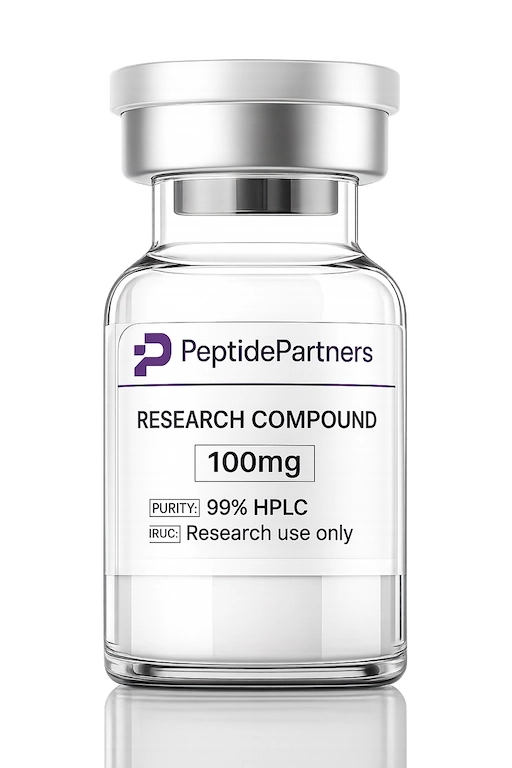
Peptide Partners Research Catalog

At-Home Blood Test
Research Supplies
Affiliate disclosure: University of Peptide may earn a commission from eligible links at no added cost to you. Prices, stock, and testing records can change.
Companion Supplies & Routine Support
Why Peptide Dosage Charts Disagree
Dosage charts online often list different numbers for the same peptide. These are the usual reasons.
- Most research peptides have no tested human dose. Charts copy community numbers from each other, and the numbers drift as they get copied. Rows here built on those numbers say "Community" in the Evidence column.
- Nasal, oral, and injected doses of the same peptide can differ by 10 times or more, and some charts mix them. Each row here names its route, and the full guides keep each route separate.
- A chart that lists "10 units" only works for the vial and water amount it assumed. Convert from mcg or mg yourself instead of copying someone else's units.
- Some charts blend prescription drugs with research products. A drug label dose applies only to that product, and a research powder with the same name is a different product.
Peptide Dosage Chart FAQ
Q1: What is a normal peptide dose?
There is no single normal dose. Peptide doses range from about 20 mcg (0.02 mg) (IGF-1 LR3) to 2 mg (2,000 mcg) or more (TB-500, tirzepatide), and some are given daily while others are weekly. Find the peptide in the chart above, then open its full guide for the schedule.
Q2: How many units is 250 mcg (0.25 mg)?
It depends on the vial. With a 10 mg (10,000 mcg) vial and 2 mL of water, 250 mcg (0.25 mg) is 5 units on a U-100 syringe. With a 5 mg (5,000 mcg) vial and 2 mL, it is 10 units. With a 10 mg (10,000 mcg) vial and 3 mL, it is 7.5 units. See the syringe units chart.
Q3: What is the difference between mcg and mg?
1 mg (1,000 mcg) (milligram) equals 1,000 mcg (1 mg) (micrograms). Many peptides are dosed in mcg, like BPC-157 at 250 mcg (0.25 mg). GLP-1 drugs are dosed in mg, like semaglutide at 2.4 mg (2,400 mcg). Mixing up the two is a 1,000-times error, so check the unit every time.
Q4: Do you take peptides every day?
Some, not all. BPC-157, KPV, and most growth hormone peptides are usually daily. Semaglutide, tirzepatide, and retatrutide are once weekly. TB-500 and Thymosin Alpha-1 are about twice weekly. The How often column shows the usual schedule for each one.
Q5: Are peptide doses based on body weight?
Usually not. Most label and community doses are fixed amounts. A few exceptions use weight, such as Thymosin Alpha-1 for adults under 40 kg and many animal studies. Animal doses by weight do not convert into a safe human dose.
Q6: Why do GLP-1 doses go up every 4 weeks?
Starting low and stepping up slowly gives the stomach time to adjust and lowers nausea. The Wegovy and Zepbound labels and the retatrutide Phase 3 trials all use four-week steps. A label allows staying at a lower step longer if side effects are hard to tolerate.
Q7: Where do the doses on this chart come from?
Each row summarizes the dosing section of the linked guide on this site. Those guides cite FDA labels, published trials, and clearly labeled community sources. The Evidence column shows which kind of source each row is based on.
Q8: Is this chart medical advice?
No. This is an educational reference. Most compounds here are not FDA-approved, and community doses have not been proven safe. Talk to a licensed clinician before using any peptide.
Sources
- U.S. Food and Drug Administration. Wegovy (semaglutide) injection and tablets - Prescribing Information (June 2026). FDA (2026)
- U.S. Food and Drug Administration Zepbound (tirzepatide) injection — Prescribing Information (revised August 2026). Eli Lilly / FDA-approved prescribing information (2026)
- Giblin K, Kaplan LM, Somers VK, et al. Retatrutide for the treatment of obesity, obstructive sleep apnea and knee osteoarthritis: Rationale and design of the TRIUMPH registrational clinical trials. Diabetes, Obesity and Metabolism (2025)
- Garvey WT, Blüher M, Osorto Contreras CK, et al. Coadministered Cagrilintide and Semaglutide in Adults with Overweight or Obesity (REDEFINE 1). New England Journal of Medicine (2025)
- Le Roux CW, Steen O, Lucas KJ, Startseva E, Unseld A, Hennige AM. Glucagon and GLP-1 receptor dual agonist survodutide for obesity: a randomised, double-blind, placebo-controlled, dose-finding phase 2 trial. The Lancet Diabetes & Endocrinology (2024)
- U.S. Food and Drug Administration Egrifta SV (tesamorelin) prescribing information. FDA (2024)
- U.S. Food and Drug Administration. FORZINITY (elamipretide) injection — Highlights of Prescribing Information. accessdata.fda.gov (2025)
- Bremelanotide (subcutaneous route) — Description and Dosing. Mayo Clinic Drugs & Supplements (2026)
- Dominari A, et al. Thymosin alpha 1: A comprehensive review of the literature. World Journal of Virology (2020)
- Astrup A, Madsbad S, Breum L, Jensen TJ, Kroustrup JP, Larsen TM Effect of tesofensine on bodyweight loss, body composition, and quality of life in obese patients: a randomised, double-blind, placebo-controlled trial. The Lancet (2008)
- Heij L, Niesters M, Swartjes M, et al. Safety and efficacy of ARA 290 in sarcoidosis patients with symptoms of small fiber neuropathy: a randomized, double-blind pilot study. Molecular Medicine (2012)
- Richie JP Jr, Nichenametla S, Neidig W, et al. Randomized controlled trial of oral glutathione supplementation on body stores of glutathione. European Journal of Nutrition (2015)
- Sikich L, Kolevzon A, King BH, McDougle CJ, et al. Intranasal Oxytocin in Children and Adolescents with Autism Spectrum Disorder. New England Journal of Medicine (2021)
Related Dosing Protocols
Educational use only
This chart is an educational research reference and is not medical advice. Most compounds listed are not FDA-approved, and community-reported doses have not been shown to be safe or effective in people. Consult a licensed healthcare provider before considering any peptide.
Need the full schedule?
Every row in this chart links to a full guide with the week-by-week schedule, reconstitution table, side effects, and sources.