On this page
TOOLS FOR THIS GUIDE
Work with Tesamorelin
The guide name carries across. Amounts, dates and instructions remain yours to enter; opening a tool saves nothing.
Worked examples: calculations, records and source checks
Fictional arithmetic, unrelated to a recommended amount of Tesamorelin: 10 mg (10,000 mcg) in a final 2 mL is 5 mg/mL (5,000 mcg/mL). A target mass of 0.25 mg (250 mcg) corresponds to 0.05 mL, or 5 U-100 syringe markings. Biological IU cannot be inferred from these inputs. Neither the mass nor the liquid is a preparation recommendation.
Open the arithmetic example- Supply example: two 10 mg (10,000 mcg) vials start at 20 mg (20,000 mcg). Four recorded entries of 0.25 mg (250 mcg) leave a theoretical 19 mg (19,000 mcg), before losses or expiry. Skipped entries do not deduct stock.
- Measurement example: enter “Sleep duration”, “7.5”, “hours” and the date. Keep the same unit and note changing conditions. A trend does not prove a treatment effect.
- Source example: record “rat study” when rats were studied, even when the headline describes recovery. Keep the exact paper and its limitations.
The planner accepts mg and mcg. Biological IU/USP units, sprays, drops and variable mixtures need product-specific instructions; they cannot be inferred from a generic mass calculator. For stacks, record each known ingredient separately.
FDA: why concentration and unit errors matterEvidence & source checks
Did tesamorelin change visceral fat in this specific clinical population?
Visceral-fat measurements fell 15.2% with tesamorelin and rose 5.0% with placebo. IGF-I increased. More tesamorelin participants withdrew because of an adverse event, although overall adverse-event rates did not differ significantly.
Limit: Visceral-fat change is not the same outcome as overall weight loss.
What to verify before filling a plan
- Identity and formulation: match the name, sequence or active ingredient, route and strength. A related molecule or branded medicine is not automatically equivalent.
- Instruction source: obtain the actual amount, frequency and duration from qualified medical instructions. A community table or trial protocol does not establish an individual regimen.
- Units and product details: keep mass, liquid volume and biological activity units separate. Record batch, storage and discard instructions from the actual product; the tools cannot determine sterility or stability.
- Review and follow-up: list medicines and supplements, unresolved interactions and questions. Agree on relevant observations and actions with a qualified professional; normal measurements do not prove safety.
Selected source context, not a systematic review or medical approval. Study cards checked 24 November 2026; guide source notes checked 25 November 2026. Research references and citations appear below.
Guide summary
REFERENCE SUMMARY- Compound
- Tesamorelin (Egrifta, TH9507)
- Class
- GHRH analogue (44 amino acids)
- Common format
- Daily SubQ injection
- Regulatory status
- FDA-approved (HIV lipodystrophy)
Tesamorelin Quick Start
Tesamorelin is the only FDA-approved GHRH (growth hormone-releasing hormone) peptide. It signals your pituitary gland to release more of your own growth hormone in its natural rhythm. It is sold as Egrifta SV and Egrifta WR for HIV-related belly fat (lipodystrophy). It is also sold as research-grade vials for off-label study.
Most protocols use 2 mg (2,000 mcg) once a day under the skin of the abdomen. Egrifta SV uses 1.4 mg (1,400 mcg) daily and Egrifta WR uses 1.28 mg (1,280 mcg) daily. Research vials usually come in 2 mg (2,000 mcg), 5 mg (5,000 mcg), or 10 mg (10,000 mcg) sizes and are mixed with bacteriostatic water before use.
- Route
- Subcutaneous injection in the abdomen only. Rotate sites daily.
- Schedule
- Once daily. No ramp-up. Full dose from day one.
- Measure
- Use a U-100 insulin syringe. Volume depends on vial concentration after reconstitution.
- Supplies
- Peptide vials, bacteriostatic water, syringes, and alcohol swabs.
- Research status
- FDA-approved for HIV lipodystrophy. All other use is off-label.
Disclaimer
This page is an educational research reference and is not medical advice. Tesamorelin is FDA-approved only for HIV-associated lipodystrophy. Use for any other purpose is off-label and should involve a licensed clinician.
This page covers Tesamorelin dose steps, timing, vial math, and storage. Want the full research background? Read the Tesamorelin guide. It covers how it works, study results, side effects, and legal status.
Tesamorelin Dosing Protocol & Schedule
Unlike most peptides, tesamorelin does not need a slow ramp-up. The FDA label starts patients at the full dose on day one. The table below shows dosing for all three formulations: Egrifta SV (the current main product), Egrifta WR (a newer once-weekly-reconstitution version), and legacy Egrifta (the original 2 mg/day (2,000 mcg/day) product used in trials). Research vials from grey-market sources are usually dosed like legacy Egrifta — 2 mg (2,000 mcg) once a day.
Tesamorelin Dosing by Formulation
Choose the formulation you are researching to see the matching daily dose and prep notes.
Open a format reference below.
Research vials format reference
Grey-market research-grade vials.
Research-grade vials are usually 2 mg (2,000 mcg), 5 mg (5,000 mcg), or 10 mg (10,000 mcg) of lyophilized (freeze-dried) powder. Most protocols match the original Phase III dose: 2 mg (2,000 mcg) per day, given as one subcutaneous injection in the abdomen. No ramp-up is used. Reconstitute with bacteriostatic water and store refrigerated.
Research Vial Dosing — Phase III Equivalent
| Phase | Timing | Daily Dose | Notes |
|---|---|---|---|
| Day 1 onward | Every day | 2 mg (2,000 mcg) | No titration. Inject SubQ in the abdomen. |
| Weeks 1-26 | Daily | 2 mg (2,000 mcg) | Phase III trial exposure pattern. |
| Continued therapy | Daily | 2 mg (2,000 mcg) | Trials showed effects reverse when stopped. |
Research-vial dosing mirrors the original 2 mg/day (2,000 mcg/day) legacy Egrifta protocol used in LIPO-010 and CTR-1011.
Egrifta sv format reference
Current FDA product with smaller daily volume.
Egrifta SV is the current FDA-approved version of tesamorelin. Each 2 mg (2,000 mcg) vial is mixed with 0.5 mL of supplied diluent. After reconstitution, the daily dose is 1.4 mg (1,400 mcg), drawn as 0.35 mL, injected once a day under the skin of the abdomen.
Egrifta SV — Label Dosing
| Phase | Timing | Daily Dose | Notes |
|---|---|---|---|
| Day 1 onward | Every day | 1.4 mg (1,400 mcg) | Draw 0.35 mL after reconstitution with 0.5 mL diluent. |
| Maintenance | Daily | 1.4 mg (1,400 mcg) | Use immediately after mixing (per label). |
Egrifta SV is single-use. The label says to inject right after reconstitution.
Egrifta wr format reference
Newer weekly-reconstitution format.
Egrifta WR is the newest FDA-approved format. The 11.6 mg (11,600 mcg) vial is mixed once a week with 1.45 mL of bacteriostatic water. The daily dose is 1.28 mg (1,280 mcg), drawn as 0.16 mL, injected once a day under the skin of the abdomen.
Egrifta WR — Label Dosing
| Phase | Timing | Daily Dose | Notes |
|---|---|---|---|
| Day 1 onward | Every day | 1.28 mg (1,280 mcg) | Draw 0.16 mL after weekly reconstitution. |
| Maintenance | Daily | 1.28 mg (1,280 mcg) | Store reconstituted vial at 2-8C for up to 28 days. |
Egrifta WR cuts injection prep down to once per week instead of daily.
Cycle Guidelines
Tesamorelin Cycle Guidelines
| Approach | Duration | Review Point | Best For |
|---|---|---|---|
| Standard | 26 weeks | Week 26 imaging | Phase III trial exposure pattern |
| Extended | 52 weeks | Week 52 imaging | Pooled Phase III extension data |
| Long-term (NAFLD context) | 12 months | 12-month imaging | Liver-fat study exposure pattern |
Trial data showed visceral fat returns toward baseline after stopping. Sustained therapy is generally needed to keep results.
Important Dosing Notes
No titration required. The label and Phase III trials started patients at the full dose on day one.
Injection site. Only the abdomen is on the label. Rotate spots and avoid scarred or bruised tissue.
Timing. Tesamorelin can be given any time of day. Trials were not bedtime-only. Some users pick morning; others pick bedtime.
Missed dose. Per the Egrifta prescribing information, a missed dose is skipped and dosing resumes on the next scheduled day without doubling up.
Formulation note. Grey-market research vials use bacteriostatic water and are stored refrigerated. Egrifta SV uses its own supplied diluent and is used right after mixing.
Tesamorelin Supplies Needed
Use the dosing schedule above to plan supplies. Math below assumes the research-vial protocol: 2 mg (2,000 mcg) per day from a 10 mg (10,000 mcg) vial reconstituted with 2.0 mL bacteriostatic water (5,000 mcg/mL (5 mg/mL) concentration, 0.40 mL / 40 units per dose).
Recommended Supply
Choose your region
Use discount code PEPPAL at Peptide Partners checkout. See why we love Peptide Partners.
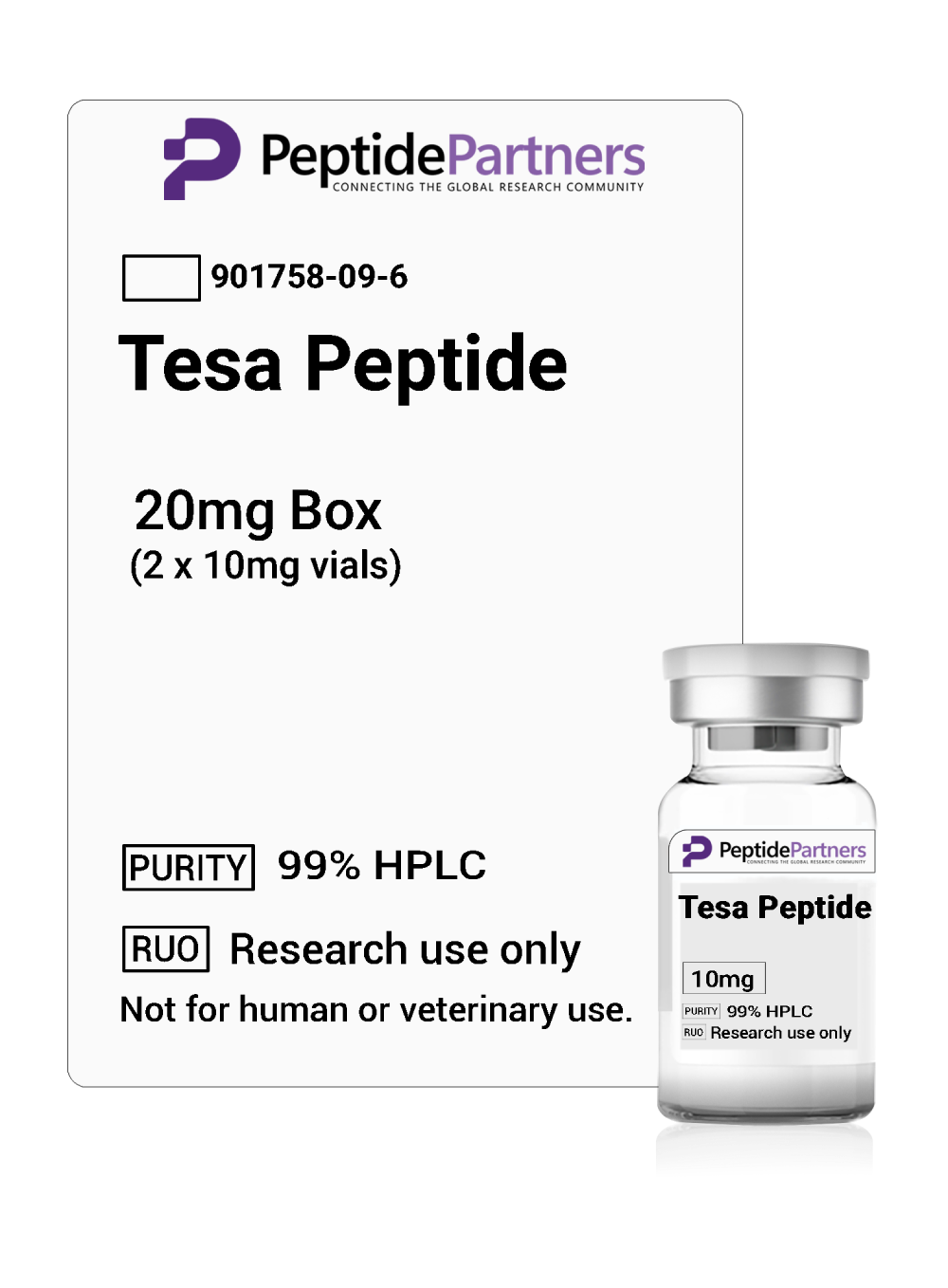
Tesamorelin (10mg (10,000 mcg) vials)

Pharmacy Grade Tesamorelin

At-Home Blood Test
Research Supplies
Peptide Vials
Math assumes 10 mg (10,000 mcg) vials at 2 mg/day (2,000 mcg/day). One 10 mg (10,000 mcg) vial covers about 5 doses.
| Cycle length | Planning note |
|---|---|
4 weeks 6 vials (10 mg (10,000 mcg)) | 28 daily doses needed. Allow ~5 doses per vial. |
8 weeks 12 vials (10 mg (10,000 mcg)) | 56 daily doses needed. |
12 weeks 17 vials (10 mg (10,000 mcg)) | 84 daily doses needed. |
26 weeks 37 vials (10 mg (10,000 mcg)) | 182 daily doses needed. Matches Phase III exposure. |
Insulin Syringes (U-100)
Use 0.5 mL / 50-unit syringes. One syringe per daily injection.
| Cycle length | Planning note |
|---|---|
4 weeks 28 syringes | 1 syringe per injection. |
8 weeks 56 syringes | 1 syringe per injection. |
12 weeks 84 syringes | 1 syringe per injection. |
26 weeks 182 syringes | 1 syringe per injection. |
Bacteriostatic Water
Use 2.0 mL per 10 mg (10,000 mcg) vial. Each 10 mL bottle covers about 5 vials.
| Cycle length | Planning note |
|---|---|
4 weeks 2 x 10 mL bottles | 6 vials use 12 mL total. Round up. |
8 weeks 3 x 10 mL bottles | 12 vials use 24 mL total. |
12 weeks 4 x 10 mL bottles | 17 vials use 34 mL total. |
26 weeks 8 x 10 mL bottles | 37 vials use 74 mL total. |
Round up to allow for priming losses, dropped syringes, damaged swabs, and any protocol adjustments.
Companion Supplies & Routine Support
Tesamorelin Reconstitution Guide
Reconstitution means mixing the dry powder in the vial with bacteriostatic water (BAC water) to make a liquid you can draw into a syringe. The amount of water you add changes the concentration — less water means a stronger mix and smaller injections, more water means a weaker mix and easier-to-measure injections.
The table below shows mixing options for the most common research vial sizes. Find your vial size on the left, pick a BAC water volume, then read across to your target dose.
Tesamorelin Reconstitution — Vial Size, BAC Water, and Dose Volumes
| Vial Size | BAC Water | Concentration | 1 mg (1,000 mcg) Dose | 1.4 mg (1,400 mcg) Dose | 2 mg (2,000 mcg) Dose |
|---|---|---|---|---|---|
| 2 mg (2,000 mcg) | 0.5 mL | 4,000 mcg/mL (4 mg/mL) | 0.25 mL (25 units) | 0.35 mL (35 units) | 0.50 mL (50 units, full vial) |
| 2 mg (2,000 mcg) | 1.0 mL | 2,000 mcg/mL (2 mg/mL) | 0.50 mL (50 units) | 0.70 mL (70 units) | 1.0 mL (100 units, full vial) |
| 5 mg (5,000 mcg) | 1.0 mL | 5,000 mcg/mL (5 mg/mL) | 0.20 mL (20 units) | 0.28 mL (28 units) | 0.40 mL (40 units) |
| 5 mg (5,000 mcg) | 2.5 mL | 2,000 mcg/mL (2 mg/mL) | 0.50 mL (50 units) | 0.70 mL (70 units) | 1.0 mL (100 units) |
| 10 mg (10,000 mcg) | 2.0 mL | 5,000 mcg/mL (5 mg/mL) | 0.20 mL (20 units) | 0.28 mL (28 units) | 0.40 mL (40 units) |
| 10 mg (10,000 mcg) | 5.0 mL | 2,000 mcg/mL (2 mg/mL) | 0.50 mL (50 units) | 0.70 mL (70 units) | 1.0 mL (100 units) |
U-100 insulin syringes have 100 units = 1.0 mL.
Step-by-Step Reconstitution
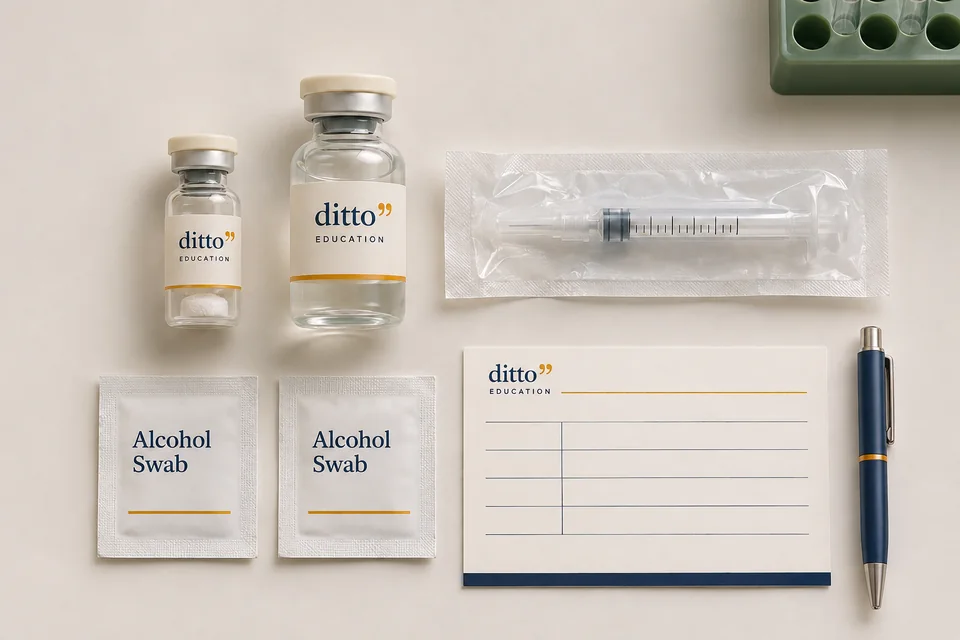
An illustrated reading aid for the product instructions. Confirm the exact formulation, diluent and handling method first. A research-only vial is not an approved medicine.
Prepare a clean workspace
Use a clean work area, clean hands and the supplies specified for the product. Check that disposable equipment is unopened and in date. Research-only materials are not medicines for human use.

Measure the specified diluent
Confirm the diluent type and volume in the product instructions. Measure that volume using the correct syringe scale. A concentration calculation cannot establish that a diluent is compatible.

Add as instructed
Follow the product-specific addition method. Where slow addition along the vial wall is specified, keep the flow gentle. Do not infer a preparation method from a dose table or combine separate compounds in one vial.
Add as instructed
Follow the product-specific addition method. Where slow addition along the vial wall is specified, keep the flow gentle. Do not infer a preparation method from a dose table or combine separate compounds in one vial.

Mix and inspect
Use the mixing method specified for the product; some require gentle swirling rather than shaking. Compare the appearance with the instructions. Do not use a preparation with unexpected particles, discoloration or suspected contamination.
Mix and inspect
Use the mixing method specified for the product; some require gentle swirling rather than shaking. Compare the appearance with the instructions. Do not use a preparation with unexpected particles, discoloration or suspected contamination.

Record and store
Record the preparation date and calculated concentration in mg/mL and mcg/mL. Follow the exact storage conditions and discard time on the product instructions. There is no universal refrigerated shelf life for all peptides.
AI-generated educational scenes with Ditto-inspired concept labels; not photographs of supplied products. CDC preparation and equipment principles · Check your calculation
Need custom math?
Use the free University of Peptide calculator to get exact syringe units for any vial size and BAC water volume.
Tesamorelin Dosage Chart
This tesamorelin dosage chart summarizes the no-ramp-up daily dosing approach across research vials, Egrifta SV, and Egrifta WR, with dose and administration notes by formulation.
 UNIVERSITY OF PEPTIDE · RESEARCH REFERENCE
Tesamorelin Dosage Chart
| Phase | Timing | Daily Dose | Notes |
|---|---|---|---|
| Day 1 onward | Every day | 2 mg (2,000 mcg) | No titration. Inject SubQ in the abdomen. |
| Weeks 1-26 | Daily | 2 mg (2,000 mcg) | Phase III trial exposure pattern. |
| Continued therapy | Daily | 2 mg (2,000 mcg) | Trials showed effects reverse when stopped. |
How Tesamorelin Works
Tesamorelin tells your pituitary gland (the small gland in your brain that controls growth hormone) to release more growth hormone (GH) in its natural rhythm. That extra GH then drives the body to break down deep belly fat and liver fat more than other fat stores.
GHRH Receptor Binding
Your pituitary has docking points called GHRH receptors. Tesamorelin locks onto these receptors and turns on the same signaling pathways (cAMP and PKA) your body uses naturally. The result is a normal-shaped pulse of GH release, not a constant flood.
IGF-1 Increase
Once GH enters the bloodstream, the liver makes more IGF-1 (insulin-like growth factor 1). IGF-1 carries out many of GH's downstream effects on fat and tissue. Trials show IGF-1 rises while other pituitary hormones stay in their normal ranges.
Fat Breakdown
The GH and IGF-1 rise drives fat breakdown in visceral fat (the deep fat around your organs) more than in fat under the skin. It also reduces fat buildup in the liver. Phase III trials and NAFLD studies confirmed these effects, which is what earned tesamorelin its FDA approval.
Feedback Stays Intact
Unlike injecting growth hormone directly (which can shut off your body's own GH production), tesamorelin keeps your normal feedback loops. Your brain still controls the system. Tesamorelin only amplifies the signal your body already sends.
Who Tesamorelin Is For and Who Should Avoid It
Tesamorelin (Egrifta) is FDA-approved for adults with HIV-associated lipodystrophy — meaning people on HIV medication who have built up excess belly fat. Use for any other reason is off-label and should involve a licensed clinician.
Should Not Use Tesamorelin
The FDA label lists several groups who should not use tesamorelin. These include people with active cancer (any type), people who are pregnant or planning pregnancy, anyone with a known allergy to tesamorelin or mannitol (an inactive ingredient), and people with major problems of the hypothalamus or pituitary gland (the brain area that controls hormone release).
Use With Caution
Some groups should be reviewed carefully with a clinician before starting. These include people with type 2 diabetes or higher blood sugar, people with a history of cancer, and people with eye conditions like diabetic retinopathy. The label recommends checking blood sugar before starting and during use because GH can affect glucose levels.
Pregnancy and Breastfeeding
Tesamorelin is not safe in pregnancy. It can also cross into breast milk. The label recommends stopping tesamorelin if pregnancy is suspected.
Tesamorelin Side Effects & Safety
Tesamorelin has one of the largest safety databases of any peptide. Phase III trials covered more than 800 participants and tracked side effects through 26 to 52 weeks of daily injections.
Most Common Side Effects
Injection-site reactions are the most common. These include redness, itching, pain, swelling, and rash. In CTR-1011, injection-site issues happened in 50.7% of tesamorelin users versus 21.4% on placebo. In LIPO-010, the numbers were 30.0% versus 24.1%.
Fluid retention, joint pain, and muscle aches can also happen because of GH-related fluid shifts. Swelling occurred in about 9.9% of tesamorelin users versus 5.8% on placebo. Muscle aches occurred in 3.7-7.7% versus 1.6-2.2% on placebo. Most cases were mild to moderate.
Blood Sugar Changes
Trials showed more tesamorelin users had elevated HbA1c (a 3-month average blood sugar marker) compared to placebo. The FDA label recommends checking blood sugar before starting and at intervals during use.
Antibody Development
About half of trial participants developed anti-tesamorelin IgG antibodies after 26 to 52 weeks. The good news: visceral fat reduction and IGF-1 effects were similar in people who developed antibodies and those who did not.
IGF-1 Levels
IGF-1 is expected to rise on tesamorelin. Persistent very high levels (for example, sustained above 3 SDS in clinical context) may need clinician review, dose adjustment, or stopping.
Should Not Use Tesamorelin
Active cancer, pregnancy, known allergy (including to mannitol), and major problems of the hypothalamus or pituitary gland are listed contraindications. See the Evidence library for a broader cross-class safety review.
Tesamorelin Timeline & What to Monitor
Tesamorelin is a slow-acting peptide. Trial outcomes were measured in weeks and months, not days. Below is a rough timeline based on Phase III and NAFLD trial data, plus the markers that make sense to track with a clinician.
Tesamorelin Timeline — What Trials Measured and When
| Time Point | What Trials Saw |
|---|---|
| Week 2 | IGF-1 levels rise; overnight GH output goes up (Grinspoon 2011 healthy-male data). |
| Week 13 | Early visceral fat decrease begins (interim trial readouts). |
| Week 26 | Phase III primary endpoint: VAT reduction of 11.7 to 15.2% versus placebo. |
| Week 52 | Pooled extension data showed maintained VAT effects with continued therapy. |
| 12 months | Lancet HIV NAFLD trial: liver-fat reduction of about 32% versus placebo, with lower fibrosis progression. |
| After stopping | VAT and other effects trended back toward baseline. |
Trial data; not a promise of personal results.
What to Monitor With a Clinician
Reasonable markers to track include fasting blood sugar, HbA1c, IGF-1, liver enzymes (ALT, AST), and lipid panel. Body composition can be tracked with waist circumference or DEXA imaging if available. Stop and review with a clinician if blood sugar climbs significantly, if IGF-1 rises far above normal, or if side effects do not settle.
Tesamorelin Clinical Evidence Context
Tesamorelin has one of the strongest clinical programs in peptide therapeutics. Two large Phase III trials, a Lancet HIV NAFLD study, and mechanistic transcriptomic and proteomic follow-up papers anchor the evidence base.
LIPO-010 (Phase III, n=412)
Falutz et al. HIV lipodystrophy patients showed about 15.2% visceral fat reduction at 26 weeks versus placebo, plus favorable lipid and trunk-fat changes.
CTR-1011 (Phase III, n=404)
Falutz et al. Replication trial showed about 11.7% VAT reduction at 26 weeks, with increased lean mass and waist changes.
Pooled Phase III analysis (n=816)
Consistent VAT reductions across both trials with maintenance during continued therapy and regression toward baseline after stopping.
Stanley et al. 2019 (Lancet HIV, n=61)
Phase II investigator-initiated trial in HIV-NAFLD: about 32% liver-fat reduction and lower fibrosis-progression rate versus placebo at 12 months.
Stanley et al. 2014 (JAMA, n=54)
Phase II trial in HIV with abdominal fat: significant VAT reduction over 6 months with metabolic and hepatic-signal analyses.
Fourman et al. 2020 (JCI Insight)
Mechanistic follow-up: tesamorelin shifted liver transcriptomic signatures toward oxidative phosphorylation and reduced inflammatory signaling.
Fourman et al. 2021 (Scientific Reports)
Proteomic profiles identified response pathways tied to inflammation and tissue-remodeling modulation in HIV-NAFLD.
Grinspoon et al. 2011 (Phase I, n=13)
Healthy men: increased overnight GH output and pulse-area effects with reversal after withdrawal.
Falutz et al. 2024 (AIDS)
Efficacy and safety review of tesamorelin in people with HIV on integrase inhibitors — confirms continued relevance in modern HIV care.
Limitations
Direct trial evidence is in HIV-associated populations. Off-label use in non-HIV populations relies on extrapolation, not large RCTs.
Tesamorelin Storage & Handling
Tesamorelin Storage
| State | Storage | Duration |
|---|---|---|
| Lyophilized Egrifta SV | 77F (25C) controlled room temp | Until expiration. 59-86F (15-30C) excursions allowed. |
| Lyophilized research vials | -4F (-20C) freezer | Long-term storage (years). |
| Lyophilized research vials | 35.6-46.4F (2-8C) refrigerator | Several months. |
| Reconstituted Egrifta SV | Use immediately | Discard if not used right away (label). |
| Reconstituted Egrifta WR | 35.6-46.4F (2-8C) refrigerator | Up to 28 days. |
| Reconstituted research vials | 35.6-46.4F (2-8C) refrigerator | Up to 28 days. |
Protect from light. Keep in original packaging when possible. Do not freeze reconstituted solution. Discard cloudy or discolored solutions.
Tesamorelin Protocol Mistakes & Troubleshooting
Cloudy or particulate solution
Discard the vial. Reconstituted tesamorelin should be clear and colorless. Cloudiness or visible particles can mean the powder did not fully dissolve, the vial was contaminated, or it was stored improperly.
Missed a dose
Per the Egrifta prescribing information, a missed dose is skipped and dosing resumes on the next scheduled day at the normal time without doubling up.
Burning or stinging at the injection site
This usually means the solution is too cold (just out of the fridge) or was injected too quickly. Label and clinical guidance describe briefly allowing the syringe to reach room temperature, injecting slowly, and rotating sites daily.
Vial seems to be running out faster than expected
Recheck your reconstitution math. A 10 mg (10,000 mcg) vial with 2.0 mL BAC water at 2 mg/day (2,000 mcg/day) = 5 doses per vial. If you are getting fewer doses than expected, you may be drawing more than your target volume.
Powder is hard to dissolve
Roll the vial gently between your palms for 60 to 90 seconds. Do not shake. If powder is still stuck on the wall, gently swirl. Avoid forcing the water against the powder.
Blood sugar rising on tesamorelin
Bring this to a clinician. The label recommends blood-sugar monitoring before and during use. Persistently high blood sugar may need dose review or stopping.
Severe reaction or persistent side effect
Stop tesamorelin and seek qualified medical care. Severe allergic reactions, persistent edema, or signs of high IGF-1 (joint pain, carpal tunnel, headaches) warrant clinical review.
Tesamorelin Regulatory Status
As of June 2026, tesamorelin (brand name Egrifta) is FDA-approved for reduction of excess abdominal fat in HIV-infected adults with lipodystrophy. It was first approved in November 2010. Egrifta SV (2 mg (2,000 mcg) vial) and Egrifta WR (11.6 mg (11,600 mcg) weekly-reconstitution vial) are the current commercial products. The original 1 mg (1,000 mcg) vial format has been discontinued.
Tesamorelin is not a scheduled controlled substance. It is a prescription drug for its approved use. Use for non-HIV indications — including off-label use for general visceral fat reduction, metabolic syndrome, or body composition — is not FDA-approved and is considered off-label or research use.
Research-grade tesamorelin sold by grey-market peptide suppliers is not approved for human consumption. These products are labeled for research use only.
Tesamorelin is also a prohibited substance under WADA (World Anti-Doping Agency) rules as a peptide hormone in class S2.
Tesamorelin vs Sermorelin vs CJC-1295
Tesamorelin, sermorelin, and CJC-1295 all hit the same target (the GHRH receptor) but differ in important ways. The biggest gaps: tesamorelin is the only one with FDA approval and Phase III data showing visceral fat reduction. Sermorelin has the longest history of clinical use but is no longer made as a prescription product. CJC-1295 (with DAC) needs the fewest injections (weekly versus daily) but has no comparable trial evidence.
GHRH Peptides — Side-by-Side
| Feature | Tesamorelin | Sermorelin | CJC-1295 (DAC) |
|---|---|---|---|
| Receptor Target | GHRH receptor | GHRH receptor | GHRH receptor |
| Peptide Length | 44 amino acids (modified) | 29 amino acids | 29 amino acids + DAC |
| Half-Life | 26-38 minutes | 11-12 minutes | ~6-8 days |
| Dosing Frequency | Once daily | Once nightly | 1-2x weekly |
| FDA Status | Approved (2010; Egrifta) | Previously approved; discontinued | Not FDA-approved |
| Phase III Trial Data | Yes (n=816 pooled) | No adult Phase III VAT datasets | No |
| Visceral Fat Reduction | 15-20% at 26 weeks | Not formally studied in RCTs | Not formally studied in RCTs |
| Liver Fat Reduction | 32% at 12 months (NAFLD trial) | Not studied | Not studied |
| Typical Research Dose | 2 mg (2,000 mcg) daily | 200-300 mcg (0.2-0.3 mg) nightly | 1-2 mg (1,000-2,000 mcg) weekly |
| Unique Advantage | Only FDA-approved GHRH with deepest trial evidence | Longest historical track record | Weekly dosing convenience |
Tesamorelin is the only GHRH peptide with active FDA approval and validated Phase III visceral-fat data.
For a metabolic angle outside the GHRH axis, see the SLU-PP-332 protocol — a pan-ERR exercise-mimetic small molecule, not a GH-releasing peptide. For compound-specific deep dives, see the Sermorelin protocol and CJC-1295 (DAC) protocol.
Tesamorelin Blood Tests & Monitoring
Tesamorelin is an approved GHRH analog in a specific clinical context and increases IGF-1. Monitoring focuses on IGF-1, glucose control, diabetes/retinopathy context, lipids, and GH-axis symptoms.
Blood test markers to discuss with a clinician
| Marker | Why it matters | Timing |
|---|---|---|
| IGF-1 | Tesamorelin increases IGF-1, so this marker helps track downstream GH-axis exposure. | Follow-up |
| A1c | Reviews longer-term glucose control because tesamorelin can affect glucose tolerance. | Baseline |
| Fasting glucose | Gives a current glucose snapshot during GH-axis stimulation. | Follow-up |
| Lipid panel | Tracks cardiometabolic changes that may be part of tesamorelin-related monitoring. | Follow-up |
| TSH and free T4 | Adds thyroid context because thyroid status can affect energy, weight, and GH-axis interpretation. | Optional |
Monitoring guidance is label-informed for tesamorelin, especially IGF-1 and glucose-related monitoring.
At-home blood test option
Easy at home option to monitor core metrics during research cycles.
Beyond Whoosh
Pharmacy Grade Tesamorelin
Prescription-grade peptide care through Beyond Whoosh. Whoosh prescribes after a clinician reviews your eligibility.
Simple timing framework
- Baseline
- Discuss baseline labs before starting, especially with diabetes, retinopathy, sleep apnea, edema, cancer history, thyroid disease, or glucose intolerance.
- Follow-up
- Re-check IGF-1 and glucose markers after 6-12 weeks or after meaningful dose changes.
- Longer term
- For longer protocols, review IGF-1 and metabolic trends periodically with a clinician.
How to interpret the labs
- IGF-1 monitoring is especially relevant because tesamorelin labeling discusses IGF-1 elevation.
- Diabetes, glucose intolerance, and retinopathy history need clinician-guided review.
- Cancer history or active malignancy concerns need medical review before GH-axis stimulation is considered.
Do not wait for routine labs
Vision changes, rapid swelling, severe headaches, chest pain, shortness of breath, or allergic symptoms need medical review. New numbness, wrist pain, or worsening sleep apnea symptoms should be discussed with a clinician.
FAQ
Q1: What is the starting dose of tesamorelin?
Tesamorelin starts at full dose from day one — no ramp-up. The dose depends on the formulation: 1.4 mg (1,400 mcg) daily for Egrifta SV, 1.28 mg (1,280 mcg) daily for Egrifta WR, or 2 mg (2,000 mcg) daily for research vials (matching the original Phase III trial dose). Inject under the skin of the abdomen, rotating sites each day.
Q2: What is tesamorelin's half-life?
Tesamorelin's half-life is about 26 to 38 minutes. That means the compound itself clears from the bloodstream quickly. The growth hormone and IGF-1 it triggers continue working in the body well beyond that window, which is why once-daily dosing is effective despite the short half-life.
Q3: Is tesamorelin FDA-approved?
Yes. Tesamorelin (brand name Egrifta) was FDA-approved in November 2010 for reduction of excess abdominal fat in HIV-infected adults with lipodystrophy. It is the only FDA-approved GHRH analogue. Use for any other purpose is off-label.
Q4: What are the most common side effects of tesamorelin?
The most common side effects are injection-site reactions (redness, itching, swelling), fluid retention with swelling in hands or feet, joint pain, and muscle aches. Some people see changes in blood sugar levels, so periodic monitoring is recommended. About half of trial participants developed antibodies to tesamorelin, but this did not reduce the drug's fat-reduction effects.
Q5: How do you reconstitute tesamorelin?
For research vials, add bacteriostatic water slowly down the inside wall of the vial (typically 2.0 mL for a 10 mg (10,000 mcg) vial). Roll gently to dissolve. Do not shake. Refrigerate at 2-8C. For exact volumes by vial size, see the reconstitution table above or use the University of Peptide calculator.
Q6: How much bacteriostatic water should be added to tesamorelin?
Common setups: 0.5 to 1.0 mL for a 2 mg (2,000 mcg) vial, 1.0 to 2.5 mL for a 5 mg (5,000 mcg) vial, and 2.0 to 5.0 mL for a 10 mg (10,000 mcg) vial. Less water means a stronger mix and smaller injections. More water means a weaker mix and easier-to-measure injections. Use the University of Peptide calculator for exact unit math.
Q7: What results can be expected from tesamorelin?
Phase III trials showed visceral fat reduction of about 12-20% over 26 weeks of daily 2 mg (2,000 mcg) dosing. A 12-month NAFLD trial reported about 32% liver-fat reduction versus placebo. When trial participants stopped tesamorelin, belly fat trended back toward pre-treatment levels, which suggests continued use is needed to keep results. Personal results vary and are not guaranteed.
Q8: How does tesamorelin compare to sermorelin and CJC-1295?
All three target the GHRH receptor. Tesamorelin is the only one with current FDA approval and Phase III trial data showing visceral fat reduction. Sermorelin has the longest history of clinical use but is no longer made as a prescription product. CJC-1295 (with DAC) lasts longer (weekly dosing) but has no comparable trial evidence. See the Sermorelin protocol and CJC-1295 DAC protocol for compound-specific guides.
Q9: What vial sizes does tesamorelin come in?
FDA-approved products are Egrifta SV (2 mg (2,000 mcg) vial) and Egrifta WR (11.6 mg (11,600 mcg) vial). Research-grade vials commonly come in 2 mg (2,000 mcg), 5 mg (5,000 mcg), and 10 mg (10,000 mcg) sizes. The legacy 1 mg (1,000 mcg) Egrifta vial is discontinued.
Q10: How many doses are in a 10 mg (10,000 mcg) vial of tesamorelin?
At 2 mg (2,000 mcg) per day, a 10 mg (10,000 mcg) vial gives about 5 daily doses. Reconstitute with 2.0 mL of bacteriostatic water for a 5,000 mcg/mL (5 mg/mL) solution. Each daily dose is 0.40 mL (40 units on a U-100 insulin syringe). Round up your vial count to allow for priming losses.
Q11: What is the best time of day for tesamorelin?
Tesamorelin can be injected at any time of day. The original Phase III trials did not require bedtime dosing. Some users prefer morning to align with daytime activity; others prefer bedtime to match the body's natural overnight GH pulse. Consistency matters more than timing.
Q12: How should reconstituted tesamorelin be stored?
Storage depends on the formulation. Egrifta SV is single-use and should be injected right after mixing per the label. Egrifta WR and research-grade reconstituted vials are stored refrigerated at 35.6 to 46.4F (2-8C) for up to 28 days. Do not freeze reconstituted solution. Discard if cloudy or discolored.
Q13: Is tesamorelin a controlled or scheduled drug?
No. Tesamorelin is not a scheduled controlled substance under the U.S. Controlled Substances Act. It is a prescription drug for its FDA-approved use in HIV lipodystrophy. It is, however, a prohibited substance under WADA anti-doping rules (class S2 peptide hormone).
Q14: What clinical trials have been done on tesamorelin?
Tesamorelin has two Phase III lipodystrophy trials (LIPO-010 and CTR-1011), pooled analyses across 816 participants, the Stanley 2019 Lancet HIV NAFLD trial, the Stanley 2014 JAMA abdominal-fat trial, and mechanistic transcriptomic and proteomic follow-up papers. An ongoing registered study (ClinicalTrials.gov NCT02196831) continues to evaluate these outcomes.
Q15: Is titration necessary for tesamorelin?
No. The FDA label and Phase III trials both start patients at the full dose on day one. Tesamorelin does not need the slow ramp-up that many other peptides use. This is one of the things that makes it different from community-derived peptide protocols.
Q16: Where can I calculate reconstitution and syringe units?
Use the University of Peptide calculator for exact dose-to-unit conversions across any vial size and BAC water volume.
Sources & Research
- Falutz J, et al. Effects of tesamorelin (TH9507), a growth hormone-releasing factor analog, in HIV-infected patients with excess abdominal fat: pooled analysis of two multicenter Phase 3 trials with safety extension data. Journal of Clinical Endocrinology & Metabolism (2010)
- Stanley TL, Fourman LT, Feldpausch MN, et al. Effects of tesamorelin on non-alcoholic fatty liver disease in HIV: a randomised, double-blind, multicentre trial. Lancet HIV (2019)
- Fourman LT, Stanley TL, et al. Effects of tesamorelin on hepatic transcriptomic signatures in HIV-associated NAFLD. JCI Insight (2020)
- Fourman LT, Stanley TL, et al. Delineating tesamorelin response pathways in HIV-associated NAFLD using a targeted proteomic and transcriptomic approach. Scientific Reports (2021)
- Grinspoon S, et al. Effects of a Growth Hormone-Releasing Hormone Analog on Endogenous GH Pulsatility and Insulin Sensitivity in Healthy Men. Journal of Clinical Endocrinology & Metabolism (2011)
- Ishida J, et al. Growth hormone secretagogues: history, mechanism of action, and clinical development. JCSM Rapid Communications (2020)
- U.S. Food and Drug Administration Egrifta SV (tesamorelin) prescribing information. FDA (2024)
- U.S. Food and Drug Administration Egrifta WR (tesamorelin) prescribing information. FDA (2025)
- Drugs.com Tesamorelin Monograph for Professionals. Drugs.com (2025)
- National Institutes of Health LiverTox: Tesamorelin. NCBI Bookshelf (2023)
- ClinicalTrials.gov Tesamorelin Effects on Liver Fat and Histology in HIV (NCT02196831). ClinicalTrials.gov (2024)
- Falutz J, McLaughlin T, et al. Efficacy and safety of tesamorelin in people with HIV on integrase inhibitors. AIDS (2024)
Related Dosing Protocols
Reconstitution calculator
Enter your own values. This tool calculates quantities, not a recommended dose.
Check the concentration
Changing the unit keeps the entered mass equivalent. 1 milligram (mg) = 1,000 micrograms (mcg). This tool does not choose a target amount.
Biological IU (optional, product-specific)
Only enter a potency explicitly stated as IU per mg on the exact product label or reference. Do not enter the 100 from a U-100 syringe. No factor is assumed for any peptide.
Your result will appear here
Enter the mass, final solution volume and target mass, or load a fictional example.
Assumes accurate masses, final solution volume and even distribution. Blend arithmetic does not establish whether substances can be mixed. Read the formulas and assumptions.
Study findings, reported examples and supplier statements have different levels of evidence. Follow the citations and check the formulation, population and date before interpreting a number.
Editorial standards and corrections