On this page
TOOLS FOR THIS GUIDE
Work with Sermorelin
The guide name carries across. Amounts, dates and instructions remain yours to enter; opening a tool saves nothing.
Worked examples: calculations, records and source checks
Fictional arithmetic, unrelated to a recommended amount of Sermorelin: 10 mg (10,000 mcg) in a final 2 mL is 5 mg/mL (5,000 mcg/mL). A target mass of 0.25 mg (250 mcg) corresponds to 0.05 mL, or 5 U-100 syringe markings. Biological IU cannot be inferred from these inputs. Neither the mass nor the liquid is a preparation recommendation.
Open the arithmetic example- Supply example: two 10 mg (10,000 mcg) vials start at 20 mg (20,000 mcg). Four recorded entries of 0.25 mg (250 mcg) leave a theoretical 19 mg (19,000 mcg), before losses or expiry. Skipped entries do not deduct stock.
- Measurement example: enter “Sleep duration”, “7.5”, “hours” and the date. Keep the same unit and note changing conditions. A trend does not prove a treatment effect.
- Source example: record “rat study” when rats were studied, even when the headline describes recovery. Keep the exact paper and its limitations.
The planner accepts mg and mcg. Biological IU/USP units, sprays, drops and variable mixtures need product-specific instructions; they cannot be inferred from a generic mass calculator. For stacks, record each known ingredient separately.
FDA: why concentration and unit errors matterEvidence & source checks
Sermorelin: source check
A study in 30 healthy men measured growth-hormone responses and low intranasal bioavailability after GHRH(1-29)-NH2 administration.
Limit: Hormone release and route-specific pharmacokinetics do not establish adult anti-aging benefits or a subcutaneous regimen.
Question to resolve: Does the paper use the exact peptide sequence and formulation on the label?
Source and reading scope
Pharmacokinetics of growth hormone-releasing hormone(1-29)-NH2 and stimulation of growth hormone secretion in healthy subjects after intravenous or intranasal administration.
PubMed abstract; not an independent clinical review. Checked 25 November 2026.
What to verify before filling a plan
- Identity and formulation: match the name, sequence or active ingredient, route and strength. A related molecule or branded medicine is not automatically equivalent.
- Instruction source: obtain the actual amount, frequency and duration from qualified medical instructions. A community table or trial protocol does not establish an individual regimen.
- Units and product details: keep mass, liquid volume and biological activity units separate. Record batch, storage and discard instructions from the actual product; the tools cannot determine sterility or stability.
- Review and follow-up: list medicines and supplements, unresolved interactions and questions. Agree on relevant observations and actions with a qualified professional; normal measurements do not prove safety.
Selected source context, not a systematic review or medical approval. Study cards checked 24 November 2026; guide source notes checked 25 November 2026. Research references and citations appear below.
Guide summary
REFERENCE SUMMARY- Compound
- Sermorelin (GRF 1-29)
- Class
- GHRH analogue
- Common format
- 10 mg (10,000 mcg) lyophilized vial, subQ nightly
- Regulatory status
- 503A Category 1 (compoundable); branded Geref discontinued 2008
Sermorelin Quick Start
Sermorelin is a small peptide that copies the first 29 amino acids of the body's natural growth hormone-releasing hormone (GHRH). It is also called GRF 1-29 or sermorelin acetate. The short copy still fits the pituitary gland's GHRH receptor, so it can trigger a normal growth hormone (GH) pulse.
Most research-context protocols use 200-300 mcg (0.2-0.3 mg) once a night, by subcutaneous injection, about 30-60 minutes before bed on an empty stomach. This is meant to ride along with the body's largest natural GH pulse, which happens during early sleep.
Sermorelin has an unusual history. It was FDA-approved in 1990 as a diagnostic agent and again in 1997 as a treatment for childhood growth hormone deficiency (brand name Geref). Serono Laboratories pulled it from the market in 2008 for manufacturing reasons, not safety reasons. As of June 2026, sermorelin still sits in FDA 503A Category 1, which means licensed compounding pharmacies can legally prepare it. That is different from peptides like BPC-157 or CJC-1295, which sit on Category 2 and cannot be compounded.
- Common dose
- 200-300 mcg (0.2-0.3 mg) subQ nightly. Titration usually starts at 100 mcg (0.1 mg).
- Half-life
- About 11-12 minutes. That is why it is given nightly, not weekly.
- Reconstitution
- 3 mL bacteriostatic (BAC) water in a 10 mg (10,000 mcg) vial gives 3 units per 100 mcg (0.1 mg) on a U-100 insulin syringe.
- Timing
- 30-60 minutes before sleep, on an empty stomach. Insulin and meals blunt the GH pulse.
- Regulatory status
- 503A Category 1 in June 2026 - still legally compoundable. Branded Geref discontinued 2008.
Educational research reference only
This page is an educational research reference, not medical advice or a treatment plan. Sermorelin has historical FDA approvals but no current branded product. Work with a licensed clinician and a 503A or 503B compounding pharmacy if you are exploring sermorelin in a clinical setting.
Sermorelin Dosing Protocol & Schedule
Sermorelin dosing in research-context protocols centers on nightly subcutaneous (subQ) injections before bed. The FDA-era label set adult-context dosing at 0.2-0.3 mg (200-300 mcg) per day (200-300 mcg (0.2-0.3 mg)). Modern community protocols use a similar range, with some practitioners titrating up to 400-500 mcg (0.4-0.5 mg) in selected cases.
Higher doses do not always produce a bigger GH pulse. The body's natural "off switch" hormone, somatostatin, kicks in when GH rises too high. That feedback caps how much GH a single sermorelin dose can release. This is one reason sermorelin is considered lower-risk than direct GH injections.
Typical Titration Schedule
Sermorelin titration framework (research-context reference, not medical advice)
| Phase | Time | Dose nightly | Notes |
|---|---|---|---|
| Initiation | Weeks 1-2 | 100 mcg (0.1 mg) | Check for injection-site reactions and any sleep changes. |
| Standard | Weeks 3-4 | 200 mcg (0.2 mg) | Common starting therapeutic tier in practitioner protocols. |
| Optimization | Weeks 5-8 | 300 mcg (0.3 mg) | Often paired with IGF-1 and thyroid labs at the 6-week point. |
| Elevated | Week 9+ | 400-500 mcg (0.4-0.5 mg) | Higher end if response at 300 mcg (0.3 mg) is not enough. Watch IGF-1 trend. |
These numbers come from FDA-era prescribing context for the 0.2-0.3 mg/day (200-300 mcg/day) range and from published practitioner reviews. Adult anti-aging dosing was never validated by a large modern RCT. This is not a dosing recommendation.
Why Bedtime, Empty Stomach Matters
- The body's biggest natural GH pulse happens during the first hours of deep sleep. Dosing 30-60 minutes before bed lines sermorelin up with that pulse.
- Insulin from food can blunt the GH response. Most protocols wait at least 60-90 minutes after the last meal.
- Sermorelin clears the bloodstream in 11-12 minutes, but the GH pulse it triggers lasts longer.
Scheduling Options
Common nightly scheduling models
| Schedule | Pattern | Best for |
|---|---|---|
| Standard | 7 nights per week | Steady-state research protocols. |
| 5 on / 2 off | Sunday-Thursday on, Friday-Saturday off | Practitioners who prefer planned rest nights. |
| Cycle length | 3-6 months at a target dose | Most published practitioner reviews suggest reviewing labs at baseline, week 6, and week 12. |
Sleep and recovery changes often appear in 2-4 weeks. Body-composition shifts usually need 3-6 months. Practitioner protocols describe skipping a missed dose and resuming the next night rather than doubling up.
Lab monitoring matters
Standard practice is baseline labs (IGF-1 plus a thyroid panel), repeat at week 6, and again at week 12. Untreated hypothyroidism can blunt the GH response. About 6.5% of FDA-era trial participants developed hypothyroidism, which is why thyroid checks were built into the original prescribing pattern.
Sermorelin Supplies Needed
Affiliate disclosure: University of Peptide may earn a commission when you use eligible supplier links, at no extra cost to you. The math below assumes a default 10 mg (10,000 mcg) sermorelin vial, 3 mL BAC water per vial, and 200 mcg (0.2 mg) per night.
Recommended Supply
Choose your region
Use discount code PEPPAL at Peptide Partners checkout. See why we love Peptide Partners.
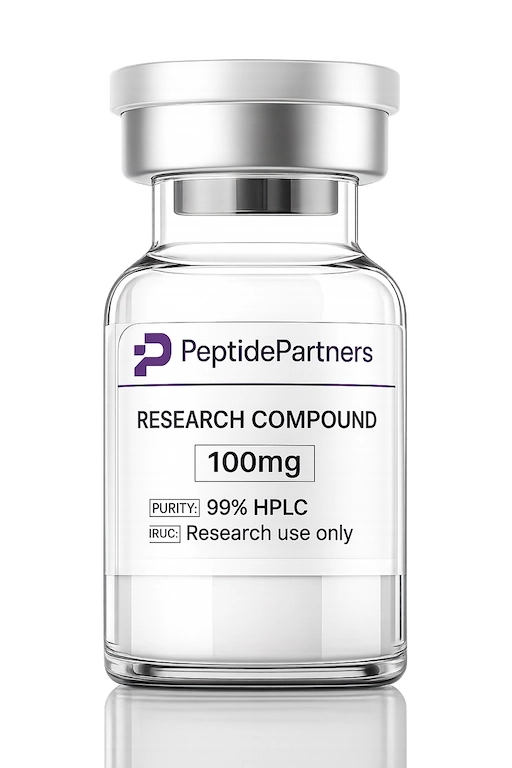
Sermorelin (10mg (10,000 mcg) vials)

Pharmacy Grade Sermorelin

At-Home Blood Test
Research Supplies
Sermorelin Vials (10 mg (10,000 mcg) default)
One 10 mg (10,000 mcg) vial holds 50 doses of 200 mcg (0.2 mg). Once reconstituted, the solution should be used within 28 days, so longer cycles need fresh vials roughly once a month.
| Cycle length | Planning note |
|---|---|
4 weeks 1 vial | 28 nights of 200 mcg (0.2 mg) from one vial. |
8 weeks 2 vials | Start the second vial around day 28 to respect the 28-day reconstituted limit. |
12 weeks 3 vials | One vial per ~28 days of dosing. |
24 weeks 6 vials | Six vials cover ~168 nightly doses across a 24-week cycle. |
Insulin Syringes (U-100)
Use 0.3 mL / 30-unit syringes. With 3 mL BAC water, 200 mcg (0.2 mg) equals 6 units - easy to read on a U-100 syringe.
| Cycle length | Planning note |
|---|---|
4 weeks 28-30 syringes | One syringe per nightly injection. Round up for occasional losses. |
8 weeks 60 syringes | One syringe per nightly injection. |
12 weeks 90 syringes | One syringe per nightly injection. |
24 weeks 180 syringes | About one 100-count box plus a partial second box. |
Bacteriostatic Water
Use 3 mL per 10 mg (10,000 mcg) vial. Most BAC water bottles are 10 mL or 30 mL.
| Cycle length | Planning note |
|---|---|
4-12 weeks 1 x 10 mL bottle | 4 weeks: One vial uses 3 mL; one bottle gives margin.; 8 weeks: Two vials use 6 mL total; one bottle is enough.; 12 weeks: Three vials use 9 mL; one 10 mL bottle gives a little margin. |
24 weeks 2 x 10 mL bottles | Six vials use 18 mL; two bottles cover the cycle with margin. |
Round up for priming losses, dropped syringes, and protocol adjustments. If you use a 2 mg (2,000 mcg), 5 mg (5,000 mcg), 9 mg (9,000 mcg), or 15 mg (15,000 mcg) vial instead, use the [University of Peptide calculator](/calculator?compound=sermorelin) to recheck units.
Companion Supplies & Routine Support
Sermorelin Reconstitution Guide
Reconstitution is just adding sterile bacteriostatic (BAC) water to the dry sermorelin powder so it can be drawn into a syringe. The math is the same for any peptide: divide the total peptide amount by the BAC water volume to get the concentration in mcg/mL, then divide your target dose by that concentration to get the draw volume in mL.
Default 10 mg (10,000 mcg) Vial Setup
With 10 mg (10,000 mcg) of sermorelin and 3 mL of BAC water, the concentration is 3,333 mcg/mL (3.333 mg/mL). On a U-100 insulin syringe (where 100 units equals 1 mL), the math comes out to clean whole units:
10 mg (10,000 mcg) sermorelin vial reconstituted with 3 mL BAC water (3,333 mcg/mL (3.333 mg/mL))
| Target dose | Draw volume | Units (U-100) |
|---|---|---|
| 100 mcg (0.1 mg) | 0.03 mL | 3 units |
| 200 mcg (0.2 mg) | 0.06 mL | 6 units |
| 300 mcg (0.3 mg) | 0.09 mL | 9 units |
| 400 mcg (0.4 mg) | 0.12 mL | 12 units |
| 500 mcg (0.5 mg) | 0.15 mL | 15 units |
Round to the nearest unit if your syringe does not show half-unit marks. For a different vial size or water volume, recheck with the calculator.
Other Common Vial Sizes
Other sermorelin vial sizes and BAC water amounts
| Vial size | BAC water | Concentration | 200 mcg (0.2 mg) = |
|---|---|---|---|
| 2 mg (2,000 mcg) | 1 mL | 2,000 mcg/mL (2 mg/mL) | 10 units |
| 5 mg (5,000 mcg) | 2 mL | 2,500 mcg/mL (2.5 mg/mL) | 8 units |
| 9 mg (9,000 mcg) | 3 mL | 3,000 mcg/mL (3 mg/mL) | ~6.7 units |
| 15 mg (15,000 mcg) | 5 mL | 3,000 mcg/mL (3 mg/mL) | ~6.7 units |
Smaller vials (2 mg (2,000 mcg), 5 mg (5,000 mcg)) give the cleanest whole-unit numbers. Larger vials (9 mg (9,000 mcg), 15 mg (15,000 mcg)) hold more doses at the same dose size; vial size does not extend shelf life.
Step-by-Step Reconstitution
An illustrated reading aid for the product instructions. Confirm the exact formulation, diluent and handling method first. A research-only vial is not an approved medicine.
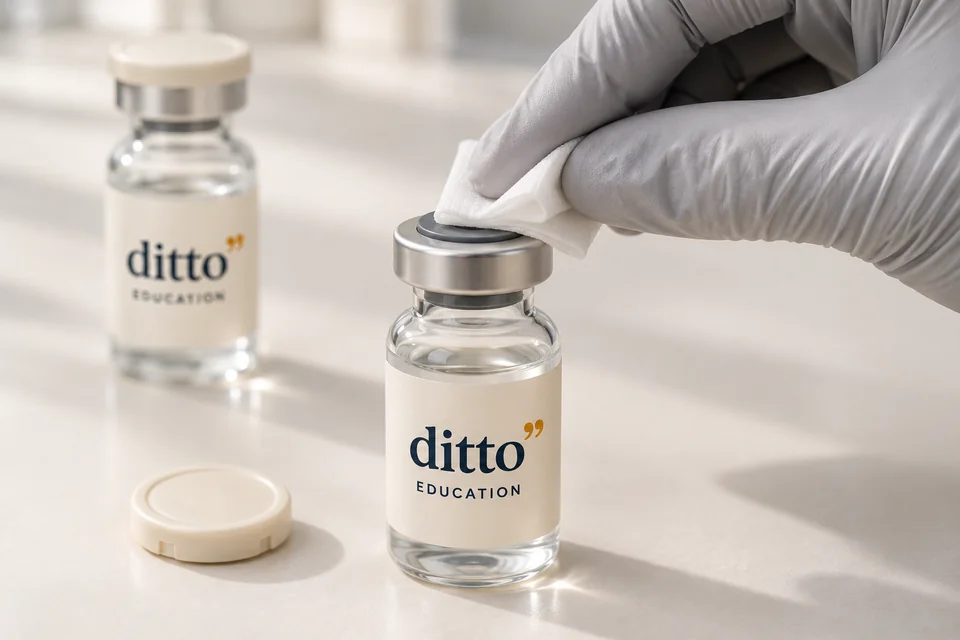
Clean the stopper
If the product instructions call for vial access, disinfect the exposed rubber stopper with a fresh alcohol swab and let it dry. Avoid touching it afterward; use sterile equipment for each access.
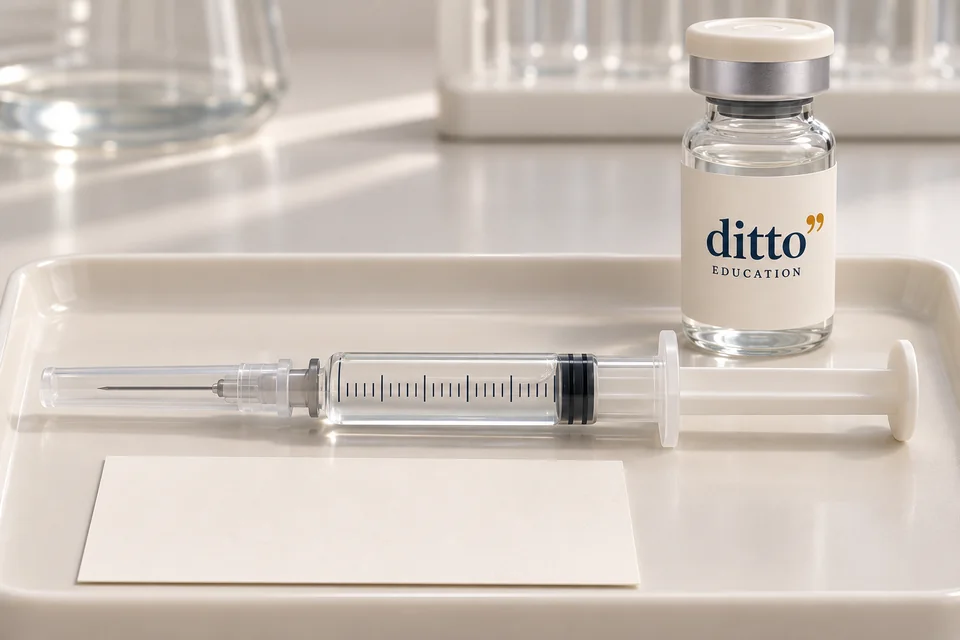
Measure the specified diluent
Confirm the diluent type and volume in the product instructions. Measure that volume using the correct syringe scale. A concentration calculation cannot establish that a diluent is compatible.
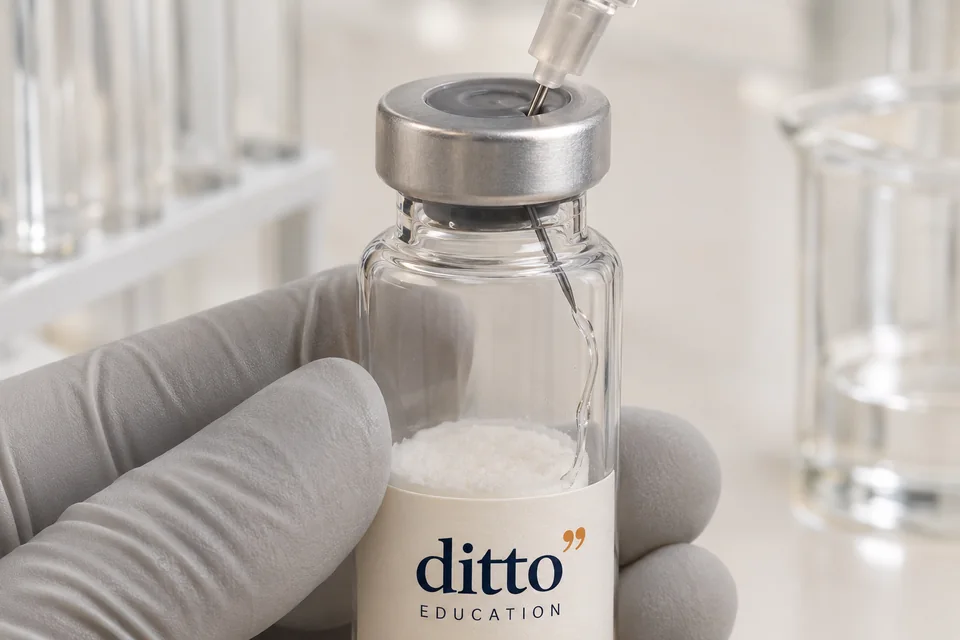
Add as instructed
Follow the product-specific addition method. Where slow addition along the vial wall is specified, keep the flow gentle. Do not infer a preparation method from a dose table or combine separate compounds in one vial.
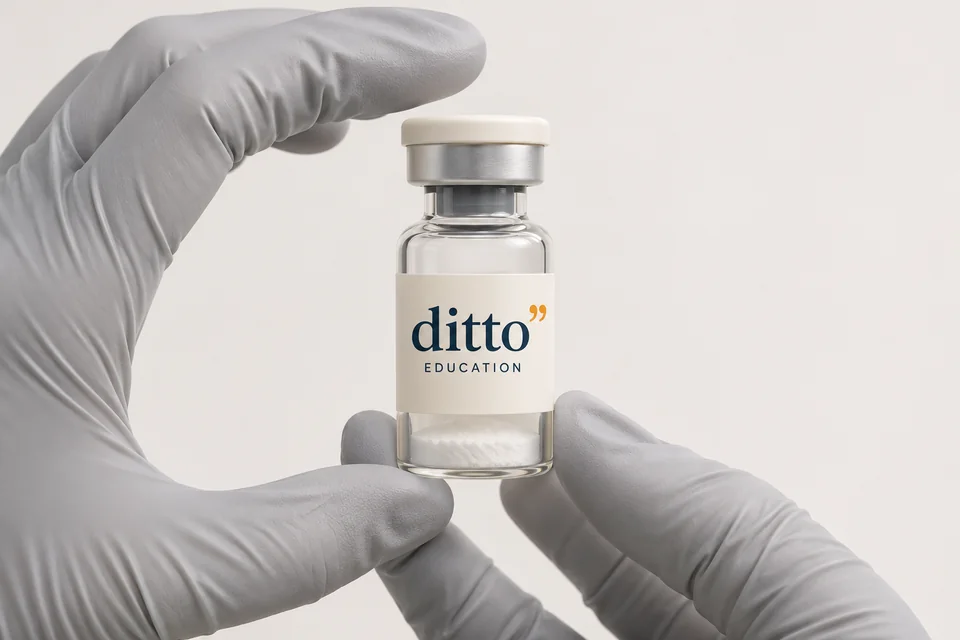
Check the exact product
Read the label, formulation, vial content, expiry and preparation instructions. Check the vial and closure for damage. Appearance alone cannot establish identity, purity or sterility.
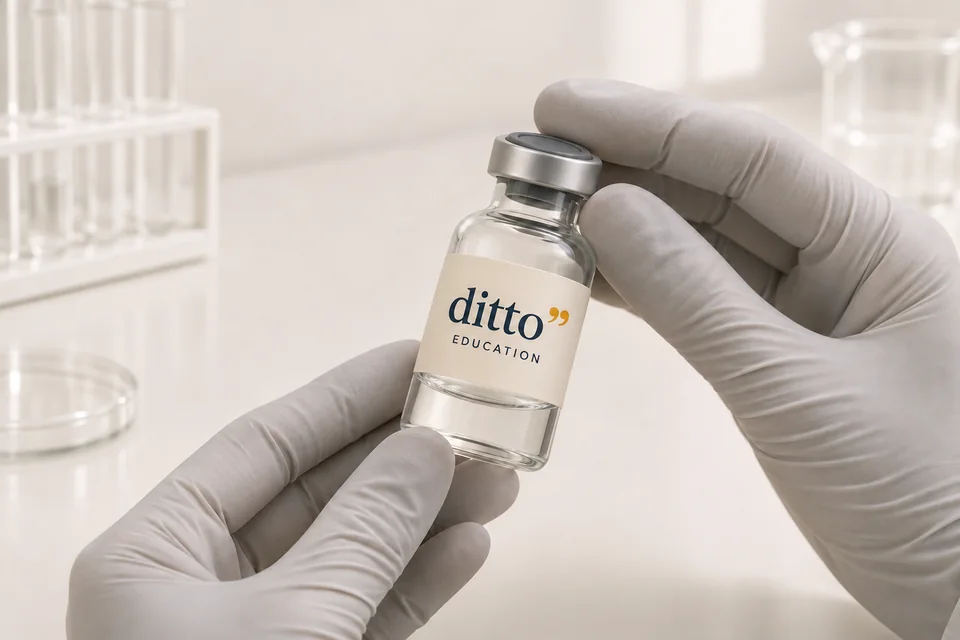
Mix and inspect
Use the mixing method specified for the product; some require gentle swirling rather than shaking. Compare the appearance with the instructions. Do not use a preparation with unexpected particles, discoloration or suspected contamination.
Check the exact product
Read the label, formulation, vial content, expiry and preparation instructions. Check the vial and closure for damage. Appearance alone cannot establish identity, purity or sterility.
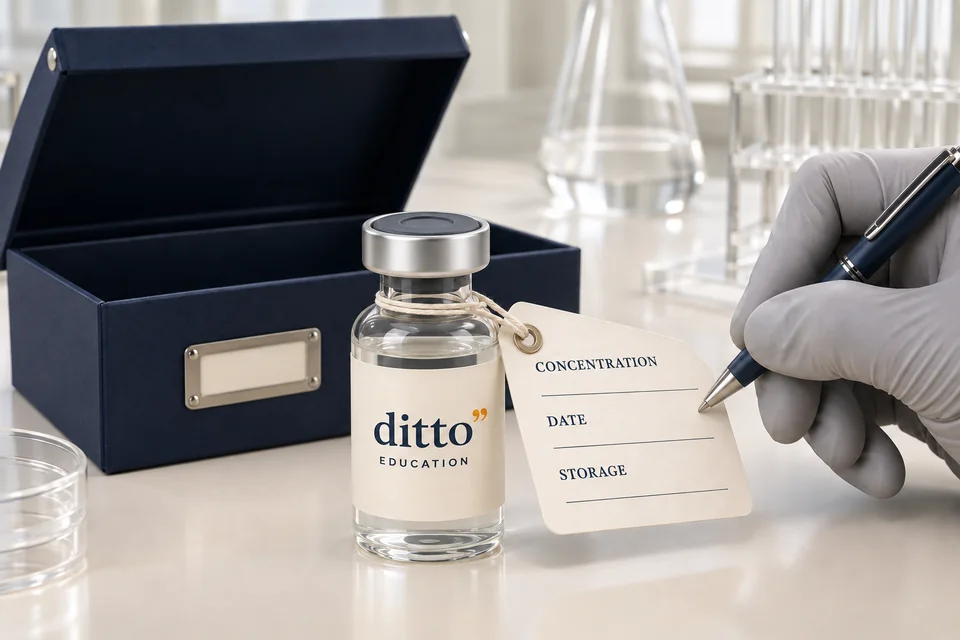
Record and store
Record the preparation date and calculated concentration in mg/mL and mcg/mL. Follow the exact storage conditions and discard time on the product instructions. There is no universal refrigerated shelf life for all peptides.
AI-generated educational scenes with Ditto-inspired concept labels; not photographs of supplied products. CDC preparation and equipment principles · Check your calculation
Need exact units for a custom setup?
If you have a non-standard vial size or different BAC water volume, use the free University of Peptide calculator to get the exact draw volume and syringe units.
Sermorelin Dosage Chart
This sermorelin dosage chart summarizes the common nightly titration schedule from 100 mcg (0.1 mg) up to 500 mcg (0.5 mg), with dose escalation shown by week range.
 UNIVERSITY OF PEPTIDE · RESEARCH REFERENCE
Sermorelin Dosage Chart
| Phase | Time | Dose nightly | Notes |
|---|---|---|---|
| Initiation | Weeks 1-2 | 100 mcg (0.1 mg) | Check for injection-site reactions and any sleep changes. |
| Standard | Weeks 3-4 | 200 mcg (0.2 mg) | Common starting therapeutic tier in practitioner protocols. |
| Optimization | Weeks 5-8 | 300 mcg (0.3 mg) | Often paired with IGF-1 and thyroid labs at the 6-week point. |
| Elevated | Week 9+ | 400-500 mcg (0.4-0.5 mg) | Higher end if response at 300 mcg (0.3 mg) is not enough. Watch IGF-1 trend. |
How Sermorelin Works
Sermorelin works by talking to the pituitary gland, a small gland at the base of the brain that makes growth hormone (GH). The pituitary normally listens for a signal from the brain called GHRH (growth hormone-releasing hormone). When GHRH shows up, the pituitary releases a burst of GH.
Sermorelin is a short copy of GHRH. The natural hormone is 44 amino acids long. Sermorelin uses only the first 29. Despite being shorter, the 29-amino-acid version still fits the GHRH receptor and still triggers a GH pulse. That is the main mechanism.
The Built-in Safety Brake
The body has a natural "off switch" hormone called somatostatin. When GH levels climb too high, somatostatin steps in and quiets the pituitary back down. Because sermorelin works through the body's own GHRH pathway, this off switch stays active. GH levels rise in natural pulses rather than staying flat and elevated.
This is the key difference from direct GH injections. With direct GH, the dose you inject is the dose you get - the off switch is bypassed. With sermorelin, the brake is still on, so the body protects itself from very high GH levels even at higher sermorelin doses.
Pulsatile Release Matters
Healthy growth hormone in the body is pulsatile - it rises and falls in waves, with the biggest waves during early sleep. Sermorelin's short half-life (11-12 minutes) actually fits this pattern well. It nudges the pituitary into making a pulse, then clears out fast, leaving the body's own rhythm in place.
- Receptor: GHRH receptor on pituitary somatotroph cells.
- Trigger: cAMP signaling inside the cell, which causes GH release.
- Brake: Somatostatin feedback keeps GH from climbing too high.
- Why nightly: Sermorelin clears in minutes, but the GH pulse it triggers fits the natural early-night surge.
Who Sermorelin Is For and Who Should Avoid It
Sermorelin is typically discussed in two settings: pediatric GH deficiency in the historical FDA-era label, and adult off-label use through 503A or 503B compounding pharmacies for GH optimization, sleep, and body composition. Both should involve a licensed clinician.
Who Generally Avoids Sermorelin
- Known allergy to sermorelin or any of the ingredients in the formulation.
- Pregnancy or breastfeeding. The FDA-era label flagged sermorelin as Pregnancy Category C. There are no controlled studies in pregnant women, and it is unknown whether sermorelin passes into breast milk.
- Active cancer. GH and IGF-1 can act as growth signals on existing cells. Most protocols screen for active malignancy before starting.
- Growth hormone deficiency from an intracranial lesion - the FDA-era label specifically said these patients were not studied and were not recommended for sermorelin therapy.
- Untreated hypothyroidism. This blunts the GH response and should be corrected first.
- On glucocorticoid therapy. Glucocorticoids can blunt the response to sermorelin per the FDA-era label drug interactions.
Clinical oversight
Sermorelin therapy was, in the FDA-era label, supposed to be carried out under the regular guidance of a physician experienced in growth-hormone-related conditions. That is still the standard expectation for compounded sermorelin in 2026.
Sermorelin Side Effects & Safety
Sermorelin has a published safety profile from its FDA-era pediatric clinical trial program. Across 350 patients in those trials, the peptide was generally well-tolerated. Most side effects were mild, local, and resolved on their own.
Common Side Effects
- Injection-site reactions (about 1 in 6 participants, roughly 17%): pain, swelling, or redness at the injection site. Usually mild, usually went away on their own. Only 3 of 350 patients stopped treatment because of them.
Less Common Side Effects (each under 1%)
- Headache
- Facial flushing
- Difficulty swallowing (dysphagia)
- Dizziness
- Restlessness or hyperactivity
- Drowsiness
- Changes in taste
- Hives (urticaria)
- Nausea or vomiting (more often with IV diagnostic use than nightly subQ)
Things to Monitor
- Antibody development. About 70% of FDA-era trial participants developed anti-GRF antibodies at least once during treatment. The label noted that these antibodies did not appear to meaningfully reduce sermorelin's effectiveness or cause specific reactions in most participants.
- Hypothyroidism. About 6.5% of trial participants developed hypothyroidism. Untreated hypothyroidism reduces the body's response to GH stimulation, so baseline and follow-up thyroid labs are standard practice.
- Allergic reactions. Like any injected peptide, sermorelin can cause local or, rarely, systemic allergic reactions. Stop and seek medical attention for swelling of the face, mouth, or throat, trouble breathing, or widespread hives.
Lower-Risk Profile Compared to Direct GH
Because sermorelin works through the body's own feedback system, the risk of pushing GH or IGF-1 too high is built-in lower than with direct recombinant GH injections. Clinical data also showed no significant abuse or dependence potential.
For a broader cross-class safety reference, see the Evidence library.
Sermorelin Timeline & What to Monitor
Most published practitioner reviews and FDA-era clinical context line up on a similar timeline. Sleep and recovery feedback tend to show up first. Body-composition changes take much longer, partly because they depend on weeks of steady GH and IGF-1 elevation, not a single pulse.
Reasonable monitoring framework for a sermorelin protocol
| Timepoint | What to check | Why |
|---|---|---|
| Baseline | IGF-1, full thyroid panel, fasting glucose, comprehensive metabolic panel | Establish starting values before therapy and rule out untreated hypothyroidism. |
| Weeks 2-4 | Subjective sleep quality, recovery, injection-site tolerance | Sleep changes are usually the first reported shift. |
| Week 6 | Repeat IGF-1, thyroid panel | First objective check on whether the protocol is producing a GH/IGF-1 response. |
| Week 12 | Repeat IGF-1, thyroid panel, body-composition markers if relevant | Mid-point on a 3-6 month cycle. |
| Month 6 | Full re-check of baseline labs plus body composition | Most modern practitioner protocols re-evaluate the cycle around this point. |
These are reasonable lab markers based on the FDA-era label and published practitioner reviews. They are not a treatment plan. Your clinician decides what to order and when.
Sermorelin Clinical Evidence Context
Sermorelin has an unusual evidence profile for a research-context peptide. It was actually FDA-approved twice: once in 1990 as a diagnostic agent for GH deficiency, and again in 1997 as a treatment for childhood GH deficiency. The branded version (Geref) was pulled in 2008 for manufacturing reasons, not safety reasons.
So sermorelin has real FDA-era trial data - but most of it is in children. Adult use today rests on practitioner experience, published reviews, and pharmacokinetic (PK) studies, not large modern randomized controlled trials.
FDA-era diagnostic program (1990)
Single-dose IV sermorelin produced rapid, specific GH release in healthy children and a blunted response in GH-deficient children. This is the data that supported sermorelin's diagnostic FDA approval.
FDA-era pediatric treatment program (1997)
Children with growth hormone deficiency received nightly subQ sermorelin at 0.2-0.3 mg/day (200-300 mcg/day). Trials showed significant increases in GH release and growth velocity at 6 months, with efficacy reported through 36 months.
Pharmacokinetics (Ishida et al., 2020)
Pooled PK data showed a half-life of about 11-12 minutes after either IV or subQ dosing, plasma clearance of 2.4-2.8 L/min, and rapid time-to-peak after subcutaneous injection.
Adult-context review (Walker, 2006)
Walker's review in Clinical Interventions in Aging discussed sermorelin for adult GH insufficiency, highlighting the pituitary-supportive and feedback-regulated nature of GHRH stimulation versus direct GH replacement.
Modern adult RCT data
Large modern randomized controlled trials in adults are limited after the 2008 commercial discontinuation. Current adult dosing rests on practitioner experience and published reviews rather than fresh Phase 3 trials.
Bottom line: sermorelin has more historical clinical evidence than most peptides discussed in research-use forums, but modern adult evidence is thin. That gap is a real boundary on any specific dosing claim.
Sermorelin Storage & Handling
Sermorelin storage by form
| Form | Temperature | Time |
|---|---|---|
| Lyophilized (powder) | -4°F (-20°C) | Long-term (years) |
| Lyophilized (powder) | 36-46°F (2-8°C) | Months |
| Lyophilized (powder) | 59-77°F (15-25°C) | Weeks (shipping tolerance) |
| Reconstituted | 36-46°F (2-8°C) | Up to 28 days |
| Reconstituted (frozen) | -4°F (-20°C) | Not recommended |
Protect from light. Use bacteriostatic water for multi-dose handling. Do not freeze reconstituted sermorelin. Discard if the solution is cloudy, has particles, or is more than 28 days past reconstitution.
Short room-temperature windows (for example during travel) are usually fine, but refrigerate again as soon as possible.
Sermorelin Protocol Mistakes & Troubleshooting
Common issues and what to do
Issue
Cloudy vial after mixing
What it means
The solution may be contaminated or the powder may not have fully dissolved. Cloudiness can also signal a damaged or expired product.
Common response
Do not use. Discard and start fresh.
Issue
Missed a nightly dose
What it means
One missed dose is not a crisis. The GH pulse is short and self-limiting.
Common response
Practitioner protocols describe skipping a missed dose and resuming the next night rather than doubling up.
Issue
Ate a large meal before injection
What it means
Insulin from the meal can blunt the GH pulse.
Common response
Most published protocols wait 60-90 minutes after the last meal before injecting. Consistency matters more than perfection.
Issue
Used too much or too little BAC water
What it means
The concentration changes, so the syringe-unit math no longer matches the chart.
Common response
Use the University of Peptide calculator with your actual BAC water volume to get the corrected unit count.
Issue
Persistent injection-site redness
What it means
Most reactions are mild and resolve. Persistent or expanding redness can signal infection or a stronger allergic reaction.
Common response
Site rotation is a commonly reported injection technique. Expanding or painful redness warrants stopping and contacting a clinician.
Issue
No subjective change after 8 weeks
What it means
Response varies. Untreated hypothyroidism or poor sleep timing can blunt the protocol.
Common response
Recheck thyroid labs and IGF-1. Review timing (empty stomach, before bed). Discuss with your clinician.
| Issue | What it means | Common response |
|---|---|---|
| Cloudy vial after mixing | The solution may be contaminated or the powder may not have fully dissolved. Cloudiness can also signal a damaged or expired product. | Do not use. Discard and start fresh. |
| Missed a nightly dose | One missed dose is not a crisis. The GH pulse is short and self-limiting. | Practitioner protocols describe skipping a missed dose and resuming the next night rather than doubling up. |
| Ate a large meal before injection | Insulin from the meal can blunt the GH pulse. | Most published protocols wait 60-90 minutes after the last meal before injecting. Consistency matters more than perfection. |
| Used too much or too little BAC water | The concentration changes, so the syringe-unit math no longer matches the chart. | Use the University of Peptide calculator with your actual BAC water volume to get the corrected unit count. |
| Persistent injection-site redness | Most reactions are mild and resolve. Persistent or expanding redness can signal infection or a stronger allergic reaction. | Site rotation is a commonly reported injection technique. Expanding or painful redness warrants stopping and contacting a clinician. |
| No subjective change after 8 weeks | Response varies. Untreated hypothyroidism or poor sleep timing can blunt the protocol. | Recheck thyroid labs and IGF-1. Review timing (empty stomach, before bed). Discuss with your clinician. |
These are reasonable troubleshooting steps, not a substitute for clinician guidance.
Sermorelin Regulatory Status
Sermorelin's regulatory status confuses a lot of people. Here is the timeline, as of June 2026:
Sermorelin regulatory timeline
| Year | Status |
|---|---|
| 1990 | FDA-approved as a diagnostic agent for GH deficiency. |
| 1997 | FDA-approved as a treatment for childhood GH deficiency, brand name Geref, made by Serono Laboratories. |
| 2008 | Serono voluntarily discontinued the branded Geref product. Reason: manufacturing process difficulties, not safety concerns. |
| 2023-2024 | FDA moved 19 other peptides (BPC-157, CJC-1295, ipamorelin, TB-500, and others) from 503A Category 1 to Category 2. Sermorelin was not moved. It remained in Category 1. |
| June 2026 | Sermorelin still sits in FDA 503A Category 1, meaning licensed compounding pharmacies can legally prepare it for patients with a valid prescription. |
This is the most important practical difference between sermorelin and most other peptides in research-use discussions. Most research peptides cannot be legally compounded today. Sermorelin can.
Compounded vs research-use
Compounded sermorelin from a licensed 503A or 503B pharmacy with a prescription is different from "research use only" (RUO) peptide sold online. Compounded products are intended for human use under clinician supervision. RUO products carry disclaimers that they are not for human use, and the FDA has issued warning letters when sellers cross that line.
Sermorelin vs Tesamorelin vs CJC-1295
Sermorelin, tesamorelin, and CJC-1295 (DAC) all target the same GHRH receptor in the pituitary. They differ in how long they last in the body, how often you inject, and how much modern evidence supports them.
Side-by-side GHRH analogue comparison
Receptor
Sermorelin
GHRH receptor
Tesamorelin
GHRH receptor
CJC-1295 (DAC)
GHRH receptor
Length
Sermorelin
29 amino acids
Tesamorelin
44 amino acids (modified)
CJC-1295 (DAC)
29 amino acids + DAC
Half-life
Sermorelin
11-12 minutes
Tesamorelin
26-38 minutes
CJC-1295 (DAC)
~6-8 days
Dosing
Sermorelin
Nightly subQ
Tesamorelin
Daily subQ
CJC-1295 (DAC)
1-2x per week subQ
FDA status
Sermorelin
Previously approved; discontinued 2008; Category 1
Tesamorelin
FDA-approved (Egrifta) for HIV-associated lipodystrophy
CJC-1295 (DAC)
Not FDA-approved; Category 2
Key clinical evidence
Sermorelin
FDA-era pediatric trials + PK data
Tesamorelin
Phase 3 visceral fat data
CJC-1295 (DAC)
Phase 1 PK and GH/IGF-1 duration data
Typical research dose
Sermorelin
200-300 mcg (0.2-0.3 mg) nightly
Tesamorelin
2 mg (2,000 mcg) daily
CJC-1295 (DAC)
1-2 mg (1,000-2,000 mcg) weekly
Main use case
Sermorelin
GH optimization, sleep, recovery
Tesamorelin
Visceral fat / metabolic context
CJC-1295 (DAC)
Sustained GH/IGF-1 elevation
| Sermorelin | Tesamorelin | CJC-1295 (DAC) | |
|---|---|---|---|
| Receptor | GHRH receptor | GHRH receptor | GHRH receptor |
| Length | 29 amino acids | 44 amino acids (modified) | 29 amino acids + DAC |
| Half-life | 11-12 minutes | 26-38 minutes | ~6-8 days |
| Dosing | Nightly subQ | Daily subQ | 1-2x per week subQ |
| FDA status | Previously approved; discontinued 2008; Category 1 | FDA-approved (Egrifta) for HIV-associated lipodystrophy | Not FDA-approved; Category 2 |
| Key clinical evidence | FDA-era pediatric trials + PK data | Phase 3 visceral fat data | Phase 1 PK and GH/IGF-1 duration data |
| Typical research dose | 200-300 mcg (0.2-0.3 mg) nightly | 2 mg (2,000 mcg) daily | 1-2 mg (1,000-2,000 mcg) weekly |
| Main use case | GH optimization, sleep, recovery | Visceral fat / metabolic context | Sustained GH/IGF-1 elevation |
All three target the same receptor but are not interchangeable. Half-life, FDA status, and access pathway differ.
Quick Decision Framework
- Sermorelin has the longest historical track record and is currently the most accessible GHRH analogue via compounding pharmacies. Best fit when pulsatile, feedback-controlled GH is the goal.
- Tesamorelin has the strongest modern RCT evidence, specifically for visceral fat reduction in HIV-associated lipodystrophy. Also legally accessible as an FDA-approved drug.
- CJC-1295 (DAC) offers the longest dosing interval but sits in 503A Category 2, so it cannot be legally compounded in the U.S. today.
For full compound-specific guides, see the Tesamorelin protocol and CJC-1295 (DAC) protocol.
Sermorelin Blood Tests & Monitoring
Sermorelin is a GHRH analog that stimulates the GH-axis. Monitoring focuses on IGF-1, glucose handling, thyroid context, lipids, and fluid-retention symptoms.
Blood test markers to discuss with a clinician
| Marker | Why it matters | Timing |
|---|---|---|
| IGF-1 | Shows the downstream signal after GH-axis stimulation and helps frame pathway intensity. | Follow-up |
| A1c | Tracks longer-term glucose control because GH-axis changes may affect insulin sensitivity. | Baseline |
| Fasting glucose | Gives a current glucose snapshot before and during GH-axis protocols. | Follow-up |
| Lipid panel | Reviews cholesterol and triglyceride trends during body-composition or GH-axis changes. | Baseline |
| TSH and free T4 | Thyroid status can affect energy, weight, and GH-axis interpretation. | Optional |
Monitoring guidance is GHRH/GH-axis pathway-based, with IGF-1 used as the main downstream monitoring marker.
At-home blood test option
Easy at home option to monitor core metrics during research cycles.
Beyond Whoosh
Pharmacy Grade Sermorelin
Prescription-grade peptide care through Beyond Whoosh. Whoosh prescribes after a clinician reviews your eligibility.
Simple timing framework
- Baseline
- Discuss baseline labs before starting, especially with diabetes risk, sleep apnea, edema, thyroid disease, pituitary history, or cancer history.
- Follow-up
- Re-check IGF-1 and metabolic markers after 6-8 weeks or after meaningful dose changes.
- Longer term
- For longer protocols, review GH-axis and metabolic trends every 3-6 months with a clinician.
How to interpret the labs
- IGF-1 should be interpreted with age, symptoms, and baseline values.
- Fluid retention, joint pain, numbness, sleep apnea symptoms, and glucose changes matter during GH-axis protocols.
- Cancer history or active malignancy concerns require clinician-guided review before GH-axis stimulation is considered.
Do not wait for routine labs
Rapid swelling, severe headaches, vision changes, chest pain, or shortness of breath needs medical review. New numbness, wrist pain, or worsening sleep apnea symptoms should be discussed with a clinician.
FAQ
Q1: What is the starting dose of sermorelin?
Common adult research-context starting guidance is 100-200 mcg (0.1-0.2 mg) subQ at bedtime for the first 1-2 weeks, then titrating to 200-300 mcg (0.2-0.3 mg) nightly. The historical FDA-era pediatric label used 0.2-0.3 mg/day (200-300 mcg/day). Adult protocols are typically adjusted based on response, sleep changes, and IGF-1 lab trends. This is not a dosing recommendation - work with a licensed clinician.
Q2: How much BAC water do you use to reconstitute a 10 mg (10,000 mcg) sermorelin vial?
A common research-context setup is 3 mL of bacteriostatic water in a 10 mg (10,000 mcg) vial, which gives a 3,333 mcg/mL (3.333 mg/mL) concentration. On a U-100 insulin syringe, that produces clean whole-unit doses: 100 mcg (0.1 mg) = 3 units, 200 mcg (0.2 mg) = 6 units, 300 mcg (0.3 mg) = 9 units. For other vial sizes or water volumes, recheck with the University of Peptide calculator.
Q3: How many units of sermorelin should I inject?
It depends on your vial size and how much BAC water you used. With the common 10 mg (10,000 mcg) vial plus 3 mL BAC water setup, 200 mcg (0.2 mg) equals 6 units on a U-100 syringe and 300 mcg (0.3 mg) equals 9 units. For any other setup, use the calculator linked in this protocol to get the exact unit count.
Q4: What is sermorelin's half-life?
Sermorelin's plasma half-life is approximately 11-12 minutes after either IV or subQ injection, per Ishida et al. (2020) and the FDA-era prescribing data. Plasma clearance is in the 2.4-2.8 L/min range. The growth hormone pulse triggered by sermorelin lasts longer than the parent peptide stays in circulation.
Q5: Is sermorelin FDA-approved in 2026?
Sermorelin was FDA-approved in 1990 (diagnostic use) and 1997 (pediatric GH deficiency, brand name Geref). Serono Laboratories voluntarily discontinued Geref in 2008 due to manufacturing difficulties, not safety concerns. As of June 2026, there is no currently marketed FDA-approved sermorelin product. However, sermorelin still sits in FDA 503A Category 1, which means licensed compounding pharmacies can legally prepare it with a prescription.
Q6: Is sermorelin legal to compound in 2026?
Yes. Sermorelin remains in FDA 503A Category 1, which means licensed 503A and 503B compounding pharmacies can legally prepare it for patients with a valid prescription. This is different from most other research peptides (BPC-157, CJC-1295, ipamorelin, TB-500, and others), which sit in Category 2 and cannot be legally compounded.
Q7: What are the most common side effects of sermorelin?
Across 350 FDA-era trial patients, the most common side effect was a mild injection-site reaction - pain, swelling, or redness - in about 1 in 6 participants. Only 3 of 350 patients discontinued because of it. Less common effects (each under 1%) included headache, flushing, dizziness, difficulty swallowing, drowsiness, and hives. About 6.5% developed hypothyroidism during trials, which is why thyroid labs are standard monitoring.
Q8: What results can be expected from sermorelin?
Practitioner timelines and FDA-era data line up on a similar pattern: sleep and recovery changes often appear in 2-4 weeks. Body-composition shifts and IGF-1 increases usually need 3-6 months of consistent nightly dosing. Adult-population endpoint data outside practitioner literature is limited, so individual response varies.
Q9: How does sermorelin compare to tesamorelin and CJC-1295?
All three target the GHRH receptor, but they differ in half-life, dosing, and regulatory status. Sermorelin: ~12 minute half-life, nightly, 503A Category 1. Tesamorelin: ~26-38 minute half-life, daily, FDA-approved for HIV-associated lipodystrophy. CJC-1295 (DAC): ~6-8 day half-life, weekly, 503A Category 2 (cannot be legally compounded). See the Tesamorelin protocol and CJC-1295 (DAC) protocol for full details.
Q10: Should sermorelin be taken at night?
Most research-context protocols use sermorelin 30-60 minutes before bed on an empty stomach. The body's biggest natural growth hormone pulse happens during early sleep, and bedtime dosing rides along with that pulse. Eating raises insulin, which blunts the GH response, so most protocols wait 60-90 minutes after the last meal before injecting.
Q11: What vial sizes does sermorelin come in?
Common research-channel sermorelin vial sizes include 2 mg (2,000 mcg), 5 mg (5,000 mcg), 9 mg (9,000 mcg), 10 mg (10,000 mcg), and 15 mg (15,000 mcg) lyophilized formats. The 10 mg (10,000 mcg) vial is widely available from current compounded and research suppliers. Smaller vials (2 mg (2,000 mcg), 5 mg (5,000 mcg)) give the cleanest whole-unit syringe math. Larger vials hold more doses at the same dose size, but the stated 28-day reconstituted-solution shelf life still applies.
Q12: How should reconstituted sermorelin be stored?
Store reconstituted sermorelin upright in the refrigerator at 2-8°C (36-46°F), protect from light, and use within 28 days. Do not freeze reconstituted sermorelin. Discard if the solution is cloudy, discolored, or has any visible particles. Brief room-temperature windows (such as travel) are usually fine, but get it back into refrigeration as soon as possible.
Q13: Can sermorelin be stacked with ipamorelin?
Community protocols often discuss pairing sermorelin (a GHRH analogue) with ipamorelin (a GH secretagogue/GHRP) at bedtime to recruit both signaling pathways. Direct stack-specific clinical trial evidence is limited, and adding compounds increases the safety and quality-control surface area. Read the Stack evidence checker before combining compounds.
Q14: Is this page medical advice?
No. This is an educational research reference. It summarizes published FDA-era data, pharmacokinetic literature, and practitioner-derived protocol structures so you have a clear starting point for a conversation with a licensed clinician. It is not a treatment plan and does not replace medical guidance.
Sources & Research
- Ishida J, et al. Growth hormone secretagogues: history, mechanism of action, and clinical development. JCSM Rapid Communications (2020)
- Walker RF. Sermorelin: A better approach to management of adult-onset growth hormone insufficiency? Clinical Interventions in Aging (2006)
- Cunha JP. Sermorelin Acetate prescribing information. RxList (FDA-era label content, rev. 10/2/2001) (2022)
- U.S. Food and Drug Administration. Certain Bulk Drug Substances for Use in Compounding that May Present Significant Safety Risks (503A Category 1 / Category 2 list). FDA.gov (2026)
- U.S. Food and Drug Administration. July 23-24, 2026 Meeting of the Pharmacy Compounding Advisory Committee (503A Bulks List review). FDA.gov advisory committee calendar (2026)
- Mayo Clinic. Sermorelin (injection route) - side effects and dosage. Mayo Clinic Drugs & Supplements (2025)
- DrugBank. Sermorelin (DB00010) drug profile. DrugBank Online (2026)
- PubChem. Sermorelin (CID 16132413). PubChem (NCBI) (2026)
- Merriam GR, et al. Pharmacokinetics of growth hormone-releasing hormone(1-29)-NH2 and stimulation of growth hormone secretion in healthy subjects after intravenous or intranasal administration. Acta Paediatrica Supplement (1993)
- Frier Levitt Attorneys at Law. Regulatory Status of Peptide Compounding in 2025 (sermorelin and NAD+ as Category 1 examples). Frier Levitt (2026)
- ScienceDirect Topics. Sermorelin summary and references. ScienceDirect (Elsevier) (2025)
Related Dosing Protocols
Educational research reference
This page is an educational research reference, not medical advice or a treatment plan. Sermorelin was previously FDA-approved (Geref, discontinued 2008) and as of June 2026 remains legally compoundable through 503A and 503B pharmacies with a valid prescription. Always work with a licensed clinician for personal protocols.
Calculate vial math
Use the University of Peptide calculator for exact syringe units across any vial size and BAC water volume.
Reconstitution calculator
Enter your own values. This tool calculates quantities, not a recommended dose.
Check the concentration
Changing the unit keeps the entered mass equivalent. 1 milligram (mg) = 1,000 micrograms (mcg). This tool does not choose a target amount.
Biological IU (optional, product-specific)
Only enter a potency explicitly stated as IU per mg on the exact product label or reference. Do not enter the 100 from a U-100 syringe. No factor is assumed for any peptide.
Your result will appear here
Enter the mass, final solution volume and target mass, or load a fictional example.
Assumes accurate masses, final solution volume and even distribution. Blend arithmetic does not establish whether substances can be mixed. Read the formulas and assumptions.
Study findings, reported examples and supplier statements have different levels of evidence. Follow the citations and check the formulation, population and date before interpreting a number.
Editorial standards and corrections