On this page
TOOLS FOR THIS GUIDE
Work with CJC-1295 (no DAC)
The guide name carries across. Amounts, dates and instructions remain yours to enter; opening a tool saves nothing.
Worked examples: calculations, records and source checks
Fictional arithmetic, unrelated to a recommended amount of CJC-1295 (no DAC): 10 mg (10,000 mcg) in a final 2 mL is 5 mg/mL (5,000 mcg/mL). A target mass of 0.25 mg (250 mcg) corresponds to 0.05 mL, or 5 U-100 syringe markings. Biological IU cannot be inferred from these inputs. Neither the mass nor the liquid is a preparation recommendation.
Open the arithmetic example- Supply example: two 10 mg (10,000 mcg) vials start at 20 mg (20,000 mcg). Four recorded entries of 0.25 mg (250 mcg) leave a theoretical 19 mg (19,000 mcg), before losses or expiry. Skipped entries do not deduct stock.
- Measurement example: enter “Sleep duration”, “7.5”, “hours” and the date. Keep the same unit and note changing conditions. A trend does not prove a treatment effect.
- Source example: record “rat study” when rats were studied, even when the headline describes recovery. Keep the exact paper and its limitations.
The planner accepts mg and mcg. Biological IU/USP units, sprays, drops and variable mixtures need product-specific instructions; they cannot be inferred from a generic mass calculator. For stacks, record each known ingredient separately.
FDA: why concentration and unit errors matterEvidence & source checks
Check the identity: The original GH-Pulse and Advanced Recomp stacks specify no DAC. Do not substitute the DAC form or sermorelin.
CJC-1295 (no DAC): source check
The linked CJC-1295 trial studied a long-acting DAC formulation and measured GH and IGF-I responses.
Limit: The long-acting DAC formulation does not validate a no-DAC or modified GRF (1-29) product. Its duration and schedule cannot be transferred.
Question to resolve: Does the source explicitly identify the no-DAC sequence rather than a long-acting analogue?
Source and reading scope
Long-acting CJC-1295: GH and IGF-I response
PubMed abstract; not an independent clinical review. Checked 25 November 2026.
What to verify before filling a plan
- Identity and formulation: match the name, sequence or active ingredient, route and strength. A related molecule or branded medicine is not automatically equivalent.
- Instruction source: obtain the actual amount, frequency and duration from qualified medical instructions. A community table or trial protocol does not establish an individual regimen.
- Units and product details: keep mass, liquid volume and biological activity units separate. Record batch, storage and discard instructions from the actual product; the tools cannot determine sterility or stability.
- Review and follow-up: list medicines and supplements, unresolved interactions and questions. Agree on relevant observations and actions with a qualified professional; normal measurements do not prove safety.
Selected source context, not a systematic review or medical approval. Study cards checked 24 November 2026; guide source notes checked 25 November 2026. Research references and citations appear below.
Guide summary
REFERENCE SUMMARY- Compound
- CJC-1295 No DAC (Mod GRF 1-29)
- Class
- GHRH analog (GH secretagogue)
- Common format
- Lyophilized vials, 2 mg (2,000 mcg) / 5 mg (5,000 mcg) / 10 mg (10,000 mcg)
- Regulatory status
- Not FDA-approved
CJC-1295 No DAC Quick Start
CJC-1295 No DAC, also called Modified GRF 1-29 or Mod GRF 1-29, is a GHRH analog. It is distinct from CJC-1295 with DAC, which binds albumin and is the compound studied in the human trials cited here.
Community discussions pair it with Ipamorelin because they act at different receptors. That rationale does not establish the combination’s benefit, dose, or safety. CJC-1295 No DAC is not FDA-approved.
- Half-life
- Short-acting classification; a precise human No-DAC half-life is not established by the cited DAC trials.
- Illustrative example
- 100, 150, then 200 mcg (0.2 mg) once daily in the table. These are unvalidated examples, not dose recommendations.
- Default vial setup
- 10 mg (10,000 mcg) divided by 3 mL gives approximately 3,333 mcg/mL (3.333 mg/mL). This is concentration math only.
- Route
- The examples concern subcutaneous use. Cited DAC studies do not validate this No-DAC regimen.
- Status
- Not FDA-approved. Educational research reference only.
Disclaimer
This page is an educational research reference and is not medical advice or a treatment plan. CJC-1295 No DAC is not approved by the FDA for human use.
This no-DAC page covers dose timing and setup. Want the bigger CJC view? See the CJC-1295 research overview. It covers effects, studies, safety notes, and legal status.
CJC-1295 No DAC Dosing Protocol & Schedule
No validated human No-DAC regimen is established by the sources below. This table retains one illustrative example from community-use descriptions so its daily amounts are clear. It is not a treatment schedule, a proven titration plan, or a safe range.
Illustrative community example, not clinically validated
| Example stage | Window | Amount per administration | Frequency | Daily total |
|---|---|---|---|---|
| A | Weeks 1–2 | 100 mcg (0.1 mg) | Once daily | 100 mcg/day (0.1 mg/day) |
| B | Weeks 3–4 | 150 mcg (0.15 mg) | Once daily | 150 mcg/day (0.15 mg/day) |
| C | Weeks 5–8 | 200 mcg (0.2 mg) | Once daily | 200 mcg/day (0.2 mg/day) |
These exact stages are not supported by a direct human No-DAC trial. They do not establish a maximum, clinical benefit, or when to increase an amount.
What the human research can establish
The Teichman 2006 trial studied long-acting CJC-1295 with DAC, including weekly or biweekly repeat dosing. Its 5.8–8.1-day half-life and GH/IGF-1 results cannot establish a daily No-DAC schedule. It does not prove a 100-mcg receptor-saturation threshold or that extra administrations work better than a larger single amount.
Timing and cycle limits
Fasted, pre-bed, 5-days-on/2-days-off, and 8–12-week patterns appear in community discussions. Direct clinical evidence that these patterns improve No-DAC outcomes or preserve receptor responsiveness is lacking. No validated missed-dose rule or ideal off-period is established.
Evidence boundary
The single example above is used consistently across this page. Reconstitution amounts are arithmetic inputs, not recommended doses. Longer supply horizons below are separate inventory examples, not extensions of this schedule.
CJC-1295 No DAC Supplies Needed
This is a separate inventory example at a fixed 200 mcg (0.2 mg) once daily, using 10 mg (10,000 mcg) vials / 3 mL BAC water. It is not the staged schedule above. Vial counts are theoretical mass-only minima before losses or discard; no usable life is implied.
Recommended Supply
Choose your region
Use discount code PEPPAL at Peptide Partners checkout. See why we love Peptide Partners.
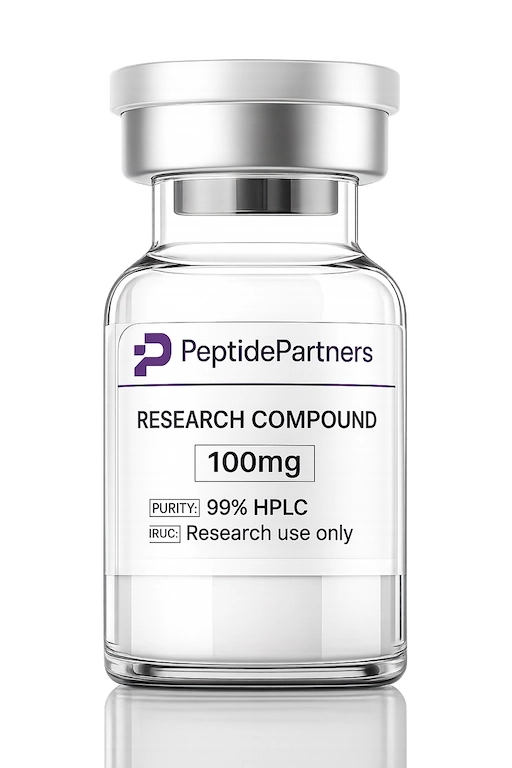
CJC-1295 no DAC (10mg (10,000 mcg) vials)

Pharmacy Grade CJC-1295 / Ipamorelin

At-Home Blood Test
Research Supplies
Peptide Vials (10 mg (10,000 mcg) default)
10,000 mcg (10 mg) / 200 mcg (0.2 mg) = 50 theoretical portions before losses. This does not mean one opened vial can be used for 50 days. Product-specific discard timing may require more vials.
| Cycle length | Planning note |
|---|---|
4-6 weeks 1 vial, mass-only minimum | 4 weeks: 28 administrations = 5.6 mg (5,600 mcg) before losses and discard.; 6 weeks: 42 administrations = 8.4 mg (8,400 mcg) before losses and discard. |
8-12 weeks 2 vials, mass-only minimum | 8 weeks: 56 administrations = 11.2 mg (11,200 mcg) before losses and discard.; 12 weeks: 84 administrations = 16.8 mg (16,800 mcg) before losses and discard. |
Insulin Syringes (U-100, 0.3 mL / 30-unit)
Smaller barrels make it easier to read low unit counts like 3 or 6 units at the 10 mg (10,000 mcg) / 3 mL default.
| Cycle length | Planning note |
|---|---|
4 weeks 28 syringes | One syringe per injection. |
6 weeks 42 syringes | One syringe per injection. |
8 weeks 56 syringes | One syringe per injection. |
12 weeks 84 syringes | One syringe per injection. |
Bacteriostatic Water
Each 10 mg (10,000 mcg) vial uses 3 mL in this arithmetic example. Water amounts below follow the mass-only vial minima. Extra vials and bottle discard dates can increase the actual requirement.
| Cycle length | Planning note |
|---|---|
4 weeks 3 mL total water | For 1 vial; bottle count depends on the manufacturer’s post-opening discard period. |
8-12 weeks 6 mL total water | 8 weeks: For 2 vials; bottle count depends on the manufacturer’s post-opening discard period.; 12 weeks: 3 mL × 2 vials = 6 mL. Any extra unopened supply is a separate allowance; opened-bottle discard dates still apply. |
These are minimum inventory calculations, not a purchase guarantee or usable-life claim. Product-specific discard dates and handling losses can increase vial and water needs. Syringe and swab counts assume one administration daily.
Companion Supplies & Routine Support
CJC-1295 No DAC Reconstitution Guide
The arithmetic example uses 10 mg (10,000 mcg) divided by 3 mL = approximately 3,333 mcg/mL (3.333 mg/mL). Every row below is a concentration conversion, not a recommended dose or a claim that a research vial is suitable for injection. The 300-mcg input is outside the illustrative schedule and does not extend it.
Default: 10 mg (10,000 mcg) Vial + 3 mL BAC Water
10 mg (10,000 mcg) / 3 mL setup → 3,333 mcg/mL (3.333 mg/mL). Units shown for a U-100 syringe.
| Target dose | Volume to draw | U-100 syringe units |
|---|---|---|
| 100 mcg (0.1 mg) | 0.03 mL | 3 units |
| 150 mcg (0.15 mg) | 0.045 mL | ~4.5 units |
| 200 mcg (0.2 mg) | 0.06 mL | 6 units |
| 300 mcg (0.3 mg) | 0.09 mL | 9 units |
Arithmetic inputs only. At a fixed concentration, U-100 units measure volume, not biological potency; 100 units = 1 mL.
Other Common Vial / BAC Water Combinations
Reconstitution reference for other common formats
| Vial | BAC water | Concentration | 100 mcg (0.1 mg) | 200 mcg (0.2 mg) | 300 mcg (0.3 mg) |
|---|---|---|---|---|---|
| 2 mg (2,000 mcg) | 1.0 mL | 2,000 mcg/mL (2 mg/mL) | 5 units | 10 units | 15 units |
| 2 mg (2,000 mcg) | 2.0 mL | 1,000 mcg/mL (1 mg/mL) | 10 units | 20 units | 30 units |
| 5 mg (5,000 mcg) | 2.0 mL | 2,500 mcg/mL (2.5 mg/mL) | 4 units | 8 units | 12 units |
| 5 mg (5,000 mcg) | 3.0 mL | 1,667 mcg/mL (1.667 mg/mL) | 6 units | 12 units | 18 units |
| 5 mg (5,000 mcg) | 5.0 mL | 1,000 mcg/mL (1 mg/mL) | 10 units | 20 units | 30 units |
| 10 mg (10,000 mcg) | 3.0 mL | 3,333 mcg/mL (3.333 mg/mL) | 3 units | 6 units | 9 units |
| 10 mg (10,000 mcg) | 5.0 mL | 2,000 mcg/mL (2 mg/mL) | 5 units | 10 units | 15 units |
These rows show concentration arithmetic only. Syringe markings and rounding affect measurement accuracy; none of these inputs establishes a dose or product suitability.
Step-By-Step Reconstitution
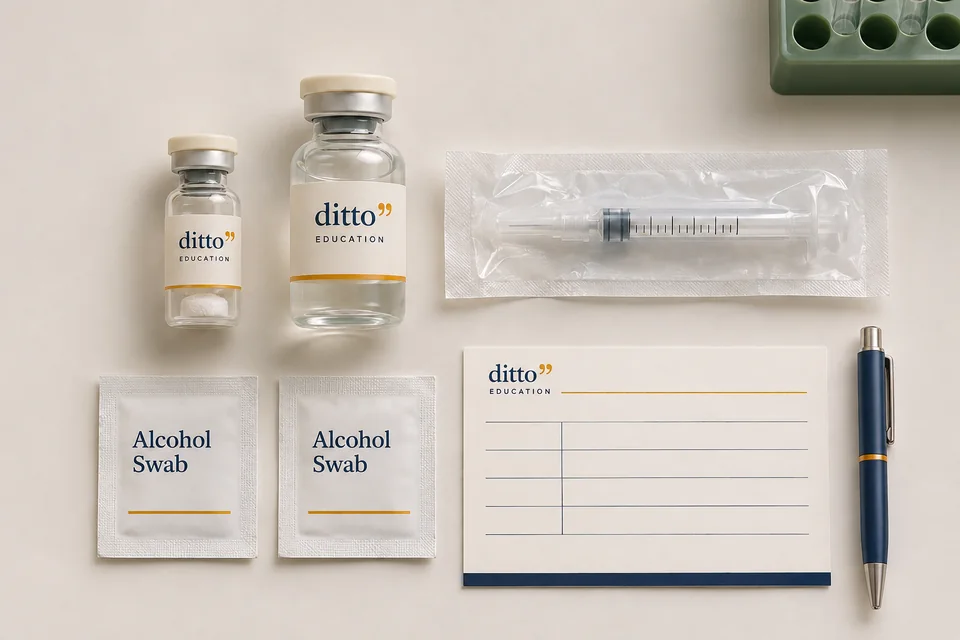
An illustrated reading aid for the product instructions. Confirm the exact formulation, diluent and handling method first. A research-only vial is not an approved medicine.
Prepare a clean workspace
Use a clean work area, clean hands and the supplies specified for the product. Check that disposable equipment is unopened and in date. Research-only materials are not medicines for human use.

Clean the stopper
If the product instructions call for vial access, disinfect the exposed rubber stopper with a fresh alcohol swab and let it dry. Avoid touching it afterward; use sterile equipment for each access.

Measure the specified diluent
Confirm the diluent type and volume in the product instructions. Measure that volume using the correct syringe scale. A concentration calculation cannot establish that a diluent is compatible.

Add as instructed
Follow the product-specific addition method. Where slow addition along the vial wall is specified, keep the flow gentle. Do not infer a preparation method from a dose table or combine separate compounds in one vial.

Mix and inspect
Use the mixing method specified for the product; some require gentle swirling rather than shaking. Compare the appearance with the instructions. Do not use a preparation with unexpected particles, discoloration or suspected contamination.
Mix and inspect
Use the mixing method specified for the product; some require gentle swirling rather than shaking. Compare the appearance with the instructions. Do not use a preparation with unexpected particles, discoloration or suspected contamination.

Record and store
Record the preparation date and calculated concentration in mg/mL and mcg/mL. Follow the exact storage conditions and discard time on the product instructions. There is no universal refrigerated shelf life for all peptides.
AI-generated educational scenes with Ditto-inspired concept labels; not photographs of supplied products. CDC preparation and equipment principles · Check your calculation
Need a custom setup?
Use the University of Peptide calculator to plug in any vial size and BAC water volume and get exact unit counts.
CJC-1295 No DAC Dosage Chart
This chart matches the single illustrative community example in the schedule table: 100 mcg/day (0.1 mg/day) in weeks 1–2, 150 mcg/day (0.001–0.002, 0.15 mg/day) in weeks 3–4, and 200 mcg/day (0.2 mg/day) in weeks 5–8, each once daily. None is a validated dose or safe maximum.
 UNIVERSITY OF PEPTIDE · RESEARCH REFERENCE
CJC-1295 No DAC Dosage Chart
| Example stage | Window | Amount per administration | Frequency | Daily total |
|---|---|---|---|---|
| A | Weeks 1–2 | 100 mcg (0.1 mg) | Once daily | 100 mcg/day (0.1 mg/day) |
| B | Weeks 3–4 | 150 mcg (0.15 mg) | Once daily | 150 mcg/day (0.15 mg/day) |
| C | Weeks 5–8 | 200 mcg (0.2 mg) | Once daily | 200 mcg/day (0.2 mg/day) |
How CJC-1295 No DAC Works
GHRH analogs act at GHRH receptors in the pituitary, which can stimulate growth hormone release. GH then signals the liver and other tissues to produce IGF-1; it is not converted into IGF-1.
That mechanism alone cannot establish the dose, duration, benefit, or safety of a No-DAC regimen. The cited human CJC-1295 studies used the long-acting DAC compound.
Ipamorelin acts at the ghrelin receptor rather than the GHRH receptor. Using two receptor pathways is a biological rationale for studying a combination, not proof that a community stack works or is safe.
Who CJC-1295 No DAC Is For and Who Should Avoid It
This page is a research-planning reference. The note below covers who research protocols typically exclude, not who can or cannot use the compound personally. There is no human-use approval, and the decision should always involve a licensed clinician.
Groups Most Protocols Exclude
- Active cancer or recent cancer history. GH and IGF-1 can affect cell growth, and most planning frameworks exclude this group by default.
- Meaningful cardiovascular disease, especially uncontrolled heart conditions.
- Pregnancy or breastfeeding.
- Significant glucose dysregulation or uncontrolled diabetes, because GH can raise blood sugar.
- Known hypersensitivity to peptide products or to bacteriostatic water (benzyl alcohol).
Medication Conflicts to Flag
- Glucocorticoids (steroids) can blunt GH response and may complicate planning.
- Insulin and oral diabetes medications may interact with GH-driven glucose changes.
- Thyroid medication adjustments may be relevant because GH affects thyroid hormone conversion.
Clinical oversight
Anything in this section is general research-planning context. Decisions about who should or should not consider any peptide protocol should be made with a licensed clinician who can review individual medical history, labs, and medications.
CJC-1295 No DAC Side Effects & Safety
The frequency and severity of adverse effects from subcutaneous No-DAC use are not established by the cited DAC studies. A short-acting label does not mean side effects will be mild or end within 30–60 minutes.
- Reports of flushing, headache, injection-site irritation, fluid retention, or tingling do not establish how common these effects are.
- Changes in GH/IGF-1 may affect glucose control. Long-term No-DAC safety remains uncertain.
- New, severe, or persistent symptoms need medical assessment. Adding doses or frequency is not an evidence-based remedy.
The historical halted trial concerned CJC-1295 with DAC. It cannot establish either harm or safety for No DAC. Lack of a reported No-DAC signal is not evidence of safety.
A batch-matched certificate of analysis can describe selected test results; it does not establish that a research vial is sterile, approved, or safe for injection. We track testing information in our supplier reviews.
CJC-1295 No DAC Timeline & What to Monitor
There is no validated No-DAC timeline for sleep, recovery, body-composition, or anti-aging benefits. DAC trial timing and community reports cannot supply one.
A clinician may assess symptoms, IGF-1, and glucose-related tests when clinically appropriate. Normal results do not validate an unapproved regimen or establish its long-term safety.
CJC-1295 No DAC Clinical Evidence Context
The cited human evidence concerns long-acting CJC-1295 with DAC, not a clinically validated No-DAC regimen. The compound and species boundaries below matter.
Teichman et al. 2006 (JCEM, Phase 1)
Long-acting CJC-1295 with DAC produced sustained GH and IGF-1 elevation in healthy adults. These findings do not establish No-DAC dosing or safety.
Ionescu and Frohman 2006 (JCEM)
Studied long-acting CJC-1295 with DAC; pulsatile GH secretion persisted during sustained stimulation. It did not test this page’s No-DAC schedule.
Alba et al. 2006 (preclinical)
Daily CJC-1295 in GHRH-knockout mice normalized growth and body-composition markers.
Jette et al. 2005 (Endocrinology)
Identified CJC-1295 as a long-lasting GRF analog and described its albumin-binding chemistry.
ConjuChem Phase 2, 2006 (NCT00267527, DAC version)
Halted in HIV patients after a cardiac event. Investigators said the event was unrelated, but the program was discontinued. This trial used the DAC version, not No DAC.
What This Means for No DAC
The references do not establish a human No-DAC dose, frequency, maximum, cycle, or outcome. Sharing a receptor with CJC-1295 with DAC is not enough to transfer its clinical findings. The example table is descriptive only.
CJC-1295 No DAC Storage & Handling
Storage conditions and expiry must come from validated data for the exact product, formulation, container, and handling conditions.
CJC-1295 No DAC storage evidence
| Material | Required information | Limit |
|---|---|---|
| Unmixed powder | Product-specific storage and expiry data | No generic months-to-years shelf life is established here. |
| Reconstituted material | Validated temperature, stability and beyond-use date | No universal 28-day or 2–4-week use period is established. |
| Frozen material | Product-specific freezing and thawing validation | Freezing or aliquoting does not establish a safe extended life. |
| Opened bacteriostatic water | Manufacturer’s post-opening discard instructions | Bottle count depends on time as well as volume. |
No product-specific stability study is cited here. Refrigeration, a clear appearance, or the presence of benzyl alcohol does not establish sterility, potency, or a safe use period. Vial-yield arithmetic cannot determine a discard date.
CJC-1295 No DAC Protocol Mistakes & Troubleshooting
Cloudiness, particles, or discoloration
Do not use material with unexpected changes. Appearance alone cannot rule out contamination or loss of potency.
Wrong water volume
Concentration equals total mcg divided by total mL. Recalculate the arithmetic using the actual volume and verify the label. The University of Peptide calculator handles custom inputs; it cannot determine whether a product is suitable to use.
Missed dose or side effects
No validated No-DAC missed-dose or escalation rule is established here. Persistent flushing, headache, or other symptoms need clinical review rather than a self-directed change in dose or frequency.
Temperature excursion
Ask the responsible pharmacist or manufacturer for product-specific stability information. Without it, this page cannot establish whether the material remains usable.
CJC-1295 No DAC Regulatory Status
CJC-1295 No DAC is not FDA-approved. A research-use label or compounding nomination does not establish drug approval or safety.
The FDA safety-risk page discusses CJC-1295 among substances with withdrawn nominations. FDA cites limited clinical data and reported tachycardia and systemic vasodilation. The page does not establish a No-DAC-specific dose, event rate, or safe regimen.
CJC-1295 is named in the 2026 WADA Prohibited List, S2.2.4, and is prohibited at all times for athletes subject to those rules. Current compounding eligibility requires separate professional review.
CJC-1295 No DAC vs CJC-1295 with DAC vs Sermorelin vs Ipamorelin
Compound differences, not interchangeable regimens
| Compound | Receptor or property | Evidence boundary |
|---|---|---|
| CJC-1295 No DAC | GHRH analog; lacks DAC | No validated regimen established by the cited DAC trials. |
| CJC-1295 with DAC | GHRH analog with albumin-binding group | Human studies measured prolonged GH/IGF-1 effects. |
| Sermorelin | GHRH analog | Its clinical history does not validate No-DAC products. |
| Ipamorelin | Ghrelin-receptor agonist | Human IV findings do not establish a daily subcutaneous regimen. |
No dose, half-life, benefit, or safety claim should be transferred between products.
Compound-specific guides: CJC-1295 with DAC, Sermorelin, Ipamorelin, and the GHRP-6 peptide guide.
CJC-1295 No DAC Blood Tests & Monitoring
CJC-1295 without DAC is usually discussed as a shorter GH-pulse support peptide. Monitoring focuses on IGF-1 trends, glucose handling, lipids, and fluid-retention symptoms.
Blood test markers to discuss with a clinician
| Marker | Why it matters | Timing |
|---|---|---|
| IGF-1 | Shows the downstream signal after repeated GH pulses and helps track pathway intensity. | Follow-up |
| A1c | Reviews longer-term glucose control because GH-axis stimulation can affect insulin sensitivity. | Baseline |
| Fasting glucose | Provides a current glucose snapshot during GH-axis changes. | Follow-up |
| Lipid panel | Tracks cholesterol and triglyceride trends during body-composition changes. | Baseline |
| TSH and free T4 | Helps separate thyroid-related symptoms from GH-axis effects. | Optional |
Monitoring guidance is GH-axis pathway-based and extrapolated from human GHRH analog data and GH/IGF physiology.
At-home blood test option
Easy at home option to monitor core metrics during research cycles.
Beyond Whoosh
Pharmacy Grade CJC-1295 / Ipamorelin
Prescription-grade peptide care through Beyond Whoosh. Whoosh prescribes after a clinician reviews your eligibility.
Simple timing framework
- Baseline
- Discuss baseline labs before starting, especially with diabetes risk, sleep apnea, edema, cancer history, or thyroid disease.
- Follow-up
- Re-check IGF-1 and metabolic markers after 6-8 weeks or after meaningful protocol changes.
- Longer term
- For longer protocols, review trends every 3-6 months with a clinician.
How to interpret the labs
- IGF-1 is useful, but symptoms and metabolic labs still matter.
- Shorter-acting GH-pulse protocols may still affect glucose, appetite, sleep, and fluid balance.
- Avoid assuming a normal IGF-1 means the protocol has no risk.
Do not wait for routine labs
Rapid swelling, severe headaches, vision changes, chest pain, or shortness of breath needs medical review. New numbness, wrist pain, or worsening sleep apnea symptoms should be discussed with a clinician.
FAQ
Q1: What is CJC-1295 No DAC?
CJC-1295 No DAC, also called Modified GRF 1-29, is a GHRH analog distinct from the long-acting CJC-1295 with DAC used in the cited human studies. It is not FDA-approved.
Q2: What is the common starting dose for CJC-1295 No DAC?
No validated human No-DAC starting dose is established here. The illustrative community table shows 100 mcg (0.1 mg) once daily in weeks 1–2, 150 mcg (0.001–0.002, 0.15 mg) once daily in weeks 3–4, and 200 mcg (0.2 mg) once daily in weeks 5–8. These are descriptive examples, not recommended doses or a safe range.
Q3: What is CJC-1295 No DAC's half-life?
The cited human trial measured a 5.8–8.1-day half-life for CJC-1295 with DAC. It does not establish a precise No-DAC half-life or a No-DAC injection frequency.
Q4: How do you reconstitute a 10 mg (10,000 mcg) CJC-1295 No DAC vial?
The default setup is a 10 mg (10,000 mcg) vial with 3 mL bacteriostatic water, which gives 3,333 mcg/mL (3.333 mg/mL). At that concentration, 100 mcg (0.1 mg) is 3 units, 200 mcg (0.2 mg) is 6 units, and 300 mcg (0.3 mg) is 9 units on a U-100 insulin syringe. Use the University of Peptide calculator for any custom setup.
Q5: How is CJC-1295 No DAC different from CJC-1295 with DAC?
The DAC compound has an albumin-binding group that prolongs exposure. The cited human trials studied that long-acting version. Their results cannot be treated as evidence for the No-DAC schedule.
Q6: Why is CJC-1295 No DAC paired with Ipamorelin?
They act at different receptors: GHRH for No DAC and ghrelin for ipamorelin. This is a rationale for studying a combination, not proof of benefit or safety for a community stack.
Q7: What are the most common side effects?
The frequency of adverse effects in No-DAC use is not established. Reports include flushing, headache, irritation, fluid retention, and tingling. A short-acting label does not guarantee that symptoms will be mild or brief.
Q8: Is CJC-1295 No DAC FDA-approved?
No. CJC-1295 No DAC is not FDA-approved. FDA’s CJC-1295 safety discussion does not establish a safe No-DAC regimen. CJC-1295 is named in WADA S2.2.4 and prohibited at all times for athletes subject to those rules.
Q9: Should the dose or the frequency go up first?
No direct human No-DAC evidence establishes an escalation rule. The cited DAC studies do not prove a 100-mcg receptor-saturation threshold or that increasing frequency is preferable.
Q10: What vial sizes are available for CJC-1295 No DAC?
Research suppliers list 2 mg (2,000 mcg), 5 mg (5,000 mcg), and 10 mg (10,000 mcg) vials. Vial mass is not a dose or a usable-life claim. This page uses 10 mg (10,000 mcg) / 3 mL for arithmetic only.
Q11: How long is a typical CJC-1295 No DAC cycle in research planning?
The illustrative table covers eight weeks. Community descriptions also include 8–12 weeks, 4–6 weeks off, or five days on and two off. No direct No-DAC trial establishes an ideal cycle or shows that breaks preserve receptor responsiveness.
Q12: How should reconstituted CJC-1295 No DAC be stored?
Use validated storage and discard instructions for the exact product. This page establishes no universal 2–4-week refrigerated life or months-long frozen life. Bacteriostatic water does not validate peptide stability or sterility.
Q13: Is this page medical advice?
No. This is an educational research reference. CJC-1295 No DAC is not FDA-approved for any use, and the dosing structures shown here are summaries of community planning, not a personal recommendation. Talk to a licensed clinician before considering any peptide protocol.
Sources & Research
- Teichman SL, Neale A, Lawrence B, et al. Prolonged stimulation of growth hormone and IGF-1 secretion by CJC-1295 in healthy adults. Journal of Clinical Endocrinology and Metabolism (2006)
- Ionescu M, Frohman LA. Pulsatile secretion of growth hormone persists during continuous stimulation by CJC-1295. Journal of Clinical Endocrinology and Metabolism (2006)
- Alba M, Fintini D, Sagazio A, et al. Once-daily administration of CJC-1295, a long-acting GHRH analog, normalizes growth in the GHRH knockout mouse. American Journal of Physiology - Endocrinology and Metabolism (2006)
- Jette L, Leger R, Thibaudeau K, et al. Human growth hormone-releasing factor (hGRF)1-29-albumin bioconjugates activate the GRF receptor on the anterior pituitary in rats: identification of CJC-1295 as a long-lasting GRF analog. Endocrinology (2005)
- Sackmann-Sala L, Ding J, Frohman LA, Kopchick JJ. Activation of the GH/IGF-1 axis by CJC-1295 and serum protein changes in normal adults. Growth Hormone & IGF Research (2009)
- Clemmons DR. Long-acting forms of GHRH and growth hormone: effects in normal volunteers and adults with GHD. Hormone Research (2007)
- Henninge J, Pepaj M, Hullstein I, Hemmersbach P. Identification of CJC-1295, a growth-hormone-releasing peptide, in an unknown pharmaceutical preparation. Drug Testing and Analysis (2010)
- ClinicalTrials.gov Effect of CJC-1295 on weekly growth hormone and daily IGF-1 release in adults with HIV-associated lipodystrophy (NCT00267527). ClinicalTrials.gov registry (2006)
- Aidsmap (NAM). Lipodystrophy study halted after patient death (CJC-1295 with DAC, Phase 2). aidsmap.com (2006)
- U.S. Food and Drug Administration. Certain Bulk Drug Substances for Use in Compounding that May Present Significant Safety Risks (CJC-1295; not a No-DAC dose study). FDA.gov (2026)
- World Anti-Doping Agency. Prohibited list (S2 peptide hormones, growth factors, related substances, and mimetics). WADA (2026)
Related Dosing Protocols
Educational use only
This guide is an educational research reference, not medical advice or a treatment plan. CJC-1295 No DAC is not FDA-approved for any use. Consult a licensed clinician before considering any peptide protocol.
Calculate vial math
Use the calculator for custom vial size, BAC water volume, and syringe-unit math.
Reconstitution calculator
Enter your own values. This tool calculates quantities, not a recommended dose.
Check the concentration
Changing the unit keeps the entered mass equivalent. 1 milligram (mg) = 1,000 micrograms (mcg). This tool does not choose a target amount.
Biological IU (optional, product-specific)
Only enter a potency explicitly stated as IU per mg on the exact product label or reference. Do not enter the 100 from a U-100 syringe. No factor is assumed for any peptide.
Your result will appear here
Enter the mass, final solution volume and target mass, or load a fictional example.
Assumes accurate masses, final solution volume and even distribution. Blend arithmetic does not establish whether substances can be mixed. Read the formulas and assumptions.
Study findings, reported examples and supplier statements have different levels of evidence. Follow the citations and check the formulation, population and date before interpreting a number.
Editorial standards and corrections