On this page
TOOLS FOR THIS GUIDE
Work with Epitalon
The guide name carries across. Amounts, dates and instructions remain yours to enter; opening a tool saves nothing.
Worked examples: calculations, records and source checks
Fictional arithmetic, unrelated to a recommended amount of Epitalon: 10 mg (10,000 mcg) in a final 2 mL is 5 mg/mL (5,000 mcg/mL). A target mass of 0.25 mg (250 mcg) corresponds to 0.05 mL, or 5 U-100 syringe markings. Biological IU cannot be inferred from these inputs. Neither the mass nor the liquid is a preparation recommendation.
Open the arithmetic example- Supply example: two 10 mg (10,000 mcg) vials start at 20 mg (20,000 mcg). Four recorded entries of 0.25 mg (250 mcg) leave a theoretical 19 mg (19,000 mcg), before losses or expiry. Skipped entries do not deduct stock.
- Measurement example: enter “Sleep duration”, “7.5”, “hours” and the date. Keep the same unit and note changing conditions. A trend does not prove a treatment effect.
- Source example: record “rat study” when rats were studied, even when the headline describes recovery. Keep the exact paper and its limitations.
The planner accepts mg and mcg. Biological IU/USP units, sprays, drops and variable mixtures need product-specific instructions; they cannot be inferred from a generic mass calculator. For stacks, record each known ingredient separately.
FDA: why concentration and unit errors matterEvidence & source checks
Epitalon: source check
Epithalon induced telomerase activity and telomere elongation in cultured human fetal fibroblasts.
Limit: A cell-culture finding is not proof of longer life in people. Epithalamin preparations are not interchangeable with this tetrapeptide.
Question to resolve: Does the claim concern cultured cells, the tetrapeptide, or a different pineal preparation?
Source and reading scope
Epithalon peptide induces telomerase activity and telomere elongation in human somatic cells.
PubMed abstract; not an independent clinical review. Checked 25 November 2026.
What to verify before filling a plan
- Identity and formulation: match the name, sequence or active ingredient, route and strength. A related molecule or branded medicine is not automatically equivalent.
- Instruction source: obtain the actual amount, frequency and duration from qualified medical instructions. A community table or trial protocol does not establish an individual regimen.
- Units and product details: keep mass, liquid volume and biological activity units separate. Record batch, storage and discard instructions from the actual product; the tools cannot determine sterility or stability.
- Review and follow-up: list medicines and supplements, unresolved interactions and questions. Agree on relevant observations and actions with a qualified professional; normal measurements do not prove safety.
Selected source context, not a systematic review or medical approval. Study cards checked 24 November 2026; guide source notes checked 25 November 2026. Research references and citations appear below.
Guide summary
REFERENCE SUMMARY- Compound
- Epitalon (Epithalon / AEDG)
- Class
- Synthetic tetrapeptide
- Common format
- Lyophilized vial, subcutaneous
- Regulatory status
- Not FDA-approved (research use)
Epitalon Quick Start
Epitalon, also spelled epithalon, is a small peptide made of four amino acids in a row: Ala-Glu-Asp-Gly. You may also see it written as AEDG. A peptide is just a short chain of amino acids, the same building blocks that make protein.
Researchers study epitalon mostly for aging. The two areas that get the most attention are telomeres (protective caps on the ends of your DNA) and the body clock that controls sleep and melatonin. This page covers the reported dosing context, how the vial is mixed, supplies, and safety. For a broader benefits and evidence overview, read the Epitalon guide on Peptide Advisors.
- Reconstitute
- Add 2.0 mL BAC water to a 10 mg (10,000 mcg) vial. That gives 5 mg/mL (5,000 mcg/mL).
- Reported schedule
- Short cycles: about 5-10 mg/day (5,000-10,000 mcg/day) for 10-20 days, 1-2 times a year.
- Easy measuring
- On a 5 mg/mL (5,000 mcg/mL) mix, 5 mg (5,000 mcg) equals 1.0 mL, which is 100 units on a U-100 syringe.
- Timing
- Many reported protocols use evening dosing to line up with the natural melatonin rhythm.
- Research status
- Not FDA-approved. Sold research-use-only as of June 2026.
Educational research reference
This page reports dosing context from published research and community protocols. It is not medical advice, a treatment plan, or a recommendation to use epitalon.
Epitalon Dosing Protocol & Schedule
Epitalon dosing is unusual because the cycles are short and spaced far apart. Most peptides are dosed for weeks or months. Reported epitalon protocols instead use a short burst, then a long break.
Two reported patterns show up most often in the literature and in community protocols. Both deliver a similar total dose per cycle. The numbers below describe what has been reported, not a personal recommendation.
Two commonly reported epitalon cycle patterns
| Pattern | Daily amount | Days on | Repeat |
|---|---|---|---|
| Standard short cycle | 5 mg/day (5,000 mcg/day) (evening, SubQ) | 20 days | 2-3 times per year |
| Condensed cycle | 10 mg/day (10,000 mcg/day) (evening, SubQ) | 10 days | 2-3 times per year |
Both patterns add up to roughly 100 mg (100,000 mcg) per cycle. Reported protocols space cycles 4-6 months apart. Higher single doses (up to ~50 mg/day (50,000 mcg/day) in some animal-era work) have not shown clearer results in the available research.
Route matters here. Almost all reported protocols use a subcutaneous (SubQ) injection, meaning a small injection into the fat layer just under the skin. Some community sources mention an intranasal spray version, but that route is far less studied and dosing equivalence is unclear.
Evidence boundary
There is no large, blinded human trial that tested a specific epitalon injection dose against placebo for telomere length. The schedules above come from older Russian research programs and self-reported community use, not from a modern FDA-style dosing trial.
Epitalon Supplies Needed
Supply math below is based on the standard reported schedule: 5 mg (5,000 mcg) per day from a 10 mg (10,000 mcg) vial reconstituted with 2.0 mL BAC water, for a 20-day cycle. One 10 mg (10,000 mcg) vial covers two daily doses, so a 20-day cycle uses about 10 vials.
Recommended Supply
Choose your region
Use discount code SAVE10 at Peptira checkout. See why we love Peptira.
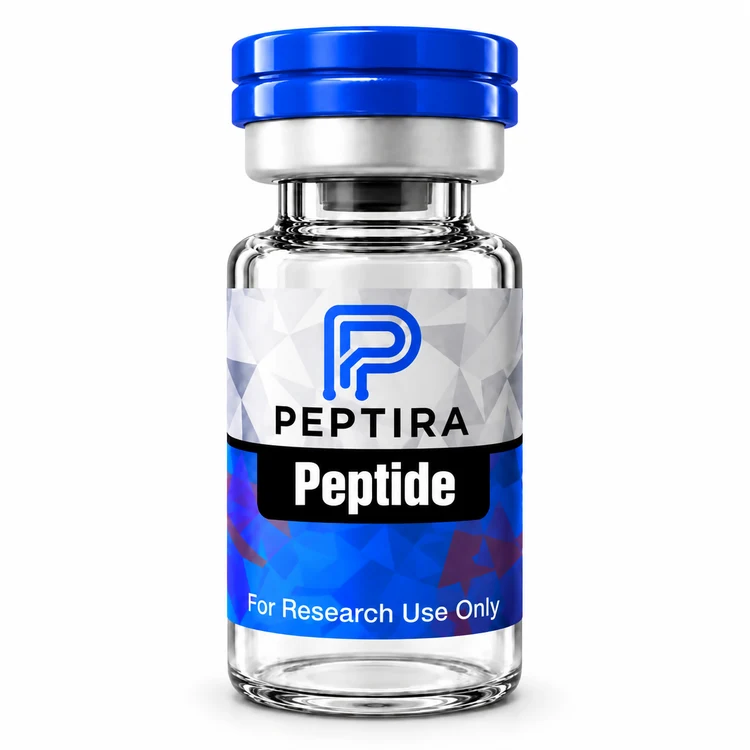
Epitalon

Pharmacy Grade Epitalon

At-Home Blood Test
Research Supplies
Peptide Vials (10 mg (10,000 mcg))
Based on 5 mg/day (5,000 mcg/day). A 10 mg (10,000 mcg) vial covers 2 daily doses. 50 mg (50,000 mcg) vials cover 10 doses each, so a full 20-day cycle is 2 of the 50 mg (50,000 mcg) size instead.
| Cycle length | Planning note |
|---|---|
10-day cycle 5 x 10 mg (10,000 mcg) vials | 10 doses at 5 mg/day (5,000 mcg/day). |
20-day cycle 10 x 10 mg (10,000 mcg) vials | 20 doses at 5 mg/day (5,000 mcg/day). |
Insulin Syringes (U-100)
One syringe per daily injection. Prefer 1 mL / 100-unit syringes since a 5 mg (5,000 mcg) dose is a full 1.0 mL draw.
| Cycle length | Planning note |
|---|---|
10-day cycle 10 syringes | 1 per day. |
20-day cycle 20 syringes | 1 per day. |
Bacteriostatic Water
Use 2.0 mL per 10 mg (10,000 mcg) vial.
| Cycle length | Planning note |
|---|---|
10-day cycle 1 x 10 mL bottle | 5 vials use 10 mL total. |
20-day cycle 2 x 10 mL bottles | 10 vials use 20 mL total. |
Round up for priming losses, dropped syringes, and damaged swabs. If you use 50 mg (50,000 mcg) vials, you need fewer vials but more BAC water per vial — recheck the math for your exact vial size with the calculator.
Companion Supplies & Routine Support
Epitalon Dosage Chart
This Epitalon dosage chart summarizes the reported short-cycle patterns from 5 mg (5,000 mcg) to 10 mg (10,000 mcg) daily shown in the dosing section above.
 UNIVERSITY OF PEPTIDE · RESEARCH REFERENCE
Epitalon Dosage Chart
| Pattern | Daily amount | Days on | Repeat |
|---|---|---|---|
| Standard short cycle | 5 mg/day (5,000 mcg/day) (evening, SubQ) | 20 days | 2-3 times per year |
| Condensed cycle | 10 mg/day (10,000 mcg/day) (evening, SubQ) | 10 days | 2-3 times per year |
Epitalon Reconstitution Guide
Reconstitution means adding liquid to the dry powder so you can measure and inject it. Epitalon ships as a dry, freeze-dried powder. You add bacteriostatic water (BAC water), which is sterile water with a tiny amount of preservative.
The mix you choose sets your concentration, which is how much peptide is in each milliliter. A simple, common mix is shown below for both popular vial sizes.
Epitalon reconstitution math (U-100 syringe)
| Vial size | BAC water added | Concentration | 5 mg (5,000 mcg) dose | 10 mg (10,000 mcg) dose |
|---|---|---|---|---|
| 10 mg (10,000 mcg) | 2.0 mL | 5 mg/mL (5,000 mcg/mL) | 1.0 mL = 100 units | Whole vial |
| 50 mg (50,000 mcg) | 5.0 mL | 10 mg/mL (10,000 mcg/mL) | 0.5 mL = 50 units | 1.0 mL = 100 units |
These are two clean, easy-to-measure mixes. Other volumes work too; the calculator handles any vial size and target dose.
An illustrated reading aid for the product instructions. Confirm the exact formulation, diluent and handling method first. A research-only vial is not an approved medicine.

Clean the stopper
If the product instructions call for vial access, disinfect the exposed rubber stopper with a fresh alcohol swab and let it dry. Avoid touching it afterward; use sterile equipment for each access.

Measure the specified diluent
Confirm the diluent type and volume in the product instructions. Measure that volume using the correct syringe scale. A concentration calculation cannot establish that a diluent is compatible.

Add as instructed
Follow the product-specific addition method. Where slow addition along the vial wall is specified, keep the flow gentle. Do not infer a preparation method from a dose table or combine separate compounds in one vial.

Mix and inspect
Use the mixing method specified for the product; some require gentle swirling rather than shaking. Compare the appearance with the instructions. Do not use a preparation with unexpected particles, discoloration or suspected contamination.
Mix and inspect
Use the mixing method specified for the product; some require gentle swirling rather than shaking. Compare the appearance with the instructions. Do not use a preparation with unexpected particles, discoloration or suspected contamination.

Record and store
Record the preparation date and calculated concentration in mg/mL and mcg/mL. Follow the exact storage conditions and discard time on the product instructions. There is no universal refrigerated shelf life for all peptides.
Record and store
Record the preparation date and calculated concentration in mg/mL and mcg/mL. Follow the exact storage conditions and discard time on the product instructions. There is no universal refrigerated shelf life for all peptides.
AI-generated educational scenes with Ditto-inspired concept labels; not photographs of supplied products. CDC preparation and equipment principles · Check your calculation
Let the calculator do the math
For any other vial size, like a 50 mg (50,000 mcg) vial or a different target dose, use the calculator to get exact BAC water volume and syringe units.
How Epitalon Is Thought to Work
In plain terms, epitalon is studied because it may help cells keep their DNA caps longer and may help reset the body clock. Those are two separate ideas, and they have different levels of proof.
The first idea is telomeres. Every time a cell divides, the telomere caps on its DNA get a little shorter. An enzyme called telomerase can add length back, but most adult cells keep telomerase switched off. In lab dishes using human cells, epitalon increased telomerase activity and let cells divide more times than usual (Khavinson et al., Bull Exp Biol Med, 2003).
The second idea is the pineal gland, a small gland in the brain that releases melatonin and helps run your sleep-wake cycle. Epitalon was built from a pineal extract called epithalamin. The melatonin evidence is mixed: it improved melatonin rhythm in some animal and human extract studies, but at least one rat study found no melatonin effect from the synthetic peptide.
What is and is not proven
The telomerase effect is mostly from cell and animal studies. There is no large, blinded human trial proving that injected synthetic epitalon lengthens telomeres or extends human lifespan.
Who Should Be Most Cautious
Because epitalon is not approved and has thin human safety data, several groups have the most reason to avoid it. This is general research context, not medical screening.
- Anyone who is pregnant or breastfeeding — there is no safety data for these groups.
- Anyone with an active cancer or a recent cancer history — telomerase activation is theoretical risk territory and has not been cleared as safe in people.
- Anyone on prescription medications without first talking to a qualified clinician, since interactions are not well studied.
- Anyone who cannot verify product quality with a current certificate of analysis (COA).
Talk to a clinician
A qualified clinician is the right person to weigh personal risk. This page cannot do that for you.
Epitalon Side Effects & Safety
Reported side effects are usually mild in the available literature and community reports. The most common are the ordinary issues that come with any injection.
- Injection-site reactions: redness, soreness, or a small bump where the needle went in.
- Mild drowsiness, especially with evening dosing, since the peptide is tied to melatonin signaling.
- Occasional reports of headache or temporary changes in sleep as the cycle starts.
The bigger safety gaps are about the unknowns, not the known side effects. Long-term human safety data are limited, and the telomerase question matters here too. In theory, switching telomerase on could affect cells you would not want dividing more, which is why people with cancer history are flagged as cautious cases.
Product quality is its own risk. Research-grade peptides are not made to pharmacy standards, so purity and sterility depend on the supplier. A current COA that matches the exact batch is the main way to check quality.
What People Report Over a Cycle
Because the human research is limited, timeline notes come mostly from self-reported community use, not from controlled trials. Treat them as anecdote, not proof.
- Sleep changes are the effect people mention earliest, often within the first several days of a cycle.
- Any telomere or aging-marker change would be slow and is not something you can feel; it would only show up on lab testing over a long period.
- Reported protocols repeat short cycles a couple of times a year rather than dosing continuously.
There are no standard required lab markers for epitalon. Some longevity researchers track telomere length or biological-age panels, but these tests are costly and their day-to-day value is debated.
Epitalon Clinical Evidence Context
Here is the part most guides get muddy. There are two related things, and they do not have the same proof. One is epithalamin, the natural pineal extract. The other is epitalon (AEDG), the synthetic four-amino-acid copy.
Human extract program (strongest human signal)
A long-running, non-blinded program in elderly subjects reported lower mortality with epithalamin, and lower still when combined with the thymic peptide thymalin (Khavinson, Neuroendocrinology Letters, 2003; Korkushko et al., Bull Exp Biol Med, 2006). A 12-year study reported 28% lower mortality and 2-fold lower cardiovascular mortality in treated elderly patients.
Human melatonin rhythm (extract)
Korkushko et al. (2004) reported improved circadian melatonin rhythm in elderly people given the pineal extract.
Human cells, in vitro (synthetic epitalon)
Khavinson et al. (2003) reported that epitalon raised telomerase activity and extended the dividing lifespan of human fibroblasts past the usual limit. A 2025 independent study in Biogerontology reported telomere lengthening in human cell lines, supporting the mechanism outside the original lab.
Animal lifespan and tumor data (preclinical)
Anisimov and colleagues reported extended lifespan and lower spontaneous tumor rates in mice. These are animal findings and do not prove a human anti-cancer benefit.
Single human case report
A 2023 case report described one person who self-administered epitalon and showed improved telomere and biological-age markers. A single case cannot prove an effect.
The honest summary
The best human longevity numbers come from the extract (epithalamin), often combined with another peptide, in studies that were not blinded. The synthetic-epitalon telomere data are mostly from cells and animals. No double-blind human RCT has confirmed that injected synthetic epitalon extends human lifespan.
Epitalon Storage & Handling
Epitalon storage
| State | Temperature | Notes |
|---|---|---|
| Lyophilized (powder) | -4 F (-20 C) long-term | Keep dry and away from light. |
| Reconstituted (liquid) | 35.6-46.4 F (2-8 C) | Use within about 1-2 weeks. |
| Appearance | Clear after mixing | Discard if cloudy or with particles. |
Avoid repeated freeze-thaw cycles of the reconstituted vial.
Common Epitalon Mistakes
- Shaking the vial hard instead of swirling — this can break the peptide. Roll it gently.
- Cloudy or speckled liquid after mixing — do not use it; sterility or quality may be off.
- Wrong concentration math — a 10 mg (10,000 mcg) vial in 2.0 mL is 5 mg/mL (5,000 mcg/mL), so 5 mg (5,000 mcg) is a full 1.0 mL (100 units), not 0.1 mL.
- Confusing the 10 mg (10,000 mcg) and 50 mg (50,000 mcg) vials — the BAC water volume and units per dose are different. Recheck with the calculator.
- Dosing in the morning when a protocol called for evening — timing is tied to the melatonin rhythm in most reported schedules.
Epitalon Regulatory Status
As of June 2026, epitalon is not approved by the FDA for any medical use. It is sold as a research-use-only chemical, which means it is not made or labeled for human use.
Epitalon is also not a dietary supplement and is not an approved medicine in the United States. The longevity research behind it comes largely from Russia and Ukraine. Western regulators have not reviewed or cleared it.
Research-use-only
Buying a product labeled research-use-only does not make it legal or safe to use in people. Verify current rules and product quality before doing anything.
Epitalon vs Other Longevity Peptides
Epitalon sits in the longevity peptide group, but it works on a different target than its neighbors. A quick contrast helps set expectations.
How epitalon compares
| Compound | Main idea | Evidence base |
|---|---|---|
| Epitalon | Telomere and body-clock aging | Human cells + animals; non-blinded human extract data |
| MOTs-C | Mitochondrial and metabolic aging | Mostly preclinical, growing interest |
| NAD+ | Cellular energy and repair | Preclinical plus early human work |
These are not interchangeable. They target different parts of aging biology.
FAQ
Q1: What is epitalon and what is it used for?
Epitalon (also spelled epithalon, or AEDG) is a synthetic four-amino-acid peptide built from a pineal-gland extract. In research it is studied for aging, mainly for its effect on telomeres and the sleep-melatonin cycle. It is not FDA-approved and is sold for research use only.
Q2: What does epitalon do?
In lab studies on human cells, epitalon raised telomerase activity and let cells divide more times than usual. In animals it has been linked to longer lifespan. The strongest human data come from the related pineal extract, not the synthetic peptide, and come from non-blinded studies, so the human picture is still limited.
Q3: How is epitalon commonly dosed in research?
Reported protocols are short and spaced out. A common pattern is about 5 mg (5,000 mcg) per day by subcutaneous injection for 20 days, or 10 mg (10,000 mcg) per day for 10 days, repeated two to three times a year. This describes what has been reported in research and community sources, not a personal recommendation.
Q4: How do you reconstitute epitalon?
A simple mix for a 10 mg (10,000 mcg) vial is 2.0 mL of bacteriostatic water, which gives 5 mg/mL (5,000 mcg/mL). On that mix, a 5 mg (5,000 mcg) dose is 1.0 mL, or 100 units on a U-100 syringe. For a 50 mg (50,000 mcg) vial, 5.0 mL of BAC water gives 10 mg/mL (10,000 mcg/mL). Use the calculator for any other vial size.
Q5: How do you reconstitute a 50 mg (50,000 mcg) epitalon vial?
Adding 5.0 mL of bacteriostatic water to a 50 mg (50,000 mcg) vial gives a 10 mg/mL (10,000 mcg/mL) concentration. On that mix, a 5 mg (5,000 mcg) dose is 0.5 mL (50 units) and a 10 mg (10,000 mcg) dose is 1.0 mL (100 units). Swirl gently, do not shake, and refrigerate after mixing.
Q6: When should epitalon be taken, and where is it injected?
Most reported protocols use evening or bedtime dosing to line up with the natural melatonin rhythm. The common route is a subcutaneous injection into the fat under the skin, with sites like the abdomen or thigh rotated each day to avoid irritation.
Q7: What is the half-life of epitalon?
Epitalon clears the bloodstream very quickly, on the order of minutes, which is typical for tiny peptides. Researchers think its effects last longer than its time in the blood because it may act on gene activity rather than staying in circulation. This is one reason short, repeated cycles are reported.
Q8: What are the side effects of epitalon?
Reported side effects are usually mild and injection-related, like redness or soreness at the site, and sometimes mild drowsiness with evening dosing. The larger concern is the unknowns: long-term human safety data are limited, and people with a cancer history are flagged as cautious cases because of the telomerase question.
Q9: Is epitalon FDA-approved?
No. As of June 2026, epitalon is not FDA-approved for any use and is not a dietary supplement. It is sold as a research-use-only chemical, which is not made or labeled for human use.
Q10: Is this page medical advice?
No. This is an educational research reference. It reports dosing context, reconstitution math, and evidence, but it is not a treatment plan. Talk to a qualified clinician about any personal health decision.
Sources & Research
- Khavinson VKh, Bondarev IE, Butyugov AA Epithalon peptide induces telomerase activity and telomere elongation in human somatic cells. Bulletin of Experimental Biology and Medicine (2003)
- Korkushko OV, Khavinson VKh, Shatilo VB, Antonyuk-Shcheglova IA Geroprotective effect of epithalamine (pineal gland peptide preparation) in elderly subjects with accelerated aging. Bulletin of Experimental Biology and Medicine (2006)
- Khavinson VKh, et al. Peptides of pineal gland and thymus prolong human life. Neuroendocrinology Letters (2003)
- Korkushko OV, Khavinson VKh, Shatilo VB, Magdich LV Effect of peptide preparation epithalamin on circadian rhythm of pineal melatonin function in elderly people. Bulletin of Experimental Biology and Medicine (2004)
- Anisimov VN, Khavinson VKh, et al. Effect of Epitalon on biomarkers of aging, life span and spontaneous tumor incidence in female SHR mice. Biogerontology (2003)
- Khavinson V, Goncharova N, Lapin B Synthetic tetrapeptide epitalon restores disturbed neuroendocrine regulation in senescent monkeys. Neuroendocrinology Letters (2001)
- Al-Dulaimi T, et al. Epitalon increases telomere length in human cell lines through telomerase upregulation or ALT activity. Biogerontology (2025)
- Cognitive Vitality, Alzheimer's Drug Discovery Foundation Epithalamin and Epithalon: research assessment of evidence and safety. Alzheimer's Drug Discovery Foundation (2021)
- U.S. Food and Drug Administration Epitalon regulatory status: not an FDA-approved drug; research-use context. FDA.gov (2026)
Related Dosing Protocols
Educational use only
This guide is an educational research reference, not medical advice or a treatment plan. Epitalon is not FDA-approved and is sold for research use only.
Calculate vial math
Use the calculator for custom vial size, BAC-water volume, and syringe-unit math.
Reconstitution calculator
Enter your own values. This tool calculates quantities, not a recommended dose.
Check the concentration
Changing the unit keeps the entered mass equivalent. 1 milligram (mg) = 1,000 micrograms (mcg). This tool does not choose a target amount.
Biological IU (optional, product-specific)
Only enter a potency explicitly stated as IU per mg on the exact product label or reference. Do not enter the 100 from a U-100 syringe. No factor is assumed for any peptide.
Your result will appear here
Enter the mass, final solution volume and target mass, or load a fictional example.
Assumes accurate masses, final solution volume and even distribution. Blend arithmetic does not establish whether substances can be mixed. Read the formulas and assumptions.
Study findings, reported examples and supplier statements have different levels of evidence. Follow the citations and check the formulation, population and date before interpreting a number.
Editorial standards and corrections