On this page
TOOLS FOR THIS GUIDE
Work with NAD+
The guide name carries across. Amounts, dates and instructions remain yours to enter; opening a tool saves nothing.
Worked examples: calculations, records and source checks
Fictional arithmetic, unrelated to a recommended amount of NAD+: 10 mg (10,000 mcg) in a final 2 mL is 5 mg/mL (5,000 mcg/mL). A target mass of 0.25 mg (250 mcg) corresponds to 0.05 mL, or 5 U-100 syringe markings. Biological IU cannot be inferred from these inputs. Neither the mass nor the liquid is a preparation recommendation.
Open the arithmetic example- Supply example: two 10 mg (10,000 mcg) vials start at 20 mg (20,000 mcg). Four recorded entries of 0.25 mg (250 mcg) leave a theoretical 19 mg (19,000 mcg), before losses or expiry. Skipped entries do not deduct stock.
- Measurement example: enter “Sleep duration”, “7.5”, “hours” and the date. Keep the same unit and note changing conditions. A trend does not prove a treatment effect.
- Source example: record “rat study” when rats were studied, even when the headline describes recovery. Keep the exact paper and its limitations.
The planner accepts mg and mcg. Biological IU/USP units, sprays, drops and variable mixtures need product-specific instructions; they cannot be inferred from a generic mass calculator. For stacks, record each known ingredient separately.
FDA: why concentration and unit errors matterEvidence & source checks
What happened to blood and urine measurements during an NAD+ infusion?
Plasma NAD+ and several metabolites rose later in the infusion, while urinary excretion changed. No adverse events were observed during the brief infusion period.
Limit: The trial measured metabolism, not longevity, cognition or clinical recovery.
What to verify before filling a plan
- Identity and formulation: match the name, sequence or active ingredient, route and strength. A related molecule or branded medicine is not automatically equivalent.
- Instruction source: obtain the actual amount, frequency and duration from qualified medical instructions. A community table or trial protocol does not establish an individual regimen.
- Units and product details: keep mass, liquid volume and biological activity units separate. Record batch, storage and discard instructions from the actual product; the tools cannot determine sterility or stability.
- Review and follow-up: list medicines and supplements, unresolved interactions and questions. Agree on relevant observations and actions with a qualified professional; normal measurements do not prove safety.
Selected source context, not a systematic review or medical approval. Study cards checked 24 November 2026; guide source notes checked 25 November 2026. Research references and citations appear below.
Guide summary
REFERENCE SUMMARY- Compound
- NAD+ (Nicotinamide Adenine Dinucleotide)
- Class
- Coenzyme / cellular-energy compound (not a peptide)
- Common format
- 750 mg (750,000 mcg) / 1,000 mg (1,000,000 mcg) lyophilized vials; pre-mixed pens; oral NMN/NR
- Regulatory status
- Not FDA-approved as injectable; compounded only
NAD+ Quick Start
NAD+ (nicotinamide adenine dinucleotide) is a coenzyme found in every living cell. Your body uses it to turn food into cellular energy (ATP), to fuel DNA repair, and to power a family of longevity-related enzymes called sirtuins.
This page is a route-by-route research-context protocol. It covers subcutaneous (SubQ) injection, intravenous (IV) infusion, intramuscular (IM) injection, oral NMN, oral NR, intranasal/sublingual formats, and pre-mixed pen or pharmacy liquid options. Pick the tab that matches the format you are researching.
Jump to NAD+ charts
Is NAD+ a peptide?
No. NAD+ is a coenzyme, not a peptide. It is grouped with peptide protocols because it shares the injectable research-use format and overlaps with peptide research goals around energy, recovery, and longevity. Searches for "NAD peptide" usually mean injectable NAD+, not a true peptide compound.
- Routes
- SubQ, IV, IM, oral (NMN/NR), intranasal/sublingual, and pre-mixed pen/pharmacy liquid.
- Schedule
- SubQ research planning is typically 2-3x weekly. IV is weekly to monthly. Oral precursors are daily.
- Measure
- Use vial concentration to convert mg to mL, then to insulin-syringe units.
- Supplies
- Match vial count, syringe count, BAC water bottles, and swabs to your cycle length.
- Status
- Injectable NAD+ is not FDA-approved as a therapeutic. Educational reference only.
Disclaimer
This page is an educational research reference and is not medical advice. NAD+ injection is not FDA-approved. Talk with a licensed clinician before making any health decision.
NAD+ Injection Dosage and Frequency
NAD+ injection schedules vary by route, concentration, and research setting. Published studies, clinic protocols, and community schedules do not all use the same amount or frequency. The tables below summarize the ranges already supported by this page and show how often each route is commonly discussed.
NAD+ Injection Dosage and Frequency by Route
| Route | Amount per session | Common frequency | Evidence or planning note |
|---|---|---|---|
| Subcutaneous | 50-100 mg (50,000-100,000 mcg) | 2-3 times weekly | Clinic and community planning; direct SubQ evidence is limited. |
| Intramuscular | 50-100 mg (50,000-100,000 mcg) | 1-3 times weekly | Clinic and community planning; direct route-comparison data are limited. |
| Intravenous | 250-500 mg (250,000-500,000 mcg); 500-1,000 mg (500,000-1,000,000 mcg) in higher-dose clinic protocols | Weekly or every other week; loading schedules vary | Published pilot research and supervised clinic practice. |
| Pen or premixed format | Label-dependent | Label-dependent | Concentration math only; confirm the listed concentration before calculating. |
These ranges describe published research, clinic practice, and community-reported planning. They are not one proven schedule or a recommendation.
Choose the tab that matches the route you are researching. Each tab uses research-context planning numbers, not personal medical instructions.
NAD+ Protocol Formats
Switch tabs to see route-specific NAD+ dose ranges, scheduling notes, and evidence boundaries.
Open a format reference below.
Subq format reference
Most practical injectable route for research-use planning at home settings.
Common research-context range: 50-100 mg (50,000-100,000 mcg) per injection, 2-3 times per week. Some titration models start at 50 mg (50,000 mcg) once weekly for 4 weeks, then escalate to 100 mg (100,000 mcg) weekly. Higher daily-loading models (100-200 mg (100,000-200,000 mcg) daily for 7-10 days) appear in clinic protocols and are typically reserved for supervised settings.
SubQ NAD+ Titration Reference
| Phase | Dose | Frequency | Notes |
|---|---|---|---|
| Assessment | 50 mg (50,000 mcg) | 1x weekly or 3x weekly | Inject slowly over 5-10 seconds; assess tolerance. |
| Titration | 75 mg (75,000 mcg) | 1-3x weekly | Increase by ~25 mg (25,000 mcg) if assessment phase is well tolerated. |
| Standard maintenance | 100 mg (100,000 mcg) | 2-3x weekly | Morning timing is commonly preferred. |
| Loading (intensive) | 100-200 mg (100,000-200,000 mcg) | Daily for 7-10 days | Higher side-effect potential; supervised settings only. |
Some research-planning protocols cap weekly SubQ at ~300 mg (300,000 mcg) without further evaluation.
Why slow injection matters: SubQ NAD+ commonly produces brief stinging or burning at the site. Injecting over 5-10 seconds (sometimes longer) usually reduces rate-dependent discomfort. Site rotation across the four abdominal quadrants, the back of the upper arm, and the outer thigh helps prevent nodules and lipohypertrophy.
Iv format reference
Highest peak NAD+ levels; typically clinic-administered.
Common research-context range: 250-500 mg (250,000-500,000 mcg) per session weekly or bi-weekly; 500-1,000 mg (500,000-1,000,000 mcg) per session in higher-dose clinic protocols. IV NAD+ is delivered slowly over 2-4 hours. Faster infusion rates increase the chance of acute discomfort like flushing, nausea, chest tightness, or headache.
IV NAD+ Reference Ranges
| Approach | Per-session dose | Schedule | Notes |
|---|---|---|---|
| Maintenance | 250-500 mg (250,000-500,000 mcg) | Weekly to bi-weekly | Slow infusion over 2-4 hours. |
| Loading | 500-1,000 mg (500,000-1,000,000 mcg) | 3-5 consecutive days, then weekly/monthly | Clinic-supervised only. |
A 750 mg (750,000 mcg) single 3-hour infusion has been reported to raise blood NAD+ ~398% over baseline in published pilot work.
IV access, pump rate control, and emergency response capacity are typical reasons IV NAD+ is administered in licensed clinic settings rather than home research-use settings.
Im format reference
Faster systemic absorption than SubQ; less common in research planning.
Common research-context range: 50-100 mg (50,000-100,000 mcg) per injection, 1-3 times per week. IM injection delivers NAD+ into the gluteal, deltoid, or vastus lateralis muscle. Onset tends to be faster than SubQ because of higher tissue blood flow, but injection-site discomfort can be more pronounced.
Direct head-to-head IM-vs-SubQ NAD+ pharmacokinetic data is limited. Most home research-planning protocols default to SubQ for tolerability, with IM reserved for clinician-led settings.
Oral nmn nr format reference
Daily oral precursor capsules. Strongest published human RCT base.
Oral NAD+ does not survive digestion intact; published research uses precursors that the body converts to NAD+. The two most studied are nicotinamide riboside (NR) and nicotinamide mononucleotide (NMN).
Oral NAD+ Precursor Ranges from Published Trials
| Precursor | Dose | Frequency | Trial signal |
|---|---|---|---|
| Nicotinamide Riboside (NR) | 300-1,000 mg (300,000-1,000,000 mcg) | Daily | Multiple human RCTs raised blood NAD+ with favorable tolerability. |
| Nicotinamide Mononucleotide (NMN) | 300-900 mg (300,000-900,000 mcg) | Daily | 60-day dose-response RCT showed dose-dependent NAD+ rise; 600 mg (600,000 mcg) gave the largest effect. |
Oral routes raise blood NAD+ more gradually than injection or IV.
Intranasal sublingual format reference
Mucosal absorption formats. Limited published evidence.
Common research-context range: 50-200 mg (50,000-200,000 mcg) per dose for intranasal sprays or sublingual troches, dosed daily or several times weekly. Bioavailability is route-dependent and lower than injection or IV. Direct head-to-head pharmacokinetic data versus SubQ NAD+ is limited.
These formats are usually pharmacy-prepared. Confirm pharmacy beyond-use dating and storage instructions before relying on a specific schedule.
Pen premixed format reference
Pharmacy-prepared liquid vials or pen devices that skip reconstitution.
Pre-mixed liquid NAD+ is supplied as a sterile, pharmacy-compounded solution at a fixed concentration (commonly 100 mg/mL (100,000 mcg/mL) or 200 mg/mL (200,000 mcg/mL)). Pen devices use the same liquid in a multi-dose cartridge with a click-set delivery volume.
Pen / Pre-mixed Reference
| Format | Concentration | Dose example | Volume per dose |
|---|---|---|---|
| Pre-mixed vial | 100 mg/mL (100,000 mcg/mL) | 50 mg (50,000 mcg) | 0.50 mL (50 units) |
| Pre-mixed vial | 100 mg/mL (100,000 mcg/mL) | 100 mg (100,000 mcg) | 1.00 mL (100 units) |
| Pre-mixed vial (high-conc.) | 200 mg/mL (200,000 mcg/mL) | 100 mg (100,000 mcg) | 0.50 mL (50 units) |
| Pen device | Set per device | Click-set per dose | Per device label |
Always verify label concentration and pharmacy beyond-use dating.
NAD+ Supplies Needed
Plan supplies based on a 100 mg (100,000 mcg) SubQ dose 3x weekly using a 750 mg (750,000 mcg) vial reconstituted with 7.5 mL BAC water (100 mg/mL (100,000 mcg/mL)). Adjust if you research a different vial size, dose, or route.
Recommended Supply
Choose your region
Use discount code PEPPAL at Peptide Partners checkout. See why we love Peptide Partners.
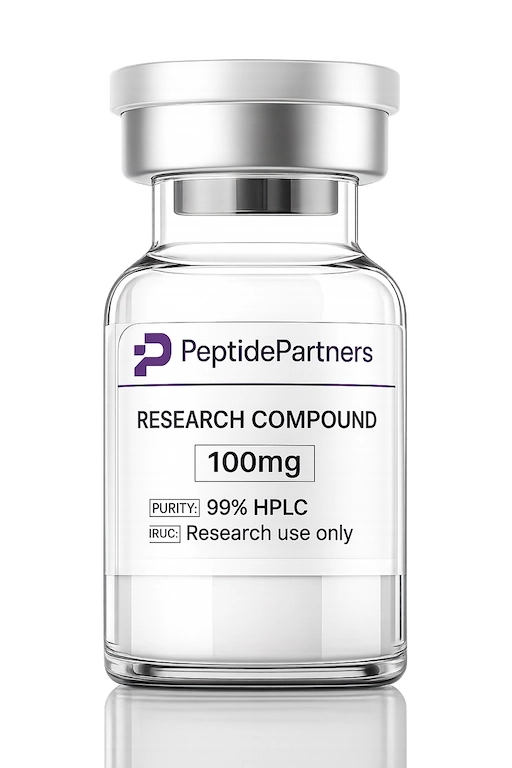
NAD+ Buffered (900mg (900,000 mcg) vials)

Pharmacy Grade NAD+

At-Home Blood Test
Research Supplies
Peptide Vials (750 mg (750,000 mcg), 100 mg (100,000 mcg) dose 3x/week)
Each 750 mg (750,000 mcg) vial holds seven full 100 mg (100,000 mcg) draws or 15 full 50 mg (50,000 mcg) draws before losses. Counts do not combine leftovers from separate vials.
| Cycle length | Planning note |
|---|---|
4 weeks 2 vials | 12 injections needed; round up for priming losses. |
8 weeks 4 vials | 24 injections needed. |
12 weeks 6 vials | 36 injections needed; 6 vials hold 42 full draws before losses. |
Insulin Syringes (U-100)
Use one fresh syringe per injection. The 100 mg (100,000 mcg) example at 100 mg/mL (100,000 mcg/mL) needs a 1 mL / 100-unit syringe.
| Cycle length | Planning note |
|---|---|
4 weeks 12 syringes | 1 per injection at 3x/week. |
8 weeks 24 syringes | Bulk box of 100 lasts multiple cycles. |
12 weeks 36 syringes | Confirm gauge and barrel size match draw volume. |
Bacteriostatic Water
Use 7.5 mL per 750 mg (750,000 mcg) vial for 100 mg/mL (100,000 mcg/mL). A 10 mL BAC water bottle reconstitutes one 750 mg (750,000 mcg) vial with margin.
| Cycle length | Planning note |
|---|---|
4 weeks 2 x 10 mL bottles | Reconstitutes ~2 vials with margin. |
8 weeks 4 x 10 mL bottles | Adds margin for losses and spare reconstitution. |
12 weeks 6 x 10 mL bottles | Six vials use 45 mL. Allow extra for spills or storage limits. |
Round up everything for dropped syringes, damaged swabs, priming losses, and protocol adjustments.
Companion Supplies & Routine Support
NAD+ 500 mg (500,000 mcg) Injection Dosage Chart
A 500 mg (500,000 mcg) vial contains 500 mg (500,000 mcg) total. It does not mean that each injection contains 500 mg (500,000 mcg). The amount of bacteriostatic water added determines the concentration, and that concentration determines the number of milliliters or U-100 syringe units needed for a selected amount.
Vial Amount Is Not the Injection Amount
A label such as 500 mg (500,000 mcg) or 1,000 mg (1,000,000 mcg) describes the total amount in the vial. The amount in one draw depends on the final concentration and the selected research-planning amount.
How Much BAC Water for 500 mg (500,000 mcg) NAD+?
There is no single required amount of bacteriostatic water for a 500 mg (500,000 mcg) NAD+ vial. The water volume is chosen to create a concentration that produces practical draw volumes. Always calculate the final concentration before converting an amount into milliliters or syringe units.
NAD+ 500 mg (500,000 mcg) Vial Concentration and Draw Chart
| BAC water added | Final concentration | 25 mg (25,000 mcg) draw | 50 mg (50,000 mcg) draw | 75 mg (75,000 mcg) draw | 100 mg (100,000 mcg) draw |
|---|---|---|---|---|---|
| 5 mL | 100 mg/mL (100,000 mcg/mL) | 0.25 mL / 25 units; fits 0.5 mL syringe | 0.50 mL / 50 units; fits 0.5 mL syringe | 0.75 mL / 75 units; 1 mL syringe required | 1.00 mL / 100 units; 1 mL syringe required |
| 2.5 mL | 200 mg/mL (200,000 mcg/mL) | 0.125 mL / 12.5 units; fits 0.5 mL syringe | 0.25 mL / 25 units; fits 0.5 mL syringe | 0.375 mL / 37.5 units; fits 0.5 mL syringe | 0.50 mL / 50 units; fits 0.5 mL syringe |
The water amount changes the concentration, not the total amount of NAD+ in the vial. Confirm the vial label and final mixed volume before calculating a draw. These rows show concentration math only.
Calculate NAD+ Syringe Units
Enter the vial amount, bacteriostatic-water volume, and selected research-planning amount to calculate the concentration, draw volume, and U-100 syringe units. University of Peptide calculator.
NAD+ 1,000 mg (1,000,000 mcg) Injection Dosage Chart
A 1,000 mg (1,000,000 mcg) vial provides a larger total amount, but the syringe calculation still depends on how much bacteriostatic water is added. A more concentrated mixture uses fewer syringe units for the same selected amount.
How Much BAC Water for 1,000 mg (1,000,000 mcg) NAD+?
A 1,000 mg (1,000,000 mcg) NAD+ vial may be mixed at different concentrations. For example, adding 10 mL creates a less concentrated solution than adding 5 mL. The correct syringe draw depends on the final concentration, not only the vial amount.
NAD+ 1,000 mg (1,000,000 mcg) Vial Concentration and Draw Chart
| Vial setup | Concentration | Selected amount | Draw volume | U-100 units | Syringe note |
|---|---|---|---|---|---|
| 1,000 mg (1,000,000 mcg) + 10 mL | 100 mg/mL (100,000 mcg/mL) | 25 mg (25,000 mcg) | 0.25 mL | 25 units | Fits a 0.5 mL syringe |
| 1,000 mg (1,000,000 mcg) + 10 mL | 100 mg/mL (100,000 mcg/mL) | 50 mg (50,000 mcg) | 0.50 mL | 50 units | Fits a 0.5 mL syringe |
| 1,000 mg (1,000,000 mcg) + 10 mL | 100 mg/mL (100,000 mcg/mL) | 75 mg (75,000 mcg) | 0.75 mL | 75 units | Exceeds 0.5 mL; use a 1 mL syringe |
| 1,000 mg (1,000,000 mcg) + 10 mL | 100 mg/mL (100,000 mcg/mL) | 100 mg (100,000 mcg) | 1.00 mL | 100 units | Exceeds 0.5 mL; use a 1 mL syringe |
| 1,000 mg (1,000,000 mcg) + 5 mL | 200 mg/mL (200,000 mcg/mL) | 25 mg (25,000 mcg) | 0.125 mL | 12.5 units | Fits a 0.5 mL syringe |
| 1,000 mg (1,000,000 mcg) + 5 mL | 200 mg/mL (200,000 mcg/mL) | 50 mg (50,000 mcg) | 0.25 mL | 25 units | Fits a 0.5 mL syringe |
| 1,000 mg (1,000,000 mcg) + 5 mL | 200 mg/mL (200,000 mcg/mL) | 75 mg (75,000 mcg) | 0.375 mL | 37.5 units | Fits a 0.5 mL syringe |
| 1,000 mg (1,000,000 mcg) + 5 mL | 200 mg/mL (200,000 mcg/mL) | 100 mg (100,000 mcg) | 0.50 mL | 50 units | Fits a 0.5 mL syringe |
Confirm the actual final mixed volume before using any concentration or syringe-unit calculation. These rows show concentration math only.
NAD+ Subcutaneous Injection Dosage Chart
Subcutaneous NAD+ schedules are often planned with smaller amounts and injection volumes than clinic-based IV protocols. There is no single established SubQ schedule, so the table clearly labels the source and evidence level behind each range.
SubQ NAD+ Research-Planning Chart
| Planning phase | Amount per injection | Frequency | Weekly total | Draw-volume note | Evidence type |
|---|---|---|---|---|---|
| Assessment | 50 mg (50,000 mcg) | Once or 3 times weekly | 50 or 150 mg (50,000 or 150,000 mcg) | Calculate from the final vial concentration | Community and clinic planning |
| Titration | 75 mg (75,000 mcg) | 1-3 times weekly | 75-225 mg (75,000-225,000 mcg) | Calculate from the final vial concentration | Community and clinic planning |
| Standard maintenance | 100 mg (100,000 mcg) | 2-3 times weekly | 200-300 mg (200,000-300,000 mcg) | Calculate from the final vial concentration | Community and clinic planning |
| Loading (intensive) | 100-200 mg (100,000-200,000 mcg) | Daily for 7-10 days | 700-1,400 mg (700,000-1,400,000 mcg) during a 7-day week | Calculate from the final vial concentration | Supervised clinic practice; not a proven SubQ schedule |
Direct human evidence for SubQ NAD+ schedules is limited. These are research-planning examples, not clinically proven protocols or recommendations.
NAD+ Reconstitution Chart by Vial Size
Reconstitution converts a lyophilized (powder) NAD+ vial into a measured liquid concentration. Pre-mixed liquid vials and pens skip this step entirely.
There is no single BAC-water amount that applies to every NAD+ vial. Adding more water creates a less concentrated mixture, while adding less water creates a more concentrated mixture. The total amount inside the vial remains the same.
NAD+ Reconstitution and Syringe Units by Vial Size
| Vial amount | BAC water | Concentration | 25 mg (25,000 mcg) | 50 mg (50,000 mcg) | 75 mg (75,000 mcg) | 100 mg (100,000 mcg) |
|---|---|---|---|---|---|---|
| 500 mg (500,000 mcg) | 5 mL | 100 mg/mL (100,000 mcg/mL) | 0.25 mL / 25 units | 0.50 mL / 50 units | 0.75 mL / 75 units | 1.00 mL / 100 units |
| 1,000 mg (1,000,000 mcg) | 10 mL | 100 mg/mL (100,000 mcg/mL) | 0.25 mL / 25 units | 0.50 mL / 50 units | 0.75 mL / 75 units | 1.00 mL / 100 units |
| 100 mg (100,000 mcg) | 1 mL | 100 mg/mL (100,000 mcg/mL) | 0.25 mL / 25 units | 0.50 mL / 50 units | 0.75 mL / 75 units | 1.00 mL / 100 units |
| 750 mg (750,000 mcg) | 7.5 mL | 100 mg/mL (100,000 mcg/mL) | 0.25 mL / 25 units | 0.50 mL / 50 units | 0.75 mL / 75 units | 1.00 mL / 100 units |
| 1,500 mg (1,500,000 mcg) | 10 mL | 150 mg/mL (150,000 mcg/mL) | 0.167 mL / 16.7 units | 0.333 mL / 33.3 units | 0.50 mL / 50 units | 0.667 mL / 66.7 units |
These rows are concentration-math examples, not required mixing setups. Confirm the vial label, final mixed volume, and syringe capacity before calculating a draw.
Step-by-Step Reconstitution
An illustrated reading aid for the product instructions. Confirm the exact formulation, diluent and handling method first. A research-only vial is not an approved medicine.
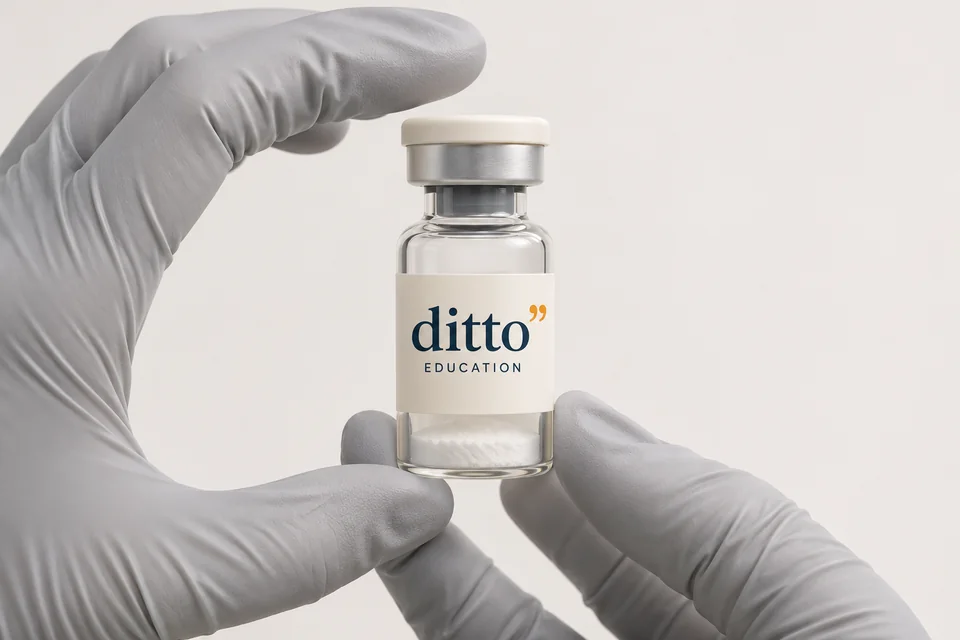
Check preparation conditions
Check the product instructions for the required preparation temperature. Do not warm a vial or change storage conditions based on a generic peptide guide.
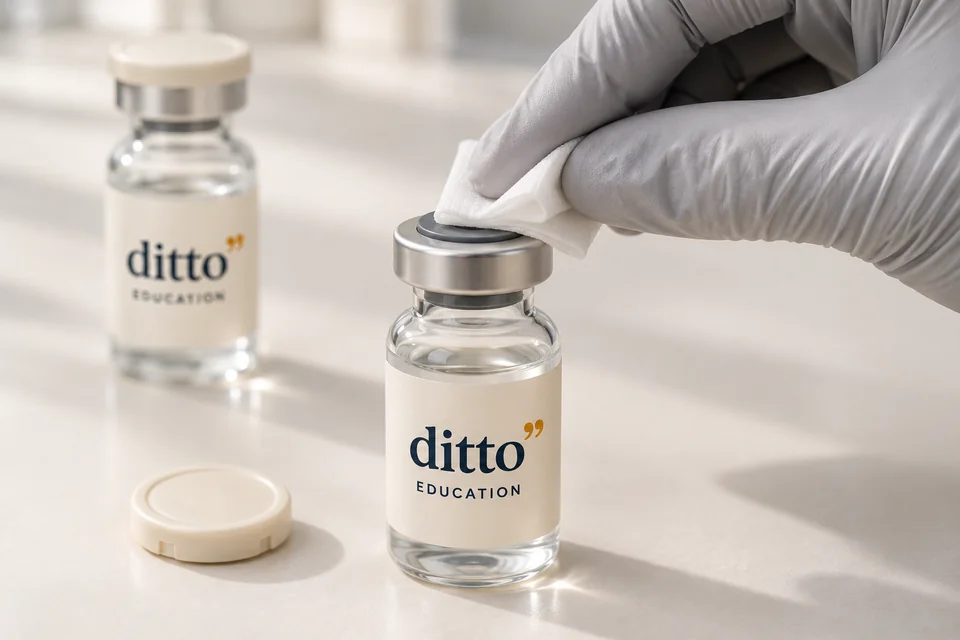
Clean the stopper
If the product instructions call for vial access, disinfect the exposed rubber stopper with a fresh alcohol swab and let it dry. Avoid touching it afterward; use sterile equipment for each access.
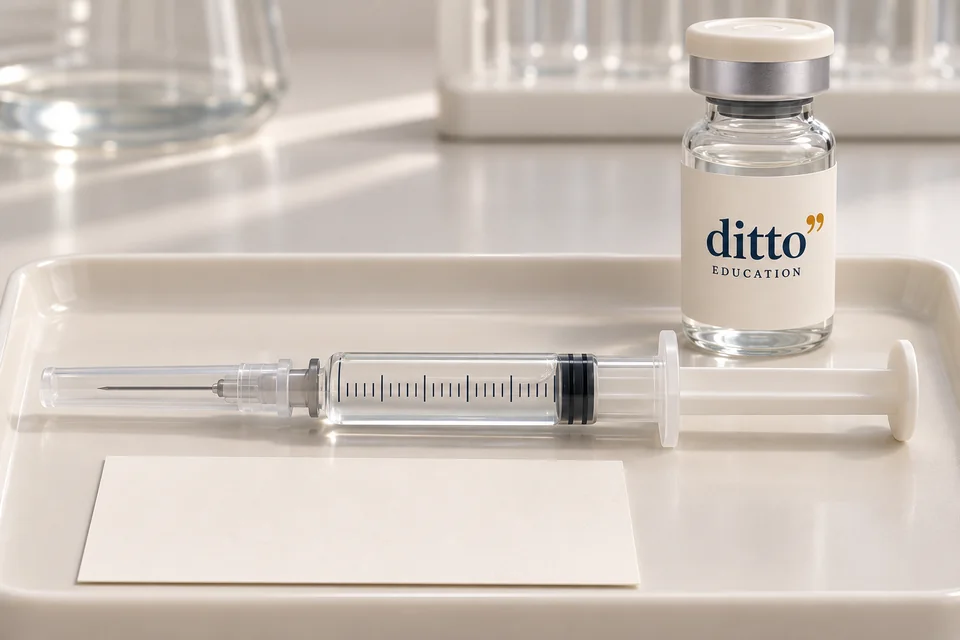
Measure the specified diluent
Confirm the diluent type and volume in the product instructions. Measure that volume using the correct syringe scale. A concentration calculation cannot establish that a diluent is compatible.
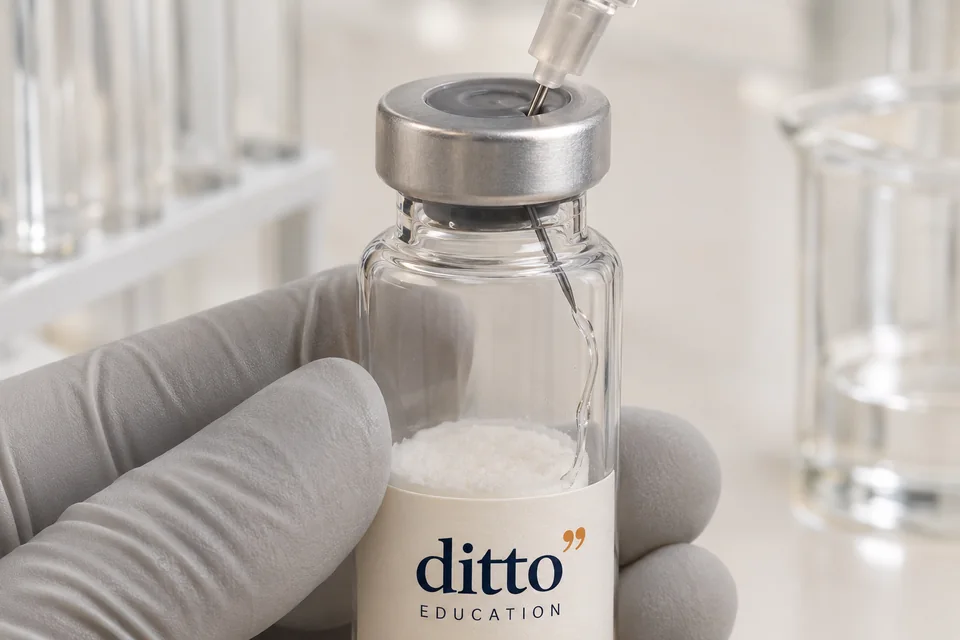
Add as instructed
Follow the product-specific addition method. Where slow addition along the vial wall is specified, keep the flow gentle. Do not infer a preparation method from a dose table or combine separate compounds in one vial.
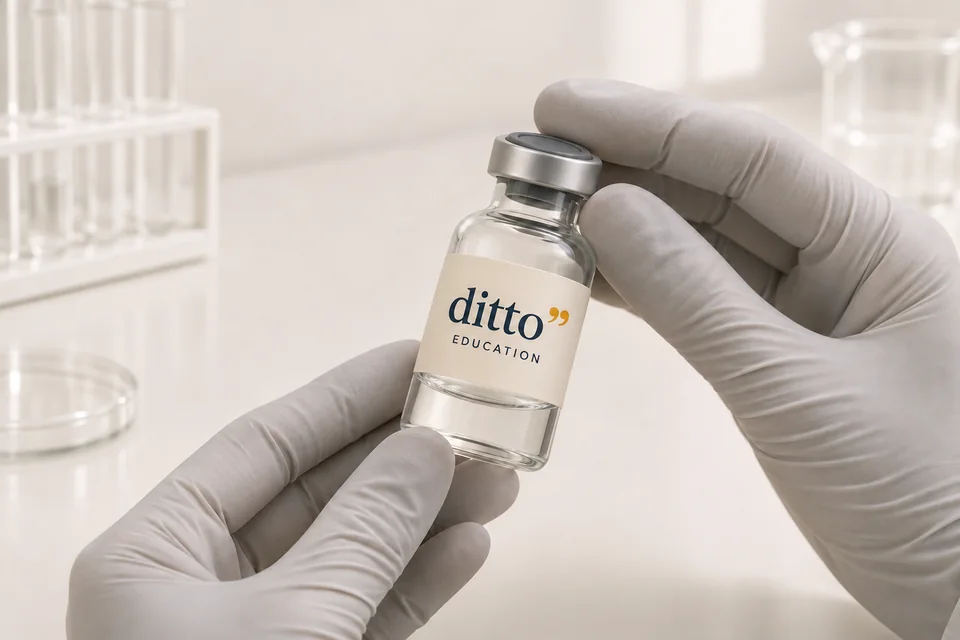
Mix and inspect
Use the mixing method specified for the product; some require gentle swirling rather than shaking. Compare the appearance with the instructions. Do not use a preparation with unexpected particles, discoloration or suspected contamination.
Mix and inspect
Use the mixing method specified for the product; some require gentle swirling rather than shaking. Compare the appearance with the instructions. Do not use a preparation with unexpected particles, discoloration or suspected contamination.
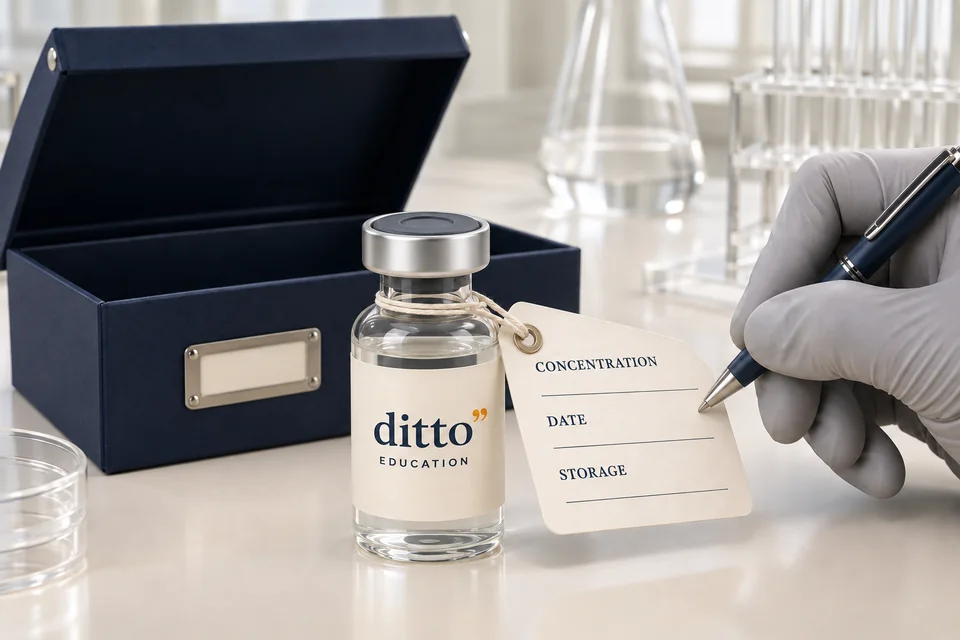
Record and store
Record the preparation date and calculated concentration in mg/mL and mcg/mL. Follow the exact storage conditions and discard time on the product instructions. There is no universal refrigerated shelf life for all peptides.
AI-generated educational scenes with Ditto-inspired concept labels; not photographs of supplied products. CDC preparation and equipment principles · Check your calculation
NAD+ Syringe Units Calculator
Use the University of Peptide calculator for exact calculations across vial sizes and BAC-water volumes.
NAD+ Cycle Length: 4, 8 and 12-Week Research Planning
There is no universally established NAD+ injection cycle. Research, clinic, and community schedules vary by route, amount, and purpose. The examples below are planning frameworks, not proven schedules or recommendations for human use.
NAD+ Cycle Length Planning Examples
| Planning framework | Loading or maintenance context | Review or adjustment point | Evidence type |
|---|---|---|---|
| 4-week SubQ planning | Assessment or titration phase | Review at week 4 | Community and clinic planning |
| 8-week SubQ planning | Titration followed by a regular planning phase | Review at weeks 4 and 8 | Community and clinic planning |
| 12-week SubQ planning | Titration followed by maintenance planning | Review every 4 weeks | Community and clinic planning |
| IV loading plus maintenance | 3-5 daily sessions, then weekly or monthly | Review after loading and every 4-8 weeks | Supervised clinic practice |
| Continuous or ongoing planning | Frequency may be adjusted instead of using a fixed break | Review every 4-8 weeks | Clinic and community planning |
NAD+ does not have to be cycled on and off. A longer cycle has not been proven to produce better results.
For a closer look at human study schedules, loading phases, washouts, and the evidence limits behind 4-, 8-, and 12-week claims, read the NAD+ cycle-length guide.
NAD+ Dosage Chart
This NAD+ dosage chart summarizes a common SubQ titration reference from 50 mg (50,000 mcg) to 100 mg (100,000 mcg) per injection, with frequency and tolerance notes shown by phase.
 UNIVERSITY OF PEPTIDE · RESEARCH REFERENCE
NAD+ Dosage Chart
| Phase | Dose | Frequency | Notes |
|---|---|---|---|
| Assessment | 50 mg (50,000 mcg) | 1x weekly or 3x weekly | Inject slowly over 5-10 seconds; assess tolerance. |
| Titration | 75 mg (75,000 mcg) | 1-3x weekly | Increase by ~25 mg (25,000 mcg) if assessment phase is well tolerated. |
| Standard maintenance | 100 mg (100,000 mcg) | 2-3x weekly | Morning timing is commonly preferred. |
| Loading (intensive) | 100-200 mg (100,000-200,000 mcg) | Daily for 7-10 days | Higher side-effect potential; supervised settings only. |
How NAD+ Works
NAD+ moves electrons between chemical reactions inside cells. That role makes it a critical part of how mitochondria turn food into ATP, how cells repair DNA, and how a family of regulatory proteins called sirtuins control gene activity.
Energy production
Mitochondria use NAD+ to shuttle electrons through the electron transport chain. When NAD+ levels drop, ATP production becomes less efficient.
DNA repair (PARPs)
PARP enzymes consume NAD+ to repair damaged DNA strands. Chronic DNA damage burns through NAD+ over time, which can compete with energy-production needs.
Sirtuin activation
Sirtuins (SIRT1-7) are NAD+-dependent enzymes that regulate gene expression, mitochondrial biogenesis, inflammation, and stress responses. Sirtuin activity falls when NAD+ falls.
CD38 and inflammaging
CD38, a NAD+-consuming enzyme, becomes more active with age and chronic inflammation. Higher CD38 activity contributes to age-related NAD+ decline.
Tissue NAD+ levels fall progressively across the lifespan. Restoring NAD+ levels in animal models has reversed multiple aging biomarkers; in human research, oral precursors raise blood NAD+ reliably, while injectable NAD+ pharmacokinetics are less fully characterized.
Who NAD+ Is For and Who Should Avoid It
Research-context interest in NAD+ centers on cellular-energy support, recovery research, and longevity research planning. Several groups should not pursue NAD+ injection without licensed clinician oversight.
- Pregnancy and breastfeeding — insufficient safety data.
- Active malignancy — NAD+ supports cellular proliferation, including potentially in cancer cells; oncologist consultation is essential.
- Severe hepatic or renal impairment — high-dose protocols may add metabolic burden.
- Known hypersensitivity to NAD+ formulation components or BAC water preservatives.
- Concurrent high-dose niacin — overlapping NAD+ pathway loads warrant clinician review.
- People on glucose-lowering medications — NAD+ may enhance insulin sensitivity over time; closer glucose monitoring is prudent.
Not medical advice
Eligibility judgments require a licensed clinician who knows your medical history. This list highlights commonly-cited boundaries from the published literature, not a personalized screen.
NAD+ Side Effects & Safety
Commonly reported with SubQ
- Injection-site stinging, burning, redness, or temporary nodules — managed with slow injection and site rotation.
- Nausea, headache, or flushing during early titration — often dose- and rate-dependent.
- Temporary fatigue or paradoxical tiredness in the first few sessions.
- Sleep disruption when injected later in the day.
Commonly reported with IV
- Flushing and warmth, especially with faster infusion rates.
- Chest tightness or shortness of breath at faster infusion rates.
- Mild headache from transient vasodilation.
- Transient increase in heart rate with rapid administration.
Theoretical or longer-horizon concerns
- Long-term human safety data for high-dose injectable NAD+ remains limited.
- Active malignancy is a contraindication because NAD+ supports cellular proliferation.
- Liver and kidney markers are reasonable to track in extended high-dose protocols.
Most acute side effects are dose-dependent and rate-dependent. Slower injection, lower starting doses, and morning timing all reduce reported tolerability issues.
NAD+ Timeline & What to Monitor
What changes when
- Immediate (24-48 hours) — IV NAD+ recipients commonly report energy and mental-clarity changes; SubQ effects may take longer.
- Weeks 1-4 — energy and sleep changes are the most commonly reported subjective endpoints during titration.
- Weeks 4-12 — recovery, exercise capacity, and skin-quality reports emerge anecdotally; large RCT outcome data is lacking for direct injection.
- Beyond 12 weeks — sustained planning typically rotates between SubQ phases and oral precursor bridges.
What is reasonable to monitor
- Sleep quality and timing (NAD+ can feel stimulating if dosed late).
- Subjective energy and recovery from training.
- Liver markers (ALT, AST) in extended high-dose protocols.
- Glucose markers if also using glucose-lowering medications.
- Injection-site appearance — rotation and slow injection should keep sites clean.
Stopping points
If side effects do not resolve with slower injection or dose reduction, the most common research-planning response is to pause, reassess, and consult a clinician before resuming.
NAD+ Clinical Evidence Context
Most published human RCT evidence on NAD+ uses oral precursors (NR and NMN), not direct injectable NAD+. The summary below separates the two.
Oral NR (strongest human RCT base)
Multiple RCTs (Martens 2018, Conze 2019, Dollerup 2018, Brakedal 2022) consistently raised blood NAD+ with favorable tolerability at doses up to 1,000 mg/day (1,000,000 mcg/day).
Oral NMN (growing human RCT base)
Yoshino 2021 showed improved muscle insulin sensitivity at 250 mg/day (250,000 mcg/day) in postmenopausal women. A 2022 dose-response RCT (Yi et al., Geroscience) at 300/600/900 mg/day raised NAD+ dose-dependently with no safety issues at 60 days.
Direct injectable NAD+ (limited human evidence)
Historical IV case reports (O'Holleran 1961) plus pilot pharmacokinetic comparisons (e.g. ChromaDex 2024 medRxiv) show IV delivery raises NAD+ rapidly. A 2024 systematic review in the American Journal of Physiology found insufficient high-quality evidence for routine subcutaneous NAD+ practice.
Mechanism and biology
Yoshino, Baur, Imai 2018 (Cell Metabolism) and Covarrubias et al. 2021 (Nature Reviews Mol Cell Biol) document age-related NAD+ decline and the biology that drives clinical interest.
Ongoing trials
Trials like NCT07328100 (intravenous coenzyme I for vascular aging, 2026 start) and NCT05243290 (oral NR in Gulf War Illness) continue to expand the human evidence base.
Evidence gap
Large-scale, long-duration RCTs of subcutaneous NAD+ for wellness or longevity endpoints have not been published as of June 2026.
NAD+ Storage & Handling
NAD+ Storage Reference
| State | Storage | Notes |
|---|---|---|
| Lyophilized (powder) | 68-77F (20-25C) room temp, dry, dark | Acceptable for short-term per manufacturer label. |
| Lyophilized (powder) | 35.6-46.4F (2-8C) refrigerated | Long-term storage option; follow manufacturer guidance. |
| Pre-mixed liquid | 35.6-46.4F (2-8C) | Use per pharmacy beyond-use date. |
| Reconstituted (from powder) | 35.6-46.4F (2-8C) | Typical 14-30 day window depending on compounder guidance. |
Avoid freezing lyophilized NAD+ unless the manufacturer label allows it. Discard reconstituted solution if it yellows, browns, or shows particulates.
NAD+ Protocol Mistakes & Troubleshooting
Strong injection-site sting
Slower injection and a lower-concentration mix are commonly reported mitigations; any dose changes should involve a clinician.
Cloudy or discolored vial
Discard the vial and reconstitute a fresh one. Cloudy or yellowing solution should not be injected.
Wrong BAC water volume
Recalculate concentration with the actual volume added; use the University of Peptide calculator to refit dose volume to the new concentration.
Flushing or chest tightness during IV
Clinicians typically slow the infusion rate because faster IV NAD+ rates are the most commonly reported driver of acute side effects.
Sleep disruption
Morning dosing is commonly reported to reduce sleep disruption because NAD+ can feel stimulating through energy-pathway activation.
Missed dose
Reported protocols typically skip a missed dose and resume at the next scheduled session rather than doubling up.
Site nodule or irritation
Rotate to a fresh quadrant for several sessions, inspect the syringe-and-needle technique, and slow the injection. Persistent reactions warrant clinician review.
Seek qualified care
If symptoms include severe shortness of breath, chest pain, or signs of an allergic reaction, stop immediately and seek qualified medical care.
NAD+ Regulatory Status
As of June 2026: Injectable NAD+ is not FDA-approved for any therapeutic indication in the United States. It is available only as a compounded preparation through 503A/503B pharmacies under valid prescription.
Oral precursors have a different regulatory profile. Nicotinamide riboside (NR) holds GRAS and NDI status as a dietary supplement ingredient. Nicotinamide mononucleotide (NMN) was excluded from the dietary supplement definition by FDA in 2022-2023 and remains in regulatory limbo for new dietary supplement marketing in the US.
Internationally, IV NAD+ is offered through licensed clinics in many jurisdictions; rules on compounded injectable products vary. Verify your local regulations and pharmacy licensing before any sourcing decision.
NAD+ vs NMN vs NR (and IV vs SubQ)
NAD+ Delivery Comparison
| Feature | NAD+ Injection (SubQ) | NAD+ Infusion (IV) | Oral NMN | Oral NR (Niagen) |
|---|---|---|---|---|
| Mechanism | Direct coenzyme delivery | Direct coenzyme delivery | NAD+ precursor (converted in vivo) | NAD+ precursor (converted in vivo) |
| Typical research-planning dose | 50-100 mg (50,000-100,000 mcg), 2-3x/week | 250-1,000 mg (250,000-1,000,000 mcg) per session | 300-600 mg/day (300,000-600,000 mcg/day) | 300-1,000 mg/day (300,000-1,000,000 mcg/day) |
| Speed to systemic NAD+ rise | Hours | Minutes to hours | Days to weeks | Days to weeks |
| Strongest human evidence | Limited | Pilot PK and historical case reports | Growing RCT base | Strongest RCT base |
| Convenience | At-home injection technique required | Clinic visit, 2-4 hour infusion | Daily oral capsule | Daily oral capsule |
| Regulatory status | Not FDA-approved; compounded only | Not FDA-approved; compounded only | Not currently a dietary supplement in the US | GRAS/NDI dietary supplement |
| Cost (research-context) | Moderate per cycle | High per session | Moderate monthly | Moderate monthly |
NMN and NR are oral precursors; SubQ and IV are direct delivery. Research-context plans sometimes layer one oral precursor with periodic injectable phases.
Many planning models pair an oral precursor for daily baseline support with periodic injectable NAD+ phases. The choice usually depends on tolerance, convenience, regulatory access, and cost — not a clear human-efficacy ranking.
NAD+ Blood Tests & Monitoring
NAD+ protocols are usually discussed in energy, aging, and mitochondrial research. Monitoring focuses on broad health context because routine labs do not directly measure meaningful NAD pathway response.
Blood test markers to discuss with a clinician
| Marker | Why it matters | Timing |
|---|---|---|
| CBC with differential | Screens anemia, infection patterns, and general blood-cell context before interpreting fatigue changes. | Baseline |
| Comprehensive metabolic panel (CMP) | Reviews liver, kidney, electrolyte, and glucose context before interpreting energy changes. | Baseline |
| Vitamin B12 and methylmalonic acid | Helps evaluate B12 status when fatigue, neuropathy, or heavy B-vitamin use is part of the context. | Optional |
| Homocysteine | Adds methylation and cardiovascular context when B-vitamin status is being reviewed. | Optional |
| TSH and free T4 | Thyroid imbalance can affect fatigue, weight, mood, and energy. | Optional |
Monitoring guidance is pathway-based and broad because NAD+ protocols do not have established clinical lab-response markers.
At-home blood test option
Easy at home option to monitor core metrics during research cycles.
Beyond Whoosh
Pharmacy Grade NAD+
Prescription-grade NAD+ care through Beyond Whoosh. Whoosh prescribes after a clinician reviews your eligibility.
Simple timing framework
- Baseline
- Discuss baseline labs before starting, especially with fatigue, liver disease, kidney disease, cardiovascular symptoms, or B-vitamin supplementation.
- Follow-up
- Repeat broad markers after 8-12 weeks if symptoms change or the protocol continues.
- Longer term
- For longer protocols, review broad health trends every 3-6 months with a clinician.
How to interpret the labs
- Routine bloodwork does not confirm cellular NAD improvement.
- Fatigue can come from sleep, thyroid status, anemia, mood, medications, nutrition, or chronic disease.
- Supplement stacks can complicate interpretation of B-vitamin and methylation markers.
Do not wait for routine labs
Chest pain, fainting, severe shortness of breath, confusion, or new neurologic symptoms need medical review.
FAQ
Q1: What is a common NAD+ injection dosage and frequency?
NAD+ injection schedules vary by route, concentration, and research setting. Published studies, clinic protocols, and community schedules do not use one standard amount or frequency.
Q2: How much BAC water do you add to 500 mg (500,000 mcg) NAD+?
There is no single required water amount. The BAC-water volume determines the final concentration, which determines the milliliters or syringe units needed for a selected amount.
Q3: How much BAC water do you add to 1,000 mg (1,000,000 mcg) NAD+?
A 1,000 mg (1,000,000 mcg) vial may be mixed at more than one concentration. Confirm the final mixed volume before calculating the draw.
Q4: How many units is 50 mg (50,000 mcg) of NAD+?
The number of U-100 syringe units depends on the vial concentration. A 50 mg (50,000 mcg) draw cannot be converted into units until the vial amount and BAC-water volume are known.
Q5: How many units is 100 mg (100,000 mcg) of NAD+?
The unit count depends on the final concentration. Use the vial amount and mixed volume to calculate milligrams per milliliter before converting the draw to U-100 units.
Q6: What is the difference between a 500 mg (500,000 mcg) vial and a 500 mg (500,000 mcg) injection?
A 500 mg (500,000 mcg) vial contains 500 mg (500,000 mcg) total. A 500 mg (500,000 mcg) injection would mean drawing the full 500 mg (500,000 mcg) amount, which is different from selecting a smaller amount from that vial.
Q7: How long is an NAD+ cycle?
There is no universally established NAD+ injection cycle. Research, clinic, and community schedules vary, so cycle examples should be treated as planning context rather than proven protocols.
Q8: How often are NAD+ injections planned?
How often it is used depends on the route, amount, and source. Study plans may differ from what clinics use or people report online.
Q9: Is NAD+ injected subcutaneously or intramuscularly?
Both SubQ and IM routes appear in clinic and community protocols, while IV administration is also common in supervised settings. Direct route-comparison evidence is limited.
Q10: Does buffered NAD+ change the dosage math?
The concentration math still depends on the total vial amount and final mixed volume. Buffering may affect preparation details, but it does not replace the need to calculate milligrams per milliliter.
Q11: Is NAD+ a peptide?
No. NAD+ is a coenzyme, not a peptide. It is grouped with peptide protocols because it shares the injectable research-use format and overlaps with peptide goals around energy, recovery, and longevity. The phrase "NAD peptide" usually refers to injectable NAD+ rather than a true peptide compound.
Q12: What is a typical starting dose of NAD+ injections?
A common research-planning SubQ start is 50 mg (50,000 mcg) (about 0.50 mL at 100 mg/mL (100,000 mcg/mL)) once weekly or three times weekly, then escalate by ~25 mg (25,000 mcg) as tolerated. Use the University of Peptide calculator for exact syringe units.
Q13: How do you reconstitute a 750 mg (750,000 mcg) NAD+ vial?
One concentration-math example uses 7.5 mL of bacteriostatic water for a 750 mg (750,000 mcg) vial, giving 100 mg/mL (100,000 mcg/mL). Another uses 4.5 mL for 166.7 mg/mL (166,700 mcg/mL). Neither amount applies to every vial. The University of Peptide calculator handles custom volumes.
Q14: How do you reconstitute a 1,000 mg (1,000,000 mcg) NAD+ vial?
One concentration-math example uses 10 mL of bacteriostatic water for a 100 mg/mL (100,000 mcg/mL) solution. Another uses 5 mL for a 200 mg/mL (200,000 mcg/mL) solution. Neither amount is universal, so confirm the vial label and final mixed volume before calculating a draw.
Q15: How much NAD+ should you take daily?
There is no universal daily dose. Research-planning SubQ models commonly stay at 50-100 mg (50,000-100,000 mcg) per injection 2-3x weekly. Loading models use 100-200 mg (100,000-200,000 mcg) daily for 7-10 days under supervision. Daily SubQ NAD+ outside loading periods is not standard.
Q16: What is the maximum dose of NAD+ studied?
Historical IV protocols used 500-1,000 mg (500,000-1,000,000 mcg) per session. Common research-planning SubQ caps sit around ~300 mg (300,000 mcg) weekly without further evaluation. Doses above 200-300 mg/day (200,000-300,000 mcg/day) are typically reserved for supervised therapeutic use.
Q17: What are NAD+ injection side effects?
Common reports include injection-site stinging, nausea, headache, flushing, and short-term fatigue. Most acute effects are dose- and rate-dependent and improve with slower injection and conservative titration.
Q18: Is NAD+ FDA-approved?
Injectable NAD+ is not FDA-approved as a therapeutic. It is available only as a compounded preparation through 503A/503B pharmacies. Oral nicotinamide riboside (NR) holds GRAS/NDI status as a dietary supplement.
Q19: Is there a difference between buffered and unbuffered NAD+?
Both contain the same NAD+ molecule. Buffered NAD+ ships with a pH stabilizer (most commonly Tris) that brings the reconstituted solution closer to physiological pH (~7-8.5), while unbuffered NAD+ reconstitutes acidic (~pH 3-4) and is more often associated with injection-site stinging. The dosing math is identical for both formats. For a full buyer-side comparison, see the Supplier research references.
Q20: How does NAD+ compare to NMN and NR?
NAD+ injection delivers the molecule directly. NMN and NR are oral precursors the body converts into NAD+. Oral NR has the strongest human RCT base; NMN evidence is growing. Direct injectable NAD+ has more limited human RCT data but rapid systemic availability.
Q21: How long does NAD+ take to work?
IV NAD+ commonly produces noticeable acute effects within 24-48 hours. SubQ NAD+ effects are usually more gradual over the first 2-4 weeks of consistent dosing. Larger RCT outcome data for direct injectable NAD+ remains limited.
Q22: Can NAD+ be taken on an empty stomach SubQ?
SubQ NAD+ does not depend on stomach contents because it bypasses digestion. Some researchers prefer morning dosing on an empty stomach for energy-pathway timing, but this is preference-driven rather than evidence-driven.
Q23: Where can I buy NAD+ research peptides?
University of Peptide does not directly sell NAD+. Compare COA-verified suppliers in our supplier reviews and verify current vial size, concentration, and lab testing before any sourcing decision.
Q24: Is this NAD+ guide medical advice?
No. This page is an educational research reference. NAD+ injection is not FDA-approved. Consult a licensed clinician for personal medical decisions.
Sources & Research
- Martens CR, Denman BA, Mazzo MR, et al. Chronic nicotinamide riboside supplementation is well-tolerated and elevates NAD+ in healthy middle-aged and older adults. Nature Communications (2018)
- Conze D, Brenner C, Kruger CL. Safety and Metabolism of Long-term Administration of NIAGEN in Healthy Overweight Adults. Scientific Reports (2019)
- Yoshino M, Yoshino J, Kayser BD, et al. Nicotinamide mononucleotide increases muscle insulin sensitivity in prediabetic women. Science (2021)
- Yi L, Maier AB, Tao R, et al. The efficacy and safety of beta-nicotinamide mononucleotide (NMN) supplementation in healthy middle-aged adults: a randomized, multicenter, double-blind, placebo-controlled, parallel-group, dose-dependent clinical trial. GeroScience (2023)
- Brakedal B, Dolle C, Riber F, et al. The NADPARK study: A randomized phase I trial of nicotinamide riboside supplementation in Parkinson's disease. Cell Metabolism (2022)
- Dollerup OL, Christensen B, Svart M, et al. A randomized placebo-controlled clinical trial of nicotinamide riboside in obese men. American Journal of Clinical Nutrition (2018)
- Elhassan YS, Kluckova K, Fletcher RS, et al. Nicotinamide Riboside Augments the Aged Human Skeletal Muscle NAD+ Metabolome and Induces Transcriptomic and Anti-inflammatory Signatures. Cell Reports (2019)
- Yoshino J, Baur JA, Imai SI. NAD+ Intermediates: The Biology and Therapeutic Potential of NMN and NR. Cell Metabolism (2018)
- Covarrubias AJ, Perrone R, Grozio A, Verdin E. NAD+ metabolism and its roles in cellular processes during ageing. Nature Reviews Molecular Cell Biology (2021)
- Trammell SAJ, Schmidt MS, Weidemann BJ, et al. Nicotinamide riboside is uniquely and orally bioavailable in mice and humans. Nature Communications (2016)
- Braidy N, Liu Y. NAD+ therapy in age-related degenerative disorders: A benefit/risk analysis. Experimental Gerontology (2020)
- Hong W, Mo F, Zhang Z, et al. The Safety and Antiaging Effects of Nicotinamide Mononucleotide in Human Clinical Trials: an Update. Advances in Nutrition (2023)
- Evaluation of safety and effectiveness of NAD in different clinical conditions (systematic review). Evaluation of safety and effectiveness of NAD in different clinical conditions: a systematic review. American Journal of Physiology - Endocrinology and Metabolism (2024)
- ClinicalTrials.gov NCT07328100 — Efficacy and Safety of Coenzyme I (NAD) for Injection on Vascular Aging. ClinicalTrials.gov (2026)
- Cleveland Clinic Health Library NAD (Nicotinamide Adenine Dinucleotide) — function, anatomy, conditions and disorders. Cleveland Clinic (2026)
Related Dosing Protocols
Reconstitution calculator
Enter your own values. This tool calculates quantities, not a recommended dose.
Check the concentration
Changing the unit keeps the entered mass equivalent. 1 milligram (mg) = 1,000 micrograms (mcg). This tool does not choose a target amount.
Biological IU (optional, product-specific)
Only enter a potency explicitly stated as IU per mg on the exact product label or reference. Do not enter the 100 from a U-100 syringe. No factor is assumed for any peptide.
Your result will appear here
Enter the mass, final solution volume and target mass, or load a fictional example.
Assumes accurate masses, final solution volume and even distribution. Blend arithmetic does not establish whether substances can be mixed. Read the formulas and assumptions.
Study findings, reported examples and supplier statements have different levels of evidence. Follow the citations and check the formulation, population and date before interpreting a number.
Editorial standards and corrections