On this page
TOOLS FOR THIS GUIDE
Work with FOXO4-DRI
The guide name carries across. Amounts, dates and instructions remain yours to enter; opening a tool saves nothing.
Worked examples: calculations, records and source checks
Fictional arithmetic, unrelated to a recommended amount of FOXO4-DRI: 10 mg (10,000 mcg) in a final 2 mL is 5 mg/mL (5,000 mcg/mL). A target mass of 0.25 mg (250 mcg) corresponds to 0.05 mL, or 5 U-100 syringe markings. Biological IU cannot be inferred from these inputs. Neither the mass nor the liquid is a preparation recommendation.
Open the arithmetic example- Supply example: two 10 mg (10,000 mcg) vials start at 20 mg (20,000 mcg). Four recorded entries of 0.25 mg (250 mcg) leave a theoretical 19 mg (19,000 mcg), before losses or expiry. Skipped entries do not deduct stock.
- Measurement example: enter “Sleep duration”, “7.5”, “hours” and the date. Keep the same unit and note changing conditions. A trend does not prove a treatment effect.
- Source example: record “rat study” when rats were studied, even when the headline describes recovery. Keep the exact paper and its limitations.
The planner accepts mg and mcg. Biological IU/USP units, sprays, drops and variable mixtures need product-specific instructions; they cannot be inferred from a generic mass calculator. For stacks, record each known ingredient separately.
FDA: why concentration and unit errors matterEvidence & source checks
FOXO4-DRI: source check
A FOXO4 peptide disrupted FOXO4-p53 interactions in senescent cells; mouse experiments reported improvements in selected aging-related measures.
Limit: These experiments do not establish human longevity benefits or a human senolytic regimen.
Question to resolve: Which species, endpoint and follow-up support the anti-aging claim?
Source and reading scope
Targeted Apoptosis of Senescent Cells Restores Tissue Homeostasis in Response to Chemotoxicity and Aging.
PubMed abstract; not an independent clinical review. Checked 25 November 2026.
What to verify before filling a plan
- Identity and formulation: match the name, sequence or active ingredient, route and strength. A related molecule or branded medicine is not automatically equivalent.
- Instruction source: obtain the actual amount, frequency and duration from qualified medical instructions. A community table or trial protocol does not establish an individual regimen.
- Units and product details: keep mass, liquid volume and biological activity units separate. Record batch, storage and discard instructions from the actual product; the tools cannot determine sterility or stability.
- Review and follow-up: list medicines and supplements, unresolved interactions and questions. Agree on relevant observations and actions with a qualified professional; normal measurements do not prove safety.
Selected source context, not a systematic review or medical approval. Study cards checked 24 November 2026; guide source notes checked 25 November 2026. Research references and citations appear below.
Guide summary
REFERENCE SUMMARY- Compound
- FOXO4-DRI (D-retro-inverso peptide)
- Class
- Senolytic peptide
- Common format
- Injectable (research SubQ; IP/IV in animal studies)
- Regulatory status
- Not FDA-approved / research use only
FOXO4-DRI Quick Start
FOXO4-DRI is a lab-made peptide studied as a senolytic — a compound meant to clear out senescent cells. Senescent cells are old, damaged cells that stop dividing but refuse to die, and they can leak inflammatory signals into nearby tissue. FOXO4-DRI is sometimes written FOX04-DRI (with a zero) and is sold by some research vendors under the name Proxofim.
The name 'DRI' stands for D-retro-inverso. In plain terms, the peptide is built from mirror-image amino acids in reverse order. That design makes it much harder for the body to break down, so it lasts longer than a normal peptide.
- What it targets
- Disrupts the FOXO4-p53 interaction so p53 can trigger apoptosis in senescent cells.
- Evidence level
- Mouse and cell studies only. No human trials as of June 2026.
- Published protocol
- Mouse: 5 mg/kg (5,000 mcg/kg) intraperitoneal, repeated over weeks (Baar et al., 2017).
- Reconstitute
- A 10 mg (10,000 mcg) vial with 3.0 mL BAC water gives about 3.33 mg/mL (3,330 mcg/mL).
- Measuring
- With a 10 mg (10,000 mcg) vial plus 3.0 mL BAC water, 7.5 units is about 250 mcg (0.25 mg), 11.25 units is about 375 mcg (0.375 mg), and 15 units is about 500 mcg (0.5 mg).
- Regulatory status
- Not FDA-approved. Research use only.
Read this first
FOXO4-DRI has never been tested in a human clinical trial. Every number on this page comes from animal research or community self-reports. This is an educational research reference, not medical advice or a dosing recommendation.
FOXO4-DRI Dosing Context & Schedule
There is no validated human dose for FOXO4-DRI. To stay honest about the evidence, this section splits dosing into two clearly labeled tabs: the published animal protocol (the only peer-reviewed dosing data) and the community-derived structure (what researchers and forums report using, with no clinical backing).
FOXO4-DRI Dosing Reference
Pick the reference you want to read. Neither tab is a human dosing recommendation.
Open a format reference below.
Community derived format reference
What the research-use community reports. No clinical validation.
Outside formal studies, FOXO4-DRI is usually discussed as a daily SubQ schedule that starts low and increases in stages. The structure below is reported community context only; it has not been tested in a human clinical trial.
Community-derived FOXO4-DRI daily dosing ladder
| Week | Daily Dose |
|---|---|
| Weeks 1-4 | 250 mcg (0.25 mg) |
| Weeks 5-8 | 375 mcg (0.375 mg) |
| Weeks 9-12 | 500 mcg (0.5 mg) |
| Weeks 13-16 | 500 mcg (0.5 mg) |
Reported community dosing only. No human clinical trial has validated this schedule, route, or dose.
No safety data behind this
Community SubQ use was never tested for bioavailability, safety, or effect in humans. Treat the schedule above as reported use, not a recommendation. Senescent cells also play useful roles in wound healing and tumor suppression, so clearing them is not automatically beneficial.
Published animal format reference
The only peer-reviewed dosing data, from mouse studies.
In the foundational 2017 Cell study, naturally aged mice and chemotherapy-treated mice received FOXO4-DRI at 5 mg/kg (5,000 mcg/kg) by intraperitoneal (IP) injection, given on an intermittent schedule (about three times per week) across several weeks. Treated aged mice showed restored coat density, better kidney markers, and improved physical activity.
Later mouse work used similar amounts. One Leydig-cell study gave 5 mg/kg (5,000 mcg/kg) IP every other day for three doses; a spermatogenesis study used 5 mg/kg/day (5,000 mcg/kg/day) for 30 days. These are animal doses by body weight and do not convert into a safe human dose.
Animal data only
Scaling a mouse 5 mg/kg (5,000 mcg/kg) dose to a person involves large uncertainty. No direct human trial has evaluated any FOXO4-DRI dose. Treat these figures as research background, not a protocol to copy.
How FOXO4-DRI is generally discussed (research context, not a recommendation)
| Approach | Pattern | Duration | Notes |
|---|---|---|---|
| Reported community dosing | 250 -> 375 -> 500 mcg (0.5 mg) daily, SubQ | 16 weeks | Reported only; no human validation |
| Published mouse regimen | 5 mg/kg (5,000 mcg/kg) IP, ~3x/week | Several weeks | Animal only; not human-equivalent |
FOXO4-DRI community schedules differ heavily between sources. The ladder above is not a validated human dose.
FOXO4-DRI Supplies Needed
The supply math below uses a 10 mg (10,000 mcg) vial reconstituted with 3.0 mL BAC water (about 3.33 mg/mL (3,330 mcg/mL)) and the 16-week community-derived daily ladder shown above. Because FOXO4-DRI stability after reconstitution is uncertain, plan conservatively and avoid mixing more than you can use promptly.
Recommended Supply
Choose your region
Use discount code PEPPAL at Peptide Partners checkout. See why we love Peptide Partners.
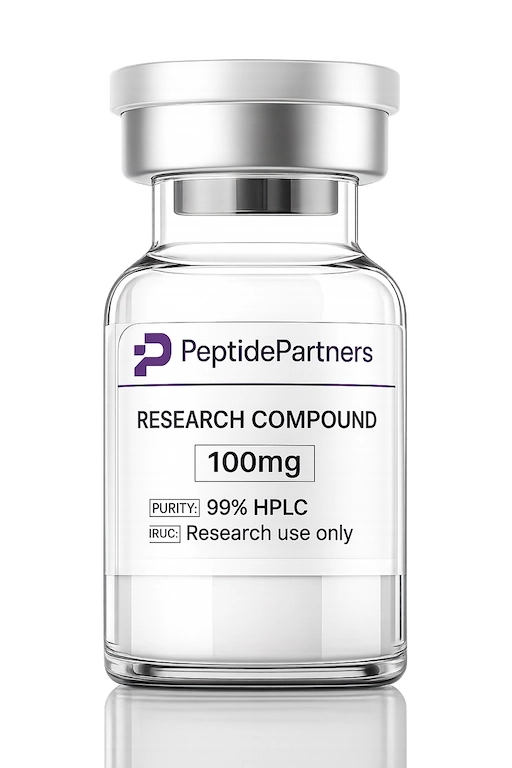
Peptide Partners Shop

At-Home Blood Test
Research Supplies
Peptide Vials (10 mg (10,000 mcg))
A 10 mg (10,000 mcg) vial contains enough material for 40 days at 250 mcg/day (0.25 mg/day), about 26 days at 375 mcg/day (0.375 mg/day), or 20 days at 500 mcg/day (0.5 mg/day). Real-world vial count depends on how conservatively you handle reconstituted storage.
| Cycle structure | Planning note |
|---|---|
Weeks 1-4 1 vial | About 7 mg (7,000 mcg) used at 250 mcg/day (0.25 mg/day). |
Weeks 5-8, Weeks 9-12, Weeks 13-16 2 vials | Weeks 5-8: About 10.5 mg (10,500 mcg) used at 375 mcg/day (0.375 mg/day).; Weeks 9-12: About 14 mg (14,000 mcg) used at 500 mcg/day (0.5 mg/day).; Weeks 13-16: About 14 mg (14,000 mcg) used at 500 mcg/day (0.5 mg/day). |
Full 16-week ladder 5-7 vials | About 45.5 mg (45,500 mcg) total used; round up if discarding partially used reconstituted vials. |
Insulin Syringes (U-100)
Prefer 0.3 mL / 30-unit syringes for the small daily draws.
| Cycle structure | Planning note |
|---|---|
Weeks 1-4, Weeks 5-8 28 syringes | 1 syringe per daily administration. |
Weeks 9-16 56 syringes | 1 syringe per daily administration. |
Full 16-week ladder 112 syringes | Round up for dropped or damaged syringes. |
Bacteriostatic Water
Use 3.0 mL per 10 mg (10,000 mcg) vial for reconstitution.
| Cycle structure | Planning note |
|---|---|
Full 16-week ladder 15-21 mL | 5-7 vials x 3.0 mL each; round up based on vial handling. |
Round up for priming losses, dropped syringes, and damaged swabs. Reconstituted FOXO4-DRI is best used fresh, so do not over-reconstitute for storage.
Companion Supplies & Routine Support
FOXO4-DRI Reconstitution Guide
Reconstitution means adding sterile bacteriostatic (BAC) water to the dry peptide powder. For a 10 mg (10,000 mcg) FOXO4-DRI vial, adding 3.0 mL of BAC water gives a concentration of about 3.33 mg/mL (3,330 mcg/mL) (3,333 mcg/mL (3.333 mg/mL)).
On a U-100 insulin syringe, 1 mL equals 100 units, so each unit holds about 33.3 mcg (0.0333 mg). The table below converts common draw sizes into milligrams at this concentration.
10 mg (10,000 mcg) vial + 3.0 mL BAC water (about 3.33 mg/mL (3,330 mcg/mL))
| Draw (units) | Volume | Amount delivered |
|---|---|---|
| 7.5 units | 0.075 mL | about 0.25 mg (250 mcg) |
| 10 units | 0.10 mL | about 0.33 mg (330 mcg) (333 mcg (0.333 mg)) |
| 11.25 units | 0.1125 mL | about 0.375 mg (375 mcg) |
| 15 units | 0.15 mL | about 0.5 mg (500 mcg) |
| 30 units | 0.30 mL | about 1.0 mg (1,000 mcg) |
Amounts are rounded. Use the calculator for a different vial size or water volume.
An illustrated reading aid for the product instructions. Confirm the exact formulation, diluent and handling method first. A research-only vial is not an approved medicine.
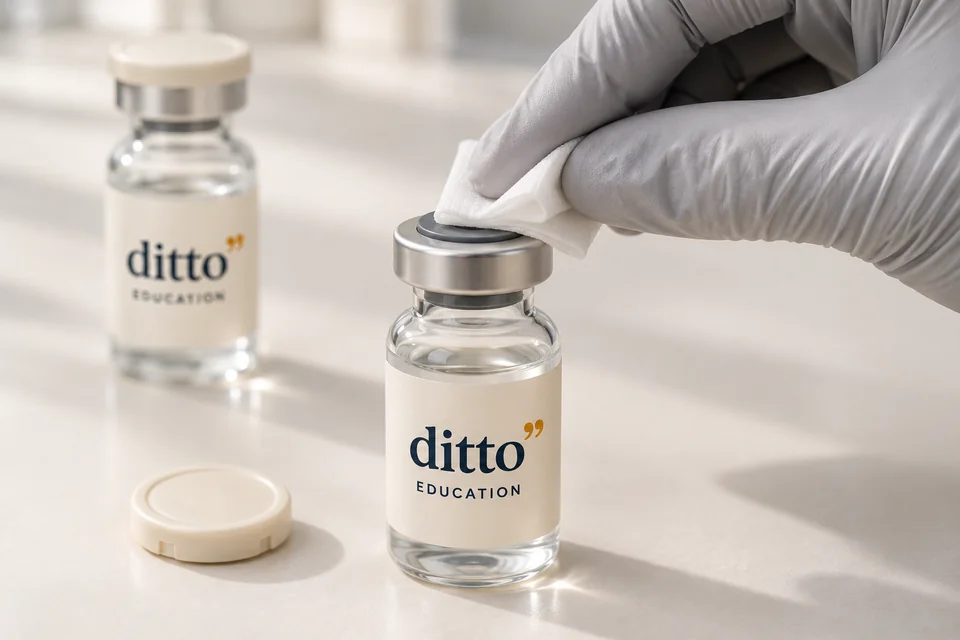
Clean the stopper
If the product instructions call for vial access, disinfect the exposed rubber stopper with a fresh alcohol swab and let it dry. Avoid touching it afterward; use sterile equipment for each access.
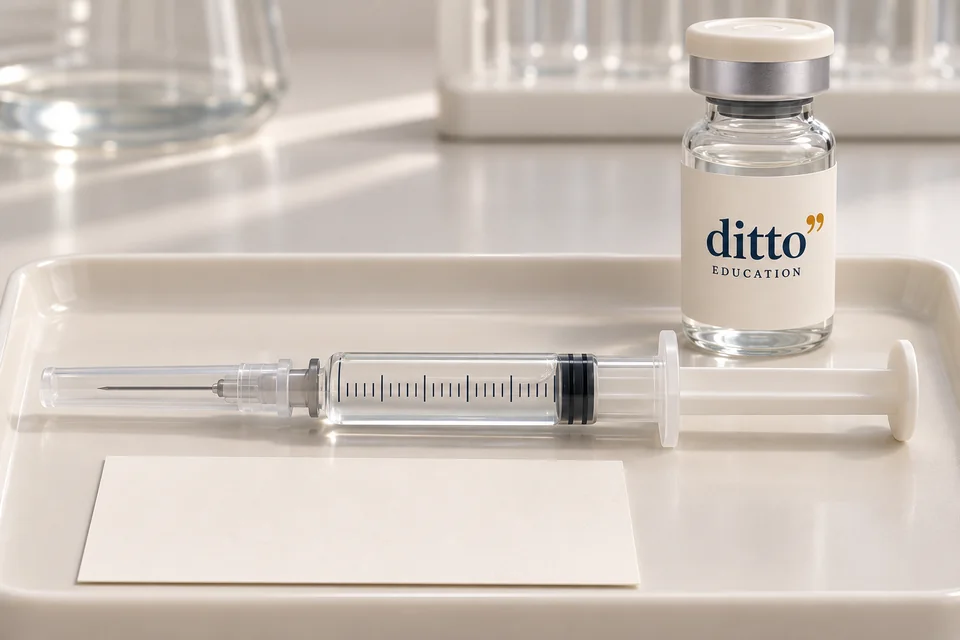
Measure the specified diluent
Confirm the diluent type and volume in the product instructions. Measure that volume using the correct syringe scale. A concentration calculation cannot establish that a diluent is compatible.
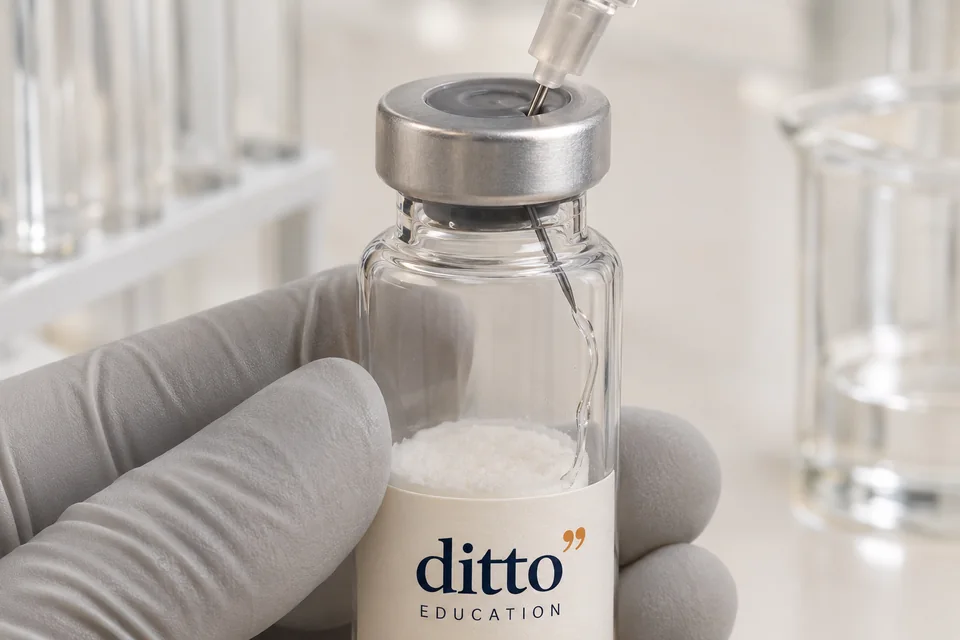
Add as instructed
Follow the product-specific addition method. Where slow addition along the vial wall is specified, keep the flow gentle. Do not infer a preparation method from a dose table or combine separate compounds in one vial.
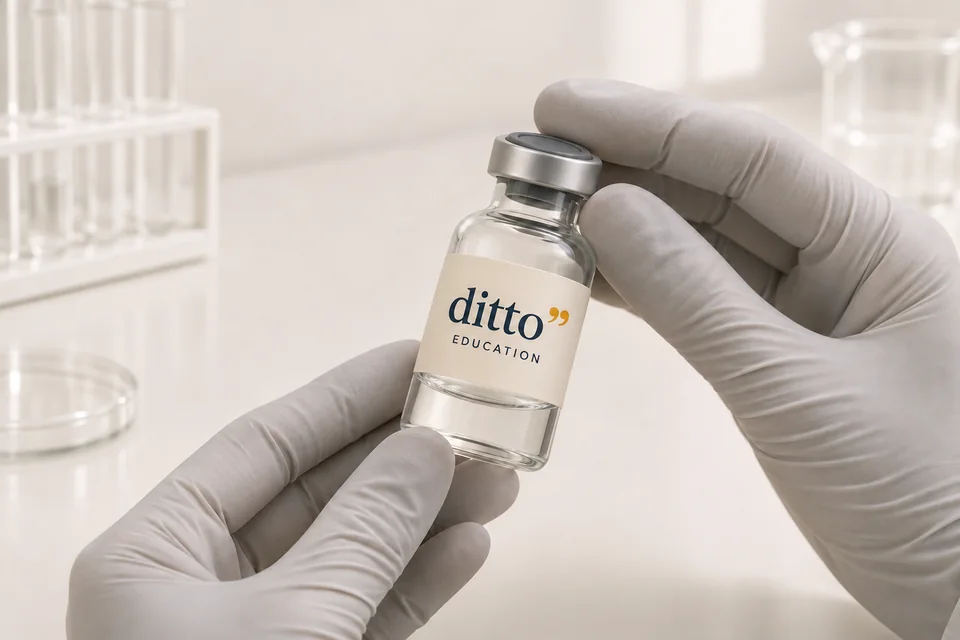
Mix and inspect
Use the mixing method specified for the product; some require gentle swirling rather than shaking. Compare the appearance with the instructions. Do not use a preparation with unexpected particles, discoloration or suspected contamination.
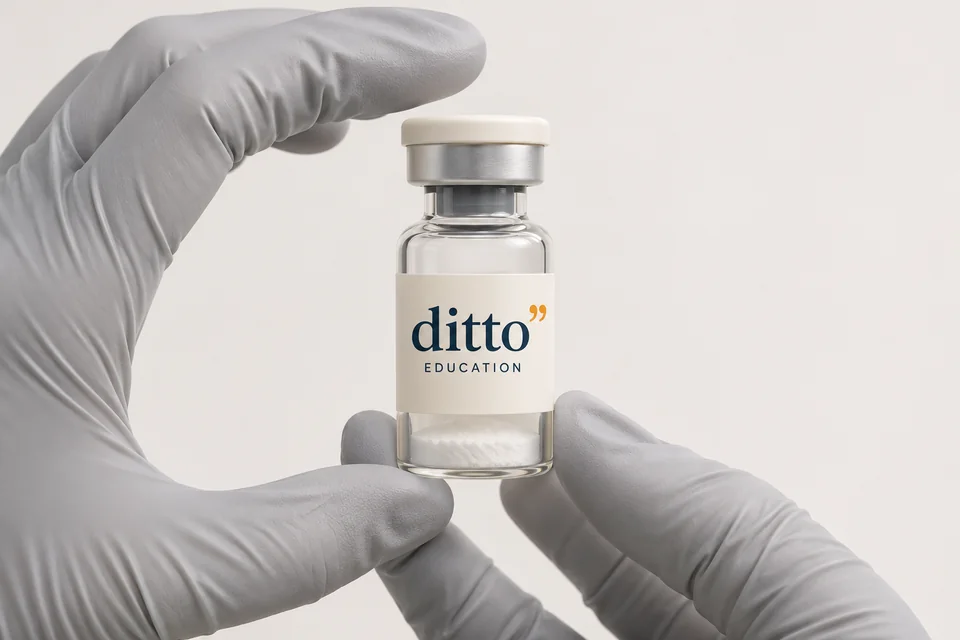
Check the exact product
Read the label, formulation, vial content, expiry and preparation instructions. Check the vial and closure for damage. Appearance alone cannot establish identity, purity or sterility.
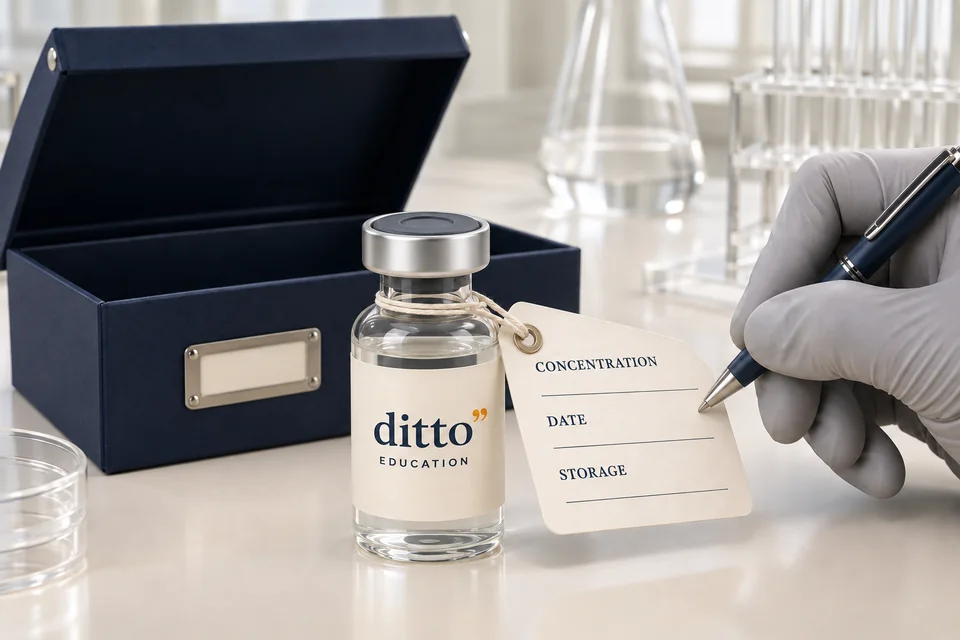
Record and store
Record the preparation date and calculated concentration in mg/mL and mcg/mL. Follow the exact storage conditions and discard time on the product instructions. There is no universal refrigerated shelf life for all peptides.
Record and store
Record the preparation date and calculated concentration in mg/mL and mcg/mL. Follow the exact storage conditions and discard time on the product instructions. There is no universal refrigerated shelf life for all peptides.
AI-generated educational scenes with Ditto-inspired concept labels; not photographs of supplied products. CDC preparation and equipment principles · Check your calculation
Run your own numbers
Use the University of Peptide calculator for any vial size, BAC-water volume, or target dose.
FOXO4-DRI Dosage Chart
This FOXO4-DRI dosage chart summarizes the reported community dosing schedule by week range, stepping from 250 mcg (0.25 mg) daily to 500 mcg (0.5 mg) daily across a 16-week structure.
 UNIVERSITY OF PEPTIDE · RESEARCH REFERENCE
FOXO4-DRI Dosage Chart
| Week | Daily Dose |
|---|---|
| Weeks 1-4 | 250 mcg (0.25 mg) |
| Weeks 5-8 | 375 mcg (0.375 mg) |
| Weeks 9-12 | 500 mcg (0.5 mg) |
| Weeks 13-16 | 500 mcg (0.5 mg) |
How FOXO4-DRI Works
In plain English: senescent cells survive by holding the protein p53 hostage. They use another protein, FOXO4, to keep p53 stuck in the nucleus so it cannot trigger cell death. FOXO4-DRI acts as a decoy that competes with FOXO4 for p53.
Once p53 is freed, it moves out of the nucleus toward the mitochondria and sets off the intrinsic apoptosis pathway (a caspase-driven self-destruct program). Healthy cells do not lean on the FOXO4-p53 link for survival, which is why the effect is reported as selective for senescent cells.
This mechanism was first described in mice and cell cultures. A 2025 Nature Communications paper mapped the binding to the disordered transactivation domain of p53, adding structural detail to how FOXO4-DRI engages its target.
- Target: the FOXO4-p53 protein interaction in senescent cells.
- Result: p53 nuclear exclusion, mitochondrial translocation, and apoptosis.
- Main limitation: selectivity figures (such as an in-vitro ~11.7-fold preference for senescent cells) come from cell models, not humans.
Who Should Be Cautious With FOXO4-DRI
Because there is no human safety data, the cautions below are drawn from the compound's mechanism and from general research practice, not from clinical findings.
- Anyone with active cancer or undergoing cancer treatment — p53 and senescence pathways interact with tumor biology in complex ways.
- Pregnancy and breastfeeding — no data exist, and apoptosis-inducing agents are a clear unknown.
- Active infection, recent surgery, or wound healing — senescent cells assist tissue repair, so clearing them could theoretically interfere.
- Anyone who is immunocompromised — clearance of dying cells depends on immune function.
Talk to a qualified clinician
These are theoretical cautions, not a complete safety list. A licensed clinician should weigh any decision involving an unapproved research compound.
FOXO4-DRI Side Effects & Safety
There are no documented human side effects because FOXO4-DRI has not been tested in people. In mouse studies, researchers reported improved health markers rather than obvious toxicity, but mouse safety does not predict human safety.
Theoretical and reported concerns
- Off-target cell death: no compound is perfectly selective, so healthy cells with temporarily high FOXO4 could be affected in theory.
- Immune or clearance burden: a rapid wave of dying cells must be cleared, which could stress the system.
- Impaired healing: senescent cells help wound repair, so clearing them at the wrong time may not be wanted.
- Injection-site issues: redness, swelling, or irritation are common to any SubQ injection and are made worse by poor technique or low-quality product.
Product quality is its own risk. As a D-amino acid peptide, FOXO4-DRI is costly to synthesize, and a wrong amino acid at the binding site can sharply cut activity. Unverified material may not contain what the label claims.
FOXO4-DRI Expected Timeline
Any timeline for FOXO4-DRI is extrapolated from animal data and community reports. No controlled human data exists, so treat the sequence below as a rough biology timeline, not a promised outcome.
Mechanistic timeline (extrapolated, not human-confirmed)
| Window | What is proposed to happen |
|---|---|
| Hours | Peptide enters circulation; competes with FOXO4 for p53 in senescent cells. |
| 1-3 days | Freed p53 reaches mitochondria; senescent cells begin apoptosis. |
| 3-14 days | Immune system clears apoptotic debris; SASP inflammatory signaling declines. |
| 2-6 weeks | Tissue microenvironment improves in animal models as inflammation drops. |
In mice, effects were seen within roughly 10-14 days. Human timing is unknown.
Useful markers for senescence biology in a research context include hs-CRP, IL-6, and IGF-1, alongside a comprehensive metabolic panel. These track inflammation and general health, not FOXO4-DRI activity directly.
FOXO4-DRI Clinical Evidence Context
There is no direct human evidence yet. As of June 2026, FOXO4-DRI has no completed or registered human clinical trial. Everything known comes from animal models and cell cultures.
Foundational mouse study (Baar et al., 2017, Cell)
Designed FOXO4-DRI and showed selective senescent-cell clearance, with restored fitness, fur density, and kidney function in aged and chemotherapy-treated mice.
Leydig cell aging (Zhang et al., 2020, Aging)
FOXO4-DRI improved testosterone secretion and the testicular microenvironment in aged mice by clearing senescent Leydig cells.
Human chondrocytes in vitro (Huang/Zhu et al., 2021)
Selectively removed senescent cells from expanded human chondrocyte cultures, suggesting cartilage-repair relevance — in a dish, not a person.
Endothelial senescence (2025, PMC)
Reported FOXO4-DRI clearing senescent endothelial cells via a p53/BCL-2/caspase-3 pathway in animal and cell models.
Mechanism mapping (Nature Communications, 2025)
Identified the disordered p53 transactivation domain as the binding target, adding structural detail to the mechanism.
The missing pieces are big: no human dosing, no human pharmacokinetics, no controlled human safety data, and no long-term outcome data in any species. The biotech developing it (Cleara Biotech, from Erasmus University research) has discussed disease targets, but that is development interest, not proof.
FOXO4-DRI Storage & Handling
Store the dry (lyophilized) powder frozen for long-term holding and keep reconstituted solution cold. FOXO4-DRI is reported to be sensitive to oxidation and repeated freeze-thaw cycles, so reconstituted material is best used fresh rather than stored for months.
Storage reference
Lyophilized (powder)
FOXO4-DRI
-4F (-20C) long-term; colder is better
Reconstituted (liquid)
FOXO4-DRI
35.6-46.4F (2-8C); use within a short window
Appearance
FOXO4-DRI
Clear solution after mixing
| FOXO4-DRI | |
|---|---|
| Lyophilized (powder) | -4F (-20C) long-term; colder is better |
| Reconstituted (liquid) | 35.6-46.4F (2-8C); use within a short window |
| Appearance | Clear solution after mixing |
Discard reconstituted solution that turns cloudy or develops particles.
FOXO4-DRI Troubleshooting
- Cloudy or particle-filled vial: do not use it. Clear solution is expected after gentle mixing.
- Over-reconstituting: a common error is mixing more than will be used promptly, then storing it too long. Reconstitute closer to what the cycle needs.
- No noticeable effect: in research terms, FOXO4-DRI only acts where senescent cells are present, and degraded or mislabeled product loses activity. Product quality is a frequent confounder.
- Site rotation and fresh supplies are commonly cited research-handling practices associated with less irritation.
- Route confusion: animal studies used IP/IV; community use is SubQ with unknown bioavailability differences. Do not assume routes are interchangeable.
FOXO4-DRI Regulatory Status
As of June 2026, FOXO4-DRI is not approved by the FDA or any other regulatory agency for human use. It has no approved indication and no established legal pathway for prescription or pharmacy compounding in the United States. It is sold only as a research-use-only chemical, sometimes under the name Proxofim.
Research use only
Research-use-only products are not intended for human consumption. Laws and enforcement vary by region, so verify your local rules before purchasing.
FOXO4-DRI vs Other Senolytics
FOXO4-DRI is one of several approaches to clearing senescent cells, and they are not interchangeable.
FOXO4-DRI vs nearby senolytics
| Option | Type | Human trial stage |
|---|---|---|
| FOXO4-DRI | D-retro-inverso peptide | None (preclinical only) |
| Dasatinib + Quercetin (D+Q) | Small-molecule drug + flavonoid | Early human trials (e.g., Alzheimer's) |
| Navitoclax | BCL-2 family inhibitor | Later-stage trials (e.g., myelofibrosis) |
D+Q and navitoclax are further along in humans but can affect healthy cells (e.g., low platelets). FOXO4-DRI's selectivity claims are from cell and animal models.
FAQ
Q1: What is FOXO4-DRI?
FOXO4-DRI is a synthetic D-retro-inverso peptide studied as a senolytic, meaning it is designed to selectively clear senescent cells. It works by disrupting the FOXO4-p53 interaction so that p53 can trigger apoptosis in those cells. It is also written FOX04-DRI and sold by some vendors as Proxofim.
Q2: What is FOXO4-DRI used for in research?
It is investigated mainly for cellular senescence and aging. Mouse and cell studies have looked at clearing senescent cells in aged tissue, testosterone-producing Leydig cells, cartilage chondrocytes, and blood-vessel endothelial cells. All current uses are preclinical research contexts, not approved treatments.
Q3: How is FOXO4-DRI dosed?
The only published dosing protocol is from mouse studies: 5 mg/kg (5,000 mcg/kg) by intraperitoneal injection, given intermittently over weeks. No human dose has been established and no human trials exist. Community sources report a 16-week subcutaneous ladder of 250 mcg (0.25 mg) daily for Weeks 1-4, 375 mcg (0.001-0.004, 0.375 mg) daily for Weeks 5-8, and 500 mcg (0.5 mg) daily for Weeks 9-16, but this is reported research context, not a recommendation.
Q4: How do you reconstitute a 10 mg (10,000 mcg) FOXO4-DRI vial?
Adding 3.0 mL of bacteriostatic water to a 10 mg (10,000 mcg) vial gives about 3.33 mg/mL (3,330 mcg/mL). On a U-100 insulin syringe, 7.5 units is about 250 mcg (0.25 mg), 11.25 units is about 375 mcg (0.375 mg), 15 units is about 500 mcg (0.5 mg), and 30 units is about 1 mg (1,000 mcg). Use the calculator at universityofpeptide.com/calculator for other vial sizes.
Q5: Is there a FOXO4-DRI dosage chart?
Yes, this guide includes a community-derived 16-week daily dosing ladder and a reconstitution chart for a 10 mg (10,000 mcg) vial reconstituted with 3.0 mL of BAC water. It converts syringe units into micrograms and milligrams. Any chart is a research reference only, since no human dose has been validated.
Q6: What are the side effects of FOXO4-DRI?
There are no documented human side effects because it has not been tested in people. Theoretical concerns include off-target cell death, immune burden from clearing many cells at once, impaired wound healing, and injection-site irritation. Product quality is a separate risk with this expensive-to-make peptide.
Q7: Are there any FOXO4-DRI human trials?
No. As of June 2026 there are no completed or registered human clinical trials for FOXO4-DRI. All evidence comes from mouse models and cell cultures. ClinicalTrials.gov is the authoritative place to check if that ever changes.
Q8: Is FOXO4-DRI FDA approved or legal?
FOXO4-DRI is not FDA approved and has no approved human indication. It is sold only as a research-use-only chemical and is not intended for human consumption. Laws vary by region, so verify local rules before purchasing.
Q9: What is the FOXO4-DRI peptide sequence?
FOXO4-DRI is a D-retro-inverso peptide built from a FOXO4 fragment that binds p53, joined to a cell-penetrating sequence, with a molecular weight near 4.8 kDa. Published descriptions vary slightly in reported length, so for the exact chemical identity check the PubChem entry rather than relying on a single secondary source.
Q10: Is FOXO4-DRI the same as Proxofim?
Proxofim is a name used by some research vendors for FOXO4-DRI. It refers to the same senolytic peptide. Listings sometimes appear as Proxofim 10 mg (10,000 mcg).
Q11: Can FOXO4-DRI treat cancer?
No such claim can be made. Some preclinical work explores FOXO4-p53-targeting peptides against senescent cancer cells, and the developer has discussed cancer as a research interest, but there is no human evidence that FOXO4-DRI treats cancer. People with active cancer should be especially cautious.
Q12: Is this page medical advice?
No. This is an educational research reference about FOXO4-DRI, not medical advice or a treatment plan. Talk with a qualified clinician before making decisions about any unapproved research compound.
Sources & Research
- Baar MP, Brandt RMC, Putavet DA, et al. Targeted apoptosis of senescent cells restores tissue homeostasis in response to chemotoxicity and aging. Cell (2017)
- Madl T, et al. The disordered p53 transactivation domain is the target of FOXO4 and the senolytic compound FOXO4-DRI. Nature Communications (2025)
- Zhang C, Xie Y, Chen H, et al. FOXO4-DRI alleviates age-related testosterone secretion insufficiency by targeting senescent Leydig cells in aged mice. Aging (Albany NY) (2020)
- Huang Y, He Y, Makarcyzk MJ, Lin H. Senolytic Peptide FOXO4-DRI Selectively Removes Senescent Cells From in vitro Expanded Human Chondrocytes. Frontiers in Cell and Developmental Biology (PMC8116695) (2021)
- Zhang H, et al. FOXO4-DRI regulates endothelial cell senescence via the p53 signaling pathway. PMC12852416 (2025)
- Yang Y, et al. FOXO4-DRI improves spermatogenesis in aged mice through reducing SASP secretion from Leydig cells. Mechanisms of Ageing and Development (2024)
- American Association for Cancer Research (Research Watch). A FOXO4 Inhibitory Peptide Limits Chemotoxicity in Mice. Cancer Discovery (2017)
- Le HH, et al. Molecular modelling of the FOXO4-TP53 interaction to design senolytic peptides for the elimination of senescent cancer cells. EBioMedicine (2021)
- National Center for Biotechnology Information. FOXO4-DRI (PubChem CID 167312269) — compound identity and molecular formula. PubChem (2026)
- U.S. National Library of Medicine. ClinicalTrials.gov registry — FOXO4-DRI search (no registered human trials as of June 2026). ClinicalTrials.gov (2026)
- Lifespan.io Rejuvenation Roadmap. Cleara Biotech — FOXO4-DRI development status. Lifespan.io (industry/development context) (2026)
Related Dosing Protocols
Educational use only
This guide is an educational research reference about FOXO4-DRI, not medical advice or a treatment plan. FOXO4-DRI is not FDA-approved and has not been tested in humans.
Calculate vial math
Use the calculator for custom vial size, BAC-water volume, and syringe-unit math.
Reconstitution calculator
Enter your own values. This tool calculates quantities, not a recommended dose.
Check the concentration
Changing the unit keeps the entered mass equivalent. 1 milligram (mg) = 1,000 micrograms (mcg). This tool does not choose a target amount.
Biological IU (optional, product-specific)
Only enter a potency explicitly stated as IU per mg on the exact product label or reference. Do not enter the 100 from a U-100 syringe. No factor is assumed for any peptide.
Your result will appear here
Enter the mass, final solution volume and target mass, or load a fictional example.
Assumes accurate masses, final solution volume and even distribution. Blend arithmetic does not establish whether substances can be mixed. Read the formulas and assumptions.
Study findings, reported examples and supplier statements have different levels of evidence. Follow the citations and check the formulation, population and date before interpreting a number.
Editorial standards and corrections