On this page
TOOLS FOR THIS GUIDE
Work with Humanin
The guide name carries across. Amounts, dates and instructions remain yours to enter; opening a tool saves nothing.
Worked examples: calculations, records and source checks
Fictional arithmetic, unrelated to a recommended amount of Humanin: 10 mg (10,000 mcg) in a final 2 mL is 5 mg/mL (5,000 mcg/mL). A target mass of 0.25 mg (250 mcg) corresponds to 0.05 mL, or 5 U-100 syringe markings. Biological IU cannot be inferred from these inputs. Neither the mass nor the liquid is a preparation recommendation.
Open the arithmetic example- Supply example: two 10 mg (10,000 mcg) vials start at 20 mg (20,000 mcg). Four recorded entries of 0.25 mg (250 mcg) leave a theoretical 19 mg (19,000 mcg), before losses or expiry. Skipped entries do not deduct stock.
- Measurement example: enter “Sleep duration”, “7.5”, “hours” and the date. Keep the same unit and note changing conditions. A trend does not prove a treatment effect.
- Source example: record “rat study” when rats were studied, even when the headline describes recovery. Keep the exact paper and its limitations.
The planner accepts mg and mcg. Biological IU/USP units, sprays, drops and variable mixtures need product-specific instructions; they cannot be inferred from a generic mass calculator. For stacks, record each known ingredient separately.
FDA: why concentration and unit errors matterEvidence & source checks
Humanin: source check
Experiments linked humanin to lifespan in worms and healthspan measures in mice; human observations concerned circulating levels.
Limit: The mouse treatment used the potent analogue HNG. Associations in people are not trials showing benefit from humanin administration.
Question to resolve: Is the source studying humanin, HNG, natural blood levels or administered treatment?
Source and reading scope
The mitochondrial derived peptide humanin is a regulator of lifespan and healthspan.
PubMed abstract; not an independent clinical review. Checked 25 November 2026.
What to verify before filling a plan
- Identity and formulation: match the name, sequence or active ingredient, route and strength. A related molecule or branded medicine is not automatically equivalent.
- Instruction source: obtain the actual amount, frequency and duration from qualified medical instructions. A community table or trial protocol does not establish an individual regimen.
- Units and product details: keep mass, liquid volume and biological activity units separate. Record batch, storage and discard instructions from the actual product; the tools cannot determine sterility or stability.
- Review and follow-up: list medicines and supplements, unresolved interactions and questions. Agree on relevant observations and actions with a qualified professional; normal measurements do not prove safety.
Selected source context, not a systematic review or medical approval. Study cards checked 24 November 2026; guide source notes checked 25 November 2026. Research references and citations appear below.
Guide summary
REFERENCE SUMMARY- Compound
- Humanin (24-aa peptide); HNG analog more potent
- Class
- Mitochondrial-derived peptide (MDP)
- Common format
- Lyophilized vial, subcutaneous after reconstitution
- Regulatory status
- Not FDA-approved
Humanin Quick Start
Humanin is a small mitochondrial-derived peptide. It is one of the first peptides shown to be encoded inside mitochondrial DNA rather than the cell nucleus. Researchers study it for its role in cell survival, mitochondrial function, and aging biology.
Most published research uses HNG, a synthetic version of humanin where one amino acid has been swapped at position 14. HNG is more stable and reportedly more potent than native humanin, so almost every animal dosing protocol on the public record uses HNG, not native humanin.
There is no published human randomized trial that has used humanin or HNG as a therapy. Everything below is a research-planning reference, not a treatment plan, and it is not medical advice.
- Route
- Subcutaneous (SC) is the most commonly described route in research planning. Animal studies often use intraperitoneal (IP).
- Schedule
- Animal HNG protocols use twice-weekly dosing. Research-context plans describe daily to 3x/week.
- Cycle length
- Cycles described in the research-use community are typically 4-12 weeks, with off periods.
- Measure
- U-100 insulin syringes after reconstitution with bacteriostatic water.
- Research status
- Not FDA-approved. No published human RCT of exogenous humanin or HNG as of June 2026.
Disclaimer
This page is an educational research reference and is not medical advice. Humanin is not approved by the FDA for any condition. Do not start any peptide protocol without qualified medical oversight.
Humanin Dosing Protocol & Schedule
There is no formal human clinical dose for humanin or HNG. The protocols below summarize what published animal research has used and what the research-use community has discussed for planning. None of this is a dosing recommendation.
Most-cited animal HNG protocol
The clearest reference point in the literature is HNG at 4 mg/kg (4,000 mcg/kg), intraperitoneal, twice weekly, used in 18-month-old female C57BL/6N mice in the Yen et al. healthspan study and the Qin et al. cardiac fibrosis study. That protocol is reported across multiple peer-reviewed papers and is the dose researchers cite most often. This is not a dosing recommendation.
Reported Research-Context Dosing Ranges
| Setting | Compound | Dose | Route | Frequency | Source |
|---|---|---|---|---|---|
| Healthspan study (mice) | HNG | 4 mg/kg (4,000 mcg/kg) | IP | 2x/week, midlife start | Yen et al., Aging, 2020 |
| Cardiac fibrosis study (mice) | HNG | 4 mg/kg (4,000 mcg/kg) | IP | 2x/week, 14 months | Qin et al., Am J Physiol Heart Circ Physiol, 2018 |
| Metabolomic study (DIO mice) | HNG | 2.5 mg/kg/injection (2,500 mcg/kg/injection) | IP | 2x/day, 3 days | Mehta et al., 2019 |
| Research-use planning (community) | Humanin or HNG | Subcutaneous milligram-range per session described in community discussion | SC | Varies, daily to 2-3x/week | Community planning, not clinical evidence |
These are research protocols and community-derived planning references. There is no FDA-approved label dose for humanin or HNG. This is not a dosing recommendation.
Cycle structure
Animal protocols have used continuous, multi-month dosing. In community research-use planning, common cycle structures are 4 weeks, 6-8 weeks, and 12 weeks, with an off period of similar length. Long-term human safety has not been characterized.
Cycle Guidelines
| Approach | Duration | Review Point | Notes |
|---|---|---|---|
| Short | 4 weeks | Week 4 | Common entry length for community research-use planning |
| Standard | 6-8 weeks | Week 6 | Most common cycle length in research-use planning |
| Extended | 12 weeks | Week 8 and Week 12 | Used in animal studies; human equivalent is unstudied |
Cycles are research-planning references only and not medical recommendations.
Evidence boundary
There is no published human randomized clinical trial of exogenous humanin or HNG as of June 2026. Translating animal protocols to human use carries unknown risk, and any human dosing reference is extrapolation, not evidence.
Humanin Supplies Needed
Math below assumes a 20 mg (20,000 mcg) humanin (or HNG) vial reconstituted with 2 mL bacteriostatic water (10 mg/mL (10,000 mcg/mL)) and a research-planning dose of about 1 mg (1,000 mcg) per session, dosed 3 times per week.
Recommended Supply
Choose your region
Use discount code SAVE10 at Orbitrex Peptides checkout. See why we love Orbitrex Peptides.
Humanin Vial

At-Home Blood Test
Research Supplies
Peptide Vials
Math assumes a 20 mg (20,000 mcg) vial of humanin or HNG. A 1 mg (1,000 mcg) session dose gives 20 sessions per vial.
| Cycle length | Planning note |
|---|---|
4-6 weeks 1 vial | 4 weeks: About 12 sessions at 3x/week; one vial gives about 8 sessions of margin; 6 weeks: About 18 sessions at 3x/week; one vial gives about 2 sessions of margin |
8-12 weeks 2 vials | 8 weeks: About 24 sessions at 3x/week; second vial gives margin; 12 weeks: About 36 sessions at 3x/week; two vials give about 4 sessions of margin |
Insulin Syringes (U-100)
One syringe per session. 0.3 mL syringes work well for a 0.10 mL draw at 10 mg/mL (10,000 mcg/mL).
| Cycle length | Planning note |
|---|---|
4 weeks 12 syringes | 1 syringe per session |
6 weeks 18 syringes | 1 syringe per session |
8 weeks 24 syringes | 1 syringe per session |
12 weeks 36 syringes | 1 syringe per session |
Bacteriostatic Water
2 mL per 20 mg (20,000 mcg) vial gives 10 mg/mL (10,000 mcg/mL). One 10 mL bottle covers most cycles.
| Cycle length | Planning note |
|---|---|
4-12 weeks 1 x 10 mL bottle | 4 weeks: 1 vial uses 2 mL total; 6 weeks: 1 vial uses 2 mL total; 8 weeks: 2 vials use 4 mL total; 12 weeks: 2 vials use 4 mL total |
Round up for priming losses, dropped syringes, damaged swabs, and any protocol adjustments. Adjust the math if the supplier sells a different vial size or if the planned dose differs.
Companion Supplies & Routine Support
Humanin Dosage Chart
This Humanin dosage chart summarizes the HNG animal-study dosing and community research-planning cycle ranges shown in the dosing section above.
 UNIVERSITY OF PEPTIDE · RESEARCH REFERENCE
Humanin Dosage Chart
| Approach | Duration | Review Point | Notes |
|---|---|---|---|
| Short | 4 weeks | Week 4 | Common entry length for community research-use planning |
| Standard | 6-8 weeks | Week 6 | Most common cycle length in research-use planning |
| Extended | 12 weeks | Week 8 and Week 12 | Used in animal studies; human equivalent is unstudied |
Humanin Reconstitution Guide
Humanin and HNG ship as a freeze-dried (lyophilized) powder inside a glass vial. Before use, the powder is mixed with bacteriostatic water (BAC water) so it can be drawn into a syringe. Always check the actual amount printed on the vial because suppliers sell different sizes.
Reconstitution Math (20 mg (20,000 mcg) vial example)
| Setting | Value |
|---|---|
| Vial size | 20 mg (20,000 mcg) |
| BAC water added | 2.0 mL |
| Final concentration | 10 mg/mL (10,000 mcg/mL) |
| 1 mg (1,000 mcg) session dose | 0.10 mL = 10 units on a U-100 syringe |
| 0.5 mg (500 mcg) session dose | 0.05 mL = 5 units on a U-100 syringe |
Adjust the math to match the actual vial size on the label.
An illustrated reading aid for the product instructions. Confirm the exact formulation, diluent and handling method first. A research-only vial is not an approved medicine.
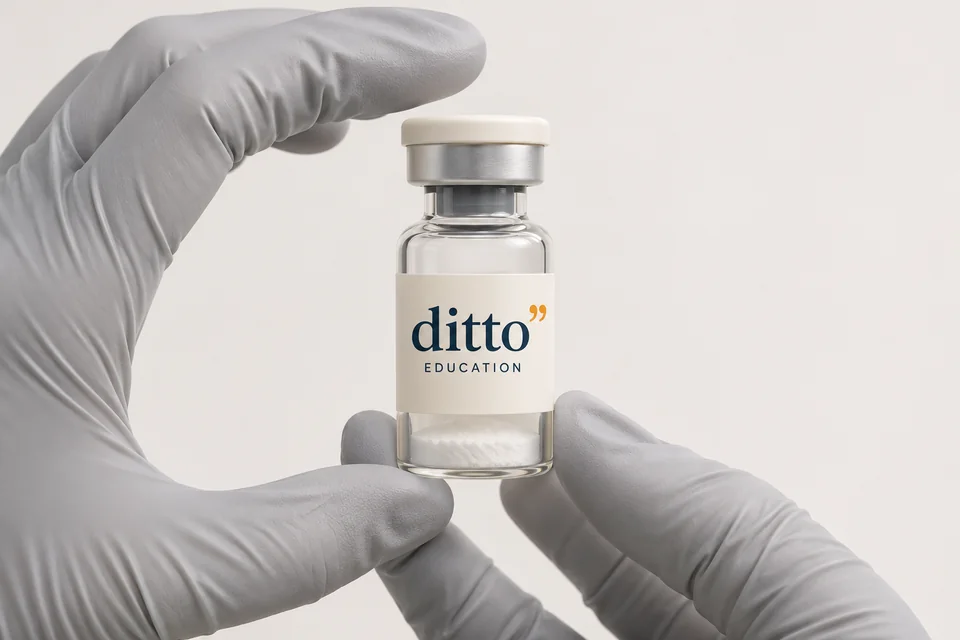
Check the exact product
Read the label, formulation, vial content, expiry and preparation instructions. Check the vial and closure for damage. Appearance alone cannot establish identity, purity or sterility.

Clean the stopper
If the product instructions call for vial access, disinfect the exposed rubber stopper with a fresh alcohol swab and let it dry. Avoid touching it afterward; use sterile equipment for each access.

Measure the specified diluent
Confirm the diluent type and volume in the product instructions. Measure that volume using the correct syringe scale. A concentration calculation cannot establish that a diluent is compatible.

Add as instructed
Follow the product-specific addition method. Where slow addition along the vial wall is specified, keep the flow gentle. Do not infer a preparation method from a dose table or combine separate compounds in one vial.

Mix and inspect
Use the mixing method specified for the product; some require gentle swirling rather than shaking. Compare the appearance with the instructions. Do not use a preparation with unexpected particles, discoloration or suspected contamination.
Mix and inspect
Use the mixing method specified for the product; some require gentle swirling rather than shaking. Compare the appearance with the instructions. Do not use a preparation with unexpected particles, discoloration or suspected contamination.

Record and store
Record the preparation date and calculated concentration in mg/mL and mcg/mL. Follow the exact storage conditions and discard time on the product instructions. There is no universal refrigerated shelf life for all peptides.
AI-generated educational scenes with Ditto-inspired concept labels; not photographs of supplied products. CDC preparation and equipment principles · Check your calculation
Calculator
Use the Peptide Dosing Calculator to confirm draw volumes for your specific vial size and planned session dose.
How Humanin Works
Humanin is a small peptide encoded inside mitochondrial DNA. Most peptides in the body are encoded by the cell nucleus, so a peptide written in mitochondrial DNA is unusual. Humanin acts as a stress signal from the mitochondria back to the rest of the cell.
Two mechanisms come up most often in published research. First, humanin binds to the pro-apoptotic protein BAX and prevents BAX from triggering programmed cell death. Second, humanin acts as a ligand at cell-surface receptors including FPRL1 and a trimeric receptor made up of CNTFR, gp130, and WSX-1, which can activate STAT3 signaling and other survival pathways.
Humanin has also been shown to activate chaperone-mediated autophagy. That is the process the cell uses to identify damaged proteins and send them to lysosomes for clean-up. Together, these mechanisms are why humanin is described as a cytoprotective and stress-response peptide.
What is HNG?
HNG is a synthetic version of humanin where the serine at position 14 is swapped for glycine. That single change makes HNG more stable and substantially more potent than native humanin. Most of the published animal work uses HNG, not native humanin.
Who Humanin Is For and Who Should Avoid It
Humanin is a research-use peptide. It is not a treatment, not a supplement, and not a medical product. The list below describes situations where humanin or HNG would carry extra theoretical risk and where qualified clinical oversight matters most.
- Active or recent cancer history. Humanin blocks BAX-mediated apoptosis, and BAX is part of the system the body uses to remove damaged cells. The implications for cancer surveillance are not well understood.
- Pregnancy or lactation. There is no safety data in pregnant or lactating humans.
- Children and adolescents. There is no human safety data in any age group, and even less in growing individuals.
- Patients on insulin or insulin-secretagogues. Humanin and HNG have insulin-sensitizing effects in animal studies; combining them with other glucose-lowering agents could be unpredictable.
- Active autoimmune or inflammatory disease. Humanin has anti-inflammatory effects, and any change to inflammatory tone should be discussed with a qualified clinician.
- Anyone unable to access qualified medical oversight, lab monitoring, or sterile injection conditions.
Humanin Side Effects & Safety
There is no human clinical trial dataset for exogenous humanin or HNG. The safety statements below are based on animal studies, mechanism, and general subcutaneous-injection risk. Long-term safety is unknown.
Reported and expected effects
- Injection site reactions: redness, mild swelling, or transient discomfort at the SC injection site.
- Mild fatigue or lethargy: anecdotally reported in research-use community planning, not characterized in trials.
- Headache: uncommon, typically mild when reported anecdotally.
- Transient nausea: more often described at higher doses or with IV administration.
Theoretical risks
- Cancer surveillance concern. Humanin's anti-apoptotic effect through BAX inactivation is the clearest theoretical concern, especially for anyone with a personal or family history of cancer.
- Glucose handling. Insulin sensitization is a feature in animal models, which means glucose handling could shift in users on existing diabetes therapy.
- Immune effects. Pharmacological doses well above natural endogenous levels could shift inflammatory tone in ways that have not been characterized in humans.
Quality and route-specific risk
- Quality control. Research peptides are not FDA-regulated as drugs. Purity and accuracy of label depend on the supplier.
- Contamination risk. Improper reconstitution, dirty syringes, or non-sterile BAC water can introduce infection risk regardless of the peptide.
- Half-life. Native humanin has a short circulating half-life of about 30 minutes, which is part of why HNG was developed and is more commonly used in research.
Bottom line on safety
No human RCT exists for humanin or HNG as of June 2026. Animal studies have not flagged major adverse signals at the doses tested, but those studies were not designed to characterize human safety.
Humanin Timeline & What to Monitor
Humanin does not act like a stimulant. The endpoints studied in animal research are slow-changing: cardiac fibrosis was assessed over 14 months in mice, healthspan markers shifted over weeks, and metabolic markers like body composition changed over months of dosing.
What changes were measured in research
- Body composition shifts over weeks to months in HNG-treated middle-aged mice (lower visceral fat, higher lean body mass).
- Inflammatory markers like IL-6 and Iba-1 declined in aging mice over months of HNG dosing.
- Cognitive performance markers and rotarod motor function improved in aged mice on HNG over the dosing window.
- Cardiac fibrosis declined and cardiomyocyte-to-fibroblast ratio improved in 32-month-old mice receiving HNG for 14 months.
What is reasonable to monitor in research-use planning
- Baseline and follow-up labs with qualified clinical oversight: glucose, HbA1c, lipid panel, inflammatory markers, complete blood count.
- Symptom journal: sleep quality, energy, injection-site response, any unusual symptom.
- Stop-and-review point at week 4 and week 8 to compare change against baseline.
What cannot be promised
Animal endpoint changes do not guarantee any human outcome. There is no validated biomarker for humanin response in humans.
Humanin Clinical Evidence Context
There is no published human randomized clinical trial of exogenous humanin or HNG as a therapy as of June 2026. Most evidence is preclinical or comes from observational human plasma studies linking endogenous humanin levels to health outcomes.
Human evidence (observational)
Conte et al. 2019 measured plasma humanin in 693 subjects aged 21 to 113 years. FGF21, GDF15, and humanin all increased with age, with the highest levels found in centenarians, suggesting a stress-response role rather than simple deficiency in aging.
Human evidence (offspring of long-lived)
Yen et al. 2020 reported that children of centenarians showed higher circulating humanin than age-matched controls, supporting a longevity-association signal in observational data.
Animal evidence (healthspan)
Yen et al. 2020 administered HNG 4 mg/kg (4,000 mcg/kg) IP twice weekly to 18-month-old female mice. Treatment improved metabolic healthspan markers, lowered visceral fat, and increased lean body mass.
Animal evidence (cardiac)
Qin et al. 2018 administered HNG 4 mg/kg (4,000 mcg/kg) IP twice weekly to mice from 18 to 32 months. Treatment reduced age-related myocardial fibrosis, lowered cardiomyocyte apoptosis, and partially reversed the cardiomyocyte-to-fibroblast ratio toward young-mouse values.
Animal evidence (cardioprotection)
Sharp et al. 2020 translated cardioprotection from rodents to a porcine ischemia-reperfusion model, where a single IV HNG dose at reperfusion reduced infarct size after 60 minutes of ischemia, but not after 75 minutes, indicating a window-dependent effect.
Mechanism evidence
Humanin binds BAX to block apoptosis, activates STAT3 via FPRL1 and CNTFR/gp130/WSX-1, and triggers chaperone-mediated autophagy via HSP90 stabilization at the lysosomal membrane.
Evidence gap
No published human RCT of exogenous humanin or HNG. No FDA-approved humanin product as of June 2026. All human dosing references are extrapolations.
Humanin Storage & Handling
Humanin Storage
| State | Storage | Notes |
|---|---|---|
| Lyophilized (powder form) | -4F (-20C) long-term | Use the supplier label and stability data. Protect from light and moisture. |
| Reconstituted (liquid form) | 35.6-46.4F (2-8C) | Native humanin has stability concerns; HNG can degrade more slowly. Use within the supplier-stated beyond-use window. |
| Travel and short-term | 35.6-46.4F (2-8C) | Keep in an insulated cooler with cold packs; avoid freezing the reconstituted vial. |
If a vial has been left at room temperature for extended periods, defer to the supplier's stability data and consider replacing the vial.
Humanin Protocol Mistakes & Troubleshooting
Vial looks cloudy after reconstitution
Do not use it. Cloudiness or particulate matter can indicate contamination or degraded peptide. Discard and start fresh with a new vial.
Wrong BAC water volume
Adding 1.0 mL instead of 2.0 mL to a 20 mg (20,000 mcg) vial doubles the concentration to 20 mg/mL (20,000 mcg/mL), so every draw delivers twice the planned dose. This reconstitution error should be verified against the calculator or supplier guidance.
Missed a session
Research protocols generally avoid doubling a dose after a gap.
Injection site reaction that does not resolve
Stop dosing and seek qualified medical advice. Persistent redness, swelling, or warmth at a site can indicate infection.
No noticeable change after 4-6 weeks
Humanin acts slowly and on cellular endpoints, not subjective energy. Use objective markers (labs, body composition, sleep tracking) instead of subjective day-to-day feel.
Confusion between humanin and HNG
Read the supplier label. Native humanin and HNG are different molecules; HNG is more potent and more stable. Match the protocol you are referencing to the compound on the label.
Storage mistake
If a reconstituted vial sat at room temperature far longer than the supplier's beyond-use window, replace it. Do not inject anything you are unsure about.
Humanin Regulatory Status
As of June 2026, neither humanin nor HNG is approved by the FDA, EMA, or any other major regulator for any condition. There is no FDA-approved label, no Abbreviated New Drug Application, and no approved compounded product for humanin or HNG.
Humanin and HNG are sold by research-use peptide suppliers as research chemicals. Research-use products are not regulated as drugs and are not intended for human use. Individual states and countries vary in how they treat possession, sale, and import of research peptides; verify current rules before ordering.
Humanin vs MOTS-c vs SS-31
Humanin sits in a small family of mitochondrial-derived peptides (MDPs). The two most-discussed peers are MOTS-c, also encoded inside mitochondrial DNA, and SS-31, a synthetic mitochondria-targeting peptide. They are not interchangeable.
Mitochondrial-Related Peptides
| Peptide | Origin | Primary research interest | Approval status |
|---|---|---|---|
| Humanin | Encoded in mitochondrial 16S rRNA region; 24 amino acids | Cytoprotection, neuroprotection, metabolic and cardiac aging models | Not FDA-approved |
| MOTS-c | Encoded in mitochondrial 12S rRNA region; 16 amino acids | Skeletal-muscle metabolism, insulin sensitivity, exercise biology | Not FDA-approved |
| SS-31 (elamipretide) | Synthetic, not mitochondrial-encoded | Mitochondrial cardiolipin protection; investigated in primary mitochondrial disease and Barth syndrome trials | Not FDA-approved (April 2025 FDA accelerated approval pathway concerns reported; verify current status) |
Humanin and MOTS-c are both mitochondrial-derived peptides but target different pathways. SS-31 is structurally unrelated and developed as a small synthetic mitochondria-targeting compound.
Related compound: MOTS-c
If you are researching mitochondrial-derived peptides for metabolic and exercise-related interest, MOTS-c is the closest peer to humanin in this family. View MOTS-c protocol.
Humanin Blood Tests & Monitoring
Humanin is usually discussed in mitochondrial, metabolic, and aging research. Monitoring is broad because compound-specific clinical lab standards are not established.
Blood test markers to discuss with a clinician
| Marker | Why it matters | Timing |
|---|---|---|
| Comprehensive metabolic panel (CMP) | Reviews liver, kidney, electrolyte, and glucose context before interpreting energy or metabolic changes. | Baseline |
| A1c | Shows the longer-term blood sugar pattern relevant to metabolic-health research. | Baseline |
| Lipid panel | Tracks cardiometabolic trends that may be part of mitochondrial or aging research. | Follow-up |
| CRP | Adds a broad inflammation marker when inflammatory burden is part of the question. | Optional |
| CBC with differential | Screens broad blood-cell patterns that may affect fatigue and general health interpretation. | Baseline |
Monitoring guidance is pathway-based because Humanin has limited established human monitoring standards.
At-home blood test option
Easy at home option to monitor core metrics during research cycles.
Simple timing framework
- Baseline
- Discuss baseline labs before starting, especially with diabetes risk, kidney disease, liver disease, inflammatory conditions, or fatigue-focused protocols.
- Follow-up
- Repeat relevant metabolic and inflammatory markers after 8-12 weeks if the protocol continues.
- Longer term
- For longer protocols, review trends every 3-6 months with a clinician.
How to interpret the labs
- Routine labs do not directly measure mitochondrial function in a simple way.
- Fatigue, exercise tolerance, sleep, medications, and nutrition should be interpreted with labs.
- Use caution when stacking with other metabolic or mitochondrial agents.
Do not wait for routine labs
Chest pain, fainting, severe weakness, confusion, or rapid worsening fatigue needs medical review.
FAQ
Q1: What is humanin?
Humanin is a small mitochondrial-derived peptide encoded inside mitochondrial DNA, in the 16S rRNA region of the MT-RNR2 gene. It was discovered in 2001 during Alzheimer's research as a factor that protected neurons from amyloid-beta toxicity. The native peptide is 24 amino acids long when translated in the cytoplasm and 21 amino acids when translated in the mitochondria.
Q2: What is HNG?
HNG, sometimes written as humanin-G or S14G-humanin, is a synthetic analog of humanin in which the serine at position 14 is replaced with glycine. That change makes HNG far more stable and significantly more potent than native humanin in published animal studies. Most peer-reviewed dosing protocols, including the 4 mg/kg (4,000 mcg/kg) IP twice-weekly schedule, used HNG rather than native humanin.
Q3: How is humanin commonly dosed in research planning?
The most-cited preclinical protocol used HNG 4 mg/kg (4,000 mcg/kg) intraperitoneal twice weekly in middle-aged mice. Research-use community planning for human use has described subcutaneous milligram-range session doses one to three times weekly over 4 to 12 week cycles. None of these are FDA-approved doses, no human RCT has been published, and this is not a dosing recommendation.
Q4: How is humanin reconstituted?
Humanin and HNG ship as a freeze-dried powder. Most research-use protocols add 2 mL of bacteriostatic water to a 20 mg (20,000 mcg) vial, which gives a 10 mg/mL (10,000 mcg/mL) solution. A 1 mg (1,000 mcg) session dose at that concentration is 0.10 mL, or 10 units on a U-100 insulin syringe. Always match the math to the actual vial size on the supplier label. Use the Peptide Dosing Calculator to verify draw volumes.
Q5: What is the half-life of humanin?
Native humanin has a short circulating half-life of about 30 minutes, which is part of why the more stable HNG analog was developed for research. HNG remains more stable but does not have published human pharmacokinetic data. Specialized stabilization formulations have been developed in research settings to extend HNG stability further.
Q6: What route is humanin given?
Animal studies have most often used intraperitoneal (IP) injection at 4 mg/kg (4,000 mcg/kg) twice weekly. Research-use community planning for human reference protocols typically describes subcutaneous (SC) injection. Some early animal pharmacology has also used intracerebroventricular and intravenous routes for specific endpoints. None of those routes are validated for human use.
Q7: How long is a typical humanin cycle?
Animal protocols have run for months. Research-use community planning typically describes 4 to 12 week cycles with off periods of similar length. There is no human evidence base to define an optimal cycle length, so any cycle structure is research-planning extrapolation rather than evidence.
Q8: What supplies are needed for a humanin protocol?
A typical research-use setup includes the humanin or HNG vial, bacteriostatic water for reconstitution, U-100 insulin syringes (0.3 mL or 0.5 mL), alcohol prep swabs, and a sharps container. The supplies-needed section above shows vial, syringe, BAC water, and swab math by cycle length.
Q9: What are the main side effects of humanin?
Animal studies have not reported significant adverse effects at the doses tested, but those studies were not designed to characterize human safety. Reasonable expectations include mild injection site reactions, occasional fatigue, headache, or transient nausea. The clearest theoretical risk is the anti-apoptotic effect through BAX inactivation, which raises questions about cancer surveillance that have not been resolved.
Q10: Who should avoid humanin?
Anyone with active or recent cancer, anyone pregnant or lactating, children, anyone on insulin or insulin-secretagogues, and anyone with active autoimmune disease should not use humanin without qualified clinical oversight. The detailed list is in the Who Should Avoid section above.
Q11: How does humanin compare to MOTS-c?
Both are peptides encoded inside mitochondrial DNA. Humanin is 24 amino acids and is most studied for cytoprotection, neuroprotection, and cardiac aging models. MOTS-c is 16 amino acids, encoded in the 12S rRNA region, and is most studied for skeletal-muscle metabolism, insulin sensitivity, and exercise biology. They are not interchangeable and target different pathways. See the MOTS-c protocol for the closest peer.
Q12: Is humanin FDA-approved?
No. As of June 2026, humanin and HNG are not approved by the FDA, EMA, or any major regulator for any indication. Research peptides sold under the humanin or HNG name are research-use products and are not approved for human use.
Q13: Is this page medical advice?
No. This page is an educational research reference. Nothing here is a treatment recommendation or a substitute for qualified medical care. Do not start any peptide protocol without supervision from a qualified clinician.
Sources & Research
- Coradduzza D, Congiargiu A, Chen Z, Cruciani S, Zinellu A, Carru C, Medici S Humanin and Its Pathophysiological Roles in Aging: A Systematic Review. Biology (Basel) (2023)
- Yen K, Mehta HH, Kim SJ, Lue Y, Hoang J, Guerrero N, et al. The mitochondrial derived peptide humanin is a regulator of lifespan and healthspan. Aging (Albany NY) (2020)
- Qin Q, Mehta H, Yen K, Navarrete G, Brandhorst S, Wan J, et al. Chronic treatment with the mitochondrial peptide humanin prevents age-related myocardial fibrosis in mice. American Journal of Physiology-Heart and Circulatory Physiology (2018)
- Conte M, Ostan R, Fabbri C, Santoro A, Guidarelli G, Vitale G, et al. Human Aging and Longevity Are Characterized by High Levels of Mitokines. The Journals of Gerontology: Series A (2019)
- Conte M, Martucci M, Mosconi G, Chiariello A, Cappuccilli M, Totti V, et al. Disease-specific plasma levels of mitokines FGF21, GDF15, and Humanin in type II diabetes and Alzheimer's disease in comparison with healthy aging. GeroScience (2020)
- Mehta HH, Xiao J, Ramirez R, Miller B, Kim SJ, Cohen P, Yen K Metabolomic profile of diet-induced obesity mice in response to humanin and small humanin-like peptide 2 treatment. Metabolomics (2019)
- Sharp TE 3rd, Schena GJ, Hobby AR, Starosta T, Berretta RM, Wallner M, et al. Cortical Bone Stem Cell Therapy Preserves Cardiac Structure and Function After Myocardial Infarction (HNG cardioprotection in porcine model context). Circulation Research / related humanin cardioprotection literature (2020)
- Sreekumar PG, Ishikawa K, Spee C, Mehta HH, Wan J, Yen K, et al. The Mitochondrial-Derived Peptide Humanin Protects RPE Cells From Oxidative Stress, Senescence, and Mitochondrial Dysfunction.Unverified citation: the original identifier opened a different or unavailable record. This link searches the stated title; it is not a verified source. Investigative Ophthalmology & Visual Science (2016)
- Gong Z, Tas E, Muzumdar R Humanin and age-related diseases: a new therapeutic target? Frontiers in Endocrinology / related reviews (2014-2022)
- Theurey P, Pizzo P (review summaries) / Nashine S et al. Humanin G protects retinal pigment epithelial cybrids from inflammation in age-related macular degeneration models. Aging / Mol Med (2022)
- Gerasimenko M, Lecka-Czernik B, et al. (eds. summary) Neuroprotective Action of Humanin and Humanin Analogues: Research Findings and Perspectives. International Journal of Molecular Sciences (2023)
- U.S. Food and Drug Administration Drug approval databases (Drugs@FDA, Orange Book) confirming no approved humanin or HNG product as of June 2026. FDA.gov (2026)
Related Dosing Protocols
Reconstitution calculator
Enter your own values. This tool calculates quantities, not a recommended dose.
Check the concentration
Changing the unit keeps the entered mass equivalent. 1 milligram (mg) = 1,000 micrograms (mcg). This tool does not choose a target amount.
Biological IU (optional, product-specific)
Only enter a potency explicitly stated as IU per mg on the exact product label or reference. Do not enter the 100 from a U-100 syringe. No factor is assumed for any peptide.
Your result will appear here
Enter the mass, final solution volume and target mass, or load a fictional example.
Assumes accurate masses, final solution volume and even distribution. Blend arithmetic does not establish whether substances can be mixed. Read the formulas and assumptions.
Study findings, reported examples and supplier statements have different levels of evidence. Follow the citations and check the formulation, population and date before interpreting a number.
Editorial standards and corrections