On this page
TOOLS FOR THIS GUIDE
Work with KPV
The guide name carries across. Amounts, dates and instructions remain yours to enter; opening a tool saves nothing.
Worked examples: calculations, records and source checks
Fictional arithmetic, unrelated to a recommended amount of KPV: 10 mg (10,000 mcg) in a final 2 mL is 5 mg/mL (5,000 mcg/mL). A target mass of 0.25 mg (250 mcg) corresponds to 0.05 mL, or 5 U-100 syringe markings. Biological IU cannot be inferred from these inputs. Neither the mass nor the liquid is a preparation recommendation.
Open the arithmetic example- Supply example: two 10 mg (10,000 mcg) vials start at 20 mg (20,000 mcg). Four recorded entries of 0.25 mg (250 mcg) leave a theoretical 19 mg (19,000 mcg), before losses or expiry. Skipped entries do not deduct stock.
- Measurement example: enter “Sleep duration”, “7.5”, “hours” and the date. Keep the same unit and note changing conditions. A trend does not prove a treatment effect.
- Source example: record “rat study” when rats were studied, even when the headline describes recovery. Keep the exact paper and its limitations.
The planner accepts mg and mcg. Biological IU/USP units, sprays, drops and variable mixtures need product-specific instructions; they cannot be inferred from a generic mass calculator. For stacks, record each known ingredient separately.
FDA: why concentration and unit errors matterEvidence & source checks
KPV: source check
KPV reduced inflammatory signaling in cell experiments and inflammation in two mouse colitis models.
Limit: Cell and animal findings do not establish a human bowel-disease treatment, route or dose.
Question to resolve: Does the source test the exact tripeptide, in which species and by which route?
Source and reading scope
PepT1-mediated tripeptide KPV uptake reduces intestinal inflammation.
PubMed abstract; not an independent clinical review. Checked 25 November 2026.
What to verify before filling a plan
- Identity and formulation: match the name, sequence or active ingredient, route and strength. A related molecule or branded medicine is not automatically equivalent.
- Instruction source: obtain the actual amount, frequency and duration from qualified medical instructions. A community table or trial protocol does not establish an individual regimen.
- Units and product details: keep mass, liquid volume and biological activity units separate. Record batch, storage and discard instructions from the actual product; the tools cannot determine sterility or stability.
- Review and follow-up: list medicines and supplements, unresolved interactions and questions. Agree on relevant observations and actions with a qualified professional; normal measurements do not prove safety.
Selected source context, not a systematic review or medical approval. Study cards checked 24 November 2026; guide source notes checked 25 November 2026. Research references and citations appear below.
Guide summary
REFERENCE SUMMARY- Compound
- KPV (Lys-Pro-Val)
- Class
- alpha-MSH C-terminal tripeptide
- Common format
- Lyophilized powder, 5 mg (5,000 mcg) / 10 mg (10,000 mcg) vials
- Regulatory status
- Not FDA-approved; FDA proposed against 503A Bulks List inclusion (Jul 23, 2026 meeting)
KPV Quick Summary
For pet-specific evidence, see KPV for dogs. The commonly cited gut study used cells and mice; this general protocol page does not provide a canine treatment or dosing plan.
KPV is a three-amino-acid peptide (lysine-proline-valine) cut from the C-terminus of alpha-MSH. The research community most often discusses it for anti-inflammatory and gut-barrier work, particularly in inflammatory bowel disease (IBD) models.
Animal and laboratory research: KPV is small enough for transport through a gut protein called PepT1. This is why community research discussions often compare oral KPV with subcutaneous (SubQ) use. Human route standards have not been established.
Unlike melanotan-type peptides, KPV does not trigger pigmentation. It uses a different mechanism than the rest of alpha-MSH and skips melanocortin-receptor signaling.
- Routes
- Oral, subcutaneous, topical, and (less commonly) intranasal.
- Range
- Community planning often discusses 200–500 mcg (0.2–0.5 mg) daily. This is not a proven human dose.
- Measure
- 10 mg (10,000 mcg) + 2 mL BAC water gives 5,000 mcg/mL (5 mg/mL); 500 mcg (0.5 mg) = 0.10 mL = 10 units.
- Supplies
- Supply needs depend on the route, vial size, product instructions, and research setting.
- Status
- Not FDA-approved. July 2026 meeting materials proposed against adding KPV free base and KPV acetate to the 503A Bulks List.
This protocol page is for KPV dosing, vial mixing, and planning. For the broader research view, visit the KPV guide on how it may work, studies, safety notes, and legal status.
KPV Peptide Dosage Chart
The chart below shows calculation examples for commonly discussed KPV research amounts from 200 to 500 mcg (0.2 to 0.5 mg). A 5 mg (5,000 mcg) vial mixed with 1 mL and a 10 mg (10,000 mcg) vial mixed with 2 mL both create a concentration of 5,000 mcg (5 mg) per mL. At that concentration, 200 mcg (0.2 mg) equals 4 units on a U-100 syringe and 500 mcg (0.5 mg) equals 10 units.
KPV Vial and Syringe Calculation Reference
| Research calculation | 5 mg (5,000 mcg) vial + 1 mL | 10 mg (10,000 mcg) vial + 2 mL | U-100 syringe units |
|---|---|---|---|
| 200 mcg (0.2 mg) | 0.04 mL | 0.04 mL | 4 units |
| 300 mcg (0.3 mg) | 0.06 mL | 0.06 mL | 6 units |
| 400 mcg (0.4 mg) | 0.08 mL | 0.08 mL | 8 units |
| 500 mcg (0.5 mg) | 0.10 mL | 0.10 mL | 10 units |
These values are calculation references, not an official dosing schedule. Both examples use the same final concentration of 5,000 mcg (5 mg) per mL. Always confirm the vial amount, added liquid, syringe type, and final concentration before using any calculator result.
 UNIVERSITY OF PEPTIDE · RESEARCH REFERENCE
KPV Peptide Dosage Chart
KPV dosage chart summarizing oral, SubQ, and topical research-context dosing ranges.
KPV Supplies Needed
Affiliate disclosure: University of Peptide may earn a commission when you use eligible supplier links, at no extra cost to you. Supply needs depend on the route, vial size, and product instructions.
Recommended Supply
Choose your region
Use discount code PEPPAL at Peptide Partners checkout. See why we love Peptide Partners.
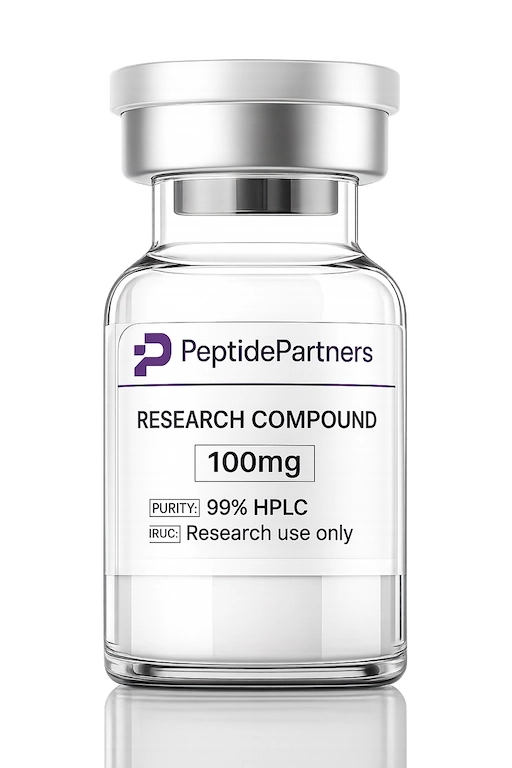
KPV (10mg (10,000 mcg) vials)

At-Home Blood Test
Research Supplies
KPV Vials (10 mg (10,000 mcg))
A 10 mg (10,000 mcg) vial contains 10,000 mcg (10 mg) total. The values below are calculation-only examples.
| Supply item | Planning note |
|---|---|
10 mg (10,000 mcg) vial 20 × 500 mcg (0.5 mg) calculations | Approximate vial math before transfer loss, dead space, spills, or product left in the vial. |
Insulin Syringes (U-100)
0.3 mL / 30-unit syringes are typical for KPV's small draw volumes.
| Supply item | Planning note |
|---|---|
U-100 syringe One sterile syringe per draw | Follow the syringe and material handling instructions. |
Bacteriostatic Water
The chart examples use 1 mL for a 5 mg (5,000 mcg) vial and 2 mL for a 10 mg (10,000 mcg) vial.
| Supply item | Planning note |
|---|---|
Mixing liquid Product-specific | Follow the label or preparation instructions that apply to the material. |
These are supply-planning references, not a dosing recommendation. Route and preparation needs vary.
Companion Supplies & Routine Support
KPV 10 mg (10,000 mcg) Dosage Chart
A 10 mg (10,000 mcg) vial contains 10,000 mcg (10 mg) total. Adding 2 mL of bacteriostatic water creates a concentration of 5,000 mcg (5 mg) per mL, or 50 mcg (0.05 mg) per unit on a U-100 syringe. The table below shows the math for several common research reference amounts.
| Research calculation | Volume | U-100 units | Approximate calculations per vial |
|---|---|---|---|
| 200 mcg (0.2 mg) | 0.04 mL | 4 units | 50 |
| 300 mcg (0.3 mg) | 0.06 mL | 6 units | 33 |
| 400 mcg (0.4 mg) | 0.08 mL | 8 units | 25 |
| 500 mcg (0.5 mg) | 0.10 mL | 10 units | 20 |
Formula
10,000 mcg (10 mg) ÷ 2 mL = 5,000 mcg/mL (5 mg/mL). On a U-100 syringe, each unit equals 0.01 mL, so each unit contains 50 mcg (0.05 mg) at this concentration.
KPV 5 mg (5,000 mcg) Dosage Chart
A 5 mg (5,000 mcg) vial contains 5,000 mcg (5 mg) total. Adding 1 mL of bacteriostatic water creates a concentration of 5,000 mcg (5 mg) per mL, or 50 mcg (0.05 mg) per unit on a U-100 syringe. This produces the same unit math as a 10 mg (10,000 mcg) vial mixed with 2 mL.
| Research calculation | Volume | U-100 units | Approximate calculations per vial |
|---|---|---|---|
| 200 mcg (0.2 mg) | 0.04 mL | 4 units | 25 |
| 300 mcg (0.3 mg) | 0.06 mL | 6 units | 16 full calculations, with some remaining |
| 400 mcg (0.4 mg) | 0.08 mL | 8 units | 12 full calculations, with some remaining |
| 500 mcg (0.5 mg) | 0.10 mL | 10 units | 10 |
The number of full calculations is based only on vial math. It does not account for normal transfer loss, dead space, spills, or product left in the vial.
KPV Protocol: Daily Dose, Frequency, and Schedule
No completed human dose-finding trial defines an official KPV protocol. Research and community planning most often discuss 200–500 mcg (0.2–0.5 mg) per day, but route, frequency, and duration vary. The table below separates community-reported schedules from published evidence and calculation-only content.
| Route | Commonly discussed research range | Frequency discussed in community protocols | Evidence label |
|---|---|---|---|
| Subcutaneous | 200–500 mcg (0.2–0.5 mg) | Often once daily | Community-reported practice; not clinically established |
| Oral | 200–500 mcg (0.2–0.5 mg) | Often once or twice daily | Community-reported practice; not clinically established |
| Topical | Formulation-specific | Often once or twice daily | Formulation and clinic practice vary |
These schedules are not proven human protocols. Published KPV research is mainly preclinical, and route-specific human pharmacokinetic data are not established. Keep all route details labeled by evidence type.
KPV Reconstitution Chart and Vial Math
KPV reconstitution math depends on the amount in the vial and the amount of liquid added. Convert the vial amount from milligrams to micrograms, divide by the added milliliters, and then calculate the volume needed for the target research amount. The examples below use U-100 syringe units, where 100 units equal 1 mL.
Reconstitution formulas
Concentration in mcg/mL = total mcg in the vial ÷ milliliters added
Volume in mL = target mcg ÷ concentration in mcg/mL
U-100 units = volume in mL × 100
Worked example: A 10 mg (10,000 mcg) vial contains 10,000 mcg (10 mg). Adding 2 mL creates a concentration of 5,000 mcg/mL (5 mg/mL). A 300 mcg (0.3 mg) calculation is 300 ÷ 5,000 = 0.06 mL, which equals 6 units on a U-100 syringe.
KPV Reconstitution Math (Vial × BAC Water)
| Vial Size | BAC Water | Concentration | 200 mcg (0.2 mg) | 300 mcg (0.3 mg) | 500 mcg (0.5 mg) |
|---|---|---|---|---|---|
| 5 mg (5,000 mcg) | 1 mL | 5,000 mcg/mL (5 mg/mL) | 0.04 mL (4 units) | 0.06 mL (6 units) | 0.10 mL (10 units) |
| 5 mg (5,000 mcg) | 2 mL | 2,500 mcg/mL (2.5 mg/mL) | 0.08 mL (8 units) | 0.12 mL (12 units) | 0.20 mL (20 units) |
| 10 mg (10,000 mcg) | 2 mL | 5,000 mcg/mL (5 mg/mL) | 0.04 mL (4 units) | 0.06 mL (6 units) | 0.10 mL (10 units) |
| 10 mg (10,000 mcg) | 3 mL | 3,333 mcg/mL (3.333 mg/mL) | 0.06 mL (6 units) | 0.09 mL (9 units) | 0.15 mL (15 units) |
| 10 mg (10,000 mcg) | 5 mL | 2,000 mcg/mL (2 mg/mL) | 0.10 mL (10 units) | 0.15 mL (15 units) | 0.25 mL (25 units) |
Lower concentration = larger draw volume = better precision for microgram-level dosing. Use a U-100 insulin syringe and read units, not mL.
Standard 7-Step Reconstitution
An illustrated reading aid for the product instructions. Confirm the exact formulation, diluent and handling method first. A research-only vial is not an approved medicine.
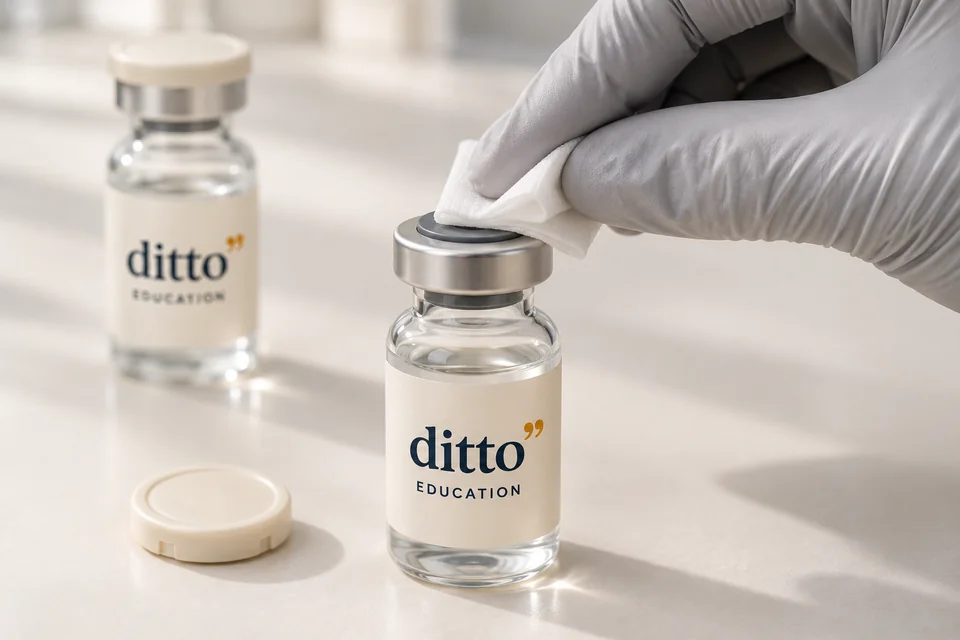
Clean the stopper
If the product instructions call for vial access, disinfect the exposed rubber stopper with a fresh alcohol swab and let it dry. Avoid touching it afterward; use sterile equipment for each access.
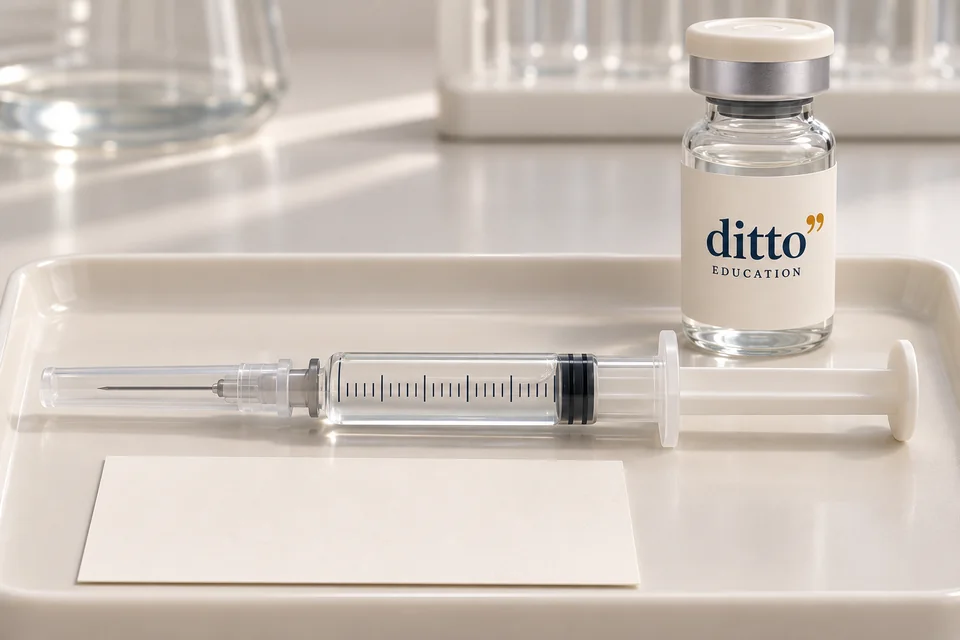
Measure the specified diluent
Confirm the diluent type and volume in the product instructions. Measure that volume using the correct syringe scale. A concentration calculation cannot establish that a diluent is compatible.
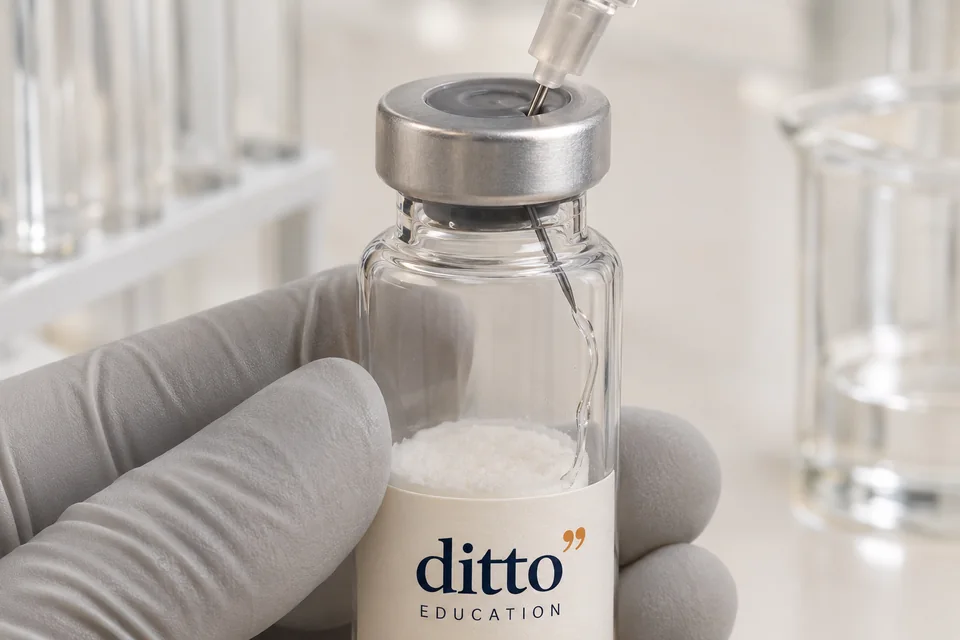
Add as instructed
Follow the product-specific addition method. Where slow addition along the vial wall is specified, keep the flow gentle. Do not infer a preparation method from a dose table or combine separate compounds in one vial.
Add as instructed
Follow the product-specific addition method. Where slow addition along the vial wall is specified, keep the flow gentle. Do not infer a preparation method from a dose table or combine separate compounds in one vial.
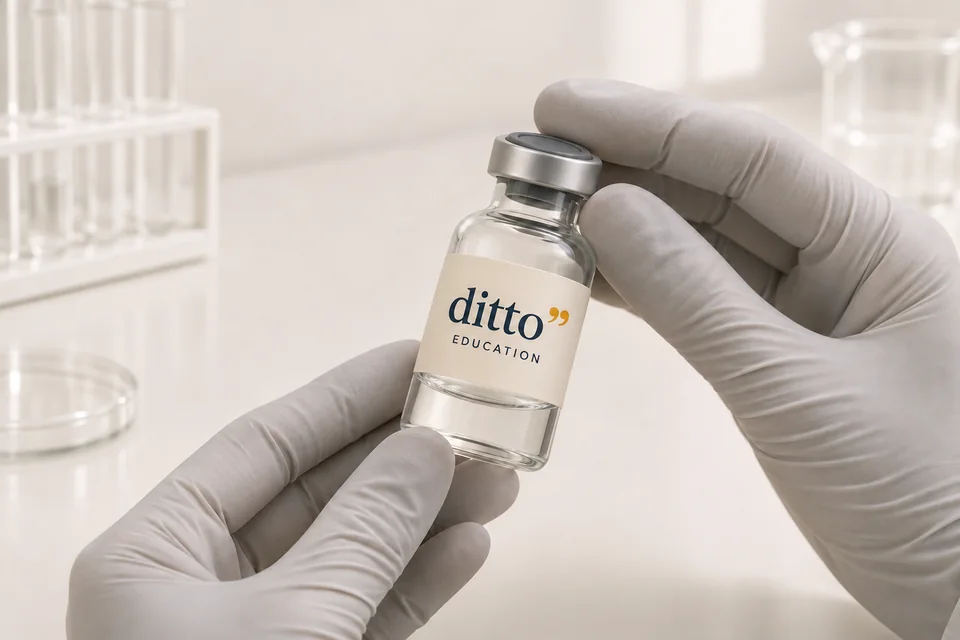
Mix and inspect
Use the mixing method specified for the product; some require gentle swirling rather than shaking. Compare the appearance with the instructions. Do not use a preparation with unexpected particles, discoloration or suspected contamination.
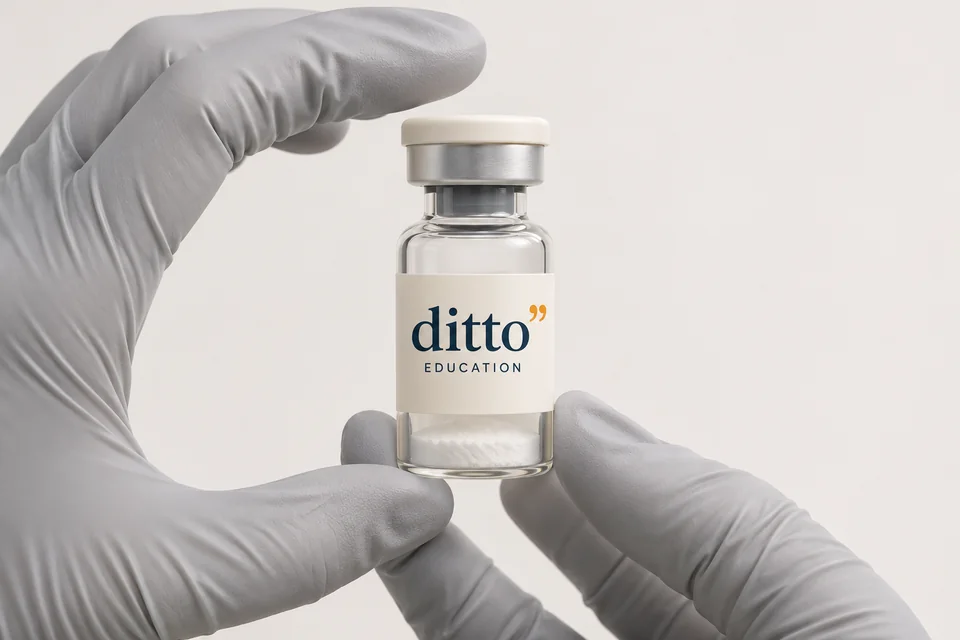
Check the exact product
Read the label, formulation, vial content, expiry and preparation instructions. Check the vial and closure for damage. Appearance alone cannot establish identity, purity or sterility.
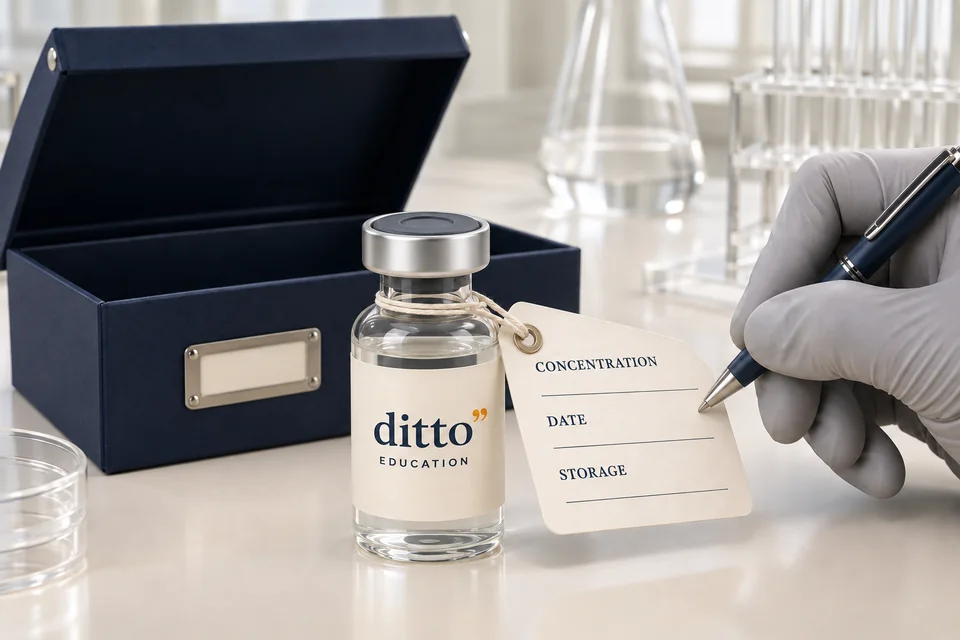
Record and store
Record the preparation date and calculated concentration in mg/mL and mcg/mL. Follow the exact storage conditions and discard time on the product instructions. There is no universal refrigerated shelf life for all peptides.
AI-generated educational scenes with Ditto-inspired concept labels; not photographs of supplied products. CDC preparation and equipment principles · Check your calculation
Calculator
Need exact units for a different vial size or BAC volume? Use the University of Peptide calculator.
KPV Cycle Length and Timeline
Published research does not establish a clinically proven KPV cycle length. Community schedules often use several weeks followed by a review period, but these timelines are anecdotal and should not be treated as validated human protocols.
For four-, six-, eight-, 12-, and 16-week planning examples, reported break periods, study timelines, and vial calculations, read the KPV cycle-length guide.
KPV Route Details
KPV appears in oral, subcutaneous, and topical research discussions. Published human comparisons have not established which route, dose, or schedule is best.
KPV Research Route Notes
These details separate animal or laboratory research from community and clinic practice.
Open a format reference below.
Injectable format reference
Community-reported practice often discusses this route for systemic research models. It is not clinically established.
Subcutaneous Schedule Examples
| Research calculation | Frequency discussed | Evidence label |
|---|---|---|
| 200–500 mcg (0.2–0.5 mg) | Often once daily | Community-reported practice; not a proven human protocol |
Published human pharmacokinetic and dose-finding studies have not established a subcutaneous KPV schedule.
Oral format reference
Animal and laboratory research describes PepT1 transport in gut tissue. Human dose and absorption standards have not been established.
Oral Schedule Examples
| Research calculation | Frequency discussed | Evidence label |
|---|---|---|
| 200–500 mcg (0.2–0.5 mg) | Often once or twice daily | Community-reported practice; not a proven human protocol |
The route has preclinical support, but community schedule details are not human trial findings.
Animal and laboratory research: KPV is small enough for PepT1 transport. Inflamed intestinal tissue may express more PepT1, which helps explain why oral KPV is studied in gut models.
Topical format reference
Topical KPV is discussed in formulation and clinic practice for localized skin research.
Topical Schedule Examples
| Research calculation | Frequency discussed | Evidence label |
|---|---|---|
| Formulation-specific | Often once or twice daily | Clinic or pharmacy practice varies by formulation |
Follow the product or pharmacy labeling. No standard human topical concentration has been established.
How KPV Works
KPV works differently from most anti-inflammatory compounds. Instead of broadly suppressing the immune system the way steroids do, it targets a specific inflammation switch inside cells. The mechanism is unusually well mapped for a peptide that has not been tested in humans.
PepT1 Uptake
PepT1 is a transporter on the surface of intestinal cells that moves di- and tripeptides from the gut into the cell. KPV is small enough to fit. Inflamed gut tissue produces more PepT1, so oral KPV may preferentially concentrate where inflammation is worst (Dalmasso et al. 2008, Gastroenterology).
NF-kB Inhibition
NF-kB is the master switch that turns on inflammatory gene expression. Preclinical work reports that KPV reduces how long this switch stays "on" and how many inflammatory signals are produced — without the broad immunosuppression of corticosteroids.
What KPV Does Not Do
Some older articles claim KPV acts on melanocortin receptors. This is incorrect. The 2008 Dalmasso paper showed no melanocortin-receptor signaling, and follow-up work in receptor-knockout mice confirmed KPV still works without those receptors. KPV does not cause tanning or pigmentation changes and should not be confused with melanotan compounds.
PepT1-mediated uptake
Concentrates KPV in inflamed intestinal tissue.
NF-kB inhibition
Reduces inflammatory gene expression intracellularly.
MAP kinase suppression
Lowers TNF-driven inflammatory signaling in cell models.
Antimicrobial activity
Direct activity against S. aureus and C. albicans in lab assays.
Not melanocortin-mediated
Bypasses the receptor pathway used by alpha-MSH and melanotan compounds.
KPV Clinical Evidence Context
No completed human trial
All published KPV efficacy data comes from animal models and laboratory cell experiments. No completed human clinical trial has confirmed KPV's effects, optimal dosing, or long-term safety profile in people.
Dalmasso et al. 2008 (Gastroenterology)
Oral KPV reduced colitis severity in DSS and TNBS mouse models. Identified PepT1-mediated uptake as the central mechanism.
Xiao et al. 2017 (Molecular Therapy)
Nanoparticle-delivered KPV improved targeting to inflamed colonic tissue and reduced inflammatory markers in DSS colitis.
Kannengiesser et al. 2008
Dose-dependent suppression of TNF-driven inflammatory signaling in bronchial epithelial cell models.
Catania et al. 2000
Reported direct antimicrobial activity against S. aureus and C. albicans in lab assays.
Brzoska, Luger, Maaser et al. 2008
Review of alpha-MSH-derived peptides as a class, including KPV's place in melanocortin-system research.
Getting et al. 2006
Reviewed melanocortin-derived anti-inflammatory pharmacology and confirmed KPV's distinction from receptor-mediated signaling.
The gut-inflammation findings — particularly the PepT1 transport discovery — are the strongest part of the KPV literature. They are still preclinical. No human study has yet confirmed how effective KPV is in people, what an optimal dose looks like, or what the long-term safety profile is.
KPV Research Safety Limits
KPV is studied mainly in anti-inflammatory and gut-barrier models. No completed human trial defines who can use it safely, so this page does not provide personal eligibility advice.
Generally outside research-planning scope: pregnancy and breastfeeding (no safety data), known hypersensitivity to peptide compounds, and active complex infectious disease without clinician oversight (because of overlapping inflammatory and antimicrobial signaling).
Caution areas: active autoimmune disease on prescribed immunomodulators (the interaction has not been studied), and IBD or other inflammatory bowel conditions managed with prescription therapy. KPV should not replace prescribed medication and should be discussed with the treating clinician.
Quality-control caution: KPV is sold as research-use peptide outside FDA-approved channels. Source quality, COA verification, and storage handling vary widely between suppliers.
KPV Side Effects & Safety
KPV is generally reported as well-tolerated in animal studies and in community use, but no formal human safety trial has been completed. Long-term safety data does not exist.
Commonly reported effects (community-level, not trial data): mild and transient injection-site irritation, occasional mild headache, and occasional GI upset at higher oral doses.
Pigmentation: KPV is generally modeled as non-pigmenting. It does not bind the melanocortin receptors that drive melanotan-style tanning.
Immune profile: KPV dials down specific inflammatory pathways (notably NF-kB) rather than broadly suppressing the immune system. In animal work this has not produced the infection-susceptibility profile seen with corticosteroids — but this distinction has not been confirmed in human trials.
Quality-control risk: As with any research-use peptide, contamination, underdosing, or incorrect labeling are real risks. Use COA-verified suppliers and inspect every reconstituted vial for clarity before use.
General cautions: Avoid in pregnancy/breastfeeding. Discuss with a clinician if you have active autoimmune disease, complex infectious disease, or are taking prescribed immunomodulators.
KPV Regulatory Status
KPV is not FDA-approved for any indication.
In materials presented for the July 23, 2026 Pharmacy Compounding Advisory Committee meeting, the FDA proposed that KPV free base and KPV acetate not be added to the 503A Bulks List. KPV remains unapproved. This proposal should not be described as FDA approval or as a general ban on all KPV research.
Status can change
Regulatory status can change. This section is educational and should be reviewed whenever the page is updated. Do not turn a committee proposal, agency review, or compounding decision into a broader legal or safety claim.
WADA status: KPV is not a named WADA-prohibited substance. The relevant alpha-MSH-derived compounds covered under WADA rules are different molecules.
Sources for this section include FDA materials for the July 23, 2026 Pharmacy Compounding Advisory Committee meeting and the FDA bulk substances list update. See the Sources & Research section below.
KPV Storage & Handling
Reconstituted peptide material is commonly stored under refrigeration, but the correct conditions depend on the product and preparation instructions. Follow the label or documentation provided with the material.
KPV Storage Reference
| State | Storage reference | Main caution |
|---|---|---|
| Lyophilized (powder) | Follow the product documentation | Protect from heat, direct light, and moisture |
| Reconstituted | Commonly refrigerated; follow the label | Avoid repeated temperature changes |
Avoid freezing unless the applicable instructions specifically allow it. Storage time and temperature can vary by formulation and supplier.
KPV Research Monitoring
No human trial defines a KPV response timeline or standard monitoring plan. Animal and laboratory findings should not be used to predict when a person will notice a result.
Research review: Track the material, route, calculation, storage conditions, and any unexpected change. There is no trial-defined lab panel for KPV, and any health concern needs review by a licensed clinician.
KPV Protocol Mistakes & Troubleshooting
Missed dose
Community protocols generally resume at the next planned calculation rather than doubling it. This is community practice, not a clinically validated instruction.
Cloudy or particulate vial
Discard. Reconstituted KPV should be clear and colorless. Cloudiness can indicate contamination or peptide degradation.
Wrong BAC water volume
Recalculate concentration before drawing. Adding more water lowers concentration and increases the draw volume; do not draw the original units number against a re-diluted vial.
Oral dose taken with food
PepT1 absorption competes with dietary peptides. Research protocols generally return to empty-stomach timing at the next scheduled dose rather than doubling to compensate.
Injection-site reaction
Mild redness or irritation usually resolves quickly. Persistent or worsening reactions should pause the protocol and prompt clinician review.
Storage mistake (left at room temperature)
Check the product or laboratory instructions before keeping the material. Storage limits vary, so do not assume a precise room-temperature window is safe.
Confused mcg vs mg
KPV is dosed in micrograms (mcg). When stacking with TB-500 or GHK-Cu (dosed in mg), label every vial to avoid 1,000x errors.
KPV vs BPC-157 vs alpha-MSH
KPV is often compared with BPC-157 and alpha-MSH. In preclinical discussions, KPV is studied for inflammatory signaling, BPC-157 is studied for repair, and alpha-MSH is the parent hormone with broader effects.
KPV vs BPC-157 vs alpha-MSH
| Feature | KPV | BPC-157 | alpha-MSH (full-length) |
|---|---|---|---|
| Origin | C-terminal tripeptide of alpha-MSH | Synthetic 15-aa gastric-protein fragment | Endogenous 13-aa melanocortin hormone |
| Primary mechanism | PepT1 uptake; NF-kB inhibition | Angiogenesis; tissue-protective signaling | Melanocortin-receptor activation |
| Primary use model | Inflammation control; gut-barrier support | Structural tissue repair | Pigmentation; melanocortin signaling |
| Oral viability | Yes (PepT1) | Yes | Limited |
| Pigmentation effects | No | No | Yes |
| Clinical evidence | Preclinical only | Limited human + broad preclinical | Extensive hormonal research |
KPV and BPC-157 are commonly paired in gut-focused stacks because KPV emphasizes inflammation control while BPC-157 emphasizes structural repair.
KPV should not be confused with melanotan compounds. Pigmentation is not part of KPV's profile.
KPV Blood Tests & Monitoring
KPV is usually discussed in inflammation, gut, immune, and skin research. Monitoring focuses on broad inflammatory context, but labs may not capture local skin or gut response.
Blood test markers to discuss with a clinician
| Marker | Why it matters | Timing |
|---|---|---|
| CBC with differential | Screens white-cell patterns, anemia, and immune context before interpreting inflammatory symptoms. | Baseline |
| Comprehensive metabolic panel (CMP) | Reviews liver, kidney, electrolyte, and glucose context in one broad panel. | Baseline |
| CRP | Adds a broad inflammation marker when systemic inflammation is part of the question. | Follow-up |
| ESR | Provides a slower-moving inflammation marker that may be useful for chronic symptoms. | Optional |
Monitoring guidance is immune and inflammation pathway-based because KPV has limited established human monitoring standards.
At-home blood test option
Easy at home option to monitor core metrics during research cycles.
Simple timing framework
- Baseline
- Discuss baseline labs before starting, especially with autoimmune disease, gut symptoms, infection concern, liver disease, kidney disease, or immune medication use.
- Follow-up
- Repeat broad markers after 6-12 weeks if symptoms change or inflammation tracking is part of the research context.
- Longer term
- For longer immune or gut-focused protocols, review trends every 3-6 months with a clinician.
How to interpret the labs
- Gut, skin, and immune symptoms can change even when routine labs look normal.
- Autoimmune disease, infection risk, and immune-suppressing medications need clinician-guided interpretation.
- Avoid presenting KPV as a treatment or cure for inflammatory disease.
Do not wait for routine labs
Fever, bloody stool, severe abdominal pain, fast-spreading rash, or breathing symptoms need medical review.
FAQ
Q1: Does KPV have an official dosing protocol?
No completed human dose-finding trial has established an official KPV dosing protocol. Published research is mainly preclinical. The amounts shown on this page are calculation examples and community-reported research ranges, not medical advice or a validated human schedule.
Q2: What is the KPV 10 mg (10,000 mcg) dosage chart?
When a 10 mg (10,000 mcg) vial is mixed with 2 mL, the concentration is 5,000 mcg/mL (5 mg/mL). At that concentration, 200 mcg (0.2 mg) equals 4 U-100 units, 300 mcg (0.3 mg) equals 6 units, 400 mcg (0.4 mg) equals 8 units, and 500 mcg (0.5 mg) equals 10 units. These are calculation references, not dosing advice.
Q3: How many units is 500 mcg (0.5 mg) of KPV?
At a concentration of 5,000 mcg/mL (5 mg/mL), 500 mcg (0.5 mg) equals 0.10 mL or 10 units on a U-100 syringe. The answer changes when a different vial amount or liquid volume is used, so always confirm the final concentration first.
Q4: How do you reconstitute a 10 mg (10,000 mcg) vial of KPV?
One simple calculation example is adding 2 mL to a 10 mg (10,000 mcg) vial, which creates a concentration of 5,000 mcg/mL (5 mg/mL). This is vial math, not a required preparation method. Follow the product, pharmacy, laboratory, or licensed professional instructions that apply to the material being handled.
Q5: Does KPV need to be refrigerated?
Reconstituted peptide material is commonly stored under refrigeration, but the correct storage conditions depend on the product and preparation instructions. Follow the label or documentation provided with the material. Avoid heat, direct light, repeated temperature changes, and freezing unless the instructions specifically allow it.
Q6: What is the half-life of KPV peptide?
An established human KPV half-life has not been published. Public regulatory reviews have not identified human clinical pharmacokinetic studies that define a reliable half-life. Do not present a precise number as proven unless a suitable primary source becomes available.
Q7: How long should a KPV cycle last?
Published research does not establish a clinically proven KPV cycle length. Community schedules often discuss several-week blocks, but these are anecdotal and vary by route and research goal. They should not be presented as validated human protocols.
Q8: Does KPV need to be cycled?
There is no established human evidence showing that KPV must follow a specific on-and-off cycle. Cycle structures found online are usually based on community practice rather than clinical trials. Label them clearly and avoid presenting them as required.
Q9: Can KPV be taken orally or injected?
KPV has been discussed in oral, injectable, and topical research contexts. Evidence, absorption, formulation, and preparation differ by route. Human route comparisons and official dosing standards have not been established.
Q10: Is the KPV dosage chart medical advice?
No. The chart explains vial concentration and syringe-unit math for research and education. It does not recommend human use, diagnose a condition, or replace advice from a licensed healthcare professional.
Sources & Research
- Dalmasso G, Charrier-Hisamuddin L, et al. PepT1-mediated tripeptide KPV uptake reduces intestinal inflammation. Gastroenterology (2008)
- Xiao B, Laroui H, et al. Orally targeted delivery of tripeptide KPV via hyaluronic acid-functionalized nanoparticles efficiently alleviates ulcerative colitis. Molecular Therapy (2017)
- Brzoska T, Luger TA, Maaser C, et al. Alpha-MSH related peptides: a new class of anti-inflammatory and immunomodulating drugs. Annals of the Rheumatic Diseases (2008)
- Catania A, et al. The neuropeptide alpha-MSH and inflammation: peripheral and central anti-inflammatory effects.Unverified citation: the original identifier opened a different or unavailable record. This link searches the stated title; it is not a verified source. Journal of Leukocyte Biology (2000)
- Getting SJ. Targeting melanocortin receptors as potential novel therapeutics.Unverified citation: the original identifier opened a different or unavailable record. This link searches the stated title; it is not a verified source. Pharmacology & Therapeutics (2006)
- Lee DJ, Kwon JY, et al. The therapeutic potential of melanocortin peptides in inflammatory bowel disease. Nature Reviews Gastroenterology and Hepatology (2018)
- Wang W, et al. Melanocortin regulation of inflammation. Frontiers in Endocrinology (2019)
- Star RA, Rajora N, et al. Evidence for autocrine modulation of macrophage nitric oxide synthase by alpha-melanocyte-stimulating hormone. PNAS (1995)
- Rajora N, Boccoli G, et al. Alpha-MSH modulates experimental inflammatory bowel disease. Peptides (1997)
- Lipton JM, et al. Anti-inflammatory effects of the neuropeptide alpha-MSH in acute, chronic, and systemic inflammation. Annals of the New York Academy of Sciences (1989)
- U.S. Food and Drug Administration. Pharmacy Compounding Advisory Committee meeting materials for July 23, 2026: KPV free base and KPV acetate. FDA (2026)
- U.S. Food and Drug Administration. Bulk drug substances nominated for use in compounding under 503A: Category 2 update (KPV removed from Category 2 effective April 22, 2026). FDA (2026)
- SSRP Institute. FDA Announces Change in Status of 12 Peptides (April 15, 2026 announcement). Seeds Scientific Research & Performance (2026)
Related Dosing Protocols
Research and Education Disclaimer
KPV is not FDA-approved, and no completed human dose-finding trial has established an official dose, schedule, cycle, route, or long-term safety profile. The charts on this page explain calculation math and community-reported research context. They are not medical advice, a recommendation for human use, or a substitute for care from a licensed healthcare professional.
Reconstitution calculator
Enter your own values. This tool calculates quantities, not a recommended dose.
Check the concentration
Changing the unit keeps the entered mass equivalent. 1 milligram (mg) = 1,000 micrograms (mcg). This tool does not choose a target amount.
Biological IU (optional, product-specific)
Only enter a potency explicitly stated as IU per mg on the exact product label or reference. Do not enter the 100 from a U-100 syringe. No factor is assumed for any peptide.
Your result will appear here
Enter the mass, final solution volume and target mass, or load a fictional example.
Assumes accurate masses, final solution volume and even distribution. Blend arithmetic does not establish whether substances can be mixed. Read the formulas and assumptions.
Study findings, reported examples and supplier statements have different levels of evidence. Follow the citations and check the formulation, population and date before interpreting a number.
Editorial standards and corrections