On this page
TOOLS FOR THIS GUIDE
Work with 5-Amino-1MQ
The guide name carries across. Amounts, dates and instructions remain yours to enter; opening a tool saves nothing.
Worked examples: calculations, records and source checks
Fictional arithmetic, unrelated to a recommended amount of 5-Amino-1MQ: 10 mg (10,000 mcg) in a final 2 mL is 5 mg/mL (5,000 mcg/mL). A target mass of 0.25 mg (250 mcg) corresponds to 0.05 mL, or 5 U-100 syringe markings. Biological IU cannot be inferred from these inputs. Neither the mass nor the liquid is a preparation recommendation.
Open the arithmetic example- Supply example: two 10 mg (10,000 mcg) vials start at 20 mg (20,000 mcg). Four recorded entries of 0.25 mg (250 mcg) leave a theoretical 19 mg (19,000 mcg), before losses or expiry. Skipped entries do not deduct stock.
- Measurement example: enter “Sleep duration”, “7.5”, “hours” and the date. Keep the same unit and note changing conditions. A trend does not prove a treatment effect.
- Source example: record “rat study” when rats were studied, even when the headline describes recovery. Keep the exact paper and its limitations.
The planner accepts mg and mcg. Biological IU/USP units, sprays, drops and variable mixtures need product-specific instructions; they cannot be inferred from a generic mass calculator. For stacks, record each known ingredient separately.
FDA: why concentration and unit errors matterEvidence & source checks
5-Amino-1MQ: source check
NNMT-inhibitor experiments reported changes in cultured fat cells and reduced body weight and fat mass in diet-induced obese mice.
Limit: This small-molecule research does not establish human efficacy, safety or a dosing schedule.
Question to resolve: Is the claimed result from mice, and does the tested inhibitor match the supplied chemical?
Source and reading scope
Selective and membrane-permeable small molecule inhibitors of nicotinamide N-methyltransferase reverse high fat diet-induced obesity in mice.
PubMed abstract; not an independent clinical review. Checked 25 November 2026.
What to verify before filling a plan
- Identity and formulation: match the name, sequence or active ingredient, route and strength. A related molecule or branded medicine is not automatically equivalent.
- Instruction source: obtain the actual amount, frequency and duration from qualified medical instructions. A community table or trial protocol does not establish an individual regimen.
- Units and product details: keep mass, liquid volume and biological activity units separate. Record batch, storage and discard instructions from the actual product; the tools cannot determine sterility or stability.
- Review and follow-up: list medicines and supplements, unresolved interactions and questions. Agree on relevant observations and actions with a qualified professional; normal measurements do not prove safety.
Selected source context, not a systematic review or medical approval. Study cards checked 24 November 2026; guide source notes checked 25 November 2026. Research references and citations appear below.
Guide summary
REFERENCE SUMMARY- Compound
- 5-Amino-1-methylquinolinium (5-Amino-1MQ)
- Class
- Small-molecule NNMT inhibitor
- Common format
- Oral capsule (50 mg (50,000 mcg)); lyophilized vial less common
- Regulatory status
- Not FDA-approved
5-Amino-1MQ Quick Start
5-Amino-1MQ is short for 5-amino-1-methylquinolinium. It is a small molecule, not a true peptide, even though it is often sold alongside research peptides. Researchers study it for two main goals: helping the body shrink fat cells and raising NAD+ levels inside cells without cutting appetite.
It works by blocking an enzyme called NNMT (nicotinamide N-methyltransferase). When NNMT runs too high in fat tissue, it wastes a form of vitamin B3 that the body needs to make NAD+. NAD+ is the cellular energy currency. Block NNMT, save the B3, raise NAD+, and fat cells start working more like lean tissue. That, in plain English, is the whole story.
Most research-context use is oral capsules at 50 to 150 mg (50,000 to 150,000 mcg) per day. A subcutaneous (under-the-skin) vial format also exists. This page covers both.
- Why researchers care
- Fat-cell shrinkage and higher NAD+ without appetite suppression.
- Class
- Small-molecule NNMT inhibitor. Not a peptide.
- Most common route
- Oral capsule, 50 to 150 mg (50,000 to 150,000 mcg) per day, taken in the morning.
- Cycle length
- See the 5-Amino-1MQ cycle-length guide for published animal-study durations, community cycles, and evidence limits.
- Status
- Not FDA-approved as of July 30, 2026. No published human trials.
Educational reference only
This page is a research-context summary, not personal medical advice. 5-Amino-1MQ is sold under research-use-only labeling and is not an FDA-approved treatment. Talk to a qualified clinician before any use.
5-Amino-1MQ Dosing Protocol & Schedule
No human trial has established a typical 5-Amino-1MQ dose. Research community discussions most often use 50 to 150 mg (50,000 to 150,000 mcg) by mouth each day, while subcutaneous examples use much smaller amounts. These ranges come from animal studies and informal reports. They are research context, not proven human dosing.
5-Amino-1MQ Protocol Formats
Choose the format you are researching to see route-specific notes.
Open a format reference below.
Subcutaneous format reference
Less common. Used when the research compound is sold as a lyophilized vial.
Some research suppliers sell 5-Amino-1MQ as a lyophilized (freeze-dried) 50 mg (50,000 mcg) vial. The subcutaneous route is used at much smaller doses than oral because a 100 mg (100,000 mcg) injection would require two 50 mg (50,000 mcg) vials and about 6 mL of liquid when each vial is mixed with 3.0 mL BAC water, which is too much for one subcutaneous site.
Subcutaneous planning from a 50 mg (50,000 mcg) vial reconstituted with 3.0 mL BAC water (~16.7 mg/mL (16,700 mcg/mL))
| Phase | Daily dose | Units on U-100 syringe | Volume |
|---|---|---|---|
| Days 1–2 (tolerance) | 2.5 mg (2,500 mcg) once daily | 15 units | 0.15 mL |
| Days 3+ (standard) | 5 mg (5,000 mcg) once daily | 30 units | 0.30 mL |
| Split option (BID) | 2.5 mg (2,500 mcg) twice daily | 15 units each | 0.15 mL each |
These subcutaneous examples come from informal research discussions. No human study has established a route conversion or shown that they match oral exposure.
A single 50 mg (50,000 mcg) vial lasts roughly 10 to 20 days at these subcutaneous doses. Research community sources commonly describe rotating injection sites (abdomen, outer thigh, back of upper arm) to lower the chance of local irritation. A mild stinging sensation is common with this compound because of its quinolinium chemistry.
Oral format reference
The standard route in research community use and in most published guides.
5-Amino-1MQ Oral Dosage and Research Evidence
No human study has established an oral dose for 5-Amino-1MQ. Informal research discussions often reference 50 to 150 mg (50,000 to 150,000 mcg) per day, but those amounts are not clinically validated. A rat study reported 38.4% oral bioavailability. Human oral bioavailability remains unknown.
Oral dosing ranges discussed in research community use
| Phase | Daily dose | Notes |
|---|---|---|
| Weeks 1–2 (start low) | 50 mg (50,000 mcg) once daily | Morning dosing is the pattern most often reported; sleep, energy, and digestion changes are commonly monitored in community reports. |
| Weeks 3+ (standard) | 100 mg (100,000 mcg) once daily | The most common research community target dose. |
| Weeks 3+ (higher end) | 150 mg (150,000 mcg) once daily | Some sources go this high. Diminishing returns and more side effects are reported above 150 mg (150,000 mcg). |
| Split option | 50 mg (50,000 mcg) morning + 50 mg (50,000 mcg) midday | Some sources prefer split AM dosing because the plasma half-life is short (about 4 to 7 hours in rodent PK). |
Reflects research community structure scaled from rodent data. This is not a dosing recommendation.
Cycle structure: the common research community cycle is 8 to 12 weeks on, then 4 to 6 weeks off. The off-period gives the body a chance to reset baseline NNMT activity. Research community protocols typically restrict dosing to the morning; evening dosing has been linked to sleep disruption because of the metabolic activation effect.
No human trial dose exists
Every dose number above comes from rodent studies scaled to a human size or from research community use. No human clinical trial of 5-Amino-1MQ has been published. Treat these numbers as research-context structure only.
5-Amino-1MQ Supplies Needed
The supplies math below covers the subcutaneous 50 mg (50,000 mcg) vial route. If you are using oral capsules, you only need the capsules themselves — no syringes or BAC water.
Recommended Supply
Choose your region
Use discount code PEPPAL at Peptide Partners checkout. See why we love Peptide Partners.
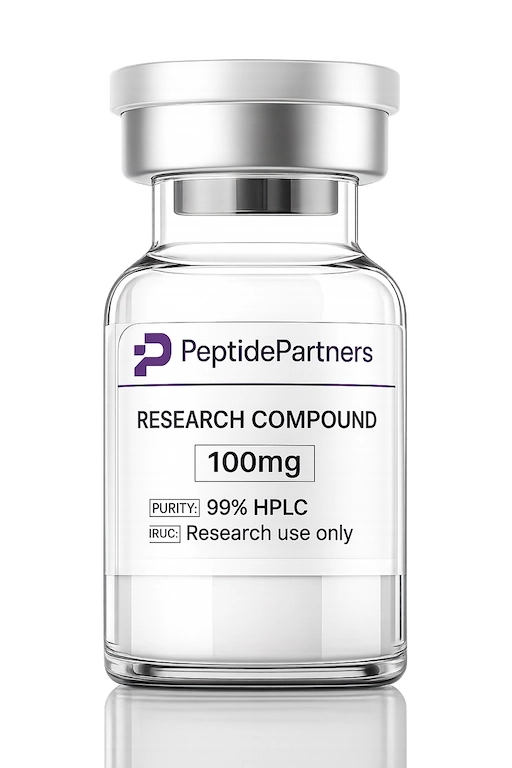
5-Amino-1MQ (10mg (10,000 mcg) vials)

At-Home Blood Test
Research Supplies
Vials (50 mg (50,000 mcg) each, subcutaneous route only)
One 50 mg (50,000 mcg) vial lasts about 10 to 20 days at 2.5 to 5 mg (2,500 to 5,000 mcg) per day.
| Cycle length | Planning note |
|---|---|
2 weeks 1–2 vials | 14 days use 35–70 mg (35,000–70,000 mcg) before losses. |
4 weeks 2–3 vials | 28 days use 70–140 mg (70,000–140,000 mcg) before losses. |
8 weeks 3–6 vials | 56 days use 140–280 mg (140,000–280,000 mcg) before losses. |
12 weeks 5–9 vials | 84 days use 210–420 mg (210,000–420,000 mcg) before losses. |
Insulin Syringes (U-100)
One fresh syringe per injection. The example subQ doses fit a 0.5 mL barrel.
| Cycle length | Planning note |
|---|---|
2 weeks 14 syringes | 1 syringe per day at once-daily dosing. |
4 weeks 28 syringes | 1 syringe per day. |
8 weeks 56 syringes | 1 syringe per day. |
12 weeks 84 syringes | 1 syringe per day. Add more if running twice-daily. |
Bacteriostatic Water
Use up to 3.0 mL per 50 mg (50,000 mcg) vial. One 10 mL bottle covers three vials with margin.
| Cycle length | Planning note |
|---|---|
2-4 weeks 1 × 10 mL bottle | 2 weeks: Uses 3–6 mL at 3 mL per vial.; 4 weeks: Uses 6–9 mL at 3 mL per vial. |
8 weeks 2 × 10 mL bottles | Uses 9–18 mL at 3 mL per vial. |
12 weeks 3 × 10 mL bottles | Uses 15–27 mL at 3 mL per vial. |
Vial ranges are rounded up before losses. Allow extra for priming losses and storage limits. If you are using oral capsules, none of the above applies — you only need the capsules themselves.
Companion Supplies & Routine Support
Best Time to Take 5-Amino-1MQ: Morning or Night?
Morning is the most commonly discussed time for 5-Amino-1MQ because some informal reports describe warmth, alertness, or trouble sleeping after later use. No human trial has tested the best time, however. Timing should be treated as an unproven research practice, not a medical schedule.
Timing questions and current evidence limits
| Question | Research-context answer |
|---|---|
| Morning or evening? | Morning is more common in community protocols. Evening use may be more likely to disrupt sleep, but this has not been tested in a controlled human study. |
| With or without food? | No human study has compared the two. Taking an oral capsule with food may be easier on the stomach, but food could also change absorption. |
| Once daily or split? | Once-daily and split morning-to-midday schedules are both discussed. Split timing is based on short rat half-life data, not a proven human benefit. |
| Oral or subcutaneous timing? | Oral absorption and injected delivery are different. Rat data cannot establish the best timing for either route in people. |
| What if a scheduled amount is missed? | There is no approved missed-dose guidance. Informal protocols generally avoid doubling the next amount because safety and dose limits are unknown. |
No human study has established a best time, meal rule, or missed-dose plan for 5-Amino-1MQ.
5-Amino-1MQ Oral Capsules vs Injection
Oral capsules are easier to use, while subcutaneous injection requires a vial, bacteriostatic water, and syringe math. Rat research found 38.4% oral bioavailability, but no human study has compared the two routes. Oral and injected amounts are not directly interchangeable, and neither route has a proven human dose.
5-Amino-1MQ oral and subcutaneous route comparison
| Factor | Oral capsules | Subcutaneous injection |
|---|---|---|
| Administration | Capsule taken by mouth | Reconstituted solution placed under the skin |
| Commonly discussed research amounts | 50 to 150 mg (50,000 to 150,000 mcg) per day in community reports | 2.5 to 5 mg (2,500 to 5,000 mcg) per day in community reports |
| Frequency | Once daily or split between morning and midday | Usually discussed as once daily, with some split examples |
| Absorption evidence | 38.4% oral bioavailability in one rat study; human bioavailability is unknown | Human subcutaneous bioavailability and pharmacokinetics are unknown |
| Convenience | No mixing or syringe math | Requires reconstitution, sterile supplies, and injection-site planning |
| Evidence limits | No controlled human dose, benefit, or safety trial | No controlled human dose, benefit, or safety trial |
| Can the amounts be treated as equal? | No. Route changes exposure, and rat data cannot provide a safe conversion. | No. A smaller injected amount is not proven equal to a larger oral amount. |
The listed amounts describe informal research discussions. They are not dosing recommendations or validated route conversions.
5-Amino-1MQ Half-Life and Dosing Frequency
5-Amino-1MQ has no established human half-life. In rats, the reported average was about 3.8 hours after IV dosing and 6.9 hours after oral dosing. Those figures help explain why some informal protocols split timing, but they cannot set a safe or effective schedule for people.
Published 5-Amino-1MQ pharmacokinetic findings
| Measure | Published finding | What it means |
|---|---|---|
| IV half-life | 3.80 ± 1.10 hours in rats | Animal IV data only; it does not describe oral or subcutaneous timing in people. |
| Oral half-life | 6.90 ± 1.20 hours in rats | Animal oral data only; it is not an established human half-life. |
| Oral bioavailability | 38.4% in rats | Shows that some oral absorption occurred in that model. Human absorption may differ. |
| Subcutaneous half-life | Not established in humans | Skipping the gut may change exposure, but no safe route conversion can be calculated from current data. |
Source: Awosemo et al., Journal of Pharmaceutical and Biomedical Analysis, 2021.
Some community protocols use a morning and midday split to spread exposure across the day. That idea is an extrapolation from rat data. It has not been shown to improve results or reduce risks in people. Route, food, metabolism, and product quality could all change how long the compound remains in the body.
5-Amino-1MQ Dosage Chart
This 5-Amino-1MQ dosage chart summarizes the oral and SubQ research dosing ranges from 2.5 mg (2,500 mcg) to 150 mg (150,000 mcg) shown in the dosing section above.
 UNIVERSITY OF PEPTIDE · RESEARCH REFERENCE
5-Amino-1MQ Dosage Chart
| Phase | Daily dose | Notes |
|---|---|---|
| Weeks 1–2 (start low) | 50 mg (50,000 mcg) once daily | Morning dosing is the pattern most often reported; sleep, energy, and digestion changes are commonly monitored in community reports. |
| Weeks 3+ (standard) | 100 mg (100,000 mcg) once daily | The most common research community target dose. |
| Weeks 3+ (higher end) | 150 mg (150,000 mcg) once daily | Some sources go this high. Diminishing returns and more side effects are reported above 150 mg (150,000 mcg). |
| Split option | 50 mg (50,000 mcg) morning + 50 mg (50,000 mcg) midday | Some sources prefer split AM dosing because the plasma half-life is short (about 4 to 7 hours in rodent PK). |
5-Amino-1MQ Reconstitution Guide
The amount of BAC water depends on the vial strength and the concentration needed. The examples below use 1.0 mL for a 10 mg (10,000 mcg) vial, 2.0 mL for a 20 mg (20,000 mcg) vial, and 3.0 mL for a 50 mg (50,000 mcg) vial. Reconstitution does not apply to oral capsules.
10 mg (10,000 mcg) vial reconstitution math
| BAC water added | Final concentration | Research amount | Draw volume | U-100 syringe units |
|---|---|---|---|---|
| 1.0 mL | 10 mg/mL (10,000 mcg/mL) | 1 mg (1,000 mcg) | 0.10 mL | 10 units |
| 1.0 mL | 10 mg/mL (10,000 mcg/mL) | 2.5 mg (2,500 mcg) | 0.25 mL | 25 units |
| 1.0 mL | 10 mg/mL (10,000 mcg/mL) | 5 mg (5,000 mcg) | 0.50 mL | 50 units |
A 5 mg (5,000 mcg) amount uses half of this vial and requires a 0.50 mL draw at this concentration.
20 mg (20,000 mcg) vial reconstitution math
| BAC water added | Final concentration | Research amount | Draw volume | U-100 syringe units |
|---|---|---|---|---|
| 2.0 mL | 10 mg/mL (10,000 mcg/mL) | 1 mg (1,000 mcg) | 0.10 mL | 10 units |
| 2.0 mL | 10 mg/mL (10,000 mcg/mL) | 2.5 mg (2,500 mcg) | 0.25 mL | 25 units |
| 2.0 mL | 10 mg/mL (10,000 mcg/mL) | 5 mg (5,000 mcg) | 0.50 mL | 50 units |
The same 10 mg/mL (10,000 mcg/mL) concentration makes the syringe math match the 10 mg (10,000 mcg) vial example above.
50 mg (50,000 mcg) vial reconstitution math
| BAC water added | Final concentration | Research amount | Draw volume | U-100 syringe units |
|---|---|---|---|---|
| 3.0 mL | 16.7 mg/mL (16,700 mcg/mL) | 1 mg (1,000 mcg) | 0.06 mL | 6 units |
| 3.0 mL | 16.7 mg/mL (16,700 mcg/mL) | 2.5 mg (2,500 mcg) | 0.15 mL | 15 units |
| 3.0 mL | 16.7 mg/mL (16,700 mcg/mL) | 5 mg (5,000 mcg) | 0.30 mL | 30 units |
| 3.0 mL | 16.7 mg/mL (16,700 mcg/mL) | 10 mg (10,000 mcg) | 0.60 mL | 60 units |
The values are rounded. A 0.60 mL draw may be unusually large for one subcutaneous site. This table is math, not a dosing recommendation.
An illustrated reading aid for the product instructions. Confirm the exact formulation, diluent and handling method first. A research-only vial is not an approved medicine.
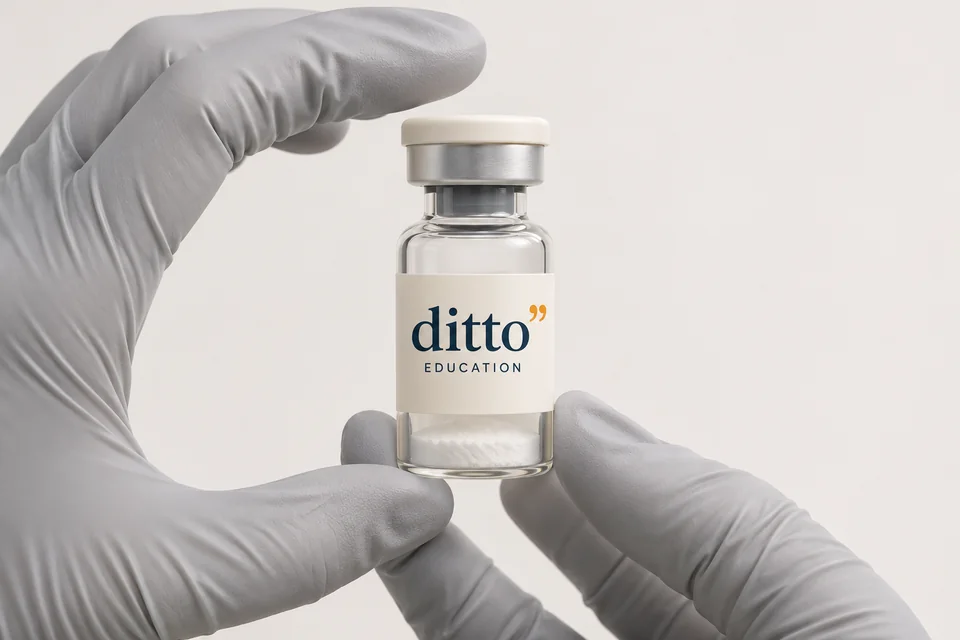
Check preparation conditions
Check the product instructions for the required preparation temperature. Do not warm a vial or change storage conditions based on a generic peptide guide.
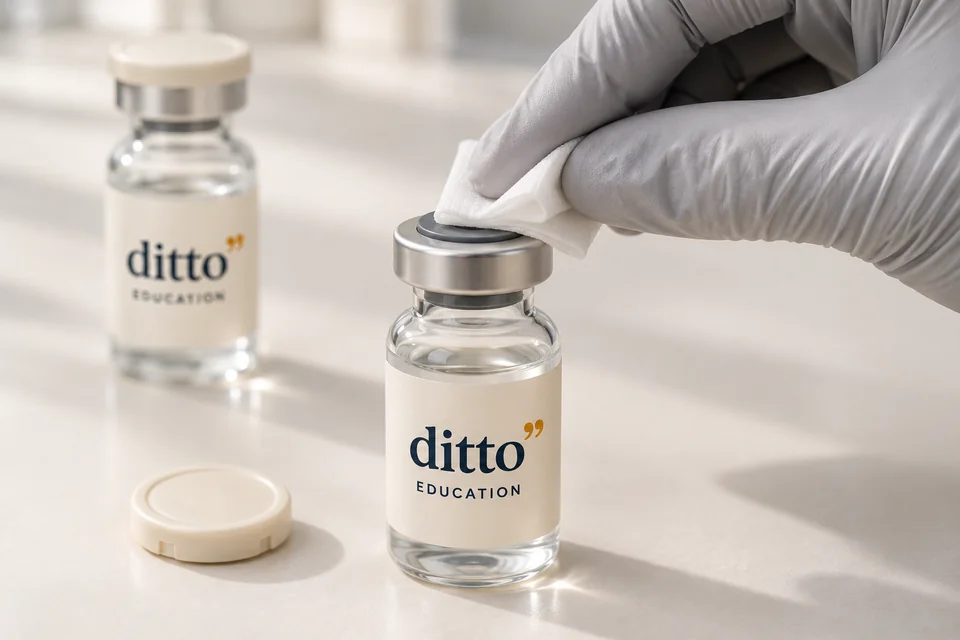
Clean the stopper
If the product instructions call for vial access, disinfect the exposed rubber stopper with a fresh alcohol swab and let it dry. Avoid touching it afterward; use sterile equipment for each access.
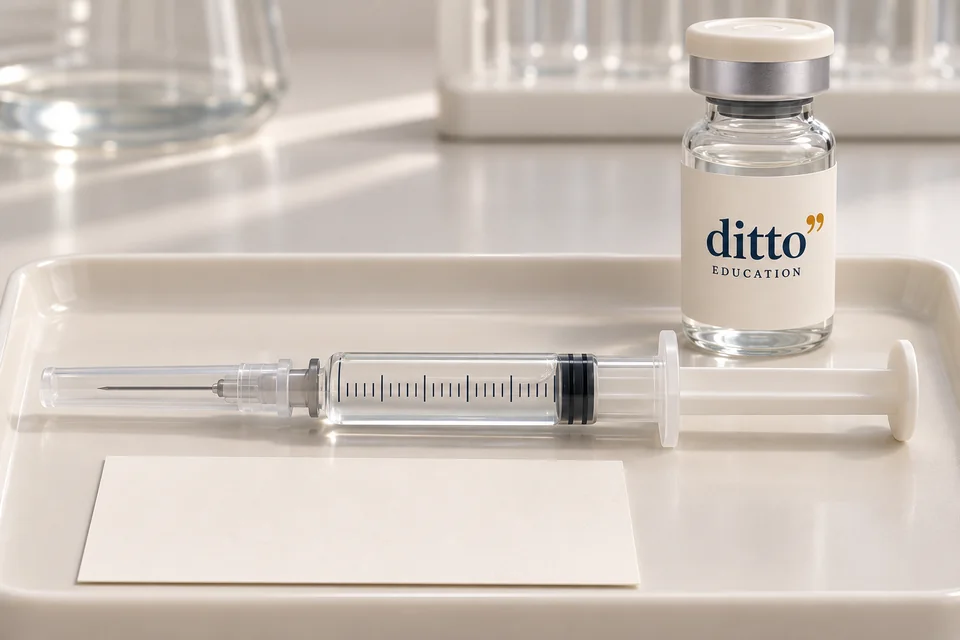
Measure the specified diluent
Confirm the diluent type and volume in the product instructions. Measure that volume using the correct syringe scale. A concentration calculation cannot establish that a diluent is compatible.
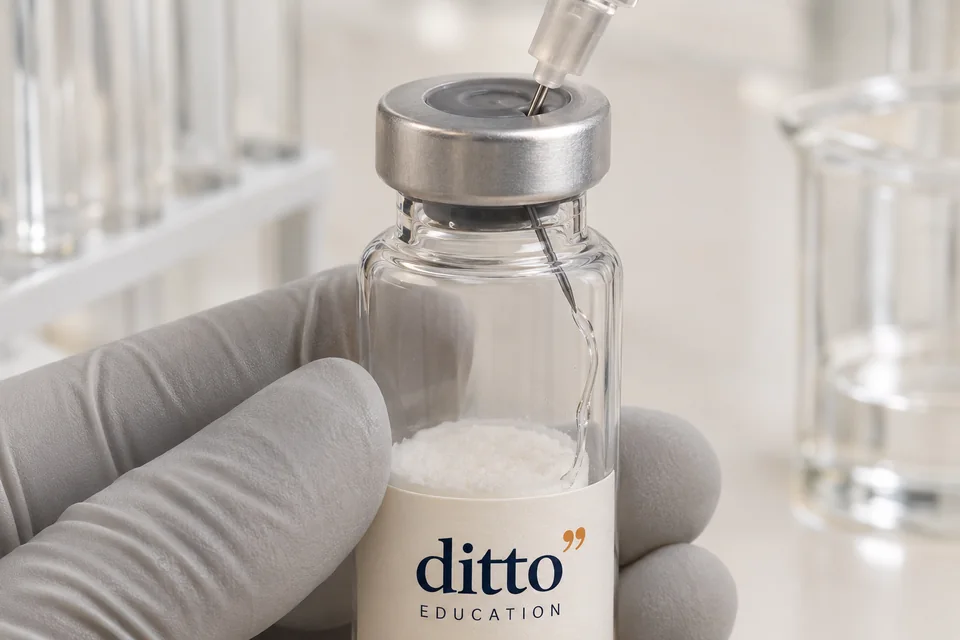
Add as instructed
Follow the product-specific addition method. Where slow addition along the vial wall is specified, keep the flow gentle. Do not infer a preparation method from a dose table or combine separate compounds in one vial.
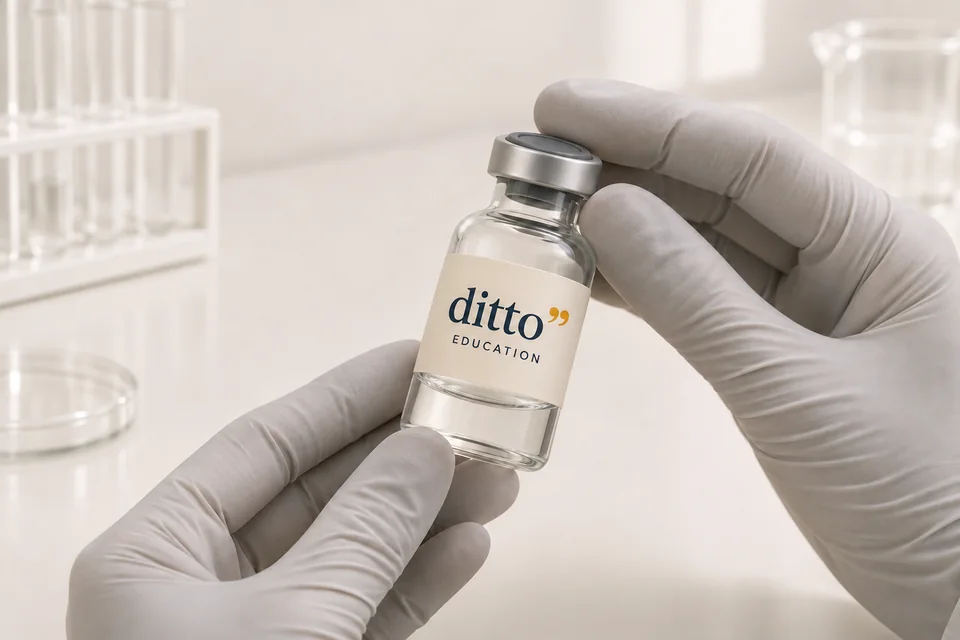
Mix and inspect
Use the mixing method specified for the product; some require gentle swirling rather than shaking. Compare the appearance with the instructions. Do not use a preparation with unexpected particles, discoloration or suspected contamination.
Check the exact product
Read the label, formulation, vial content, expiry and preparation instructions. Check the vial and closure for damage. Appearance alone cannot establish identity, purity or sterility.
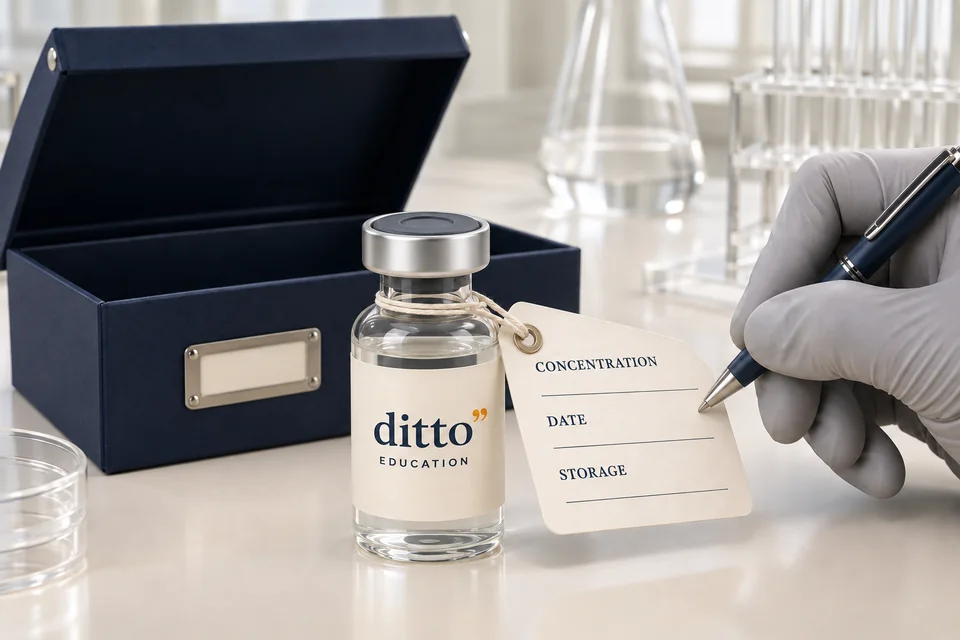
Record and store
Record the preparation date and calculated concentration in mg/mL and mcg/mL. Follow the exact storage conditions and discard time on the product instructions. There is no universal refrigerated shelf life for all peptides.
Check the quantity calculation
Use the labeled mass and final liquid volume in the calculator. Read mg and mcg together, then check the mL and U-100 markings. Biological IU requires the exact product potency; the calculator does not choose a dose.
AI-generated educational scenes with Ditto-inspired concept labels; not photographs of supplied products. CDC preparation and equipment principles · Check your calculation
5-Amino-1MQ Dosage Calculator
If your vial size, BAC-water volume, or research amount is different from the tables above, use the University of Peptide calculator for custom vial math. Enter the vial amount, BAC-water volume, and target amount to calculate the draw volume and U-100 syringe units. The calculator only performs the math; it does not recommend a dose.
How 5-Amino-1MQ Works
5-Amino-1MQ blocks one enzyme: NNMT (nicotinamide N-methyltransferase). That single block sets off a chain of changes inside fat cells.
Here is the plain-English version. Your body uses a form of vitamin B3 called nicotinamide to build NAD+, the energy currency that powers mitochondria and many cell-repair processes. NNMT is an enzyme that grabs nicotinamide and methylates it, turning it into a waste product called 1-MNA that gets cleared from the body. In obesity, NNMT activity is unusually high in fat cells, which means a lot of nicotinamide gets thrown out before it can be turned into NAD+.
5-Amino-1MQ stops that waste step. With NNMT blocked, nicotinamide stays in the cell, NAD+ levels climb, and fat cells start burning more fuel instead of storing it. Researchers also observed shifts in glucose uptake and sirtuin activity (the SIRT1 longevity protein family) when NNMT was blocked.
Blocks NNMT in fat cells
In 3T3-L1 mouse fat cells, 30 µM of 5-Amino-1MQ for 24 hours strongly lowered 1-MNA levels — direct proof of NNMT inhibition (Neelakantan et al., Biochemical Pharmacology, 2018).
Raises NAD+ and SAM
The same study showed that NAD+ and S-adenosyl-methionine (SAM) both went up after NNMT inhibition. LC-MS/MS measurements confirmed both cofactors rose.
Shrinks fat cells in mice
In diet-induced obese mice, 11 days of 5-Amino-1MQ (subcutaneous, around 34 mg/kg/day (34,000 mcg/kg/day)) reduced body weight, total fat mass, and plasma cholesterol with no drop in food intake or lean mass.
Confirmed at 28 days
A follow-up 28-day study (Babula et al., 2024) extended the finding: 5-Amino-1MQ dose-dependently limited body weight and fat mass gain without changing food intake, and it improved liver markers in obese mice.
Looking for outcomes rather than protocol math? See the 5-Amino-1MQ results and benefits guide for a closer look at animal findings, reported timelines, before-and-after claims, and the limits of current human evidence.
5-Amino-1MQ Human Clinical Trials and FDA Status
Current evidence
No published human dosing trial has established a 5-Amino-1MQ dose, cycle, safety profile, or treatment benefit. The research used to support this protocol is mainly preclinical, including cell and animal studies.
Searches for 5-Amino-1MQ human clinical trials often lead to animal research being presented as if it were human evidence. That is an important distinction. The key published studies behind 5-Amino-1MQ used laboratory models and mice, not controlled dosing trials in people.
What has been studied with 5-Amino-1MQ?
| Evidence type | What is available | What it can establish |
|---|---|---|
| Cell research | Laboratory studies have tested NNMT inhibition and related biological effects. | Mechanism and cellular effects only. Cell studies cannot establish a human dose or cycle. |
| Animal research | Published mouse studies have tested 5-Amino-1MQ across treatment periods ranging from days to several weeks. | Preclinical effects and study-specific exposure. Animal doses and schedules should not be transferred directly to humans. |
| Human clinical dosing trials | No published human dosing trial was identified in the evidence used for this protocol. | No validated human dose, frequency, cycle length, or expected outcome can be established. |
| FDA-approved use | No FDA-approved 5-Amino-1MQ use is established in the sources reviewed here. | Community protocols should not be described as FDA-approved dosing. |
Absence of established human dosing evidence is why this page keeps published animal research separate from community-reported protocols.
What does the FDA say about 5-Amino-1MQ?
In a January 20, 2026 warning letter, the FDA specifically named 5-amino-1-methylquinolinium iodide (5-Amino-1MQ). The agency said it did not appear on the 503B bulks list and was not being used to compound a drug on the FDA drug-shortage list. Because of that, products compounded with it at the facility discussed in the letter were not eligible for the exemptions provided under section 503B.
503B status is not the same as a human dosing study
The FDA warning letter is regulatory evidence, not clinical evidence. It does not provide a 5-Amino-1MQ dose, cycle, safety standard, or proof of benefit. It does show why 5-Amino-1MQ should not be described as an FDA-approved human protocol.
Why animal doses do not become human doses
Published 5-Amino-1MQ studies can help explain the compound's mechanism and how researchers designed animal experiments. They cannot establish a human protocol. Species, route, metabolism, dose scaling, treatment length, and study goals can all change how an experiment is designed.
- A mouse dose is not a validated human dose.
- A rodent treatment period is not a proven human cycle.
- Animal pharmacokinetics do not establish a human half-life.
- Changes measured in mice do not guarantee the same outcome in people.
- Community-reported schedules remain unvalidated unless tested in appropriate human research.
For that reason, the dosage, timing, and cycle information elsewhere on this page is labeled by evidence level. Published preclinical research is presented separately from community-reported practices rather than combining them into one supposedly proven protocol.
Who 5-Amino-1MQ Is For and Who Should Avoid It
5-Amino-1MQ has no FDA-approved use, so there is no formal eligibility list. The list below reflects how the published rodent studies were set up and what is known about NNMT in human biology.
- Pregnancy and breastfeeding: not studied. Avoid.
- Active cancer or recent cancer history: NNMT plays a complex role in cancer biology. In some tumor types, NNMT activity helps the tumor grow; in others, the picture is less clear. Until human safety data exists, anyone with a cancer history should avoid 5-Amino-1MQ outside formal oncology research.
- Liver disease: liver enzyme monitoring is recommended in community use, and a baseline ALT/AST check is reasonable before starting.
- Children and teenagers: no safety data exists.
- Anyone taking methyl-donor-sensitive medications (some psychiatric drugs, methotrexate, methylated B-vitamin protocols at high doses): NNMT shares the methyl donor SAM, so theoretical interactions exist.
- People with known sleep disorders: the metabolic activation effect can worsen insomnia if dosed late in the day.
If any of those apply, talk to a qualified clinician before considering 5-Amino-1MQ for any reason.
5-Amino-1MQ Side Effects, Risks and Safety
Possible side effects are not well defined because no controlled human safety trial has been published. Informal reports mention sleep trouble, warmth, a faster resting heart rate, stomach upset, and injection-site stinging. Their true frequency and cause are unknown, and long-term risks, drug interactions, and safe-use groups have not been established.
What is known and unknown about 5-Amino-1MQ safety
| Reported or proposed issue | Evidence source | Known or theoretical? | Important limits |
|---|---|---|---|
| Sleep trouble, warmth, or a faster resting heart rate | Informal community reports | Reported, but not confirmed in a controlled study | Frequency, dose link, and cause are unknown. Other stimulants may add to these effects. |
| Stomach upset with oral capsules | Informal community reports | Reported, but not confirmed | Food effects and human oral tolerability have not been studied. |
| Stinging or irritation after injection | Informal route-specific reports | Reported, but not confirmed | Could relate to the compound, concentration, sterility, or injection method. |
| Liver or metabolic changes | Animal studies and pathway theory | Human risk is unknown | Animal studies cannot establish safe liver effects or monitoring rules for people. |
| Drug or supplement interactions | Mechanism-based theory | Theoretical | No controlled interaction studies exist. Concerns may be higher with drugs that affect metabolism, blood sugar, sleep, or methyl-group pathways. |
| Pregnancy, breastfeeding, children, liver disease, or cancer history | No direct human safety data | Unknown | These groups are not covered by established human research and should not be treated as proven safe-use groups. |
| Long-term or repeated-cycle effects | No long-term human trial | Unknown | No established long-term human safety data exists. |
A lack of reported harm is not proof of safety. Human side-effect rates and interaction risks are not established.
Quality-control risks
Products sold under research-use-only labels do not carry the same approval review as FDA-approved drugs. Identity, purity, strength, and sterility may vary. A lot-matched certificate of analysis can add context, but it does not prove that a product is safe for people. Both product quality and the compound's own risks remain uncertain.
How Long Does 5-Amino-1MQ Take to Work?
There is no proven human timeline for 5-Amino-1MQ. Informal reports sometimes describe body-composition changes after 4 to 6 weeks, but these reports are not controlled evidence. Animal studies measured changes over 11 to 28 days. Those findings cannot predict when, or whether, a person would notice a result.
- Days 1–28 in animal research: mouse studies reported metabolic and fat-mass changes during this window.
- Weeks 4–6 in informal reports: some community accounts describe early waist or body-fat changes, but other causes cannot be ruled out.
- Weeks 8–12 in informal cycles: often described as a full research cycle, not as a proven time to peak results.
- Before-and-after claims: diet, training, other compounds, lighting, and selection bias can all change the picture. Treat these claims cautiously.
Animal and human bodies absorb, break down, and respond to compounds in different ways. A mouse result cannot be converted into a human promise by scaling time or dose. There is also no validated clinical marker that shows 5-Amino-1MQ is working in a person.
5-Amino-1MQ Benefits and Results: What the Evidence Shows
The possible benefits of 5-Amino-1MQ come from cell and animal research, not controlled human trials. Studies in obese mice reported changes in fat mass and metabolic markers after NNMT inhibition. These findings support more research, but they do not show that 5-Amino-1MQ causes weight loss, more energy, or better health in people.
Evidence behind common 5-Amino-1MQ benefit claims
| Claimed outcome | Evidence level | What research currently shows |
|---|---|---|
| Fat-mass changes | Animal evidence | Obese mouse studies reported less body-weight gain, lower fat mass, or smaller fat cells after NNMT inhibition. |
| NAD+ changes | Cell and animal evidence | Blocking NNMT can preserve nicotinamide, a building block used to make NAD+. Higher cellular NAD+ was reported in preclinical work. |
| Appetite reduction | Limited evidence | Mouse changes occurred without lower food intake. That suggests appetite suppression was not the main mechanism in those studies. |
| Human weight loss | Not established | No controlled human trial has shown that 5-Amino-1MQ causes weight loss. |
| Energy changes | Preclinical or anecdotal | NAD+ biology offers a possible mechanism, and informal reports vary. Human benefit and side-effect rates are unknown. |
Evidence from cells and animals can show a research signal. It cannot establish a safe or effective human outcome.
Changes appeared within 11 to 28 days in mouse studies. There is no matching human timeline. People and mice differ in metabolism, body size, route exposure, and disease biology, so animal results cannot predict a person's outcome.
Before-and-after photos and personal stories should be treated with care. They rarely control for diet, exercise, water weight, other compounds, camera conditions, or who chose to share a result. Our 5-Amino-1MQ results and benefits guide takes a closer look at reported timelines, before-and-after claims, and the gaps in human evidence.
5-Amino-1MQ Storage & Handling
Capsules and vials follow different storage rules.
5-Amino-1MQ storage by format
| Form | Temperature | Note |
|---|---|---|
| Capsules (sealed container) | Room temperature | Keep in a cool, dry, dark place. Stable up to 12 months at room temperature. |
| Lyophilized vial (long-term) | -4 °F (-20 °C) or colder | Best for long storage. Stable up to 24 months. |
| Lyophilized vial (short-term) | 35.6 to 46.4 °F (2 to 8 °C) | Acceptable for short transit and short holds. |
| Reconstituted vial | 35.6 to 46.4 °F (2 to 8 °C) | Refrigerate. Use within 2 to 4 weeks. Do not refreeze. |
| Appearance | Clear after mixing | Cloudy or particulate solution means stop using it. |
Capsules at room temperature is fine. Reconstituted vials should never be left out for more than a few hours.
5-Amino-1MQ Protocol Mistakes & Troubleshooting
I can't sleep after starting
Insomnia is most often linked in reports to evening or midday dosing rather than morning dosing.
I missed a daily dose
Community protocols generally do not double up after a missed dose; the next scheduled dose resumes as normal.
I am not seeing fat loss at week 4
There is no proven human timeline or response rate. Informal reports cannot show whether 5-Amino-1MQ caused a change, and animal timelines should not be converted into human expectations.
The vial looks cloudy after mixing
Stop using it. Cloudy solution can mean degradation or contamination. Reconstituted 5-Amino-1MQ should be clear.
A high amount requires a very large draw
At 16.7 mg/mL (16,700 mcg/mL), a 100 mg (100,000 mcg) amount would require about 6 mL. That is far beyond the static subcutaneous examples on this page and shows why oral and injected amounts should not be treated as interchangeable.
My resting heart rate went up 5 bpm
Reported as a mild stimulant-like effect in the first 1 to 2 weeks. If it climbs higher, stays elevated past 2 weeks, or causes symptoms, stop and consult a clinician.
5-Amino-1MQ vs AOD-9604 vs Semaglutide vs NAD+
5-Amino-1MQ is often compared to fat-loss peptides and to NAD+ boosters. The four below sit closest to it in research community use.
Fat-loss and metabolic compound comparison
| Compound | Mechanism | Route | Acts on appetite? | FDA status |
|---|---|---|---|---|
| 5-Amino-1MQ | NNMT inhibitor; raises NAD+, shrinks fat cells | Oral capsule (50–150 mg/day (50,000–150,000 mcg/day)) | No | Not FDA-approved |
| AOD-9604 | Modified GH fragment; promotes fat oxidation | Subcutaneous injection | No | Not FDA-approved |
| Semaglutide | GLP-1 receptor agonist; suppresses appetite | Subcutaneous injection or oral | Yes (strong) | FDA-approved (T2D and obesity) |
| NAD+ (intravenous or subcutaneous) | Direct NAD+ supplementation | IV infusion or subcutaneous | No | Not FDA-approved as a drug |
These compounds are not interchangeable. Each has its own evidence base and safety boundary.
Plain-English summary: 5-Amino-1MQ and AOD-9604 both target fat without touching appetite. Semaglutide works on appetite but does not directly raise NAD+. NAD+ supplementation adds NAD+ from the outside; 5-Amino-1MQ helps the body make and keep more NAD+ from the inside. Some research community protocols stack 5-Amino-1MQ with AOD-9604 or with a GLP-1 drug, but no human study has tested those combinations.
FAQ
Q1: What is 5-Amino-1MQ?
5-Amino-1MQ is short for 5-amino-1-methylquinolinium. It is a small synthetic molecule, not a peptide. It blocks an enzyme called NNMT, which helps control how cells use nicotinamide. Researchers are studying this pathway for possible effects on fat tissue, NAD+, and metabolism, but human benefits are not established.
Q2: Is 5-Amino-1MQ a peptide?
No. 5-Amino-1MQ is a small molecule, not a chain of amino acids. It is often sold alongside research peptides because it fits the same metabolic research space, but chemically it is closer to a small-molecule drug than to peptides like BPC-157 or semaglutide.
Q3: Is 5-Amino-1MQ FDA approved?
No. 5-Amino-1MQ was not listed as an FDA-approved drug when this page was checked on July 30, 2026. It is an experimental research compound, not an approved treatment. A missing FDA listing does not prove that a product is safe, effective, or made to drug-quality standards.
Q4: What is the typical research dosage for 5-Amino-1MQ?
No typical human dose has been established. Research community discussions often mention 50 to 150 mg (50,000 to 150,000 mcg) per day by mouth and 2.5 to 5 mg (2,500 to 5,000 mcg) per day by subcutaneous injection. These ranges come from animal-data extrapolation and informal reports, not controlled human trials, and the two routes are not directly interchangeable.
Q5: Is there a different 5-Amino-1MQ dosage for women?
No sex-specific human dose has been established for 5-Amino-1MQ. Published research has not validated a separate dosing schedule for women. Any amounts discussed elsewhere should be treated as research-context or community-reported information, not a proven female-specific dose.
Q6: How much BAC water should be added to 5-Amino-1MQ?
BAC-water volume depends on vial strength and the concentration needed. The examples on this page use 1.0 mL for a 10 mg (10,000 mcg) vial, 2.0 mL for a 20 mg (20,000 mcg) vial, and 3.0 mL for a 50 mg (50,000 mcg) vial. These are static math examples, not mixing instructions for human use.
Q7: When is the best time to take 5-Amino-1MQ: morning or night?
Morning is the most common timing in informal research protocols because later use is sometimes linked to alertness or sleep trouble. No controlled human trial has established a best time, however. Morning-versus-night timing should be treated as an unproven research practice, not a medical schedule.
Q8: What is the half-life of 5-Amino-1MQ?
No human half-life has been established. In rats, the reported average was about 3.8 hours after IV dosing and 6.9 hours after oral dosing. These animal findings may help explain split timing in informal protocols, but they cannot set a safe dosing frequency or predict subcutaneous timing in people.
Q9: What is the injection dose for 5-Amino-1MQ?
Subcutaneous use is uncommon and dose-limited. A 50 mg (50,000 mcg) vial mixed with 3.0 mL of bacteriostatic water gives about 16.7 mg/mL (16,700 mcg/mL), and the example subcutaneous range is 2.5 to 5 mg (2,500 to 5,000 mcg) per day. Anything higher than that quickly becomes too much volume for one subQ site, which is why oral capsules are the standard route.
Q10: Oral capsule or subcutaneous injection — which is better?
Neither route is proven better in people. A rat study reported 38.4% oral bioavailability, while human oral and subcutaneous exposure remain unknown. Capsules are more convenient, but injection requires reconstitution and sterile supplies. The commonly discussed amounts differ greatly and should not be treated as equal or directly converted.
Q11: What are the possible side effects of 5-Amino-1MQ?
Possible side effects are not well defined because no controlled human safety trial exists. Informal reports mention sleep trouble, warmth, a faster resting heart rate, stomach upset, and injection-site stinging. Their true frequency and cause are unknown. Drug interactions, long-term risks, and safe-use groups have not been established.
Q12: Who should avoid 5-Amino-1MQ?
Pregnant or breastfeeding people, anyone with active cancer or a recent cancer history, anyone with liver disease, children and teenagers, and anyone with known sleep disorders should avoid 5-Amino-1MQ outside formal research supervision.
Q13: How long does it take to work?
There is no proven human timeline. Informal reports sometimes describe body-composition changes after 4 to 6 weeks, while animal studies measured changes over 11 to 28 days. Animal findings cannot predict when, or whether, a person would notice a result, and before-and-after claims often leave out other important factors.
Q14: How long should a 5-Amino-1MQ cycle be?
Common research community cycles run 8 to 12 weeks on, followed by 4 to 6 weeks off. The off-period gives baseline NNMT activity a chance to reset before the next cycle.
Q15: Can 5-Amino-1MQ be stacked with semaglutide or AOD-9604?
Some research community protocols combine 5-Amino-1MQ with AOD-9604 (fat oxidation) or with a GLP-1 drug like semaglutide (appetite suppression), since the mechanisms do not overlap. No human study has tested these combinations.
Q16: Is this page medical advice?
No. This page is an educational research-context reference. 5-Amino-1MQ is not FDA-approved and is not a supplement. Talk to a qualified clinician before considering any use.
Sources & Research
- Neelakantan H, Vance V, Wetzel MD, et al. Selective and membrane-permeable small molecule inhibitors of nicotinamide N-methyltransferase reverse high fat diet-induced obesity in mice. Biochemical Pharmacology (2018)
- Babula JJ, Bui D, Stevenson HL, Watowich SJ, Neelakantan H. Nicotinamide N-methyltransferase inhibition mitigates obesity-related metabolic dysfunction. PubMed (peer-reviewed) (2024)
- Awosemo O, Neelakantan H, Watowich S, et al. Development & validation of LC-MS/MS assay for 5-amino-1-methyl quinolinium in rat plasma: Application to pharmacokinetic and oral bioavailability studies. Journal of Pharmaceutical and Biomedical Analysis (2021)
- Kraus D, Yang Q, Kong D, et al. Nicotinamide N-methyltransferase knockdown protects against diet-induced obesity. Nature (2014)
- Sampson CM, Dimet AL, Neelakantan H, et al. Combined nicotinamide N-methyltransferase inhibition and lean-diet substitution reduces body weight and liver fat in obese mice. Scientific Reports (2021)
- Neelakantan H, Brightwell CR, Graber TG, et al. Small molecule nicotinamide N-methyltransferase inhibitor activates muscle stem cells and progenitor cell function. Biochemical Pharmacology (2019)
- Pissios P. Nicotinamide N-Methyltransferase: More Than a Vitamin B3 Clearance Enzyme. Trends in Endocrinology and Metabolism (2017)
- National Center for Biotechnology Information. PubChem Compound Summary for 5-Amino-1-methylquinolinium (5-Amino-1MQ). PubChem (2026)
- U.S. Food and Drug Administration. Drugs@FDA: FDA-approved drug database checked for 5-Amino-1MQ on July 30, 2026. FDA.gov (2026)
- U.S. Food and Drug Administration. Development & Approval Process | Drugs. FDA.gov (2026)
- U.S. Food and Drug Administration. GenoGenix LLC Warning Letter 718739. FDA.gov (2026)
- ClinicalTrials.gov. Search results for 5-Amino-1MQ, checked July 30, 2026. ClinicalTrials.gov (2026)
Related Dosing Protocols
Educational use only
This guide is an educational research reference, not medical advice or a treatment plan. 5-Amino-1MQ is not FDA-approved for human use.
Calculate vial math
Use the calculator for custom vial size, BAC-water volume, and syringe-unit math.
Reconstitution calculator
Enter your own values. This tool calculates quantities, not a recommended dose.
Check the concentration
Changing the unit keeps the entered mass equivalent. 1 milligram (mg) = 1,000 micrograms (mcg). This tool does not choose a target amount.
Biological IU (optional, product-specific)
Only enter a potency explicitly stated as IU per mg on the exact product label or reference. Do not enter the 100 from a U-100 syringe. No factor is assumed for any peptide.
Your result will appear here
Enter the mass, final solution volume and target mass, or load a fictional example.
Assumes accurate masses, final solution volume and even distribution. Blend arithmetic does not establish whether substances can be mixed. Read the formulas and assumptions.
Study findings, reported examples and supplier statements have different levels of evidence. Follow the citations and check the formulation, population and date before interpreting a number.
Editorial standards and corrections