On this page
TOOLS FOR THIS GUIDE
Work with Semaglutide
The guide name carries across. Amounts, dates and instructions remain yours to enter; opening a tool saves nothing.
Worked examples: calculations, records and source checks
Fictional arithmetic, unrelated to a recommended amount of Semaglutide: 10 mg (10,000 mcg) in a final 2 mL is 5 mg/mL (5,000 mcg/mL). A target mass of 0.25 mg (250 mcg) corresponds to 0.05 mL, or 5 U-100 syringe markings. Biological IU cannot be inferred from these inputs. Neither the mass nor the liquid is a preparation recommendation.
Open the arithmetic example- Supply example: two 10 mg (10,000 mcg) vials start at 20 mg (20,000 mcg). Four recorded entries of 0.25 mg (250 mcg) leave a theoretical 19 mg (19,000 mcg), before losses or expiry. Skipped entries do not deduct stock.
- Measurement example: enter “Sleep duration”, “7.5”, “hours” and the date. Keep the same unit and note changing conditions. A trend does not prove a treatment effect.
- Source example: record “rat study” when rats were studied, even when the headline describes recovery. Keep the exact paper and its limitations.
The planner accepts mg and mcg. Biological IU/USP units, sprays, drops and variable mixtures need product-specific instructions; they cannot be inferred from a generic mass calculator. For stacks, record each known ingredient separately.
FDA: why concentration and unit errors matterEvidence & source checks
What happened when the two medicines were compared within the same trial?
Mean weight reduction was 20.2% with tirzepatide and 13.7% with semaglutide. Waist circumference also fell more with tirzepatide. Gastrointestinal adverse events were common in both groups.
Limit: Participants and investigators knew which drug was assigned.
Did the specified two-drug treatment reduce weight compared with placebo?
Under the treatment-policy analysis, mean weight reduction was 20.4% with the combination and 3.0% with placebo. Gastrointestinal adverse events affected 79.6% versus 39.9% and were mainly transient and mild to moderate.
Limit: A controlled trial of this specified combination does not validate self-designed mixtures or additional stack ingredients.
What to verify before filling a plan
- Identity and formulation: match the name, sequence or active ingredient, route and strength. A related molecule or branded medicine is not automatically equivalent.
- Instruction source: obtain the actual amount, frequency and duration from qualified medical instructions. A community table or trial protocol does not establish an individual regimen.
- Units and product details: keep mass, liquid volume and biological activity units separate. Record batch, storage and discard instructions from the actual product; the tools cannot determine sterility or stability.
- Review and follow-up: list medicines and supplements, unresolved interactions and questions. Agree on relevant observations and actions with a qualified professional; normal measurements do not prove safety.
Selected source context, not a systematic review or medical approval. Study cards checked 24 November 2026; guide source notes checked 25 November 2026. Research references and citations appear below.
Guide summary
REFERENCE SUMMARY- Compound
- Semaglutide
- Class
- GLP-1 receptor agonist
- Common format
- Subcutaneous injection or oral tablet
- Regulatory status
- FDA-approved (Ozempic, Wegovy, Rybelsus)
Semaglutide Quick Start
Semaglutide is the active drug in Ozempic, Wegovy, and Rybelsus. Their approved indications, formulations, and dose schedules differ. A dose in one product cannot be assumed equivalent to the same number of milligrams in another, especially across oral and injectable forms.
Semaglutide is a GLP-1 receptor agonist. It acts on a gut-hormone pathway involved in blood sugar and appetite. Approved injections are weekly; approved tablets are daily. This guide separates the Wegovy injection example, selected oral-product schedules, and research-vial arithmetic.
- Two routes
- Injectable (once weekly) and oral tablet (once daily). The two routes use different dose schedules.
- Slow start
- Wegovy injection uses four-week escalation stages; the oral schedules below use 30-day stages. Further steps depend on the exact product label and tolerability.
- Calculation only
- At a nominal 2.5 mg/mL (2,500 mcg/mL), 0.25 mg (250 mcg) equals 0.10 mL or 10 U-100 units. Research-vial math does not establish a sterile or approved product.
- Long half-life
- About 7 days. Steady levels take roughly 4-5 weeks at each dose.
- Status
- FDA-approved. Research-use vials from supplier sources are for research only.
Educational reference only
This page is an educational research guide. It is not medical advice and is not a treatment plan. Talk to a qualified clinician before starting any peptide.
Semaglutide Dosing Protocol & Schedule
There is no single semaglutide schedule. The injection tab shows the standard Wegovy 2.4 mg (2,400 mcg) target for adult weight reduction, with other maintenance options explained below. The tablet tab covers Wegovy oral and Rybelsus; oral Ozempic is a separate product whose schedule is not tabulated here. Tablets are taken daily, but dose increases occur in 30-day stages, not daily.
Semaglutide Dosing Schedules by Route
Choose a product-specific prescribing-information example. These schedules do not apply to research-grade powders.
Open a format reference below.
Injectable format reference
Wegovy injection for adult weight reduction: the standard 2.4 mg (2,400 mcg) target, with indication-specific alternatives explained below.
Wegovy Injection: Standard 2.4 mg (2,400 mcg) Target
The table shows Wegovy injection’s standard path to 2.4 mg (2,400 mcg) weekly for adult weight reduction. Each escalation stage lasts four weeks; the label allows delaying an increase for tolerability. The table does not show every maintenance option. See Wegovy prescribing information, sections 2.2–2.3.
Wegovy injection: adult weight reduction, standard 2.4 mg (2,400 mcg) target
| Phase | Weeks | Weekly dose | Label context |
|---|---|---|---|
| Phase 1 - Initiation | Weeks 1-4 | 0.25 mg (250 mcg) | Initiation dose; not a maintenance dose. |
| Phase 2 - Early escalation | Weeks 5-8 | 0.5 mg (500 mcg) | Escalation step in this Wegovy example. |
| Phase 3 - Mid escalation | Weeks 9-12 | 1.0 mg (1,000 mcg) | Escalation step; Ozempic has separate prescribing instructions. |
| Phase 4 - High escalation | Weeks 13-16 | 1.7 mg (1,700 mcg) | Escalation step toward 2.4 mg (2,400 mcg); also an adult weight-reduction maintenance option. |
| Phase 5 - Maintenance | Week 17+ | 2.4 mg (2,400 mcg) | Recommended standard adult weight-reduction maintenance dose; not the maximum for every indication. |
Adult weight-reduction maintenance can be 1.7 or 2.4 mg (1,700 or 2,400 mcg) weekly. A later increase to 7.2 mg (7,200 mcg) is optional only after at least 4 weeks tolerated at 2.4 mg (2,400 mcg) when additional weight reduction is clinically indicated. Do not transfer that option to other indications or pediatric use.
Titration Notes
- Titration pacing matters. Slow dose increases reduce stomach side effects. In the STEP trials, side effects were most common during escalation and usually settled by week 20.
- Adult weight reduction. Maintenance may be 1.7 or 2.4 mg (1,700 or 2,400 mcg) weekly, with 2.4 mg (2,400 mcg) recommended. After at least 4 weeks tolerated at 2.4 mg (2,400 mcg), 7.2 mg (7,200 mcg) may be used if additional weight reduction is clinically indicated. It is optional, not a required final step.
- Other Wegovy injection indications. Adult cardiovascular risk reduction and weight reduction in pediatric patients ages 12–17 use 1.7 or 2.4 mg (1,700 or 2,400 mcg) maintenance. MASH uses 2.4 mg (2,400 mcg); if not tolerated, the label permits 1.7 mg (1,700 mcg) with consideration of re-escalation. The 7.2 mg (7,200 mcg) option applies only to adult weight reduction.
- Slower escalation. If an escalation dose is not tolerated, the label allows delaying the increase for four weeks.
- Missed dose guidance. FDA labeling states that when the next scheduled dose is more than 2 days away, a missed dose may be taken as soon as possible. When fewer than 2 days remain, the missed dose is skipped and the weekly schedule is maintained. This reports label guidance, not a personal recommendation.
- Ozempic injection differs. Start at 0.25 mg (250 mcg) weekly for four weeks, then 0.5 mg (500 mcg). If further glycemic control is needed, increase to 1 mg (1,000 mcg) after at least four weeks at 0.5 mg (500 mcg), then to 2 mg (2,000 mcg) after at least four weeks at 1 mg (1,000 mcg). The injection maximum is 2 mg (2,000 mcg); other approved indication details remain product-specific.
Separate research-vial math
The University of Peptide calculator converts nominal mass and volume into U-100 units. It does not convert a research powder into an approved medicine or validate human dosing.
Oral format reference
Product-specific daily-tablet schedules for Rybelsus and Wegovy. Oral Ozempic is a separate formulation not tabulated here.
Oral Tablet Titration
The tables below cover Rybelsus 3/7/14 mg and Wegovy tablets 1.5/4/9/25 mg. A separate Ozempic tablet 1.5/4/9 mg formulation also exists; its schedule is outside these tables. Oral products are not substitutable milligram for milligram. Follow the exact product label. These tablets are taken on an empty stomach with no more than 4 oz of plain water, followed by at least 30 minutes before food, drink, or other oral medicines.
Wegovy 25 mg (25,000 mcg) pill titration (obesity)
| Phase | Days | Daily dose | Notes |
|---|---|---|---|
| Phase 1 | Days 1–30 | 1.5 mg (1,500 mcg) | Starting dose. Tolerability only. |
| Phase 2 | Days 31–60 | 4 mg (4,000 mcg) | First step up. |
| Phase 3 | Days 61–90 | 9 mg (9,000 mcg) | Mid-range dose. |
| Phase 4 | Day 91 onward | 25 mg (25,000 mcg) | Maintenance dose for this oral Wegovy schedule. |
Take on an empty stomach with up to 4 oz of plain water. Wait 30 minutes before food, drink, or other oral medication.
Rybelsus titration (type 2 diabetes)
| Phase | Duration | Daily dose | Notes |
|---|---|---|---|
| Phase 1 | Days 1–30 | 3 mg (3,000 mcg) | Initiation dose; not effective for glycemic control. |
| Phase 2 | Days 31–60 | 7 mg (7,000 mcg) | First therapeutic dose. May stay here for ongoing T2D control. |
| Phase 3 | Day 61 onward, if needed | 14 mg (14,000 mcg) | Optional increase if additional glycemic control is needed; maximum 14 mg (14,000 mcg) daily. |
From day 61, continue 7 mg (7,000 mcg) or increase to 14 mg (14,000 mcg) if additional glycemic control is needed. Rybelsus, oral Ozempic, and oral Wegovy are separate products; their milligram doses are not interchangeable.
Oral absorption is fragile
Oral semaglutide absorption is low and product-specific. Follow the exact tablet’s empty-stomach and waiting-time instructions; food and drink can change absorption.
Treatment-duration context
Product-specific escalation and ongoing treatment
| Product example | Escalation context | Maintenance | Scope |
|---|---|---|---|
| Standard obesity titration | About 16 weeks to 2.4 mg (2,400 mcg) | Ongoing weekly maintenance | Approved Wegovy injection example; not research-vial instructions |
| Standard T2D titration | About 8-16 weeks to 1.0 or 2.0 mg (1,000 or 2,000 mcg) | Ongoing weekly maintenance | Approved Ozempic injection; increases depend on glycemic need |
| Delayed escalation | Wegovy label permits a four-week delay for tolerability | Maintenance selected for indication and tolerability | When side effects slow the planned ramp |
These medicines are used for ongoing treatment under their product labels. This table does not establish a cycling or off-treatment schedule, or a regimen for research powders.
Semaglutide Supplies Needed
These are theoretical mass-only minima for four weeks each at 0.25, 0.5, 1, and 1.7 mg (1,700 mcg), then 2.4 mg (2,400 mcg) weekly. The example assumes nominal 10 mg (10,000 mcg) vials at a final 3.0 mL, about 3.33 mg/mL (3,330 mcg/mL). It does not establish research-vial equivalence to Wegovy or a usable-life claim. The optional 7.2 mg (7,200 mcg) adult regimen is not included.
Recommended Supply
Choose your region
Use discount code PEPPAL at Peptide Partners checkout. See why we love Peptide Partners.
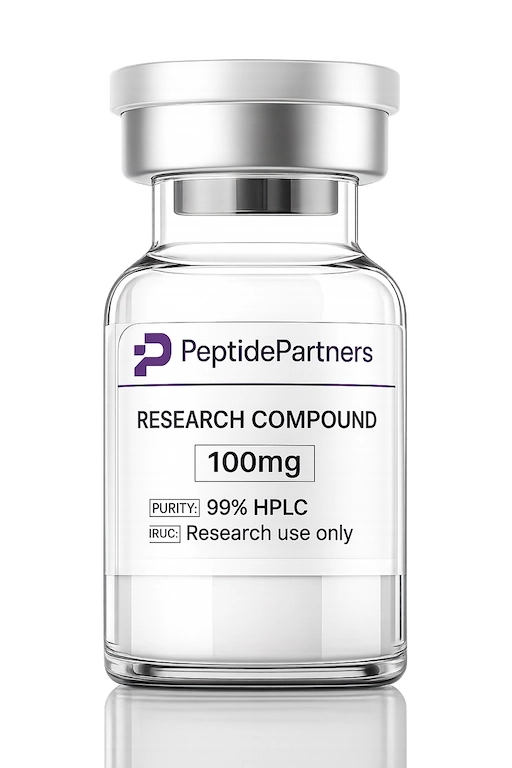
GLP-1 Semaglutide (10mg (10,000 mcg) vials)

Pharmacy Grade Semaglutide

At-Home Blood Test
Research Supplies
Peptide Vials (10 mg (10,000 mcg), 3.33 mg/mL (3,330 mcg/mL) mix)
A nominal 10 mg (10,000 mcg) in a final 3.0 mL gives about 3.33 mg/mL (3,330 mcg/mL). It contains forty 0.25 mg (250 mcg) amounts or four complete 2.4 mg (2,400 mcg) amounts before loss. These are mass counts, not weeks of usable life. Discard dates and unused remnants can require more vials.
| Calculation period | Arithmetic note |
|---|---|
8 weeks 1 vial (mass-only minimum) | Weeks 1–8 total 3 mg (3,000 mcg); one 10 mg (10,000 mcg) vial is the mass-only minimum, not permission to use one opened vial for 8 weeks. |
16 weeks 2 vials (mass-only minimum) | Weeks 1–16 total 13.8 mg (13,800 mcg); two 10 mg (10,000 mcg) vials are the mass-only minimum. |
24 weeks 4 vials (mass-only minimum) | Eight additional weeks at 2.4 mg (2,400 mcg) give 33 mg (33,000 mcg) total; four 10 mg (10,000 mcg) vials are the mass-only minimum. |
52 weeks 11 vials (mass-only minimum) | Thirty-six weeks at 2.4 mg (2,400 mcg) after escalation give 100.2 mg (100,200 mcg) total; eleven 10 mg (10,000 mcg) vials are the mass-only minimum. |
Insulin Syringes (U-100)
Prefer 0.3 mL / 30-unit syringes during the 0.25-1.0 mg (250-1,000 mcg) phase, and 1.0 mL / 100-unit syringes once doses cross 0.30 mL (30 units).
| Calculation period | Arithmetic note |
|---|---|
8 weeks 8 syringes | 1 syringe per weekly injection. |
16 weeks 16 syringes | 1 per week. Buy a box of 100 to cover the full cycle. |
24 weeks 24 syringes | 1 per week. |
52 weeks 52 syringes | 1 per week. |
Bacteriostatic Water
Volume arithmetic assumes 3.0 mL per nominal 10 mg (10,000 mcg) vial. Bottle count also depends on the manufacturer’s post-opening discard period and additional vials needed after discard or loss.
| Calculation period | Arithmetic note |
|---|---|
8 weeks 3 mL total | One mass-only vial minimum × 3 mL; bottle count also depends on its discard date. |
16 weeks 6 mL total | Two mass-only vial minima × 3 mL; no opened bottle is assumed usable for 16 weeks. |
24 weeks 12 mL total | Four mass-only vial minima × 3 mL; bottle count also depends on post-opening discard dates. |
52 weeks 33 mL total | Eleven mass-only vial minima × 3 mL; bottle count also depends on post-opening discard dates. |
Actual quantities require validated product-specific storage and discard dates plus unused remnants and handling losses. No generic research-vial beyond-use period is established here. Water-bottle discard dates are separate; the total volume does not establish bottle count across these periods.
Companion Supplies & Routine Support
Semaglutide Reconstitution Guide
Approved Ozempic and Wegovy injections are finished products and do not use these research-powder calculations. The tables below relate nominal vial mass to an assumed final solution volume. They do not validate a preparation method, diluent, stability, sterility, or human use. A U-100 scale measures volume: 100 units equals 1.0 mL.
Three example concentrations are shown: 2.5, about 3.33, and 5 mg/mL (5,000 mcg/mL). Higher concentration gives a smaller volume for the same nominal mass. Neither a convenient volume nor a calculator result establishes measurement accuracy or product suitability.
Nominal 2.5 mg/mL (2,500 mcg/mL) concentration example
| Vial size | Example final volume | 0.25 mg (250 mcg) | 0.5 mg (500 mcg) | 1.0 mg (1,000 mcg) | 1.7 mg (1,700 mcg) | 2.4 mg (2,400 mcg) |
|---|---|---|---|---|---|---|
| 2 mg (2,000 mcg) | 0.8 mL | 0.10 mL (10 u) | 0.20 mL (20 u) | 0.40 mL (40 u) | 0.68 mL (68 u) | Exceeds total vial content |
| 3 mg (3,000 mcg) | 1.2 mL | 0.10 mL (10 u) | 0.20 mL (20 u) | 0.40 mL (40 u) | 0.68 mL (68 u) | 0.96 mL (96 u) |
| 5 mg (5,000 mcg) | 2.0 mL | 0.10 mL (10 u) | 0.20 mL (20 u) | 0.40 mL (40 u) | 0.68 mL (68 u) | 0.96 mL (96 u) |
u = volume units on a U-100 syringe. One 2 mg (2,000 mcg) vial cannot supply 2.4 mg (2,400 mcg); a calculated concentration does not override total vial content.
Nominal 3.33 mg/mL (3,330 mcg/mL) example (10 mg (10,000 mcg) in 3.0 mL)
| Vial size | Example final volume | 0.25 mg (250 mcg) | 0.5 mg (500 mcg) | 1.0 mg (1,000 mcg) | 1.7 mg (1,700 mcg) | 2.4 mg (2,400 mcg) |
|---|---|---|---|---|---|---|
| 10 mg (10,000 mcg) | 3.0 mL | 0.075 mL (7.5 u) | 0.15 mL (15 u) | 0.30 mL (30 u) | 0.51 mL (51 u) | 0.72 mL (72 u) |
Physical vial capacity is product-specific and must be checked separately. A vial’s stated mass does not tell you its capacity.
Nominal 5.0 mg/mL (5,000 mcg/mL) concentration example
| Vial size | Example final volume | 0.25 mg (250 mcg) | 0.5 mg (500 mcg) | 1.0 mg (1,000 mcg) | 1.7 mg (1,700 mcg) | 2.4 mg (2,400 mcg) |
|---|---|---|---|---|---|---|
| 5 mg (5,000 mcg) | 1.0 mL | 0.05 mL (5 u) | 0.10 mL (10 u) | 0.20 mL (20 u) | 0.34 mL (34 u) | 0.48 mL (48 u) |
| 10 mg (10,000 mcg) | 2.0 mL | 0.05 mL (5 u) | 0.10 mL (10 u) | 0.20 mL (20 u) | 0.34 mL (34 u) | 0.48 mL (48 u) |
These are mass-to-volume calculations only. Device resolution and capacity must be checked separately; this table does not instruct administration.
Check a concentration calculation
Follow the arithmetic with your own verified product values. These illustrations do not instruct you to alter a ready-to-use medicine.
Identify the product
Approved finished products, compounded preparations, and research powders are separate formulations. Do not transfer their preparation instructions.

Record mass and final volume
The example of 5 mg (5,000 mcg) in a final 2.0 mL is an arithmetic assumption, not a validated mixing method.
Calculate concentration
5 mg (5,000 mcg) divided by 2.0 mL equals 2.5 mg/mL (2,500 mcg/mL).
Convert the reference amount
0.25 mg (250 mcg) divided by 2.5 mg/mL (2,500 mcg/mL) equals 0.10 mL, or 10 U-100 units.

Check content, capacity, and discard dates
A calculation cannot exceed vial content or device capacity. Product-specific stability, sterility, and discard dates require separate evidence.
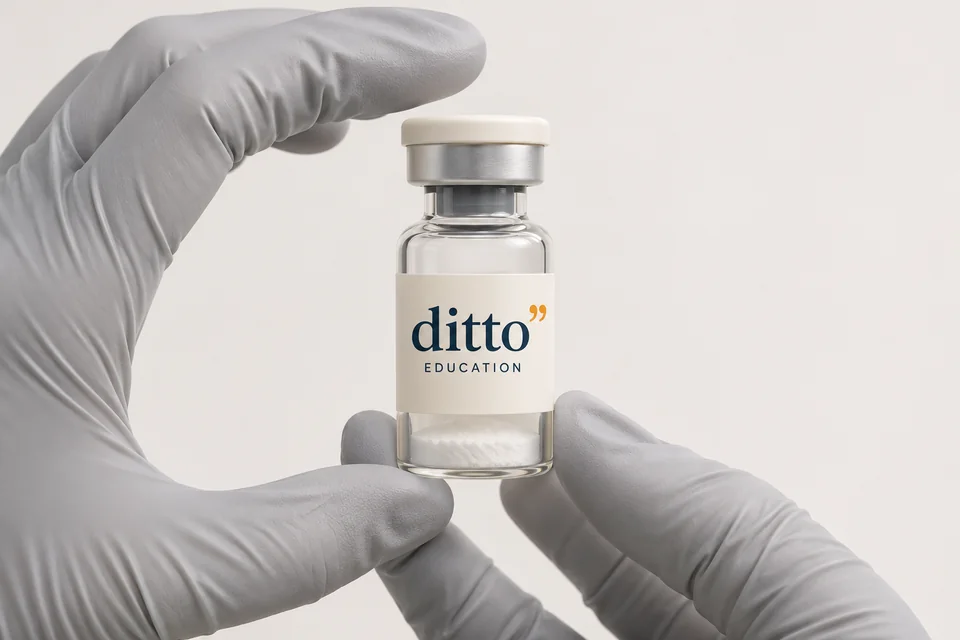
AI-generated educational scenes with Ditto-inspired concept labels; not photographs of supplied products. CDC preparation and equipment principles · Check your calculation
Need exact units for a different vial?
Use the free University of Peptide calculator. Enter vial size, water volume, and target dose. The calculator returns the exact syringe draw.
Semaglutide Dosage Chart
This chart mirrors the existing Wegovy injection table for adult weight reduction with a standard 2.4 mg (2,400 mcg) target. It is a product-label example, not a universal semaglutide schedule or research-vial instruction. The optional adult 7.2 mg (7,200 mcg) step is explained in the label notes.
 UNIVERSITY OF PEPTIDE · RESEARCH REFERENCE
Semaglutide Dosage Chart
| Phase | Weeks | Weekly dose | Label context |
|---|---|---|---|
| Phase 1 - Initiation | Weeks 1-4 | 0.25 mg (250 mcg) | Initiation dose; not a maintenance dose. |
| Phase 2 - Early escalation | Weeks 5-8 | 0.5 mg (500 mcg) | Escalation step in this Wegovy example. |
| Phase 3 - Mid escalation | Weeks 9-12 | 1.0 mg (1,000 mcg) | Escalation step; Ozempic has separate prescribing instructions. |
| Phase 4 - High escalation | Weeks 13-16 | 1.7 mg (1,700 mcg) | Escalation step toward 2.4 mg (2,400 mcg); also an adult weight-reduction maintenance option. |
| Phase 5 - Maintenance | Week 17+ | 2.4 mg (2,400 mcg) | Recommended standard adult weight-reduction maintenance dose; not the maximum for every indication. |
How Semaglutide Works
Semaglutide turns on a single target called the GLP-1 receptor. That receptor sits on cells in several different organs, which is why semaglutide affects hunger, blood sugar, the stomach, and the heart all at once.
Two small changes to the natural GLP-1 molecule give semaglutide its long shelf life in the body. First, a tweak in the peptide chain blocks the enzyme (DPP-4) that normally breaks down GLP-1 within minutes. Second, a fatty acid chain lets semaglutide bind to albumin, a protein in the blood. That binding slows clearance and stretches the half-life to about 7 days, which is why one weekly injection is enough.
Brain - appetite and fullness
GLP-1 receptors in the hypothalamus and brainstem signal fullness. Semaglutide turning these on reduces hunger and lowers calories eaten. In STEP 1, participants on 2.4 mg (2,400 mcg) lost an average of 14.9% of body weight over 68 weeks.
Pancreas - glucose-dependent insulin
In the pancreas, semaglutide triggers insulin release - but only when blood sugar is already high. This 'glucose-dependent' behavior makes dangerous low blood sugar much less likely than with some older diabetes drugs. In the SUSTAIN trials, semaglutide cut HbA1c by 1.5-1.9% at the 0.5-1.0 mg (500-1,000 mcg) doses.
Stomach - slower gastric emptying
Semaglutide slows how fast the stomach empties. That stretches fullness after meals and blunts blood sugar spikes. It also explains the nausea and vomiting that are most common during dose escalation and usually fade with time.
Heart - cardiovascular protection
Semaglutide protects the heart and blood vessels in ways that go beyond weight loss alone. The SELECT trial showed a 20% drop in major heart events (heart attack, stroke, cardiovascular death) in people with obesity and existing heart disease. The benefit appeared even in people who did not lose much weight.
Who Semaglutide Is For and Who Should Avoid It
Semaglutide is FDA-approved for several conditions, but it is not for everyone. Some people should avoid it entirely, and others need close medical oversight before starting.
Contraindications
- Personal or family history of medullary thyroid carcinoma (MTC). Semaglutide carries a boxed warning based on thyroid C-cell tumors in rodent studies.
- Multiple Endocrine Neoplasia syndrome type 2 (MEN 2).
- Known hypersensitivity to semaglutide or any ingredient in the formulation.
Use with caution
- Pregnancy and breastfeeding. Semaglutide is not approved for pregnancy. The label recommends stopping at least 2 months before a planned pregnancy because of the long half-life.
- History of pancreatitis. Pancreatitis has been reported in clinical trials. People with prior episodes need clinician oversight.
- Pre-existing diabetic retinopathy. In SUSTAIN-6, retinopathy complications were higher (3.0% vs 1.8% with placebo), likely tied to fast blood-sugar improvement in people who already had retinopathy.
- Gallbladder disease. Gallstones were more common with semaglutide (about 2.6% vs 1.2% with placebo) in the STEP trials, consistent with rapid weight loss in general.
- Severe gastrointestinal disease such as gastroparesis. Semaglutide already slows gastric emptying.
Not medical advice
Eligibility and safety decisions belong with a qualified clinician who knows your full medical history. This page is research reference only.
Semaglutide Side Effects & Safety
The most common side effects of semaglutide are stomach-related: nausea, diarrhea, vomiting, and constipation. They are usually worst during the first few months as the dose increases, and most people find they improve or go away with time. The safety profile below comes from tens of thousands of participants across the STEP, SUSTAIN, and SELECT trial programs.
Common stomach effects
In pooled STEP 1-3 data on the 2.4 mg (2,400 mcg) dose, nausea occurred in 43.9% of participants (vs 16.1% on placebo), diarrhea in 29.7% (vs 15.9%), vomiting in 24.5% (vs 6.3%), and constipation in 24.2% (vs 11.1%). These events were most common during the first 16-20 weeks of escalation and largely passed with time. 99.5% of GI events were non-serious and 98.1% were mild-to-moderate.
Dose-dependent pattern
Lower diabetes doses (0.5-1.0 mg (500-1,000 mcg)) produced stomach side effects in 32.7-36.4% of participants vs 15.3% on placebo. That is meaningfully lower than the 2.4 mg (2,400 mcg) obesity dose. Higher doses give bigger effects but also more side effects.
Heart rate
Resting heart rate rose by about 1-4 beats per minute in clinical trials. Despite this small increase, SELECT showed a 20% drop in major adverse cardiovascular events in people with existing heart disease and obesity. No rise in heart failure hospitalizations was observed.
Gallbladder and pancreatitis
Gallstones were more common with semaglutide (about 2.6% vs 1.2% with placebo) in STEP, in line with rapid weight loss across all weight-loss interventions. Pancreatitis was rare but reported. Stop and seek care for severe abdominal pain.
Diabetic retinopathy
In SUSTAIN-6 (T2D), retinopathy complications were higher with semaglutide (3.0%) than placebo (1.8%). The most likely cause is fast blood sugar improvement in people who already had retinopathy.
Thyroid boxed warning
Semaglutide carries a boxed warning based on dose-dependent thyroid C-cell tumors in rodent studies. Human relevance is unknown. Semaglutide is contraindicated in anyone with a personal or family history of medullary thyroid carcinoma (MTC) or MEN 2.
Discontinuation
In STEP, 6.8% of people on semaglutide 2.4 mg (2,400 mcg) stopped treatment because of side effects, vs 3.2% on placebo. The most common reasons were nausea (1.8%), vomiting (1.2%), and diarrhea (0.7%).
For a wider safety comparison, see the Evidence library.
Semaglutide Timeline & What to Monitor
Semaglutide takes time to build up in the body and time to show meaningful effects. The 7-day half-life means blood levels keep rising for about 4-5 weeks at each dose before they stop changing.
Reasonable timing checkpoints based on clinical trial data
| Checkpoint | What clinical trials show |
|---|---|
| Weeks 1-4 (0.25 mg (250 mcg)) | Tolerability phase. No meaningful weight or HbA1c change expected. |
| Weeks 5-8 (0.5 mg (500 mcg)) | Early appetite changes possible. Most stomach side effects show up here. |
| Weeks 8-12 | Appetite suppression often clearly noticeable at 1.0 mg (1,000 mcg) in diabetes research. |
| Weeks 16-20 | Stomach side effects usually plateau. Weight loss curve starts to accelerate. |
| Week 28 | STEP 1 interim data: significant weight loss vs placebo. |
| Week 68 | STEP 1 endpoint: 14.9% mean weight loss at 2.4 mg (2,400 mcg) vs 2.4% placebo. |
These are clinical trial markers, not personal targets.
Markers studied in trials
- Body weight - weekly or monthly trend, not daily.
- HbA1c - 3-month average blood sugar. Used for type 2 diabetes research.
- Fasting glucose - short-term blood sugar marker.
- Blood pressure - SELECT showed small decreases.
- Resting heart rate - small increase (1-4 bpm) is normal.
- Lipid panel - mild improvements in LDL and triglycerides reported in trials.
- Kidney function (eGFR, UACR) - relevant if research touches CKD outcomes (FLOW).
- Liver enzymes - relevant if research touches MASH (ESSENCE).
Lab work belongs with a clinician
Ordering, interpreting, and acting on lab work is a clinical task. This list shows what trials track. It is not a personal monitoring plan.
Semaglutide Clinical Evidence Context
Semaglutide has been studied in more clinical trials than any other GLP-1 medication - over 45,000 participants across multiple programs. Each trial name (STEP, SELECT, FLOW, ESSENCE) is its own program. STEP tested weight loss. SUSTAIN and PIONEER tested diabetes control. SELECT tested heart protection. FLOW tested kidney protection. ESSENCE tested fatty liver disease (MASH). SOUL tested cardiovascular outcomes for oral semaglutide.
Major published semaglutide trials
| Trial | Design | Population | Key result |
|---|---|---|---|
| STEP 1 (Wilding et al., NEJM 2021) | Phase 3 / 68 weeks | 1,961 adults with obesity, no diabetes | -14.9% body weight (semaglutide 2.4 mg (2,400 mcg)) vs -2.4% placebo. 86.4% reached 5%+ loss. |
| STEP 2 (Davies et al., Lancet 2021) | Phase 3 / 68 weeks | 1,210 adults with T2D and overweight or obesity | -9.6% body weight (2.4 mg (2,400 mcg)) vs -3.4% placebo. |
| STEP 3 (Wadden et al., JAMA 2021) | Phase 3 / 68 weeks | 611 adults with obesity + intensive behavior therapy | -16.0% body weight (2.4 mg (2,400 mcg)) vs -5.7% placebo. |
| STEP 5 (Garvey et al., Nature Med 2022) | Phase 3 / 104 weeks | 304 adults with obesity, no diabetes | -15.2% body weight sustained at 2 years. |
| SELECT (Lincoff et al., NEJM 2023) | Phase 3 / 39.8 mo mean follow-up | 17,604 adults with CVD + overweight or obesity, no diabetes | 20% reduction in major heart events (HR 0.80; 95% CI 0.72-0.90; P<0.001). -9.4% body weight. |
| SUSTAIN-6 (Marso et al., NEJM 2016) | Phase 3 / 104 weeks | 3,297 adults with T2D at high CV risk | 26% MACE reduction (HR 0.74; 95% CI 0.58-0.95). First CV signal for semaglutide. |
| FLOW (Perkovic et al., NEJM 2024) | Phase 3 / event-driven | 3,533 adults with T2D and CKD | 24% reduction in kidney disease progression and CV death (HR 0.76; 95% CI 0.66-0.88). |
| ESSENCE (Sanyal et al., NEJM 2025) | Phase 3 / 72 weeks (Part 1) | Adults with MASH, F2-F3 fibrosis | 33% achieved both steatohepatitis resolution and fibrosis improvement vs 16% placebo. |
| SOUL (McGuire et al., NEJM 2025) | Phase 3 / event-driven | Adults with T2D + ASCVD or CKD | Oral semaglutide significantly reduced MACE vs placebo in high-CV-risk T2D. |
| STEP TEENS (Weghuber et al., NEJM 2022) | Phase 3 / 68 weeks | 201 adolescents (12-17) with obesity | -16.1% BMI reduction vs +0.6% placebo. |
| OASIS 4 (oral Wegovy) | Phase 3 / 64 weeks | Adults with obesity, no diabetes | -16.6% body weight at 25 mg (25,000 mcg) daily. Basis for Dec 2025 oral Wegovy approval. |
ESSENCE Part 2 (240 weeks, liver outcomes) is ongoing, with results expected in 2029.
Semaglutide has the largest clinical evidence base of any GLP-1 receptor agonist. Its FDA label has grown from a single T2D indication in 2017 to six approved indications by early 2026: type 2 diabetes, chronic weight management (injectable and oral), cardiovascular risk reduction, chronic kidney disease protection, and MASH.
Semaglutide Storage & Handling
Storage instructions depend on the exact formulation
| Product | Use these instructions | Limit |
|---|---|---|
| Approved injection or tablet | Its current carton, Instructions for Use, and prescribing information | Ozempic and Wegovy have different presentations and storage rules. Do not apply one product’s after-opening limit to all pens. |
| Compounded preparation | The dispensing pharmacy’s storage instructions and beyond-use date | Approved-product storage data do not establish compounded-product stability. |
| Research powder or solution | Validated product-specific stability and handling data | No generic 28-day, shipping, refrigerated, or frozen-storage allowance is established here. |
| Bacteriostatic water | Manufacturer’s label and post-opening discard instructions | Its discard date is separate from the peptide solution’s date. |
A clear appearance, preservative, or correct concentration does not establish sterility or stability.
Semaglutide Protocol Mistakes & Troubleshooting
Wrong BAC water volume
Adding the wrong amount of water changes the concentration and the syringe-unit math. For a 5 mg (5,000 mcg) vial, 2.0 mL water = 2.5 mg/mL (2,500 mcg/mL) and 10 units = 0.25 mg (250 mcg). Adding 1.0 mL by mistake doubles the concentration to 5 mg/mL (5,000 mcg/mL), so 10 units would then equal 0.5 mg (500 mcg) - twice the intended starter dose. Recheck the math before drawing.
Cloudy or particulate vial
Do not use a product with unexpected cloudiness, color, or particles. Contact the dispensing pharmacist or manufacturer for the exact product’s instructions. Appearance alone cannot identify the cause or verify sterility, and a clear research solution is not proof that it is safe for human use.
Missed dose
FDA labeling states that when more than 2 days remain before the next scheduled weekly dose, a missed dose may be taken as soon as possible. When fewer than 2 days remain, the missed dose is skipped and the regular weekly schedule resumes without doubling up. This reports label guidance, not a personal recommendation.
Bad nausea during escalation
Stomach side effects can occur during escalation. Wegovy injection labeling allows delaying an increase for four weeks. For adult weight reduction, 1.7 mg (1,700 mcg) is a maintenance option, not merely a temporary reduction; other indications have their own guidance. Dose changes belong with the prescriber. For additional context, see the archived review’s guide to Supplier research references.
Mixing up oral and injectable
Oral and injectable semaglutide have different absorption and dosing. Rybelsus, oral Ozempic, and oral Wegovy also have product-specific formulations. Do not convert between them by milligrams or apply an injectable schedule to a tablet or research powder.
Storage mistakes
Storage and temperature excursions require instructions validated for the exact formulation. No generic research-vial freezing, room-temperature, or refrigerated-storage allowance is established here. A pharmacist or manufacturer can advise on an approved or dispensed product.
Semaglutide Regulatory Status
Semaglutide has one of the broadest FDA approval histories of any modern metabolic drug. As of June 2026, the approved indications are below.
FDA-approved semaglutide brands and indications
| Brand | Approval date | Indication |
|---|---|---|
| Ozempic (injectable) | December 2017 | Type 2 diabetes glycemic control |
| Ozempic (injectable) | January 2020 | Cardiovascular risk reduction in T2D |
| Rybelsus (oral tablet) | September 2019 | Type 2 diabetes (first oral GLP-1) |
| Wegovy (injectable) | June 2021 | Chronic weight management (BMI ≥30 or ≥27 with comorbidity) |
| Wegovy (injectable) | March 2024 | Cardiovascular risk reduction in adults with obesity and CVD |
| Wegovy (injectable) | August 2025 | Non-cirrhotic MASH with F2-F3 fibrosis (ESSENCE) |
| Wegovy oral 25 mg (25,000 mcg) pill | December 2025 | Chronic weight management (OASIS 4 basis) |
| Ozempic (injectable) | January 2025 | CKD progression in T2D (FLOW basis) |
Research-grade lyophilized semaglutide from supplier sources is not an FDA-approved drug product and is for research use only.
Generics
As of June 2026, no generic semaglutide is FDA-approved in the United States. Novo Nordisk holds the active patents on semaglutide. The FDA-recognized shortage of semaglutide ended in 2025, which limited the legal scope of 503A/503B compounded semaglutide. Some countries have different patent expirations; for example, generic semaglutide is expected to enter the Canadian market earlier than the United States. Verify the current status with FDA orange-book and country-specific regulators.
Semaglutide Cost & Access Context
Semaglutide cost varies a lot depending on the format and the source. Brand pens, compounded pharmacy semaglutide, and research-grade vials sit at very different price points.
Common semaglutide cost brackets (US, June 2026)
| Source | Format | Typical cost band | Notes |
|---|---|---|---|
| Brand Wegovy / Ozempic | Pre-filled pen | $1,000-$1,400+ per month list price | Insurance coverage varies. Manufacturer savings cards exist for eligible patients. |
| Brand Rybelsus | Oral tablet | Similar to brand pens per month | Daily dosing. Different mg numbers than injectable. |
| Compounded pharmacy | Vial or pen | Highly variable | Legal scope narrowed after the FDA shortage ended in 2025. Verify the pharmacy is 503A or 503B compliant. |
| Research-grade lyophilized vial | 5 mg (5,000 mcg) or 10 mg (10,000 mcg) vial | Lower per-mg cost | Research use only. Not an FDA-approved drug product. Quality depends on the supplier's COA process. |
Prices change. Verify with current supplier and pharmacy quotes before planning.
For a wider supplier comparison and discount-code context, see the Supplier research references. For per-mg cost math, the University of Peptide calculator converts vial size and water volume into exact draws.
Semaglutide vs Tirzepatide vs Retatrutide vs Liraglutide
Semaglutide, tirzepatide, and retatrutide are the three most-discussed GLP-1-based compounds for weight management. They activate overlapping but different receptors, which leads to different efficacy levels, side effect profiles, and availability. Liraglutide is the older once-daily GLP-1 that semaglutide replaced for most uses.
Side-by-side comparison
| Factor | Semaglutide | Tirzepatide | Retatrutide | Liraglutide |
|---|---|---|---|---|
| Receptor targets | GLP-1 only | GLP-1 + GIP | GLP-1 + GIP + glucagon | GLP-1 only |
| Half-life | ~7 days | ~5 days | ~6 days | ~13 hours |
| Dosing frequency | Once weekly | Once weekly | Once weekly | Once daily |
| Dose context | Wegovy: optional 7.2 mg/week (7,200 mcg/week) only for adult weight reduction under label conditions; oral maximum 25 mg/day (25,000 mcg/day) | 15 mg/week (15,000 mcg/week) adult label maximum; pediatric Mounjaro maximum 10 mg (10,000 mcg) | 12 mg/week (12,000 mcg/week) highest target in initial TRIUMPH trials | 3.0 mg/day (3,000 mcg/day) |
| Selected trial results; separate studies | -14.9% at 68 wks (STEP 1) | -20.9% at 72 wks (SURMOUNT-1 primary treatment-regimen estimand) | -28.7% at 68 wks (TRIUMPH-4) | -8% at 56 wks (SCALE) |
| FDA status (June 2026) | Approved (T2D, obesity, CVD, MASH, CKD, oral) | Approved (T2D, obesity) | Investigational - Phase 3 | Approved (Saxenda obesity, Victoza T2D) |
| CV outcomes data | Yes - SELECT (20% MACE drop) | Mounjaro label: major cardiovascular-event risk reduction in high-risk adults with T2D | Investigational; no approved cardiovascular indication | Yes - LEADER (13% MACE drop) |
These compounds are not interchangeable. Cross-trial results differ in population, duration, and estimand; they do not establish a ranking. Approved and investigational study products are not equivalent to research powders.
What sets each apart
- Semaglutide has the deepest evidence base across diabetes, obesity, heart, kidney, MASH, and oral. No other GLP-1 has six approved indications.
- Tirzepatide produced greater weight loss head-to-head in SURMOUNT-5: -20.2% vs -13.7%. The trial compared maximum-tolerated tirzepatide 10/15 mg with semaglutide 1.7/2.4 mg weekly.
- Retatrutide has the highest observed weight loss to date but is still investigational. Glucagon agonism adds energy expenditure and liver-fat reduction signals.
- Liraglutide is older and less effective for weight loss but has long real-world history and may still fit specific clinical scenarios.
For non-GLP-1 metabolic alternatives, see the tesofensine protocol (triple monoamine reuptake inhibitor) or the MOTS-c protocol (mitochondrial peptide).
Semaglutide Blood Tests & Monitoring
Semaglutide is an approved GLP-1 receptor agonist used in diabetes and weight-management contexts. Monitoring focuses on glucose control, kidney context, lipids, GI symptoms, gallbladder/pancreas symptoms, and thyroid-history cautions.
Blood test markers to discuss with a clinician
| Marker | Why it matters | Timing |
|---|---|---|
| A1c | Shows longer-term glucose control and helps track metabolic response over time. | Baseline |
| Fasting glucose | Gives a current glucose snapshot, especially when appetite and diabetes medication needs change. | Follow-up |
| Comprehensive metabolic panel (CMP) | Reviews kidney function, liver enzymes, electrolytes, and glucose, which matter with GI symptoms or dehydration. | Baseline |
| Lipid panel | Tracks cardiometabolic changes during weight-loss or diabetes-management phases. | Follow-up |
| Blood pressure and resting heart rate | Adds cardiovascular context during weight loss, medication changes, and hydration shifts. | Optional |
Monitoring guidance is label-informed for semaglutide and supported by GLP-1 clinical monitoring considerations.
At-home blood test option
Easy at home option to monitor core metrics during research cycles.
Beyond Whoosh
Pharmacy Grade Semaglutide
Prescription-grade peptide care through Beyond Whoosh. Whoosh prescribes after a clinician reviews your eligibility.
Simple timing framework
- Baseline
- Discuss baseline labs before starting or changing dose, especially with diabetes, kidney disease, pancreatitis history, gallbladder history, thyroid cancer history, or major calorie restriction.
- Follow-up
- Repeat glucose and CMP-related markers after 4-12 weeks or sooner if vomiting, dehydration, or glucose symptoms occur.
- Longer term
- For ongoing use, review metabolic and kidney trends every 3-6 months with a clinician.
How to interpret the labs
- Diabetes medications may need clinician review if glucose drops with reduced intake.
- Severe abdominal pain, gallbladder symptoms, and persistent vomiting require symptom-based review.
- Personal or family history of medullary thyroid carcinoma or MEN2 is an important label-based caution.
Do not wait for routine labs
Severe abdominal pain, persistent vomiting, signs of dehydration, fainting, allergic symptoms, or severe low-glucose symptoms need medical review. A neck mass, trouble swallowing, or persistent hoarseness should be discussed with a clinician.
FAQ
Q1: What is the starting dose of semaglutide?
For Wegovy injection, the standard starting dose is 0.25 mg (250 mcg) once weekly for four weeks, followed by four-week stages at 0.5, 1, and 1.7 mg (1,700 mcg) toward the selected maintenance dose. Adult weight-reduction maintenance is 1.7 or 2.4 mg (1,700 or 2,400 mcg), with an optional later 7.2 mg (7,200 mcg) increase under specific label conditions. Ozempic injection also starts at 0.25 mg (250 mcg), but uses different maintenance guidance. Oral products have separate daily doses and 30-day escalation stages.
Q2: What is semaglutide's half-life?
Semaglutide has a half-life of about 7 days (165-184 hours), among the longest for current GLP-1 receptor agonists. A fatty acid chain attached to the peptide binds to albumin in the blood, which slows clearance. The 7-day half-life supports once-weekly dosing and means it takes about 4-5 weeks at each dose level to reach steady state. After stopping, semaglutide remains in the body for roughly 5-7 weeks.
Q3: How much weight can you lose on semaglutide?
In the STEP 1 clinical trial (NEJM, 2021), participants on semaglutide 2.4 mg (2,400 mcg) lost an average of 14.9% of body weight at 68 weeks (about 33.6 lbs from a 232 lb average baseline) vs 2.4% with placebo. 86.4% achieved at least 5% loss, and about one-third reached 20% or more. STEP 3 with intensive behavior therapy showed 16.0% loss. STEP 5 showed sustained 15.2% loss at 2 years. STEP 2 in type 2 diabetes showed 9.6% loss.
Q4: How do you reconstitute semaglutide?
Approved Ozempic and Wegovy injections are finished products; do not apply research-powder mixing instructions to them. For arithmetic only, a nominal 5 mg (5,000 mcg) in a final 2.0 mL equals 2.5 mg/mL (2,500 mcg/mL), where 0.25 mg (250 mcg) equals 0.10 mL or 10 U-100 units. This does not validate a diluent, preparation method, sterility, stability, or suitability for human use. Use the University of Peptide calculator for nominal conversions.
Q5: Is semaglutide FDA-approved?
Yes. As of June 2026, semaglutide has broad FDA approval across multiple indications and brand names. Ozempic is approved for type 2 diabetes glycemic control (2017), cardiovascular risk reduction in T2D (2020), and CKD progression in T2D (January 2025). Wegovy is approved for chronic weight management (2021), cardiovascular risk reduction in adults with obesity and CVD (2024), and non-cirrhotic MASH with F2-F3 fibrosis (August 2025). The oral Wegovy 25 mg (25,000 mcg) pill was approved in December 2025. Rybelsus is the older oral T2D form.
Q6: What are the most common side effects?
Stomach side effects are most common. In pooled STEP 1-3 data on the 2.4 mg (2,400 mcg) dose, nausea occurred in 43.9% (vs 16.1% placebo), diarrhea in 29.7% (vs 15.9%), vomiting in 24.5% (vs 6.3%), and constipation in 24.2% (vs 11.1%). These were most frequent during dose escalation, peaked around weeks 8-20, and were usually mild-to-moderate and transient. Permanent discontinuation due to side effects was 6.8%. Semaglutide carries a boxed warning for thyroid C-cell tumors in rodent studies and is contraindicated in people with MTC or MEN 2.
Q7: How does semaglutide compare to tirzepatide and retatrutide?
Semaglutide is a single GLP-1 receptor agonist. Tirzepatide is a dual GLP-1 + GIP agonist. Retatrutide is a triple GLP-1 + GIP + glucagon agonist. In SURMOUNT-5, maximum-tolerated tirzepatide 10/15 mg produced -20.2% weight loss vs -13.7% for maximum-tolerated semaglutide 1.7/2.4 mg at 72 weeks. Retatrutide Phase 3 reported up to -28.7% at 68 weeks. Semaglutide's strength is depth of outcomes evidence: SELECT cardiovascular data, FLOW kidney protection, MASH approval (ESSENCE), and oral formulations.
Q8: What vial sizes are available for research semaglutide?
Research suppliers list nominal 2, 3, 5, and 10 mg (10,000 mcg) vials. Vial mass changes the concentration math and theoretical amount count, but it does not establish product identity, sterility, equivalence to approved semaglutide, or weeks of usable life. Actual quantities also depend on product-specific discard dates and losses.
Q9: How much bacteriostatic water should be added to semaglutide?
BAC water volume depends on vial size and desired concentration. For a 5 mg (5,000 mcg) vial, 2.0 mL gives 2.5 mg/mL (2,500 mcg/mL), where 0.25 mg (250 mcg) = 10 units and 2.4 mg (2,400 mcg) = 96 units on a U-100 syringe. For a 10 mg (10,000 mcg) vial, 3.0 mL gives about 3.33 mg/mL (3,330 mcg/mL), where 0.25 mg (250 mcg) = 7.5 units and 2.4 mg (2,400 mcg) = 72 units. A more concentrated 5 mg/mL (5,000 mcg/mL) option (5 mg (5,000 mcg) in 1.0 mL) gives smaller draws but needs more precise syringe handling. Use the University of Peptide calculator for any custom setup.
Q10: What are the maximum approved semaglutide doses?
Approved limits depend on the exact product and indication. Wegovy injection may be increased to 7.2 mg (7,200 mcg) weekly only for adult weight reduction, after at least four weeks tolerated at 2.4 mg (2,400 mcg) when more weight reduction is clinically indicated. That option does not apply to pediatric, cardiovascular-risk, or MASH dosing. Ozempic injection has a 2 mg (2,000 mcg) weekly maximum. Oral maxima are 25 mg (25,000 mcg) daily for Wegovy, 14 mg (14,000 mcg) for Rybelsus, and 9 mg (9,000 mcg) for oral Ozempic; these formulations are not interchangeable milligram for milligram.
Q11: How should reconstituted semaglutide be stored?
No generic storage or beyond-use period for research semaglutide is established here. Use validated instructions for the exact material and formulation. Compounded preparations follow the dispensing pharmacy’s label; approved Ozempic and Wegovy products follow their own presentation-specific instructions. An opened water bottle has a separate discard date. Concentration math or a clear appearance does not establish stability or sterility.
Q12: Is Wegovy 25 mg (25,000 mcg) the same as Rybelsus?
No. Wegovy tablets and Rybelsus contain semaglutide but have different formulations, indications, and daily doses. Wegovy uses 1.5, 4, and 9 mg (9,000 mcg) in successive 30-day stages, then 25 mg (25,000 mcg) from day 91. Rybelsus uses 3 mg (3,000 mcg) for days 1–30, then 7 mg (7,000 mcg); from day 61, 14 mg (61,000, 14,000 mcg) is optional if more glycemic control is needed. Oral Ozempic is another separate 1.5/4/9 mg formulation. Do not substitute these products milligram for milligram.
Q13: Is semaglutide insulin?
No. Semaglutide is not insulin. It is a GLP-1 receptor agonist - a drug that copies the natural gut hormone GLP-1. It does cause the pancreas to release insulin, but only when blood sugar is already high (glucose-dependent insulin secretion). That is why semaglutide is much less likely to cause dangerous low blood sugar than direct insulin. Insulin works by directly adding the hormone insulin to the body. Semaglutide works by signaling the body to release its own insulin when it is needed.
Q14: Is there a generic semaglutide?
As of June 2026, no generic semaglutide is FDA-approved in the United States. Novo Nordisk still holds active patents. The FDA-recognized shortage of semaglutide ended in 2025, which narrowed the legal scope of 503A/503B compounded semaglutide. Some countries have different patent timelines, with generic semaglutide expected in Canada earlier than the US. Verify current status with FDA orange-book listings and country-specific regulators before relying on this answer.
Q15: Where can I calculate reconstitution and syringe units?
Use the University of Peptide calculator for exact dose-to-unit conversions. Enter vial size, BAC water volume, and target dose to get the matching syringe draw.
Q16: Where can I compare peptide suppliers?
Browse our supplier reviews for current supplier listings, or read the Supplier research references for ranked comparisons with Finnrick testing context.
Sources & Research
- Aronne LJ, Horn DB, le Roux CW, et al. Tirzepatide as Compared with Semaglutide for the Treatment of Obesity (SURMOUNT-5). New England Journal of Medicine (2025)
- Wilding JPH, Batterham RL, Calanna S, et al. Once-Weekly Semaglutide in Adults with Overweight or Obesity (STEP 1). New England Journal of Medicine (2021)
- Lincoff AM, Brown-Frandsen K, Colhoun HM, et al. Semaglutide and Cardiovascular Outcomes in Obesity without Diabetes (SELECT). New England Journal of Medicine (2023)
- Marso SP, Bain SC, Consoli A, et al. Semaglutide and Cardiovascular Outcomes in Patients with Type 2 Diabetes (SUSTAIN-6). New England Journal of Medicine (2016)
- Perkovic V, Tuttle KR, Rossing P, et al. Effects of Semaglutide on Chronic Kidney Disease in Patients with Type 2 Diabetes (FLOW). New England Journal of Medicine (2024)
- Sanyal AJ, Newsome PN, Kliers I, et al. Phase 3 Trial of Semaglutide in Metabolic Dysfunction-Associated Steatohepatitis (ESSENCE). New England Journal of Medicine (2025)
- Wharton S, Calanna S, Davies M, et al. Gastrointestinal Tolerability of Once-Weekly Semaglutide 2.4 mg in Adults with Overweight or Obesity. Diabetes, Obesity and Metabolism (2022)
- Weghuber D, Barrett T, Barrientos-Perez M, et al. Once-Weekly Semaglutide in Adolescents with Obesity (STEP TEENS). New England Journal of Medicine (2022)
- McGuire DK, et al. Oral Semaglutide and Cardiovascular Outcomes in High-Risk Type 2 Diabetes (SOUL). New England Journal of Medicine (2025)
- Davies M, Faerch L, Jeppesen OK, et al. Semaglutide 2.4 mg Once a Week in Adults with Overweight or Obesity and Type 2 Diabetes (STEP 2). Lancet (2021)
- U.S. Food and Drug Administration. Wegovy (semaglutide) injection and tablets - Prescribing Information (June 2026). FDA (2026)
- U.S. Food and Drug Administration. Ozempic (semaglutide) injection - Prescribing Information. FDA (2025)
- Novo Nordisk / U.S. Food and Drug Administration Rybelsus and Ozempic (semaglutide) tablets - Current Prescribing Information. DailyMed (2026)
- ClinicalTrials.gov. STEP 1: Research Study Investigating How Well Semaglutide Works in People Suffering from Overweight or Obesity (NCT03548935). ClinicalTrials.gov (2018)
Related Dosing Protocols
Educational use only
This guide is an educational research reference, not medical advice or a treatment plan. Semaglutide is FDA-approved under Ozempic, Wegovy, and Rybelsus for specific indications. Research-grade lyophilized semaglutide discussed in reconstitution sections is for research use only. Consult a qualified clinician before considering any peptide protocol.
Calculate vial math
Use the calculator for custom vial size, BAC water volume, and syringe-unit math.
Reconstitution calculator
Enter your own values. This tool calculates quantities, not a recommended dose.
Check the concentration
Changing the unit keeps the entered mass equivalent. 1 milligram (mg) = 1,000 micrograms (mcg). This tool does not choose a target amount.
Biological IU (optional, product-specific)
Only enter a potency explicitly stated as IU per mg on the exact product label or reference. Do not enter the 100 from a U-100 syringe. No factor is assumed for any peptide.
Your result will appear here
Enter the mass, final solution volume and target mass, or load a fictional example.
Assumes accurate masses, final solution volume and even distribution. Blend arithmetic does not establish whether substances can be mixed. Read the formulas and assumptions.
Study findings, reported examples and supplier statements have different levels of evidence. Follow the citations and check the formulation, population and date before interpreting a number.
Editorial standards and corrections