On this page
TOOLS FOR THIS GUIDE
Work with Retatrutide
The guide name carries across. Amounts, dates and instructions remain yours to enter; opening a tool saves nothing.
Worked examples: calculations, records and source checks
Fictional arithmetic, unrelated to a recommended amount of Retatrutide: 10 mg (10,000 mcg) in a final 2 mL is 5 mg/mL (5,000 mcg/mL). A target mass of 0.25 mg (250 mcg) corresponds to 0.05 mL, or 5 U-100 syringe markings. Biological IU cannot be inferred from these inputs. Neither the mass nor the liquid is a preparation recommendation.
Open the arithmetic example- Supply example: two 10 mg (10,000 mcg) vials start at 20 mg (20,000 mcg). Four recorded entries of 0.25 mg (250 mcg) leave a theoretical 19 mg (19,000 mcg), before losses or expiry. Skipped entries do not deduct stock.
- Measurement example: enter “Sleep duration”, “7.5”, “hours” and the date. Keep the same unit and note changing conditions. A trend does not prove a treatment effect.
- Source example: record “rat study” when rats were studied, even when the headline describes recovery. Keep the exact paper and its limitations.
The planner accepts mg and mcg. Biological IU/USP units, sprays, drops and variable mixtures need product-specific instructions; they cannot be inferred from a generic mass calculator. For stacks, record each known ingredient separately.
FDA: why concentration and unit errors matterEvidence & source checks
Did phase 3 results extend the weight-loss findings and assess related conditions?
Mean weight reductions across the three retatrutide groups were 17.6% to 25.0%, compared with 3.9% with placebo. Prespecified knee-pain and sleep-apnea outcomes also improved in their respective subgroups. Gastrointestinal adverse events were most common.
Limit: Weight and subgroup outcomes used different approaches to treatment discontinuation; their estimates should not be mixed.
Did retatrutide reduce weight, and what short-term tolerability signals appeared?
Weight fell more with retatrutide than placebo at 24 and 48 weeks. Gastrointestinal adverse events were the most common and increased with the studied dose. Heart-rate increases peaked at 24 weeks and then declined.
Limit: A phase 2 trial with 338 participants cannot settle rare or long-term harms.
What to verify before filling a plan
- Identity and formulation: match the name, sequence or active ingredient, route and strength. A related molecule or branded medicine is not automatically equivalent.
- Instruction source: obtain the actual amount, frequency and duration from qualified medical instructions. A community table or trial protocol does not establish an individual regimen.
- Units and product details: keep mass, liquid volume and biological activity units separate. Record batch, storage and discard instructions from the actual product; the tools cannot determine sterility or stability.
- Review and follow-up: list medicines and supplements, unresolved interactions and questions. Agree on relevant observations and actions with a qualified professional; normal measurements do not prove safety.
Selected source context, not a systematic review or medical approval. Study cards checked 24 November 2026; guide source notes checked 25 November 2026. Research references and citations appear below.
Guide summary
REFERENCE SUMMARY- Compound
- Retatrutide (LY3437943)
- Class
- GLP-1 / GIP / Glucagon triple agonist
- Common format
- Lyophilized vial (5, 10, 20, 24, 30 mg (5,000, 10,000, 20,000, 24,000, 30,000 mcg))
- Regulatory status
- Not FDA-approved (Phase 3)
Retatrutide Quick Start
Retatrutide is an investigational once-weekly triple hormone receptor agonist being studied in Phase 3 trials. It activates GIP, GLP-1, and glucagon receptors.
This page separates the current Phase 3 TRIUMPH dose-escalation design from the earlier Phase 2 study. It also covers reconstitution and U-100 syringe math as calculation examples. Retatrutide is not FDA-approved, and this page is not a personal treatment plan.
Retatrutide remains investigational and does not have an FDA-approved dosage. This page explains published trial designs and calculation examples for education only; it is not a recommendation for human use.
- Route
- Subcutaneous injection in clinical trials.
- Frequency
- Once weekly in published Phase 2 and Phase 3 studies.
- Phase 3 starting dose
- 2 mg (2,000 mcg) once weekly.
- Phase 3 escalation
- Dose increases every 4 weeks until the assigned target dose is reached.
- Phase 3 target doses
- 4 mg (4,000 mcg), 9 mg (9,000 mcg), or 12 mg (12,000 mcg) depending on the TRIUMPH trial arm.
- Research status
- Investigational; not FDA-approved as of October 14, 2026.
Disclaimer
This page summarizes published trial designs and arithmetic. It is not medical advice, a treatment plan, or a recommendation for human use of research retatrutide.
This page is for dose steps, titration, vial mixing, and supplies. Want the bigger research picture? See the Retatrutide study guide. It covers how it works, trial data, side effects, and legal status.
Retatrutide Protocol: Starting Dose & Titration Schedule
Retatrutide does not have an FDA-approved starting dose because it is still investigational. In Lilly's Phase 3 TRIUMPH program, participants assigned to retatrutide started at 2 mg (2,000 mcg) once weekly and increased the dose every four weeks until they reached their assigned target dose.
The earlier Phase 2 study used several starting-dose and target-dose arms, including a fixed 1 mg (1,000 mcg) arm. Phase 2 and Phase 3 should therefore be shown separately rather than merged into one universal schedule.
Phase 3 TRIUMPH Retatrutide Titration Schedule
The initial Phase 3 TRIUMPH program uses a 2 mg (2,000 mcg) starting dose and four-week escalation steps. The table shows the path to the 12 mg (12,000 mcg) target. The 4 mg (4,000 mcg) target applies to TRIUMPH-1 and TRIUMPH-2; 9 mg (9,000 mcg) and 12 mg (12,000 mcg) targets apply to all four initial trials. See Giblin et al., Figure 2 for the original design. Trial medicine and research-market powders are not established as equivalent products.
Phase 3 TRIUMPH retatrutide titration schedule
| Weeks | Weekly dose | Trial-design note |
|---|---|---|
| 1-4 | 2 mg (2,000 mcg) | Starting dose used across the initial TRIUMPH Phase 3 program. |
| 5-8 | 4 mg (4,000 mcg) | First escalation step. Also a target dose in TRIUMPH-1 and TRIUMPH-2. |
| 9-12 | 6 mg (6,000 mcg) | Intermediate escalation step before the 9 mg (9,000 mcg) or 12 mg (12,000 mcg) target. |
| 13-16 | 9 mg (9,000 mcg) | Target dose in the initial TRIUMPH program; also a step toward 12 mg (12,000 mcg). |
| 17+ | 12 mg (12,000 mcg) | Highest target dose in the initial TRIUMPH program. |
This table shows the Phase 3 escalation path to the 12 mg (12,000 mcg) target. It is a summary of clinical-trial design, not a recommendation for personal dosing.
Phase 2 Retatrutide Dose Arms
The 2023 Phase 2 obesity trial did not use one universal titration ladder. Participants were assigned to several target-dose groups with different starting doses. The study lasted 48 weeks and used once-weekly subcutaneous dosing.
Phase 2 retatrutide dose arms
| Target dose | Initial dose | Study context |
|---|---|---|
| 1 mg (1,000 mcg) | 1 mg (1,000 mcg) | Fixed 1 mg (1,000 mcg) arm |
| 4 mg (4,000 mcg) | 2 mg (2,000 mcg) | 4 mg (4,000 mcg) target with lower starting dose |
| 4 mg (4,000 mcg) | 4 mg (4,000 mcg) | 4 mg (4,000 mcg) target without the lower start |
| 8 mg (8,000 mcg) | 2 mg (2,000 mcg) | 8 mg (8,000 mcg) target with lower starting dose |
| 8 mg (8,000 mcg) | 4 mg (4,000 mcg) | 8 mg (8,000 mcg) target with higher starting dose |
| 12 mg (12,000 mcg) | 2 mg (2,000 mcg) | Highest Phase 2 target with a 2 mg (2,000 mcg) starting dose |
Source: Jastreboff et al., NEJM 2023. Phase 2 trial, 48 weeks.
This matters because the Phase 2 trial is sometimes summarized online as one 1-to-12 mg schedule. That is not how the study was designed. The Phase 2 dose arms and Phase 3 escalation schedule describe different trial designs.
Study duration context
Retatrutide study durations
| Study | Population | Duration |
|---|---|---|
| Phase 2 obesity trial | Adults with obesity without diabetes | 48 weeks |
| TRIUMPH-4 | Adults with obesity and knee osteoarthritis | 68 weeks |
| TRIUMPH-1, TRIUMPH-2, and TRIUMPH-3 | Different study populations | 80 weeks for the main reported results |
These are clinical-trial durations, not suggested personal cycle lengths.
For a closer look at 12-, 36-, 48-, 68-, 80-, and 104-week research periods, withdrawal evidence, and the lack of a proven off-cycle schedule, read the Retatrutide Cycle Length Guide.
Need unit math for a different vial size or BAC water volume? Use the University of Peptide calculator for calculation-only conversions.
Retatrutide Supplies Needed
These are theoretical mass-only minima for the Phase 3 path to the 12 mg (12,000 mcg) target: four weeks each at 2, 4, 6, and 9 mg (9,000 mcg), then 12 mg (12,000 mcg) weekly. They do not establish that research vials match trial medicine or remain usable for these periods. Discard dates, unused remnants, and handling losses can increase actual quantities.
Recommended Supply
Choose your region
Use discount code PEPPAL at Peptide Partners checkout. See why we love Peptide Partners.
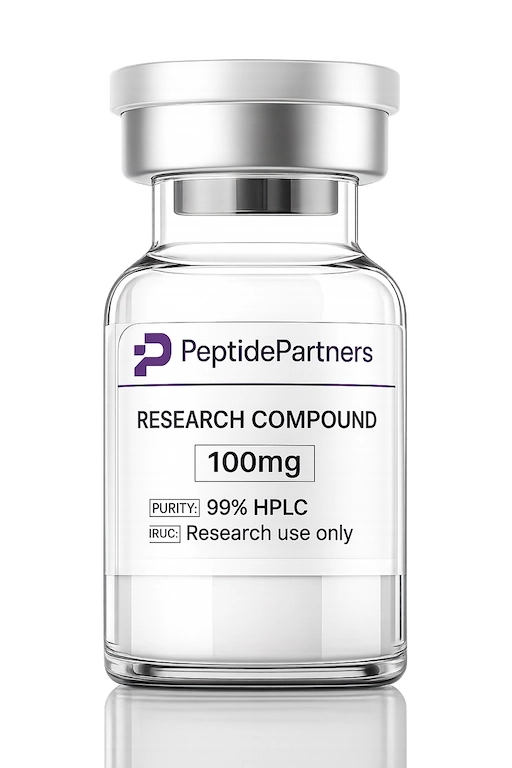
Peptide Partners Retatrutide (24mg (24,000 mcg) Vials)

At-Home Blood Test
Research Supplies
Peptide Vials (10 mg (10,000 mcg) vials)
Nominal 10 mg (10,000 mcg) vials at an assumed final volume of 2.0 mL give 5 mg/mL (5,000 mcg/mL). Counts below use total mass only and assume all contents can be counted before any discard or loss.
| Calculation period | Arithmetic note |
|---|---|
4 weeks 1 vial (mass-only minimum) | 8 mg (8,000 mcg) total; one 10 mg (10,000 mcg) vial is the mass-only minimum before discard or loss. |
8 weeks 3 vials (mass-only minimum) | 24 mg (24,000 mcg) total; 3 × 10 mg (10,000 mcg) vials provide 30 mg (30,000 mcg). |
12 weeks 5 vials (mass-only minimum) | 48 mg (48,000 mcg) total; 5 × 10 mg (10,000 mcg) vials provide 50 mg (50,000 mcg). |
16 weeks 9 vials (mass-only minimum) | 84 mg (84,000 mcg) total; 9 × 10 mg (10,000 mcg) vials provide 90 mg (90,000 mcg). |
20 weeks 14 vials (mass-only minimum) | 132 mg (132,000 mcg) total; 14 × 10 mg (10,000 mcg) vials provide 140 mg (140,000 mcg). |
24 weeks 18 vials (mass-only minimum) | 180 mg (180,000 mcg) total; 18 × 10 mg (10,000 mcg) vials provide 180 mg (180,000 mcg) before normal handling loss. |
Peptide Vials (24 mg (24,000 mcg) vials)
The linked Peptide Partners listing uses 24 mg (24,000 mcg) vials. An assumed final volume of 2.4 mL gives 10 mg/mL (10,000 mcg/mL). Counts below are mass-only minima, not a usable-life claim.
| Calculation period | Arithmetic note |
|---|---|
4-8 weeks 1 vial (mass-only minimum) | 4 weeks: 8 mg (8,000 mcg) total; one 24 mg (24,000 mcg) vial is the mass-only minimum before discard or loss.; 8 weeks: 24 mg (24,000 mcg) total; one 24 mg (24,000 mcg) vial is the mass-only minimum, with no allowance for discard or handling loss. |
12 weeks 2 vials (mass-only minimum) | 48 mg (48,000 mcg) total; 2 × 24 mg (24,000 mcg) vials is the mass-only minimum, with no allowance for discard or handling loss. |
16 weeks 4 vials (mass-only minimum) | 84 mg (84,000 mcg) total; 4 × 24 mg (24,000 mcg) vials provide 96 mg (96,000 mcg). |
20 weeks 6 vials (mass-only minimum) | 132 mg (132,000 mcg) total; 6 × 24 mg (24,000 mcg) vials provide 144 mg (144,000 mcg). |
24 weeks 8 vials (mass-only minimum) | 180 mg (180,000 mcg) total; 8 × 24 mg (24,000 mcg) vials provide 192 mg (192,000 mcg). |
Syringe capacity and weekly administration counts
A 0.5 mL syringe holds at most 0.5 mL. A 1 mL syringe holds at most 1 mL. Several calculated volumes above exceed those limits. Counts below describe scheduled weekly administrations, not a complete syringe order or instructions to split an amount.
| Calculation period | Arithmetic note |
|---|---|
4 weeks 4 scheduled administrations | One weekly administration in the trial-design example; this is not a syringe-capacity calculation. |
8 weeks 8 scheduled administrations | One weekly administration in the trial-design example; this is not a syringe-capacity calculation. |
12 weeks 12 scheduled administrations | One weekly administration in the trial-design example; this is not a syringe-capacity calculation. |
24 weeks 24 scheduled administrations | One weekly administration in the trial-design example; syringe needs depend on an authorized product and device. |
Bacteriostatic Water (10 mL bottles)
Arithmetic assumes 2.0 mL per 10 mg (10,000 mcg) vial or 2.4 mL per 24 mg (24,000 mcg) vial. The volumes below use the mass-only vial counts. Bottle count also depends on the manufacturer’s post-opening discard period; no bottle is assumed usable for the full calculation period.
| Calculation period | Arithmetic note |
|---|---|
8 weeks 6.0 mL / 2.4 mL total | 3 × 10 mg (10,000 mcg) vials use 6.0 mL; one 24 mg (24,000 mcg) vial uses 2.4 mL. |
16 weeks 18.0 mL / 9.6 mL total | 9 × 10 mg (10,000 mcg) vials use 18.0 mL; 4 × 24 mg (24,000 mcg) vials use 9.6 mL. |
24 weeks 36.0 mL / 19.2 mL total | 18 × 10 mg (10,000 mcg) vials use 36.0 mL; 8 × 24 mg (24,000 mcg) vials use 19.2 mL. |
These are mass and volume examples, not a recommendation to use retatrutide. Actual vial and water-bottle quantities require product-specific storage and discard dates plus loss allowances. No validated research-vial beyond-use period is established here; a one-vial mass total does not mean one opened vial lasts for the stated period.
Companion Supplies & Routine Support
Retatrutide Reconstitution Guide
The table below gives nominal vial-mass and final-volume calculations. It does not validate a diluent, preparation method, sterile product, or human dose. Trial schedules cannot be transferred to research-market powders. U-100 units measure volume, not retatrutide potency.
Retatrutide reconstitution chart
| Vial Size | Example final volume | Concentration | 1 mg (1,000 mcg) | 2 mg (2,000 mcg) | 4 mg (4,000 mcg) | 6 mg (6,000 mcg) | 9 mg (9,000 mcg) | 12 mg (12,000 mcg) |
|---|---|---|---|---|---|---|---|---|
| 5 mg (5,000 mcg) | 1.0 mL | 5 mg/mL (5,000 mcg/mL) | 0.20 mL (20 units) | 0.40 mL (40 units) | 0.80 mL (80 units) | Exceeds vial | Exceeds vial | Exceeds vial |
| 10 mg (10,000 mcg) | 2.0 mL | 5 mg/mL (5,000 mcg/mL) | 0.20 mL (20 units) | 0.40 mL (40 units) | 0.80 mL (80 units) | 1.20 mL (120 units); exceeds 1 mL syringe capacity | 1.80 mL (180 units); exceeds 1 mL syringe capacity | Exceeds one 10 mg (10,000 mcg) vial; mass-only minimum 2 vials. 2.40 mL at 5 mg/mL (5,000 mcg/mL) |
| 12 mg (12,000 mcg) | 1.2 mL | 10 mg/mL (10,000 mcg/mL) | 0.10 mL (10 units) | 0.20 mL (20 units) | 0.40 mL (40 units) | 0.60 mL (60 units) | 0.90 mL (90 units) | 1.20 mL (120 units); exceeds 1 mL syringe capacity |
| 20 mg (20,000 mcg) | 2.0 mL | 10 mg/mL (10,000 mcg/mL) | 0.10 mL (10 units) | 0.20 mL (20 units) | 0.40 mL (40 units) | 0.60 mL (60 units) | 0.90 mL (90 units) | 1.20 mL (120 units); exceeds 1 mL syringe capacity |
| 30 mg (30,000 mcg) | 3.0 mL | 10 mg/mL (10,000 mcg/mL) | 0.10 mL (10 units) | 0.20 mL (20 units) | 0.40 mL (40 units) | 0.60 mL (60 units) | 0.90 mL (90 units) | 1.20 mL (120 units); exceeds 1 mL syringe capacity |
U-100 units measure volume: 100 units = 1 mL. Volumes above 1 mL exceed a 1 mL syringe capacity. Vial content and syringe capacity are separate limits. This table does not specify how to administer these amounts or combine vials.
Retatrutide 12 mg (12,000 mcg) Dosage and Concentration Chart
At 12 mg (12,000 mcg) mixed with 1.2 mL, the concentration is 10 mg/mL (10,000 mcg/mL). On a U-100 syringe, 100 units equal 1 mL, so each 1 mg (1,000 mcg) equals 0.10 mL or 10 units. The table below is concentration math only; it does not tell a reader what dose to use.
Retatrutide 12 mg (12,000 mcg) dosage and concentration chart
| Reference amount | Volume at 10 mg/mL (10,000 mcg/mL) | U-100 units |
|---|---|---|
| 2 mg (2,000 mcg) | 0.20 mL | 20 units |
| 4 mg (4,000 mcg) | 0.40 mL | 40 units |
| 6 mg (6,000 mcg) | 0.60 mL | 60 units |
| 9 mg (9,000 mcg) | 0.90 mL | 90 units |
| 12 mg (12,000 mcg) | 1.20 mL | 120 units |
Calculation basis: 12 mg (12,000 mcg) ÷ 1.2 mL = 10 mg/mL (10,000 mcg/mL). U-100 math uses 100 units = 1 mL. A 1.20 mL calculated volume exceeds a 1 mL syringe; this is not administration guidance.
Check a concentration calculation
Follow the arithmetic with your own verified product values. These illustrations do not instruct you to alter a ready-to-use medicine.

Identify the material
A trial medicine, compounded preparation, and research powder are different products. A nominal mass on a research vial does not establish identity, purity, sterility, or suitability for human use.

Record mass and final volume
Use the stated mass in mg and final solution volume in mL. The example volumes are calculation assumptions, not verified mixing instructions.
Calculate concentration
Divide mass by final volume. For example, 10 mg (10,000 mcg) divided by 2 mL equals 5 mg/mL (5,000 mcg/mL).
Calculate volume and U-100 units
Divide the reference amount by mg/mL to get mL, then multiply mL by 100 for U-100 units.
Check both physical limits
The reference amount cannot exceed the vial content. The calculated volume must also fit the measuring device. These are separate checks.

Keep storage separate
Neither concentration math nor bacteriostatic water establishes stability or a beyond-use date. Product-specific validated instructions are required.
AI-generated educational scenes with Ditto-inspired concept labels; not photographs of supplied products. CDC preparation and equipment principles · Check your calculation
Need a custom vial size?
Use the free University of Peptide calculator to match exact syringe units to any vial size and BAC water volume.
Retatrutide Dosage Chart
This retatrutide dosage chart summarizes the Phase 3 TRIUMPH escalation path to the 12 mg (12,000 mcg) target: 2 mg (2,000 mcg), 4 mg (4,000 mcg), 6 mg (6,000 mcg), 9 mg (9,000 mcg), and 12 mg (12,000 mcg) in four-week steps. Participants assigned to lower target doses stop escalating when they reach their assigned target.
 UNIVERSITY OF PEPTIDE · RESEARCH REFERENCE
Retatrutide Dosage Chart
| Weeks | Weekly dose | Trial-design note |
|---|---|---|
| 1-4 | 2 mg (2,000 mcg) | Starting dose used across the initial TRIUMPH Phase 3 program. |
| 5-8 | 4 mg (4,000 mcg) | First escalation step. Also a target dose in TRIUMPH-1 and TRIUMPH-2. |
| 9-12 | 6 mg (6,000 mcg) | Intermediate escalation step before the 9 mg (9,000 mcg) or 12 mg (12,000 mcg) target. |
| 13-16 | 9 mg (9,000 mcg) | Target dose in the initial TRIUMPH program; also a step toward 12 mg (12,000 mcg). |
| 17+ | 12 mg (12,000 mcg) | Highest target dose in the initial TRIUMPH program. |
How Retatrutide Works
Retatrutide acts on three hormone pathways at the same time: GLP-1, GIP, and glucagon. Most other research peptides in this class only act on one or two. The simplest way to picture it: one pathway helps the body feel full, one helps it handle blood sugar and stored fuel, and one may push energy use up.
GLP-1 receptor (the 'feel full' lever)
This is the same general pathway used by semaglutide. It slows digestion and helps people feel full longer, which is one reason retatrutide can reduce appetite. Researchers coming from GLP-1 work will recognize this part of the mechanism.
GIP receptor (the 'handle fuel' lever)
GIP is short for glucose-dependent insulinotropic polypeptide. It is part of why retatrutide is studied as a broader metabolic compound rather than only an appetite tool. In plain English, it helps the body manage blood sugar and how it stores energy.
Glucagon receptor (the 'burn more' lever)
This is the third lever, and it is what separates retatrutide from tirzepatide. Glucagon receptor activity is linked to higher energy expenditure and fat oxidation. It is a likely reason why the weight loss and liver fat numbers in trials look stronger than older single- or dual-pathway compounds.
Structurally, retatrutide is a 39-amino acid single-chain peptide with a C20 fatty diacid attachment. That attachment helps it bind to albumin in the blood. The longer circulation time is the technical reason for the ~6-day half-life and once-weekly dosing.
Who Retatrutide Is For and Who Should Avoid It
Retatrutide is currently studied in adults with obesity, adults with type 2 diabetes, and adults with weight-related conditions like knee osteoarthritis, sleep apnea, and metabolic dysfunction-associated steatotic liver disease (MASLD). It is not approved for any use as of August 2026, so eligibility is defined by the trials, not by a label.
Trial exclusion patterns
Phase 2 and Phase 3 retatrutide trials commonly excluded participants with a history of pancreatitis, medullary thyroid carcinoma, multiple endocrine neoplasia syndrome type 2 (MEN 2), severe gastroparesis, recent major cardiovascular events, severe kidney impairment, type 1 diabetes (in the obesity studies), and pregnancy or breastfeeding. These exclusions follow the same general pattern used in semaglutide and tirzepatide trials.
Pregnancy, breastfeeding, and trying to conceive
Retatrutide has not been studied in pregnant or breastfeeding people. Trials require effective contraception. Anyone in those situations should not be considering retatrutide outside qualified medical care.
Conditions that need clinician oversight
- Personal or family history of medullary thyroid carcinoma or MEN 2.
- History of pancreatitis or gallbladder disease.
- Severe kidney or liver disease.
- Diabetic retinopathy or active retinal disease.
- Severe GI conditions (gastroparesis, IBD flare).
- Active cardiovascular disease, recent heart attack, or unstable angina.
- Use of insulin or sulfonylureas (hypoglycemia risk).
Clinician oversight matters
Retatrutide is investigational. The points above are research-population exclusion patterns, not personal medical advice. Anyone in these categories should talk to a qualified clinician.
Retatrutide Side Effects & Safety
Retatrutide side effects look broadly similar to other incretin-based research compounds. The simplest way to think about them is in two buckets: stomach symptoms during dose escalation, and a separate skin-sensation signal at the highest dose in Phase 3.
Common gastrointestinal effects (Phase 2 NEJM)
Retatrutide GI side effects at 12 mg (12,000 mcg) in the Phase 2 NEJM trial
| Effect | Rate at 12 mg (12,000 mcg) |
|---|---|
| Nausea | Up to 25% |
| Diarrhea | Up to 23% |
| Vomiting | Up to 26% |
| Constipation | Up to 16% |
GI symptoms were most common during dose escalation and were usually mild to moderate. Source: Jastreboff et al., NEJM 2023.
Dysesthesia signal (Phase 3)
TRIUMPH-4 topline results, released December 11, 2025, reported dysesthesia in about 20.9% of participants at the highest dose. Dysesthesia means unusual skin sensitivity, tingling, or tenderness to touch. It is the most distinct safety signal that separates retatrutide from older GLP-1 class compounds.
Cardiovascular and metabolic signals
- Resting heart rate increased by about 5-10 bpm on average. It peaked near week 24 and eased by weeks 36-48.
- Phase 2 reported no increase in serious cardiovascular events.
- Temporary ALT/AST elevations occurred in a minority of participants and were generally tied to dose increases.
- Injection site reactions (redness, itching, small nodules) were observed in roughly 5-15% of participants.
Discontinuation
In Phase 2, 6-16% of participants stopped because of adverse events versus 0% on placebo. Gastrointestinal effects were more common during dose escalation. The Phase 3 TRIUMPH program uses four-week escalation steps.
Quality control matters
Retatrutide is research-grade and not standardized for human use. COA verification, batch testing, and storage matter. Bad reconstitution, repeated freeze-thaw cycles, or contaminated BAC water can show up as injection site issues that look like side effects.
Retatrutide Timeline & What to Monitor
Retatrutide builds up slowly. Steady-state plasma concentrations land after about 4-5 half-lives, or roughly 4 weeks at each dose step. That is why each titration phase is 4 weeks long: it gives the dose time to reach a steady level before the next step up.
Half-life and steady state
Retatrutide's half-life is about 6 days (around 144 hours). After stopping, it takes roughly 5 half-lives (about 30 days) for the compound to clear. The 6-day half-life is the technical reason for once-weekly dosing.
Dose-by-dose weight loss in Phase 2 (NEJM)
Phase 2 NEJM weight loss by dose, 24 and 48 weeks
| Dose | 24 weeks | 48 weeks |
|---|---|---|
| 1 mg (1,000 mcg) | -7.2% | -8.7% |
| 4 mg (4,000 mcg) | -12.9% | -17.5% |
| 8 mg (8,000 mcg) | -15.7% | -22.8% |
| 12 mg (12,000 mcg) | -17.5% | -24.2% |
| Placebo | -1.6% | -2.1% |
Source: Jastreboff et al., NEJM 2023. 100% of 12 mg (12,000 mcg) participants lost at least 5%; 83% lost at least 15%.
What participants typically asked about
- Nausea, vomiting, and diarrhea during the first few weeks of each dose step; the archived review’s Supplier research references covers protein, fiber, electrolytes, and lab-driven nutrient support.
- Heart rate (resting heart rate often went up early and eased later).
- Liver enzymes (ALT/AST) when dose increases happened.
- Skin sensitivity at the highest dose (the dysesthesia signal).
- Weight trajectory - whether it was still moving at the end of the cycle.
Reasonable markers to track
- Weekly body weight on the same scale at the same time of day.
- Resting heart rate (a basic wearable or fingertip pulse oximeter is enough).
- Routine labs (CBC, CMP including ALT/AST, lipid panel, fasting glucose, HbA1c) before starting and on a regular schedule under clinician oversight.
- Notes on GI symptoms by dose phase. This is the single most useful data point for deciding when to stay at a dose.
What cannot be promised
Trial averages are not personal predictions. Phase 2 saw -24.2% at 48 weeks at 12 mg (12,000 mcg), but individual results varied widely. Phase 3 added a dysesthesia signal that did not appear at the same rate in earlier studies. Read this as range, not guarantee.
Retatrutide Clinical Evidence Context
Phase 3 evidence is now broader than the first TRIUMPH readouts. As of August 2026, Lilly has reported topline results from TRIUMPH-1, TRIUMPH-2, TRIUMPH-3, and TRIUMPH-4. Keep each result tied to its study population, target dose, and study duration rather than combining results across trials.
Human evidence - Phase 3 TRIUMPH-1 (Eli Lilly, May 21, 2026)
2,339 adults with obesity or overweight without diabetes. The 12 mg (12,000 mcg) dose produced 28.3% average body weight loss at 80 weeks, and a higher-BMI two-year subgroup reached 30.3% average loss at 104 weeks. Results are topline only; full peer-reviewed data has not been published yet.
Human evidence - Phase 3 TRIUMPH-2 (Eli Lilly, July 23, 2026)
In adults with type 2 diabetes and obesity or overweight, Lilly reported 80-week mean weight changes of -12.7% at 4 mg (4,000 mcg), -19.1% at 9 mg (9,000 mcg), and -20.8% at 12 mg (12,000 mcg) under the efficacy estimand. A1C changes were -1.4, -1.6, and -1.5 percentage points, respectively. Detailed peer-reviewed publication is still pending.
Human evidence - Phase 3 TRIUMPH-3 (Eli Lilly, July 23, 2026)
In adults with severe obesity and established cardiovascular disease, Lilly reported 80-week mean weight changes of -21.6% at 9 mg (9,000 mcg) and -22.6% at 12 mg (12,000 mcg) under the efficacy estimand. The reported cardiovascular event analysis was not conclusive, so this trial does not prove cardiovascular benefit. Detailed peer-reviewed publication is still pending.
Human evidence - Phase 3 TRIUMPH-4 (Eli Lilly, December 11, 2025)
Adults with obesity and knee osteoarthritis. Average 28.7% body weight loss at 68 weeks at the 12 mg (12,000 mcg) dose (about 71.2 lbs / 32.3 kg average loss). WOMAC pain score improved by 4.5 points. Dysesthesia reported in about 20.9% at the highest dose.
Human evidence - Phase 3 TRANSCEND-T2D-1 (Eli Lilly, March 19, 2026)
537 adults with type 2 diabetes, randomized 1:1:1:1 to retatrutide 4, 9, or 12 mg (12,000 mcg) or placebo. A1C reduction of 1.7-2.0% across doses at 40 weeks. Average 16.8% body weight loss at 12 mg (12,000 mcg) (about 36.6 lbs). Full Phase 3 results were presented and published in June 2026.
Human evidence - Phase 2 NEJM (Jastreboff et al., 2023)
338 adults with obesity but no diabetes. 12 mg (12,000 mcg): -24.2% body weight at 48 weeks. 8 mg (8,000 mcg): -22.8%. 4 mg (4,000 mcg): -17.5%. 100% of 8 mg (8,000 mcg) and 12 mg (12,000 mcg) participants lost at least 5%; 83% in the 12 mg (12,000 mcg) arm lost at least 15%.
Human evidence - Phase 2 type 2 diabetes (Rosenstock et al., Lancet 2023)
Adults with type 2 diabetes, 36 weeks. Up to -16.9% weight loss. HbA1c improved by -2.2%. 82% reached HbA1c at or below 6.5%.
Human evidence - Phase 2 MASLD substudy (Sanyal et al., Nature Medicine 2024)
Adults with MASLD and at least 10% liver fat. Up to 82% relative reduction in liver fat at 24 weeks.
Pharmacokinetics (Coskun et al., Cell Metabolism 2022)
Phase 1 PK data established the ~6-day half-life and once-weekly dosing rationale. Albumin binding via the C20 fatty diacid attachment is the technical mechanism.
Evidence boundary
Retatrutide is investigational. Phase 3 readouts are landing on a rolling basis, but FDA approval has not happened as of October 14, 2026. Treat current numbers as the best available evidence, not a final label.
Retatrutide Storage & Handling
Retatrutide has no FDA-approved product label. This page does not establish storage temperatures, shipping tolerance, freeze-thaw stability, or a beyond-use period for research powders or solutions. Clinical-trial handling instructions apply to the trial product, not to unrelated supplier material.
What storage decisions require
| Material | Required evidence | Limit |
|---|---|---|
| Research powder or solution | Validated product-specific storage and stability data | No generic month-long or frozen-storage allowance is established here. |
| Bacteriostatic water | The exact manufacturer’s label and post-opening discard instructions | An opened bottle’s discard date is separate from the peptide solution’s date. |
| Clinical-trial medicine | The trial site’s instructions for that product | Do not transfer trial-product storage rules to research vials. |
Vial mass, a clear appearance, and the presence of a preservative do not prove sterility or stability.
Retatrutide Protocol Mistakes & Troubleshooting
Most retatrutide protocol issues fall into a small number of buckets. Use this as a quick checklist when something feels off.
Missed dose
Clinical trial protocols allowed a scheduled weekly dose missed by 5 days or fewer to be taken when remembered. After more than 5 days, the missed dose was skipped and dosing resumed on the next scheduled day without doubling up. This is trial-protocol reporting, not a personal medical recommendation.
Cloudy or off-color vial
Reconstituted retatrutide should be clear. A cloudy, particulate, or strongly off-color solution is a sign to stop using that vial and check storage, BAC water, and reconstitution technique.
Wrong BAC water volume
Adding too much or too little BAC water changes the concentration and the syringe units per dose. If the volume was off, recalculate using the actual amount added rather than the planned amount. Use the University of Peptide calculator to redo the math.
Side effects feel too strong
Trial protocols allowed staying at the current dose for an extra 2-4 weeks when GI side effects were significant. Slowing the climb is the main lever. Splitting the weekly dose across two injections (microdosing-style) is a research-community pattern but is not a Phase 2 or Phase 3 standard.
Injection site reaction
Small redness, itching, or a tender bump at the injection site is common. Persistent lumps suggest the same area is being used too often. Rotating sites by roughly an inch each week is commonly reported to reduce lump formation. Persistent or growing reactions need a clinician.
Storage mistake
If reconstituted vials sat at room temperature for an extended period, or went through repeated freeze-thaw cycles, the safer choice is to discard the vial. Peptide quality and sterility cannot be visually verified.
When to seek medical care
Severe persistent vomiting, signs of pancreatitis (severe upper-abdominal pain, often radiating to the back), severe allergic reactions, or any reaction that is getting worse rather than better are reasons to stop and seek qualified medical care. This page is not emergency advice.
Retatrutide Regulatory Status
As of August 2026, retatrutide is not approved by the FDA, the EMA, or any other regulatory agency. It is investigational and is being studied in Eli Lilly's Phase 3 TRIUMPH (obesity-focused) and TRANSCEND-T2D (type 2 diabetes) programs.
Recent regulatory milestones
- December 11, 2025: Eli Lilly released TRIUMPH-4 topline results (obesity + knee osteoarthritis). 28.7% weight loss at 12 mg (12,000 mcg), dysesthesia signal at the highest dose.
- March 19, 2026: Eli Lilly announced TRANSCEND-T2D-1 topline results in adults with type 2 diabetes. The trial met its primary endpoint and all key secondary endpoints.
- May 21, 2026: Eli Lilly announced TRIUMPH-1 topline results in adults with obesity or overweight without diabetes. The 12 mg (12,000 mcg) arm averaged 28.3% weight loss at 80 weeks; a higher-BMI subgroup reached 30.3% at 104 weeks.
- June 2026: Full TRANSCEND-T2D-1 results were presented at the ADA Scientific Sessions and published in The Lancet.
- July 23, 2026: Eli Lilly reported TRIUMPH-2 and TRIUMPH-3 topline results. Both reports covered 80-week outcomes in their specific study populations.
- Lilly stated as of these announcements that retatrutide remains investigational and has not been approved by any regulatory agency.
Research-use peptide market
As of October 14, 2026, FDA states that retatrutide is not an ingredient in an approved drug, has not been found safe and effective for any condition, and cannot be used in compounding under federal law. FDA also warns about unapproved GLP-1 products marketed to consumers as research material. A supplier COA does not establish approval, sterility, or suitability for human use. See FDA’s statement on unapproved GLP-1 drugs.
International note
Retatrutide is also not approved in the UK, EU, Australia, Canada, or any other major market as of August 2026.
Retatrutide vs Tirzepatide vs Semaglutide
Semaglutide activates GLP-1 receptors, tirzepatide activates GIP and GLP-1 receptors, and retatrutide activates all three including glucagon. Receptor count alone does not establish comparative benefit or safety. Separate trials differ in population, duration, treatment, and analysis.
Retatrutide vs tirzepatide vs semaglutide
| Category | Retatrutide | Tirzepatide | Semaglutide |
|---|---|---|---|
| Receptor targets | GLP-1 + GIP + Glucagon (triple) | GLP-1 + GIP (dual) | GLP-1 only (single) |
| Half-life | ~6 days | ~5 days | ~7 days |
| Dose frequency | Once weekly | Once weekly | Once weekly |
| Dose context | 12 mg/week (12,000 mcg/week) highest target in initial TRIUMPH trials | 15 mg/week (15,000 mcg/week) adult label maximum; pediatric Mounjaro maximum 10 mg (10,000 mcg) | Wegovy adult weight reduction: optional 7.2 mg/week (7,200 mcg/week) under label conditions; other indications differ |
| Selected trial results; not a head-to-head comparison | -28.7% at 68 weeks (Phase 3 TRIUMPH-4) | -20.9% at 72 weeks (SURMOUNT-1 primary treatment-regimen estimand) | -14.9% at 68 weeks (STEP-1 primary treatment-policy estimand) |
| FDA status (August 2026) | Investigational, Phase 3 | Approved (obesity + T2D) | Approved (obesity + T2D) |
| Liver fat | Up to 82% reduction (Phase 2 substudy) | Significant reduction | Moderate reduction |
| Unique angle | Triple agonism may raise energy expenditure via glucagon pathway | Dual agonism balances effect and tolerability | Longest clinical track record; CV outcomes data (SELECT) |
These compounds are not interchangeable. Results from separate trials are not a ranking: populations, durations, and estimands differ. Trial or approved products are not established as equivalent to research powders.
Researchers comparing non-incretin options can also review the tesofensine protocol and SLU-PP-332 protocol. For compound-specific guides on the dual and single agonists, see the tirzepatide protocol and semaglutide protocol.
Why the dysesthesia signal is hard to compare
The same glucagon pathway that may explain extra weight loss may also help explain the dysesthesia signal at 12 mg (12,000 mcg) in Phase 3. Tolerability comparisons between retatrutide and tirzepatide are not 1:1 for that reason.
Retatrutide Blood Tests & Monitoring
Retatrutide is a GLP-1/GIP/glucagon receptor agonist research compound. Monitoring focuses on glucose control, liver/kidney context, lipids, heart-rate changes, and GI-related dehydration risk.
Blood test markers to discuss with a clinician
| Marker | Why it matters | Timing |
|---|---|---|
| A1c | Shows longer-term glucose control before and during incretin-pathway protocols. | Baseline |
| Fasting glucose | Gives a current glucose snapshot, especially when appetite and medication needs change. | Follow-up |
| Comprehensive metabolic panel (CMP) | Reviews kidney function, liver enzymes, electrolytes, and glucose, which matter with GI symptoms or dehydration. | Baseline |
| Lipid panel | Tracks cardiometabolic changes during weight-loss and metabolic shifts. | Follow-up |
| Blood pressure and resting heart rate | Adds cardiovascular context because retatrutide trials reported heart-rate changes in some participants. | Follow-up |
Monitoring guidance is trial-informed and incretin-pathway-based because retatrutide is investigational and does not have an approved clinical label.
At-home blood test option
Easy at home option to monitor core metrics during research cycles.
Simple timing framework
- Baseline
- Discuss baseline labs before starting or escalating, especially with diabetes, gallbladder history, pancreatitis history, kidney disease, liver disease, or cardiovascular concerns.
- Follow-up
- Repeat metabolic markers after 4-12 weeks, with closer review during dose escalation or major appetite changes.
- Longer term
- For longer protocols, review metabolic, kidney, liver, and cardiovascular trends every 3-6 months with a clinician.
How to interpret the labs
- Reduced intake can change diabetes medication needs and dehydration risk.
- Gallbladder symptoms, severe abdominal pain, persistent vomiting, and kidney symptoms need symptom-based review.
- Thyroid cancer history and MEN2 history should be discussed because incretin-class labeling uses this caution for related approved drugs.
Do not wait for routine labs
Severe abdominal pain, persistent vomiting, fainting, dehydration, chest pain, or allergic symptoms need medical review. A neck mass, trouble swallowing, or persistent hoarseness should be discussed with a clinician.
FAQ
Q1: What is the starting dose of retatrutide?
Retatrutide does not have an FDA-approved starting dose because it remains investigational. In Lilly's Phase 3 TRIUMPH program, participants assigned to retatrutide started at 2 mg (2,000 mcg) once weekly and increased every four weeks until they reached their assigned target dose. The earlier Phase 2 study used several dose arms, including a fixed 1 mg (1,000 mcg) arm.
Q2: What is the retatrutide Phase 3 titration schedule?
For the 12 mg (12,000 mcg) target arm, the Phase 3 TRIUMPH escalation path is 2 mg (2,000 mcg) for four weeks, then 4 mg (4,000 mcg), 6 mg (6,000 mcg), 9 mg (9,000 mcg), and 12 mg (12,000 mcg) in four-week steps. Participants assigned to a 4 mg (4,000 mcg) or 9 mg (9,000 mcg) target stop escalating when they reach that assigned dose.
Q3: What was the retatrutide Phase 2 dosing schedule?
The Phase 2 trial did not use one universal dosing ladder. It included target doses of 1 mg (1,000 mcg), 4 mg (4,000 mcg), 8 mg (8,000 mcg), and 12 mg (12,000 mcg) with different starting-dose groups. For example, the 4 mg (4,000 mcg) and 8 mg (8,000 mcg) targets included groups starting at either 2 mg (2,000 mcg) or 4 mg (4,000 mcg), while the 12 mg (12,000 mcg) target started at 2 mg (2,000 mcg).
Q4: What is the half-life of retatrutide?
Retatrutide's half-life is about 6 days (around 144 hours). That is why the protocol uses once-weekly dosing. After stopping, it takes roughly 5 half-lives (about 30 days) for the compound to clear the body. The technical reason for the long half-life is albumin binding via a C20 fatty diacid attachment.
Q5: How much weight loss does retatrutide produce in trials?
In the Phase 2 NEJM trial (2023), participants on 12 mg (12,000 mcg) lost an average of 24.2% of body weight at 48 weeks. In Phase 3 TRIUMPH-4 (Eli Lilly, December 11, 2025), the 12 mg (12,000 mcg) arm averaged 28.7% body weight loss at 68 weeks. In Phase 3 TRIUMPH-1 (May 21, 2026), the 12 mg (12,000 mcg) arm averaged 28.3% weight loss at 80 weeks, and a higher-BMI subgroup reached 30.3% at 104 weeks. Phase 3 TRANSCEND-T2D-1 (March 19, 2026) showed 16.8% loss at 12 mg (12,000 mcg) over 40 weeks in adults with type 2 diabetes. Results are dose-dependent and individual outcomes vary.
Q6: How do you reconstitute retatrutide?
This page provides concentration arithmetic, not a validated preparation method. For example, a nominal 10 mg (10,000 mcg) in a final 2.0 mL equals 5 mg/mL (5,000 mcg/mL), while 24 mg (24,000 mcg) in 2.4 mL equals 10 mg/mL (10,000 mcg/mL). A research vial is not established as equivalent to clinical-trial medicine, and these calculations do not establish sterility, storage, or suitability for human use. Use the University of Peptide calculator for calculation-only conversions.
Q7: Is retatrutide FDA approved?
No. As of October 14, 2026, retatrutide is not FDA-approved. It is investigational and remains in Phase 3 trials. This page does not assume when or whether a regulatory filing or approval will occur.
Q8: What are the most common side effects of retatrutide?
The most common side effects are stomach-related: nausea, diarrhea, vomiting, and constipation, especially during dose escalation. In Phase 3 TRIUMPH-4, about 20.9% of participants at the highest dose reported dysesthesia, which means unusual skin sensitivity or tingling. Resting heart rate increased by about 5-10 bpm on average and eased over time.
Q9: How does retatrutide compare to tirzepatide and semaglutide?
Retatrutide is a triple GLP-1/GIP/glucagon receptor agonist; tirzepatide activates GIP and GLP-1, and semaglutide activates GLP-1. Retatrutide remains investigational. Tirzepatide and semaglutide have approved products with indication-specific doses. Results from separate trials cannot establish superiority because populations, durations, and analyses differ.
Q10: What vial sizes does research retatrutide come in?
Research-grade retatrutide is commonly listed in 5 mg (5,000 mcg), 10 mg (10,000 mcg), 12 mg (12,000 mcg), 20 mg (20,000 mcg), 24 mg (24,000 mcg), and 30 mg (30,000 mcg) vial sizes. Vial size affects reconstitution math and how many reference amounts each vial covers. The current Peptide Partners listing uses 24 mg (24,000 mcg) vials.
Q11: What happens if I miss a retatrutide dose?
Clinical trial protocols allowed a scheduled weekly dose missed by 5 days or fewer to be taken when remembered. After more than 5 days, the missed dose was skipped and dosing resumed on the next scheduled day without doubling up. This is trial-protocol reporting, not a personal medical recommendation.
Q12: How is reconstituted retatrutide stored?
No generic research-vial storage temperature or beyond-use period is established here. Validated instructions must apply to the exact material and formulation. A preservative, refrigerator, freezer, or clear appearance does not establish sterility or stability. Trial participants should follow their trial site’s product-specific instructions.
Q13: What is the TRIUMPH clinical trial program?
TRIUMPH is Eli Lilly's Phase 3 obesity-focused retatrutide program. It includes obesity studies and weight-related conditions like knee osteoarthritis (TRIUMPH-4), obstructive sleep apnea, chronic low back pain, cardiovascular and renal outcomes, and MASLD. The separate TRANSCEND-T2D Phase 3 program covers type 2 diabetes (TRANSCEND-T2D-1 reported topline results March 19, 2026).
Q14: What is the maximum dose of retatrutide studied in Phase 3?
The highest target dose in the initial Phase 3 TRIUMPH program is 12 mg (12,000 mcg) once weekly. Lower target arms include 4 mg (4,000 mcg) and 9 mg (9,000 mcg) depending on the study. Retatrutide remains investigational, so this is a clinical-trial target dose, not an FDA-approved dosage.
Q15: How is a 20 mg (20,000 mcg) retatrutide vial calculated?
If a 20 mg (20,000 mcg) vial is mixed with 2.0 mL, the concentration is 10 mg/mL (10,000 mcg/mL). At that concentration, 1 mg (1,000 mcg) equals 0.10 mL or 10 units on a U-100 scale. This is arithmetic only; the amount a person should use is not established by this calculation.
Q16: Is retatrutide medical advice?
No. This page is an educational research reference. It is not medical advice and not a personal treatment plan. Retatrutide is investigational and not FDA-approved as of October 14, 2026. It does not recommend human use.
Sources & Research
- Giblin K, Kaplan LM, Somers VK, et al. Retatrutide for the treatment of obesity, obstructive sleep apnea and knee osteoarthritis: Rationale and design of the TRIUMPH registrational clinical trials. Diabetes, Obesity and Metabolism; Figure 2 (2025)
- Jastreboff AM, Kaplan LM, Frias JP, et al. Triple-Hormone-Receptor Agonist Retatrutide for Obesity - A Phase 2 Trial. New England Journal of Medicine (2023)
- Rosenstock J, Frias JP, Jastreboff AM, et al. Retatrutide, a GIP, GLP-1 and glucagon receptor agonist, for people with type 2 diabetes: a randomised, double-blind, placebo and active-controlled, parallel-group, phase 2 trial. The Lancet (2023)
- Sanyal AJ, Kaplan LM, Frias JP, et al. Triple hormone receptor agonist retatrutide for metabolic dysfunction-associated steatotic liver disease: a randomized phase 2a trial. Nature Medicine (2024)
- Coskun T, Urva S, Roell WC, et al. LY3437943, a novel triple glucagon, GIP, and GLP-1 receptor agonist for glycemic control and weight loss: From discovery to clinical proof of concept. Cell Metabolism (2022)
- Eli Lilly and Company Lilly's triple agonist, retatrutide, delivered weight loss of up to an average of 71.2 lbs along with substantial relief from osteoarthritis pain in first successful Phase 3 trial. PR Newswire / Eli Lilly press release (TRIUMPH-4 topline) (2025)
- Eli Lilly and Company Lilly's triple agonist, retatrutide, delivered powerful weight loss in pivotal Phase 3 obesity trial. PR Newswire / Eli Lilly press release (TRIUMPH-1 topline) (2026)
- Eli Lilly and Company Lilly's triple agonist, retatrutide, successful in two additional Phase 3 obesity trials, delivering significant improvements in weight and A1C. Eli Lilly press release (TRIUMPH-2 and TRIUMPH-3 topline) (2026)
- Eli Lilly and Company Lilly's triple agonist, retatrutide, demonstrated significant reductions in A1C and weight in first Phase 3 trial for treatment of type 2 diabetes. PR Newswire / Eli Lilly press release (TRANSCEND-T2D-1 topline) (2026)
- Eli Lilly and Company What to know about retatrutide. Lilly.com (2026)
- ClinicalTrials.gov TRANSCEND-T2D-1: A Study of Retatrutide (LY3437943) in Adult Participants With Type 2 Diabetes (NCT06354660). ClinicalTrials.gov (2026)
- ClinicalTrials.gov TRIUMPH-4: A Study of Retatrutide (LY3437943) in Participants With Obesity and Knee Osteoarthritis (NCT05929066). ClinicalTrials.gov (2025)
- Tucker ME. Triple Agonist Retatrutide Reduces A1c, Weight in T2D. Medscape (2026)
- U.S. Food and Drug Administration FDA’s Concerns with Unapproved GLP-1 Drugs Used for Weight Loss. FDA.gov drug safety statement; reviewed October 14, 2026 (2026)
Related Dosing Protocols
Reconstitution calculator
Enter your own values. This tool calculates quantities, not a recommended dose.
Check the concentration
Changing the unit keeps the entered mass equivalent. 1 milligram (mg) = 1,000 micrograms (mcg). This tool does not choose a target amount.
Biological IU (optional, product-specific)
Only enter a potency explicitly stated as IU per mg on the exact product label or reference. Do not enter the 100 from a U-100 syringe. No factor is assumed for any peptide.
Your result will appear here
Enter the mass, final solution volume and target mass, or load a fictional example.
Assumes accurate masses, final solution volume and even distribution. Blend arithmetic does not establish whether substances can be mixed. Read the formulas and assumptions.
Study findings, reported examples and supplier statements have different levels of evidence. Follow the citations and check the formulation, population and date before interpreting a number.
Editorial standards and corrections