On this page
TOOLS FOR THIS GUIDE
Work with Retatrutide + MOTS-c Stack
The guide name carries across. Amounts, dates and instructions remain yours to enter; opening a tool saves nothing.
Worked examples: calculations, records and source checks
Fictional arithmetic, unrelated to a recommended amount of Retatrutide + MOTS-c Stack: 10 mg (10,000 mcg) in a final 2 mL is 5 mg/mL (5,000 mcg/mL). A target mass of 0.25 mg (250 mcg) corresponds to 0.05 mL, or 5 U-100 syringe markings. Biological IU cannot be inferred from these inputs. Neither the mass nor the liquid is a preparation recommendation.
Open the arithmetic example- Supply example: two 10 mg (10,000 mcg) vials start at 20 mg (20,000 mcg). Four recorded entries of 0.25 mg (250 mcg) leave a theoretical 19 mg (19,000 mcg), before losses or expiry. Skipped entries do not deduct stock.
- Measurement example: enter “Sleep duration”, “7.5”, “hours” and the date. Keep the same unit and note changing conditions. A trend does not prove a treatment effect.
- Source example: record “rat study” when rats were studied, even when the headline describes recovery. Keep the exact paper and its limitations.
The planner accepts mg and mcg. Biological IU/USP units, sprays, drops and variable mixtures need product-specific instructions; they cannot be inferred from a generic mass calculator. For stacks, record each known ingredient separately.
FDA: why concentration and unit errors matterEvidence & source checks
Catalogue ingredients: RetatrutideMOTS-c
1 of 1 pairs have no curated interaction evidence here. An ingredient study does not validate the combination or show that it can be mixed in one vial.
Did phase 3 results extend the weight-loss findings and assess related conditions?
Mean weight reductions across the three retatrutide groups were 17.6% to 25.0%, compared with 3.9% with placebo. Prespecified knee-pain and sleep-apnea outcomes also improved in their respective subgroups. Gastrointestinal adverse events were most common.
Limit: Weight and subgroup outcomes used different approaches to treatment discontinuation; their estimates should not be mixed.
Did retatrutide reduce weight, and what short-term tolerability signals appeared?
Weight fell more with retatrutide than placebo at 24 and 48 weeks. Gastrointestinal adverse events were the most common and increased with the studied dose. Heart-rate increases peaked at 24 weeks and then declined.
Limit: A phase 2 trial with 338 participants cannot settle rare or long-term harms.
What to verify before filling a plan
- Identity and formulation: match the name, sequence or active ingredient, route and strength. A related molecule or branded medicine is not automatically equivalent.
- Instruction source: obtain the actual amount, frequency and duration from qualified medical instructions. A community table or trial protocol does not establish an individual regimen.
- Units and product details: keep mass, liquid volume and biological activity units separate. Record batch, storage and discard instructions from the actual product; the tools cannot determine sterility or stability.
- Review and follow-up: list medicines and supplements, unresolved interactions and questions. Agree on relevant observations and actions with a qualified professional; normal measurements do not prove safety.
Selected source context, not a systematic review or medical approval. Study cards checked 24 November 2026; guide source notes checked 25 November 2026. Research references and citations appear below.
Guide summary
REFERENCE SUMMARY- Stack
- Retatrutide + MOTS-c (Metabolic Super Stack)
- Separate dosing
- Reta weekly; MOTS-c 2-3x weekly or low-dose daily
- Cycle pattern
- Reta stays on; MOTS-c runs in 4-8 week blocks
- Regulatory status
- Reta is in Phase 3; MOTS-c is research-only
Can You Take MOTS-c With Retatrutide?
Retatrutide and MOTS-c are sometimes paired in community research protocols because they act through different pathways. However, no controlled human trial has studied the combination, its safety, or whether using both produces better results than either compound alone. Any combined schedule should be treated as community-reported practice, not a clinically proven protocol.
Evidence warning
There is no published clinical trial testing retatrutide and MOTS-c as a combined protocol. Evidence for the pairing comes from separate-compound research and community reports.
Retatrutide and MOTS-c at a Glance
Retatrutide and MOTS-c research comparison
Topic
Main pathway
Retatrutide
GLP-1, GIP, and glucagon receptor activity
MOTS-c
Mitochondrial and AMPK-related signaling
Combined research context
Different pathways are the main reason communities discuss pairing them
Topic
Human evidence
Retatrutide
Studied in controlled clinical trials as an investigational compound
MOTS-c
Native MOTS-c has limited human research
Combined research context
No controlled trial has studied the combination
Topic
Common schedule
Retatrutide
Weekly schedules have been used in trials
MOTS-c
Community schedules often use several research days per week
Combined research context
The compounds are normally planned on separate schedules
Topic
Main evidence gap
Retatrutide
Long-term use remains under study
MOTS-c
Human outcome data remains limited
Combined research context
Combined effects and risks are not established
Topic
Full guide
Retatrutide
Combined research context
Keep combined planning on this stack page
| Topic | Retatrutide | MOTS-c | Combined research context |
|---|---|---|---|
| Main pathway | GLP-1, GIP, and glucagon receptor activity | Mitochondrial and AMPK-related signaling | Different pathways are the main reason communities discuss pairing them |
| Human evidence | Studied in controlled clinical trials as an investigational compound | Native MOTS-c has limited human research | No controlled trial has studied the combination |
| Common schedule | Weekly schedules have been used in trials | Community schedules often use several research days per week | The compounds are normally planned on separate schedules |
| Main evidence gap | Long-term use remains under study | Human outcome data remains limited | Combined effects and risks are not established |
| Full guide | View the full retatrutide protocol | View the full MOTS-c dosage guide | Keep combined planning on this stack page |
Jump to the dosage and schedule, reconstitution guide, side effects, or results and evidence.
Retatrutide + MOTS-c Quick Start
The retatrutide + MOTS-c stack pairs two research compounds that act on different parts of metabolism. Retatrutide is Eli Lilly's investigational triple-receptor agonist. It acts on GLP-1, GIP, and glucagon receptors to reduce appetite, support insulin response, and raise energy use. MOTS-c is a 16-amino-acid peptide encoded in mitochondrial DNA. Researchers add it to study how cells use fuel during a retatrutide-driven calorie deficit.
The community calls this combo the Metabolic Super Stack, the Elite Metabolic Stack, or simply reta + MOTS-c. Each name means the same two-compound setup. This page explains the idea behind the stack, its separate-vial schedule, the math for both vials, key risks, and how it compares with other retatrutide stacks.
- Format
- Separate vials only. There is no commercial pre-blended retatrutide + MOTS-c product.
- Schedule
- Retatrutide once weekly. MOTS-c 2-3 times weekly or at a low daily dose.
- Easy measuring
- Both vials use U-100 insulin syringes for typical research doses.
- Sequencing
- Run retatrutide alone for the first 4 weeks. Add MOTS-c at Week 5 once tolerance is set.
- Research status
- Reta is in Phase 3. MOTS-c is research-only and banned by WADA.
Need broader context on combining peptides? See Stack evidence checker. For supplier and quality-control sourcing, see our supplier reviews. For a product-level example, read our Peptide Partners retatrutide review, which checks a live listing, public batch records, and Finnrick history. You can also check the current Peptide Partners deal before ordering research supplies.
Disclaimer
This page is an educational research reference. It is not medical advice. No published human trial has tested retatrutide and MOTS-c together. The dosing structure below is built from each compound's own research and community practitioner reports. Retatrutide is a Phase 3 investigational compound. MOTS-c is an unregulated research compound and WADA-prohibited.
Retatrutide + MOTS-c Stack Composition
No pre-blended retatrutide + MOTS-c product exists, so the stack is always two separate vials. Each vial runs on its own schedule, and MOTS-c is added at Week 5.
What is in the retatrutide + MOTS-c stack
| Component | Common vial sizes | Schedule | Starting dose | Maintenance range |
|---|---|---|---|---|
| Retatrutide | 5, 10, 20, or 30 mg (30,000 mcg) | Once weekly | 1 mg (1,000 mcg) weekly | 9 mg (9,000 mcg) or 12 mg (12,000 mcg) weekly |
| MOTS-c (intermittent) | 5 or 10 mg (5,000 or 10,000 mcg) | 2-3 times weekly from Week 5 | 5 mg (5,000 mcg), 2x weekly | 5-10 mg (5,000-10,000 mcg), 2-3x weekly |
| MOTS-c (low-dose daily) | 5 or 10 mg (5,000 or 10,000 mcg) | Daily from Week 5 | 200 mcg (0.2 mg) daily | Up to 1 mg (1,000 mcg) daily |
No trial has tested this pair together. These figures come from separate-compound research and community protocols. They are not dose recommendations.
What Is the Retatrutide + MOTS-c Stack?
The retatrutide + MOTS-c stack is a two-compound metabolic research protocol. Retatrutide acts on appetite, insulin response, and energy use. MOTS-c is added to study fuel use inside the cell. The theory is simple: retatrutide helps create the calorie deficit, while MOTS-c may help mitochondria use the fuel made available during that deficit.
This stack brings together two different areas of research: incretin hormones and mitochondrial function. The closest comparison is the cagrilintide + retatrutide stack, which focuses more on appetite control. The Advanced Recomp Stack adds a growth-hormone secretagogue for more direct lean-mass support.
What Each Compound Does
Retatrutide (LY3437943) is a once-weekly triple agonist. It acts on GLP-1, which reduces appetite and slows stomach emptying; GIP, which affects insulin response; and glucagon, which affects energy use and fat release. In the Phase 3 TRIUMPH-4 trial, the 12 mg (12,000 mcg) group lost 28.7% of body weight at 68 weeks, compared with 2.1% for placebo.
MOTS-c is a 16-amino-acid peptide linked to mitochondria. It activates AMPK, an energy-sensing pathway also affected by exercise and metformin. Much of the proposed benefit comes from cell and animal work. The native peptide has no completed human efficacy trial. The closest human data comes from CB4211, a MOTS-c analog tested in a Phase 1a/1b study.
Why People Pair Them
Retatrutide has produced large weight changes in human trials, but it mainly works through hormone receptors. MOTS-c raises a different question: could it help muscle cells and mitochondria use fuel during the calorie deficit? Here is the idea behind pairing them:
- Retatrutide helps release stored fat. MOTS-c may help cells use that fuel through AMPK signaling.
- Retatrutide affects insulin response. MOTS-c may help muscles take in glucose through a different pathway.
- Early MOTS-c research points to changes in myostatin, a protein tied to muscle growth. This has not been proven in people.
- MOTS-c is also linked to some of the signals that rise during exercise. That may matter when a large calorie deficit makes training harder.
Evidence boundary
No human or animal trial has tested retatrutide and MOTS-c together. The pairing above is a theory built from separate studies and community use. It should not be read as proof that the stack works better than retatrutide alone.
Retatrutide + MOTS-c Dosing Protocol & Schedule
Start with the per-compound plan to see how each dose changes. Then use the weekly example to see how the two schedules may fit together. These are research and community patterns, not a tested treatment plan.
Evidence-level notice
No clinical trial has tested retatrutide + MOTS-c together. Retatrutide dosing comes from the Phase 3 TRIUMPH program titration. MOTS-c dosing comes from preclinical work, the CB4211 analog Phase 1 trial, and community practitioner reports.
There is no standard pre-blended retatrutide + MOTS-c vial. The two compounds have different storage limits after mixing, so they are kept in separate vials. Community protocols use subcutaneous injections for both. Neither compound has a supported oral or sublingual form.
For the full standalone schedule, see the retatrutide protocol. For more MOTS-c schedule options, see the MOTS-c dosage guide.
Sequencing - Do Not Start Both on Day One
Community protocols often run retatrutide alone for the first 4 weeks at 1 mg (1,000 mcg) weekly before adding MOTS-c in Week 5. This staged setup makes it easier to track stomach side effects and tell which compound may be causing a new problem. No trial has tested this sequence.
Separate-vial workflow
Independent Dose Control - Two Vials, Two Schedules
Retatrutide is titrated up in 4-week steps. MOTS-c is added at Week 5 with two common approaches: intermittent (most common) or low-dose daily.
Injection burden
1-2 injections per day on overlap days
Best for
Metabolic + mitochondrial pairing
Cycle driver
Retatrutide titration sets the pace
Retatrutide
- Loading
- 1 → 2 → 4 → 6 → 9 mg (1,000 → 2,000 → 4,000 → 6,000 → 9,000 mcg) (every 4 weeks)
- Frequency
- Once weekly
- Maintenance
- 9 mg (9,000 mcg) or 12 mg (12,000 mcg) weekly
- Route
- SubQ
MOTS-c (intermittent - most common)
- Loading
- Start Week 5: 5 mg (5,000 mcg), 2x weekly
- Frequency
- 2-3x weekly
- Maintenance
- 5-10 mg (5,000-10,000 mcg), 2-3x weekly
- Route
- SubQ
MOTS-c (low-dose daily - alternative)
- Loading
- Start Week 5: 200 mcg/day (0.2 mg/day), +200 mcg (0.2 mg) every 2 weeks
- Frequency
- Daily
- Maintenance
- Up to 1 mg (1,000 mcg) daily
- Route
- SubQ
Weekly Schedule Example - Intermittent MOTS-c
Monday
Retatrutide 2 mg (2,000 mcg) (morning) + MOTS-c 5 mg (5,000 mcg) (pre-training)
Tuesday
Rest day
Wednesday
MOTS-c 5 mg (5,000 mcg) (pre-training)
Thursday
Rest day
Friday
MOTS-c 5 mg (5,000 mcg) (pre-training)
Saturday
Rest day
Sunday
Rest day
Community protocols use different injection sites and separate syringes when both compounds are dosed the same day. Many community protocols dose MOTS-c on Mon/Wed/Fri because it lines up with a typical training split, and MOTS-c is exercise-inducible in animal studies.
Cycle Guidelines
Common Retatrutide + MOTS-c Cycle Approaches
| Approach | Duration | MOTS-c Pattern | Best For |
|---|---|---|---|
| Conservative starter | Reta weeks 1-24 (titrate to 4-6 mg (4,000-6,000 mcg) max) | MOTS-c only weeks 5-12, then off | First-time stack users, metabolic concerns |
| Standard research cycle | Reta weeks 1-48 (target 9 mg (9,000 mcg)) | MOTS-c 8-week pulses with 4-week breaks | Most community protocols |
| Aggressive deficit | Reta weeks 1-68 (target 12 mg (12,000 mcg)) | MOTS-c 6 weeks on / 2 weeks off, repeating | Advanced subjects with established tolerance |
Retatrutide is run open-ended in clinical trials (TRIUMPH-4 lasted 68 weeks). Most community protocols pair MOTS-c in pulses inside the reta cycle. Retatrutide is commonly tapered rather than stopped abruptly in community protocols.
There Is No Proven Maintenance Plan
Retatrutide trials have lasted 48-68 weeks. Community plans often run MOTS-c for 4-8 weeks, followed by a break. No study has tested a long-term plan for this stack. A qualified clinician should review any change in dose or decision to stop.
For the full 12- to 104-week retatrutide research timeline, TRIUMPH-6 maintenance design, and evidence limits around planned breaks, read the Retatrutide Cycle Length Guide.
Protocol Notes
- Injection sites: Retatrutide is once-weekly so it can take a fixed day. Rotating MOTS-c sites across abdomen, thigh, and flank is a common practice to reduce local irritation.
- No oral options: Both compounds are subcutaneous only. Do not try oral or sublingual use.
- Why MOTS-c on training days: MOTS-c is exercise-inducible in animal studies, and timing it before training is the most common community pattern. Animal data show enhanced metabolic adaptation when MOTS-c is dosed before exercise.
- AMPK stacking caution: MOTS-c activates AMPK. Metformin and berberine also activate AMPK through different paths. Combining them can lower blood glucose more than expected. Test glucose response carefully in the early weeks if you use any of those.
- GI tolerance first: Retatrutide TRIUMPH-4 reported nausea in 38.1% (9 mg (9,000 mcg)) and 43.2% (12 mg (12,000 mcg)) of participants. Community protocols avoid raising both compounds at once, stepping retatrutide up first before adding MOTS-c.
- Syringe choice: U-100 insulin syringes work for both. Use 0.3 mL syringes with half-unit gradations for retatrutide doses below 1 mg (1,000 mcg) from concentrated vials.
Retatrutide + MOTS-c Supplies Needed
Use the separate-vial schedule above to plan your supplies. Retatrutide needs one syringe per week. Intermittent MOTS-c adds 2-3 syringes per week starting in Week 5. Keep a few extras on hand in case a syringe or swab is damaged. Affiliate disclosure: University of Peptide may earn a commission from eligible supplier links at no extra cost to you.
Recommended Supplies
Choose your region
Use discount code PEPPAL at Peptide Partners checkout. See why we love Peptide Partners.
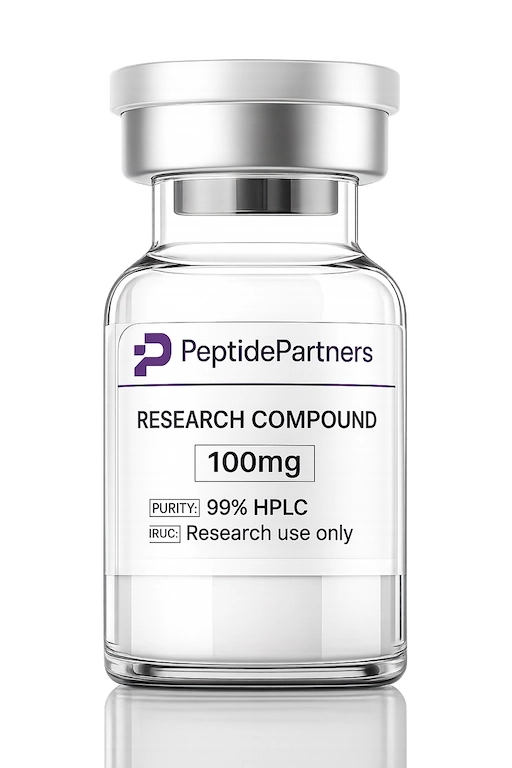
Retatrutide 24mg (24,000 mcg) Supply

MOTS-c Supply

At-Home Blood Test
Research Supplies
Retatrutide Vials
Once-weekly dosing, titrated upward. A 10 mg (10,000 mcg) vial holds ten 1 mg (1,000 mcg) doses or one 9 mg (9,000 mcg) dose.
| Cycle length | Planning note |
|---|---|
16 weeks (titration phase) At least 6 x 10 mg (10,000 mcg) vials | 1 mg (1,000 mcg) → 2 mg (2,000 mcg) → 4 mg (4,000 mcg) → 6 mg (6,000 mcg) in 4-week steps uses 52 mg (52,000 mcg) over 16 weeks. |
24 weeks (conservative cycle) Depends on the full weekly schedule | Add eight times the weekly maintenance dose to the amount used during titration. |
48 weeks (standard cycle) At least 34 x 10 mg (10,000 mcg) vials | 52 mg (52,000 mcg) through week 16, then 32 weeks at 9 mg (9,000 mcg): 340 mg (340,000 mcg) total. |
68 weeks (aggressive) Calculate from the full weekly schedule | At 12 mg (12,000 mcg) weekly, each 4-week block alone uses 48 mg (48,000 mcg). Add the amounts used during titration. |
MOTS-c Vials
Intermittent protocol: 5 mg (5,000 mcg) per injection, 2-3x weekly. MOTS-c is reconstituted-stable for only ~7 days at 2-8 °C, so plan vial sizes around use rate.
| Cycle length | Planning note |
|---|---|
8 weeks MOTS-c pulse At least 8-12 x 10 mg (10,000 mcg) vials | ~16-24 injections of 5 mg (5,000 mcg); 10 mg (10,000 mcg) vial covers 2 injections. |
12 weeks MOTS-c pulse At least 12-18 x 10 mg (10,000 mcg) vials | ~24-36 injections of 5 mg (5,000 mcg). |
Continuous MOTS-c (advanced) 1-2 x 10 mg (10,000 mcg) vials per active week | Plan around the 7-day reconstituted window; aliquot or use smaller volumes. |
Insulin Syringes (U-100)
Use 0.3 mL / 30-unit syringes for small draws (low-dose reta, low-dose MOTS-c). Use 1 mL syringes for larger volumes.
| Cycle length | Planning note |
|---|---|
16 weeks (reta only first 4 weeks) ~40 syringes | 1 reta/week + ~2 MOTS-c/week from Week 5 onward. |
24 weeks ~60 syringes | 1 reta/week + intermittent MOTS-c pulses. |
48 weeks ~120 syringes | Buy in bulk; 1 syringe per injection. |
Bacteriostatic Water
Each compound is reconstituted separately. Plan around MOTS-c's shorter reconstituted window.
| Cycle length | Planning note |
|---|---|
16-48 weeks Depends on vial count | 16 weeks: Calculate from the full vial count and the water added to each vial.; 24 weeks: Multiply the total vial count by the water added to each vial.; 48 weeks: Multiply the total vial count by the water added to each vial. |
Keep extra syringes and swabs on hand for damaged supplies or changes to the schedule. MOTS-c lasts about 7 days after mixing, so choose a vial size you can use within that time.
Companion Supplies & Routine Support
Retatrutide + MOTS-c Dosage Chart
This Retatrutide + MOTS-c dosage chart summarizes the retatrutide weekly titration and MOTS-c pulse dosing patterns shown in the dosing section above.
 UNIVERSITY OF PEPTIDE · RESEARCH REFERENCE
Retatrutide + MOTS-c Dosage Chart
| Approach | Duration | MOTS-c Pattern | Best For |
|---|---|---|---|
| Conservative starter | Reta weeks 1-24 (titrate to 4-6 mg (4,000-6,000 mcg) max) | MOTS-c only weeks 5-12, then off | First-time stack users, metabolic concerns |
| Standard research cycle | Reta weeks 1-48 (target 9 mg (9,000 mcg)) | MOTS-c 8-week pulses with 4-week breaks | Most community protocols |
| Aggressive deficit | Reta weeks 1-68 (target 12 mg (12,000 mcg)) | MOTS-c 6 weeks on / 2 weeks off, repeating | Advanced subjects with established tolerance |
Retatrutide + MOTS-c Reconstitution Guide
Each compound is mixed on its own. See the Retatrutide protocol page and MOTS-c protocol page for their standalone reconstitution tables.
Label every vial
Both compounds use U-100 insulin syringes. A draw error matters - 0.2 mL at retatrutide 10 mg/mL (10,000 mcg/mL) is 2 mg (2,000 mcg) of retatrutide. The same volume at MOTS-c 10 mg/mL (10,000 mcg/mL) is 2 mg (2,000 mcg) of MOTS-c. Concentration changes everything. Label each vial with the compound name, concentration, and date.
Retatrutide Reconstitution Math
For more vial sizes and the full standalone guide, see the retatrutide protocol.
Retatrutide - mg per dose at common vial sizes
| Vial Size | BAC Water | Concentration | 2 mg (2,000 mcg) Dose | 4 mg (4,000 mcg) Dose | 6 mg (6,000 mcg) Dose | 9 mg (9,000 mcg) Dose |
|---|---|---|---|---|---|---|
| 5 mg (5,000 mcg) | 1.0 mL | 5 mg/mL (5,000 mcg/mL) | 0.40 mL (40 units) | 0.80 mL (80 units) | N/A | N/A |
| 10 mg (10,000 mcg) | 1.0 mL | 10 mg/mL (10,000 mcg/mL) | 0.20 mL (20 units) | 0.40 mL (40 units) | 0.60 mL (60 units) | 0.90 mL (90 units) |
| 10 mg (10,000 mcg) | 2.0 mL | 5 mg/mL (5,000 mcg/mL) | 0.40 mL (40 units) | 0.80 mL (80 units) | 1.20 mL (120 units*) | 1.80 mL (180 units*) |
| 20 mg (20,000 mcg) | 2.0 mL | 10 mg/mL (10,000 mcg/mL) | 0.20 mL (20 units) | 0.40 mL (40 units) | 0.60 mL (60 units) | 0.90 mL (90 units) |
| 30 mg (30,000 mcg) | 3.0 mL | 10 mg/mL (10,000 mcg/mL) | 0.20 mL (20 units) | 0.40 mL (40 units) | 0.60 mL (60 units) | 0.90 mL (90 units) |
* Volume above 100 units exceeds a standard 1 mL insulin syringe - split into two injections or use a larger syringe.
MOTS-c Reconstitution Math
For more vial sizes and calculations, see the MOTS-c dosage guide.
MOTS-c - common doses at common vial sizes
| Vial Size | BAC Water | Concentration | 5 mg (5,000 mcg) Dose | 2.5 mg (2,500 mcg) Dose | 1 mg (1,000 mcg) Dose | 200 mcg (0.2 mg) Dose |
|---|---|---|---|---|---|---|
| 5 mg (5,000 mcg) | 1.0 mL | 5 mg/mL (5,000 mcg/mL) | 1.0 mL (100 units) | 0.50 mL (50 units) | 0.20 mL (20 units) | 0.04 mL (4 units) |
| 5 mg (5,000 mcg) | 2.0 mL | 2.5 mg/mL (2,500 mcg/mL) | 2.0 mL (200 units*) | 1.0 mL (100 units) | 0.40 mL (40 units) | 0.08 mL (8 units) |
| 10 mg (10,000 mcg) | 1.0 mL | 10 mg/mL (10,000 mcg/mL) | 0.50 mL (50 units) | 0.25 mL (25 units) | 0.10 mL (10 units) | 0.02 mL (2 units) |
| 10 mg (10,000 mcg) | 2.0 mL | 5 mg/mL (5,000 mcg/mL) | 1.0 mL (100 units) | 0.50 mL (50 units) | 0.20 mL (20 units) | 0.04 mL (4 units) |
| 10 mg (10,000 mcg) | 3.0 mL | 3.33 mg/mL (3,330 mcg/mL) | 1.50 mL (150 units*) | 0.75 mL (75 units) | 0.30 mL (30 units) | 0.06 mL (6 units) |
* Volumes above 100 units exceed a standard 1 mL insulin syringe.
Plan around MOTS-c's 7-day window
MOTS-c is reconstituted-stable for about 7 days at 2-8 °C before potency starts to drop. Retatrutide holds for 28-60 days at 2-8 °C. Reconstitute MOTS-c in smaller volumes you can use within a week, or aliquot the reconstituted vial into freezer-safe containers for -20 °C storage (2-3 months).
Reconstituted Stability
Stability windows
| Compound | Lyophilized | Reconstituted (2-8 °C) | Notes |
|---|---|---|---|
| Retatrutide | 12+ months at -20 °C | Up to 28-60 days | Standard for GLP-class peptides. |
| MOTS-c | 12+ months at -20 °C | Up to 7 days | Limiting factor for the stack. Aliquots at -20 °C: 2-3 months. |
Standard 7-Step Reconstitution
An illustrated reading aid for the product instructions. Confirm the exact formulation, diluent and handling method first. A research-only vial is not an approved medicine.

Check preparation conditions
Check the product instructions for the required preparation temperature. Do not warm a vial or change storage conditions based on a generic peptide guide.

Clean the stopper
If the product instructions call for vial access, disinfect the exposed rubber stopper with a fresh alcohol swab and let it dry. Avoid touching it afterward; use sterile equipment for each access.

Measure the specified diluent
Confirm the diluent type and volume in the product instructions. Measure that volume using the correct syringe scale. A concentration calculation cannot establish that a diluent is compatible.

Add as instructed
Follow the product-specific addition method. Where slow addition along the vial wall is specified, keep the flow gentle. Do not infer a preparation method from a dose table or combine separate compounds in one vial.

Mix and inspect
Use the mixing method specified for the product; some require gentle swirling rather than shaking. Compare the appearance with the instructions. Do not use a preparation with unexpected particles, discoloration or suspected contamination.

Record and store
Record the preparation date and calculated concentration in mg/mL and mcg/mL. Follow the exact storage conditions and discard time on the product instructions. There is no universal refrigerated shelf life for all peptides.
Record and store
Record the preparation date and calculated concentration in mg/mL and mcg/mL. Follow the exact storage conditions and discard time on the product instructions. There is no universal refrigerated shelf life for all peptides.
AI-generated educational scenes with Ditto-inspired concept labels; not photographs of supplied products. CDC preparation and equipment principles · Check your calculation
Calculator
Use the University of Peptide calculator for any custom vial size or BAC water volume across both compounds in this stack.
Why Add MOTS-c to a Retatrutide Protocol?
Retatrutide does most of the work on appetite, insulin response, and energy use. MOTS-c is added to study how cells use fuel during a large calorie deficit. The four possible links below may explain why people pair them, but the stack itself has never been tested.
What Retatrutide Already Provides
Retatrutide reduces appetite through GLP-1, affects insulin response through GIP, and raises energy use through glucagon. This can create a large calorie deficit, which may also bring fatigue and lean-mass loss. MOTS-c does not replace protein or resistance training. Researchers add it to study whether its effects on mitochondria and muscle could offer extra support.
Pathway 1 - Mitochondrial Fat Oxidation (AMPK)
MOTS-c activates AMP-activated protein kinase (AMPK), an energy sensor that helps cells change how they use fuel. Retatrutide affects appetite, energy use, and fat release. Researchers pair them in hopes that MOTS-c will help cells use the fuel made available during that process. No trial has shown that adding MOTS-c leads to more fat loss.
Pathway 2 - Insulin Sensitivity at Two Layers
The compounds may affect glucose control at different points. Retatrutide acts on the GIP receptor, which affects insulin response. MOTS-c has improved glucose uptake into skeletal muscle in animal models. This possible overlap is one reason people pair them. It is also why low blood sugar is a concern when other glucose-lowering drugs or supplements are used.
Pathway 3 - Lean Mass Through Myostatin
Early MOTS-c studies suggest that it may lower myostatin signaling. Myostatin is a protein that limits muscle growth. This could matter when trying to keep muscle during a calorie deficit, but it remains the least proven reason for using the stack. There is no direct human evidence.
Pathway 4 - Exercise-Mimetic Signaling
MOTS-c is linked to some of the same signals that rise with exercise. In one animal study, old mice given MOTS-c roughly doubled their treadmill time. This does not prove the same result in people. It explains why many community plans place MOTS-c on training days, when fatigue from a calorie deficit may be most noticeable.
When Researchers Consider the Stack
Retatrutide alone produced 28.7% average weight loss at the top dose in TRIUMPH-4. MOTS-c is not needed to show that retatrutide can drive weight loss. Researchers consider the stack when the question is about mitochondrial function, fatigue, or lean mass during the deficit. Whether MOTS-c improves any of those outcomes in people remains unknown.
Reminder
The pathways above come from separate compound studies. No published human or animal trial has measured outcomes for retatrutide + MOTS-c as a stack. The possible synergy is based on mechanism, not direct proof.
Retatrutide + MOTS-c Side Effects and Interaction Risks
No clinical study has measured the side effects of retatrutide and MOTS-c when used together. Retatrutide has documented stomach and appetite-related effects in clinical trials, while human safety data for native MOTS-c remains limited. Combining them may create risks that cannot be predicted from separate-compound studies.
Side Effects Reported in Retatrutide Trials
- Published trial finding: nausea. In TRIUMPH-4, nausea affected 38.1% of the 9 mg (9,000 mcg) group and 43.2% of the 12 mg (12,000 mcg) group.
- Published trial finding: stopping treatment. Discontinuation rates were 12.2% to 18.2% across the 9 mg (9,000 mcg) and 12 mg (12,000 mcg) groups.
- Published trial finding: unusual skin feelings. Tingling and similar feelings were reported in 8.8% of the 9 mg (9,000 mcg) group and 20.9% of the 12 mg (12,000 mcg) group, compared with 0.7% on placebo.
- Other stomach effects reported with retatrutide include diarrhea, constipation, and vomiting.
What Is Known About MOTS-c Side Effects
Human safety data for native MOTS-c is limited. Most findings come from animal studies, while the related analog CB4211 reached a Phase 1 trial. Community users report short-term injection-site redness, fatigue, lightheadedness, and sleep changes. These reports are not clinical evidence and cannot show how often an effect occurs.
Possible Overlapping Concerns
- Low blood sugar. Retatrutide affects insulin response, while MOTS-c affects AMPK and muscle glucose uptake. The possible overlap may matter more during fasted training or with metformin, berberine, insulin, or other glucose-lowering products.
- Several AMPK activators at once. MOTS-c, metformin, and berberine affect AMPK through different paths. Their combined effect in people is not well defined.
- More injection reactions. Using two injected compounds means more injection sites and more chances for redness or irritation.
- Product quality and handling. Two research vials create two chances for contamination, a label error, or weak material. Check a current, batch-matched third-party COA for both compounds. See the COA reading worksheet.
What Has Not Been Studied
No study has measured whether MOTS-c changes retatrutide side effects, whether the pair creates new risks, or how either compound affects the other's action. The risk from long-term combined use is also unknown. Medical review is especially important for anyone with severe stomach disease, type 1 diabetes, a history of pancreatitis, a personal or family history of medullary thyroid cancer, active cancer, or medicines that lower blood sugar.
When to reassess
If GI symptoms worsen instead of improving over the first 2-3 weeks, if any unusual symptom appears, or if blood glucose readings drop more than expected, pause and consult a qualified clinician. For broader stacking-safety context see the Evidence library.
MOTS-c vs Retatrutide: What Is the Difference?
MOTS-c and retatrutide differences
| Comparison | Retatrutide | MOTS-c |
|---|---|---|
| Compound type | Investigational triple-receptor agonist | Mitochondrial-derived peptide |
| Main research focus | Appetite, energy balance, and metabolic outcomes | Cellular energy signaling and mitochondrial function |
| Human evidence | Larger controlled clinical program | Limited native-peptide human evidence |
| Typical schedule discussed | Weekly | Several days per week in community protocols |
| Interchangeable? | No | No |
Retatrutide and MOTS-c are not versions of the same compound. They act through different biological pathways and have very different levels of human evidence.
They appear together in stack discussions because they may address separate parts of metabolic research. That idea has not been confirmed in a controlled combination trial.
Retatrutide + MOTS-c Benefits and Results: What the Evidence Shows
Evidence boundary
No published human or animal trial has tested retatrutide and MOTS-c together. The results below come from separate research programs and do not show what happens when the compounds are combined.
Retatrutide Trial Results
Phase 3 TRIUMPH-4 included 445 people and lasted 68 weeks. It reported 28.7% average weight loss at 12 mg (12,000 mcg) and 26.4% at 9 mg (9,000 mcg), compared with 2.1% for placebo. A 2023 Phase 2 trial reported 24.2% average weight loss at 48 weeks in the 12 mg (12,000 mcg) group. These results tested retatrutide alone. They do not prove what happens when MOTS-c is added.
See the full retatrutide protocol for its standalone research, schedule, and vial math.
MOTS-c Research Findings
The native MOTS-c peptide has no completed human efficacy trial. Animal studies found changes in insulin response in older and high-fat-fed mice. Another animal study found that old mice given MOTS-c ran about twice as long on a treadmill. The closest human data comes from CB4211, a related analog studied in a Phase 1a/1b trial. Animal and analog findings do not prove that native MOTS-c improves human outcomes.
See the full MOTS-c dosage guide for its standalone research and vial math.
Results From the Combined Stack
No controlled human trial has published weight-loss, body-composition, safety, or metabolic results for a retatrutide and MOTS-c combination.
Is There Retatrutide + MOTS-c Before-and-After Evidence?
Before-and-after photos and community reports are anecdotal. They usually cannot separate the effects of retatrutide, MOTS-c, calorie intake, exercise, other compounds, or changes in the research schedule. They should not be treated as controlled evidence.
Is There a Retatrutide + MOTS-c Combination Study?
No controlled human study has tested retatrutide and MOTS-c together. Current discussion of the stack combines findings from separate retatrutide and MOTS-c research programs. That can help explain possible mechanisms, but it cannot establish the safety, effectiveness, or ideal schedule of the combination.
Retatrutide + MOTS-c Storage & Handling
Storage Reference (Both Compounds)
| State | Retatrutide | MOTS-c |
|---|---|---|
| Lyophilized (long-term) | -4 °F (-20 °C), 12+ months | -4 °F (-20 °C), 12+ months |
| Lyophilized (short-term) | 35.6-46.4 °F (2-8 °C), several months | 35.6-46.4 °F (2-8 °C), several months |
| Lyophilized (room temp) | Weeks (shipping tolerance only) | Weeks (shipping tolerance only) |
| Reconstituted (liquid) | 35.6-46.4 °F (2-8 °C), up to 28-60 days | 35.6-46.4 °F (2-8 °C), up to 7 days |
| Aliquot frozen reconstituted | Not standard practice | -4 °F (-20 °C), 2-3 months |
| Color when reconstituted | Clear | Clear |
| Light protection | Yes | Yes |
| Oral viable | No | No |
MOTS-c lasts about 7 days in the refrigerator after mixing. Mix only what you can use within that time, or prepare smaller frozen portions for later use.
Retatrutide + MOTS-c vs Cagrilintide + Retatrutide vs Advanced Recomp Stack
How the retatrutide + MOTS-c stack compares
| Feature | Retatrutide + MOTS-c | Cagrilintide + Retatrutide | Advanced Recomp Stack |
|---|---|---|---|
| Components | Retatrutide + MOTS-c | Retatrutide + Cagrilintide | Retatrutide + CJC-1295 (No DAC) + ipamorelin |
| Pathway coverage | Triple agonist + AMPK / mitochondrial | Triple agonist + amylin (extra satiety) | Triple agonist + GH axis |
| Inflammation focus | Indirect retatrutide signal | Indirect | Indirect |
| Lean mass focus | Moderate (MOTS-c myostatin signal) | Low (no dedicated lean-mass mechanism) | High (dedicated GH secretagogue) |
| Mitochondrial focus | High (MOTS-c is mitochondrial-derived) | None | No MOTS-c component |
| Injections per week | 2 compounds, 4-5 injections | 2 compounds, 2 injections | 3+ compounds, 7+ injections |
| Cost (research-grade, monthly) | Moderate ($150-$300 combined) | Moderate ($200-$400 combined) | High ($350-$600+ combined) |
These are rough examples of monthly research costs, not current prices. Check the vial size, batch testing, and live price before comparing suppliers.
Decision Guidance
- Retatrutide + MOTS-c is the closer match when the research question is how cells use fuel during a large calorie deficit.
- Cagrilintide + retatrutide is more focused on hunger and appetite control through the amylin pathway.
- The Advanced Recomp Stack adds a GH-axis compound when lean-mass support is the main research goal.
- The KLOW stack is aimed at tissue repair, skin quality, and inflammation rather than weight-management research.
FAQ
Q1: Can you take MOTS-c with retatrutide?
The compounds are sometimes paired in community research protocols, but no controlled human trial has tested them together. Combined safety, results, and an ideal schedule have not been established.
Q2: What is the MOTS-c dosage with retatrutide?
There is no clinically established MOTS-c dosage for use with retatrutide. Published research studies the compounds separately, while combined schedules come mainly from community practice.
Q3: What are the side effects of the retatrutide and MOTS-c stack?
No clinical study has measured side effects from the combination. Retatrutide has documented trial side effects, while human safety data for native MOTS-c remains limited.
Q4: Can you mix MOTS-c and retatrutide in the same syringe?
Compatibility, stability, and sterility for mixing the compounds in one syringe have not been established. Keep reconstitution and handling guidance separate unless validated compatibility data is available.
Q5: What is the difference between MOTS-c and retatrutide?
Retatrutide is an investigational triple-receptor agonist. MOTS-c is a mitochondrial-derived peptide studied for cellular energy signaling. They are not interchangeable.
Q6: Is there a study on retatrutide and MOTS-c together?
No controlled human study has tested the combination. Current stack discussions rely on separate-compound research and community reports.
Q7: Does the retatrutide and MOTS-c stack have before-and-after evidence?
Online before-and-after reports are anecdotal and may involve diet, exercise, other compounds, and different schedules. They are not controlled evidence.
Q8: How long is a retatrutide and MOTS-c cycle?
There is no clinically established cycle length for the combination. Any combined cycle shown on this page is a community planning example, not a proven schedule.
Q9: What is the retatrutide + MOTS-c stack?
It is a two-compound research stack that pairs retatrutide, an investigational GLP-1/GIP/glucagon agonist, with MOTS-c, a mitochondrial-derived peptide linked to AMPK signaling. Retatrutide drives the main appetite and energy effects. MOTS-c is added to study cellular fuel use, fatigue, and lean-mass support during the deficit. It is also called the Metabolic Super Stack or Elite Metabolic Stack. No trial has tested the combination.
Q10: What MOTS-c doses appear in community protocols?
Two community patterns appear often. The intermittent pattern uses 5-10 mg (5,000-10,000 mcg) of MOTS-c, 2-3 times per week, often on training days. The low-dose daily pattern starts near 200 mcg (0.2 mg) per day and may rise to 1 mg (1,000 mcg) per day. Neither pattern has been validated for this stack in a human trial.
Q11: What dosing schedule is used for retatrutide with MOTS-c?
The page shows a community schedule in which retatrutide rises in 4-week steps from 1 mg (1,000 mcg) to 2 mg (2,000 mcg), 4 mg (4,000 mcg), 6 mg (6,000 mcg), and 9 mg (9,000 mcg). The highest tested retatrutide dose is 12 mg (12,000 mcg). MOTS-c is added in Week 5 at 5 mg (5,000 mcg), 2-3 times per week. This is not a tested dosing recommendation. See the full dosing section.
Q12: Is there a pre-blended retatrutide + MOTS-c vial?
There is no standard commercial pre-blend for this stack. The two compounds also have different storage limits after mixing. That is why the schedule uses separate vials, separate syringes, and separate dose math.
Q13: How do you reconstitute the retatrutide + MOTS-c stack?
Reconstitute each compound separately with bacteriostatic water. A 10 mg (10,000 mcg) retatrutide vial with 1 mL BAC water gives 10 mg/mL (10,000 mcg/mL) (a 4 mg (4,000 mcg) dose = 40 units on a U-100 syringe). A 10 mg (10,000 mcg) MOTS-c vial with 1 mL BAC water gives 10 mg/mL (10,000 mcg/mL) (a 5 mg (5,000 mcg) dose = 50 units). Inject the BAC water slowly down the inside of the glass, roll gently, never shake. Refrigerate both vials right after reconstitution. Use the University of Peptide calculator for any custom vial size.
Q14: Does MOTS-c help with muscle loss on retatrutide?
It is one reason researchers discuss the pairing, but the benefit is unproven. Early MOTS-c research links the peptide to myostatin, AMPK, and mitochondrial signals that may matter for muscle and training. No human trial has shown that MOTS-c prevents muscle loss during retatrutide use. Protein intake and resistance training remain the better-supported tools for lean-mass support. The Advanced Recomp Stack explains a different research model with a GH-axis compound.
Q15: Is the retatrutide + MOTS-c stack safe?
The stack cannot be called safe because no trial has tested it. Retatrutide has Phase 3 safety data, but MOTS-c data is mostly from animals and one related analog trial. Main concerns include low blood sugar, stomach side effects, unusual tingling linked to retatrutide, injection reactions, and product contamination. See the side effects section and speak with a qualified clinician.
Q16: When during the day should you inject each compound?
Community plans usually keep retatrutide on one fixed day each week. They often place MOTS-c in the morning on training days because animal research links it with exercise signals. No human trial has shown that this timing improves results. Separate syringes and different injection sites are used when both fall on the same day.
Q17: Can you stack MOTS-c with metformin or berberine?
This mix needs medical review. MOTS-c, metformin, and berberine all affect AMPK through different paths, and retatrutide also affects glucose control. The combined effect has not been measured in people and may lower blood sugar more than expected. Do not rely on a community dose adjustment in place of advice from a qualified clinician.
Q18: How does retatrutide + MOTS-c compare to cagrilintide + retatrutide?
The two stacks add a second compound for different reasons. Cagrilintide + retatrutide adds an amylin analog for more appetite control. Retatrutide + MOTS-c adds a mitochondrial-derived peptide to study cellular fuel use, fatigue, and lean-mass support. See the comparison table for the full side-by-side.
Q19: Can I add tesamorelin to retatrutide + MOTS-c?
That turns the stack into a three-compound protocol. Tesamorelin is a GH-releasing-hormone analog often studied for visceral fat and lean-mass support. This version is closer to the Advanced Recomp Stack. Adding a third compound also means more injections and makes side effects harder to track.
Q20: Can I take retatrutide and tirzepatide together?
Generally no. Retatrutide and tirzepatide both act on GLP-1 and GIP receptors - they overlap heavily on the same pathways. Stacking them adds redundant signaling, raises side-effect risk, and is not a pattern used in clinical trials. Most researchers switch from one to the other rather than running both.
Q21: What calculator should I use for retatrutide + MOTS-c math?
Use the University of Peptide calculator for both compounds. It handles any vial size and BAC water volume, converts mg or mcg doses into syringe units automatically, and works for U-100 and U-50 syringes. Run it twice - once for each compound - and label each reconstituted vial with concentration and date.
Q22: Is this medical advice?
No. This page is only for education and research reference. Retatrutide is still in Phase 3 trials, and MOTS-c is not FDA-approved. In July 2026, the FDA was still reviewing whether MOTS-c-related substances should be added to the 503A bulks list used for compounding. MOTS-c is also banned by WADA as an AMPK activator. This stack is not an approved treatment. Speak with a qualified healthcare provider before making any health decision.
Sources & Research
- Eli Lilly and Company Lilly's triple agonist, retatrutide, delivered weight loss of up to an average of 71.2 lbs along with substantial relief from osteoarthritis pain in first successful Phase 3 trial. Eli Lilly Investor Release (2025)
- Giblin K, Kaplan LM, Somers VK, Le Roux CW, Hunter DJ, et al. Retatrutide for the treatment of obesity, obstructive sleep apnea and knee osteoarthritis: Rationale and design of the TRIUMPH registrational clinical trials. Diabetes, Obesity and Metabolism (2026)
- Lee C, Zeng J, Drew BG, Sallam T, Martin-Montalvo A, Wan J, Kim SJ, Mehta H, Hevener AL, de Cabo R, Cohen P. The Mitochondrial-Derived Peptide MOTS-c Promotes Metabolic Homeostasis and Reduces Obesity and Insulin Resistance. Cell Metabolism (2015)
- Jastreboff AM, Kaplan LM, Frias JP, Wu Q, Du Y, Gurbuz S, Coskun T, Haupt A, Milicevic Z, Hartman ML. Triple-Hormone-Receptor Agonist Retatrutide for Obesity - A Phase 2 Trial. New England Journal of Medicine (2023)
- Reynolds JC, Lai RW, Woodhead JST, Joly JH, Mitchell CJ, Cameron-Smith D, Lu R, Cohen P, Graham NA, Benayoun BA, Merry TL, Lee C. MOTS-c is an exercise-induced mitochondrial-encoded regulator of age-dependent physical decline and muscle homeostasis. Nature Communications (2021)
- Kim J, Yang G, Kim Y, Kim J, Ha J. AMPK activators: mechanisms of action and physiological activities. Experimental & Molecular Medicine (2016)
- BioSpace / Annalee Armstrong Lilly's Retatrutide Scores Triple Trial Triumph With 26% Weight Loss, But New Safety Signal Emerges. BioSpace (2025)
- Patient Care Online Retatrutide Achieves Up to 28.7% Weight Loss and Marked Knee Pain Reduction in Phase 3 TRIUMPH-4 Trial. Patient Care Online (2025)
- ClinicalTrials.gov A Study of Retatrutide (LY3437943) Once Weekly in Adults With Obesity and Knee Osteoarthritis (TRIUMPH-4). NCT05931367. ClinicalTrials.gov (2025)
- ClinicalTrials.gov A Multiple-Ascending-Dose Study of CB4211 in Healthy Subjects and Subjects With Obesity and NAFLD. NCT03998514. ClinicalTrials.gov (2022)
- World Anti-Doping Agency The Prohibited List 2026. WADA (2026)
- U.S. Food and Drug Administration July 23-24, 2026 Meeting of the Pharmacy Compounding Advisory Committee. FDA (2026)
- California Trim Clinic Retatrutide + MOTS-c: The Elite Metabolic Stack Redefining Fat Loss. Press release via WFMJ.com (2026)
- PeptideFox Dual-Axis Stack: Retatrutide + MOTS-c + Tesamorelin with NAD+. PeptideFox (2026)
Related Dosing Protocols
Reconstitution calculator
Enter your own values. This tool calculates quantities, not a recommended dose.
Check the concentration
Changing the unit keeps the entered mass equivalent. 1 milligram (mg) = 1,000 micrograms (mcg). This tool does not choose a target amount.
Biological IU (optional, product-specific)
Only enter a potency explicitly stated as IU per mg on the exact product label or reference. Do not enter the 100 from a U-100 syringe. No factor is assumed for any peptide.
Your result will appear here
Enter the mass, final solution volume and target mass, or load a fictional example.
Assumes accurate masses, final solution volume and even distribution. Blend arithmetic does not establish whether substances can be mixed. Read the formulas and assumptions.
Study findings, reported examples and supplier statements have different levels of evidence. Follow the citations and check the formulation, population and date before interpreting a number.
Editorial standards and corrections