On this page
TOOLS FOR THIS GUIDE
Work with Cagrilintide + Tirzepatide Stack
The guide name carries across. Amounts, dates and instructions remain yours to enter; opening a tool saves nothing.
Worked examples: calculations, records and source checks
Fictional arithmetic, unrelated to a recommended amount of Cagrilintide + Tirzepatide Stack: 10 mg (10,000 mcg) in a final 2 mL is 5 mg/mL (5,000 mcg/mL). A target mass of 0.25 mg (250 mcg) corresponds to 0.05 mL, or 5 U-100 syringe markings. Biological IU cannot be inferred from these inputs. Neither the mass nor the liquid is a preparation recommendation.
Open the arithmetic example- Supply example: two 10 mg (10,000 mcg) vials start at 20 mg (20,000 mcg). Four recorded entries of 0.25 mg (250 mcg) leave a theoretical 19 mg (19,000 mcg), before losses or expiry. Skipped entries do not deduct stock.
- Measurement example: enter “Sleep duration”, “7.5”, “hours” and the date. Keep the same unit and note changing conditions. A trend does not prove a treatment effect.
- Source example: record “rat study” when rats were studied, even when the headline describes recovery. Keep the exact paper and its limitations.
The planner accepts mg and mcg. Biological IU/USP units, sprays, drops and variable mixtures need product-specific instructions; they cannot be inferred from a generic mass calculator. For stacks, record each known ingredient separately.
FDA: why concentration and unit errors matterEvidence & source checks
Catalogue ingredients: CagrilintideTirzepatide
1 of 1 pairs have no curated interaction evidence here. An ingredient study does not validate the combination or show that it can be mixed in one vial.
What happened when the two medicines were compared within the same trial?
Mean weight reduction was 20.2% with tirzepatide and 13.7% with semaglutide. Waist circumference also fell more with tirzepatide. Gastrointestinal adverse events were common in both groups.
Limit: Participants and investigators knew which drug was assigned.
Did the specified two-drug treatment reduce weight compared with placebo?
Under the treatment-policy analysis, mean weight reduction was 20.4% with the combination and 3.0% with placebo. Gastrointestinal adverse events affected 79.6% versus 39.9% and were mainly transient and mild to moderate.
Limit: A controlled trial of this specified combination does not validate self-designed mixtures or additional stack ingredients.
What to verify before filling a plan
- Identity and formulation: match the name, sequence or active ingredient, route and strength. A related molecule or branded medicine is not automatically equivalent.
- Instruction source: obtain the actual amount, frequency and duration from qualified medical instructions. A community table or trial protocol does not establish an individual regimen.
- Units and product details: keep mass, liquid volume and biological activity units separate. Record batch, storage and discard instructions from the actual product; the tools cannot determine sterility or stability.
- Review and follow-up: list medicines and supplements, unresolved interactions and questions. Agree on relevant observations and actions with a qualified professional; normal measurements do not prove safety.
Selected source context, not a systematic review or medical approval. Study cards checked 24 November 2026; guide source notes checked 25 November 2026. Research references and citations appear below.
Guide summary
REFERENCE SUMMARY- Compounds
- Tirzepatide + Cagrilintide
- Pathways covered
- GLP-1 + GIP + Amylin (3 receptor families)
- Typical cycle
- 24-week titration + maintenance
- Regulatory status
- Tirz FDA-approved; Cag investigational
Cagrilintide + Tirzepatide Quick Start
The cagrilintide + tirzepatide stack pairs two once-weekly weight-loss peptides. Tirzepatide is a dual GLP-1 / GIP agonist - one weekly injection that hits two gut-hormone receptors. It is FDA-approved as Mounjaro (type 2 diabetes, 2022) and Zepbound (obesity, 2023). Cagrilintide is a long-acting amylin peptide that mimics the natural fullness hormone your pancreas releases after meals. It is investigational (not FDA-approved on its own).
Pairing them adds a third receptor pathway (amylin) on top of tirzepatide's GLP-1 and GIP coverage. The community calls this combo a few names: cag + tirz, tirz/cagri blend, amylin + dual incretin stack, or the 3-receptor stack. This page covers what the stack does, how researchers schedule it, the reconstitution math, injection logistics, side effects, and how it compares to CagriSema.
- Format
- Two separate vials is the standard. A few suppliers sell pre-blended versions (e.g. 5 mg (5,000 mcg) / 5 mg (5,000 mcg) cag/tirz).
- Schedule
- Both compounds are once weekly. Same day, different injection sites is the standard pattern.
- Titration
- Start tirzepatide alone for 8 weeks, then add cagrilintide at 0.25 mg/week (250 mcg/week).
- Easy measuring
- Both vials use U-100 insulin syringes for most doses.
- Sourcing note
- Tirzepatide can be prescription (Mounjaro/Zepbound) or research-use. Cagrilintide is research-use only.
Need broader context on combining peptides? See Stack evidence checker. For supplier and quality-control sourcing, see our supplier reviews.
Disclaimer
This page is an educational research reference. It is not medical advice. No clinical trial has tested cagrilintide + tirzepatide together in humans. One preclinical study (Valdecantos et al. ADA 2024) showed combination benefit in obese rats. Tirzepatide is FDA-approved, but this combination is not. Cagrilintide is investigational only.
Cagrilintide + Tirzepatide Stack Composition
This stack is usually two separate vials, each injected once a week. Separate vials let each compound be set on its own. A few suppliers sell 5 mg (5,000 mcg) / 5 mg (5,000 mcg) pre-blends, which lock both doses together.
What is in the cagrilintide + tirzepatide stack
| Component | Pathway | Common vial sizes | Schedule | Maintenance target |
|---|---|---|---|---|
| Tirzepatide | GLP-1 + GIP | 5, 10, or 30 mg (30,000 mcg) | Once weekly from Week 1 | 15 mg (15,000 mcg) weekly |
| Cagrilintide | Amylin | 5 or 10 mg (5,000 or 10,000 mcg) | Once weekly from Week 9 | 2.4 mg (2,400 mcg) weekly |
Maintenance targets come from the staggered titration plan on this page. They are research-reference figures, not dose recommendations.
What Is the Cagrilintide + Tirzepatide Stack?
The cagrilintide + tirzepatide stack is a two-compound research protocol that combines an FDA-approved obesity drug with an investigational fullness peptide. The plain-English version: tirzepatide already does a lot - it cuts appetite and improves insulin signaling through two receptors. Cagrilintide adds a separate fullness signal that tirzepatide does not hit on its own.
This stack sits between two related stacks. CagriSema (cagrilintide + semaglutide) has Phase 3 trial data but uses a weaker incretin backbone (just GLP-1). The cagrilintide + retatrutide stack covers four receptors but uses an investigational triple agonist instead of an approved drug. Cag + tirz is the middle option: stronger incretin coverage than CagriSema, plus one approved component.
What Each Compound Does
Tirzepatide is a dual agonist: GLP-1 (cuts appetite, slows the stomach) and GIP (improves insulin signaling). In SURMOUNT-1 (Phase 3), tirzepatide at 15 mg (15,000 mcg) produced 22.5% body weight loss at 72 weeks. In REDEFINE-4 (head-to-head vs CagriSema), tirzepatide reached about 25.5% at 84 weeks. It is sold as Mounjaro for type 2 diabetes and Zepbound for obesity.
Cagrilintide is a long-acting amylin analog. Amylin is a hormone your pancreas releases with insulin after meals. It works in the hindbrain (a different part of the brain than where GLP-1 acts) to tell you that you have had enough food. Cagrilintide alone produced about 10.8% weight loss at 26 weeks in monotherapy (Lau et al., 2021). Combined with semaglutide as CagriSema, it pushed weight loss to about 22.7% at 68 weeks (REDEFINE-1).
Why People Pair Them
Tirzepatide hits two receptors. Cagrilintide hits a third one (amylin) that tirzepatide does not reach. The combined logic is:
- Three receptor pathways at once. Appetite (GLP-1) + insulin signaling (GIP) + fullness (amylin). No other current two-compound stack covers all three with an FDA-approved base.
- Two separate satiety channels. GLP-1 tells your gut to slow down. Amylin tells your hindbrain you are full. Different brain regions, different pathways.
- Preclinical combination data exists. One animal study (Valdecantos et al., ADA 2024) showed obese rats given both compounds at sub-maximal doses lost more weight than either compound alone.
- Approved base, lower sourcing risk. Half the stack (tirzepatide) is an FDA-approved drug. This makes quality verification easier than running two investigational compounds.
Evidence boundary
No human clinical trial has tested cagrilintide + tirzepatide together. One preclinical rat study supports synergy. Beyond that, the pairing rationale is built from each compound's own data plus the CagriSema (cag + sema) Phase 3 results.
Why Researchers Combine Cagrilintide and Tirzepatide
Adding a second compound to tirzepatide only makes sense if it covers something tirzepatide misses. Here is how each piece fits together.
Foundation - What Tirzepatide Already Provides
Tirzepatide is the strongest FDA-approved single drug for obesity, outperforming semaglutide in head-to-head trials. It works through two receptors: GLP-1 suppresses appetite and slows digestion, and GIP supports insulin sensitivity and metabolic efficiency. Together these are called dual incretin signaling. For monotherapy details, see the tirzepatide protocol page.
The Missing Pathway - Amylin Satiety
Tirzepatide does not activate amylin receptors. Amylin signals in the hindbrain - a separate part of the brain from where GLP-1 acts. The simplest way to picture it: GLP-1 tells your gut to slow down, while amylin tells your brain you have had enough food - through a different channel. Adding cagrilintide gives you appetite suppression from two different brain regions instead of one.
Preclinical Synergy Data
The one direct combination study comes from an animal trial. Valdecantos et al. (ADA 2024) gave cagrilintide and tirzepatide together to obese rats. At sub-maximal doses, the combination produced greater weight loss than either compound alone. Some metabolic markers also improved. This is encouraging but limited - animal results do not always carry over to humans, and this is one study, not a body of evidence.
Stacked Digestion Slowdown
Both compounds slow gastric emptying through different mechanisms. Combining them stretches fullness even longer after meals, but it also stacks the risk of nausea, vomiting, and constipation. This overlap is the main reason for staggered titration - start one compound first, build tolerance, then add the second.
Reminder
The pathways above describe compound-level research and one preclinical combination study. No human trial has measured outcomes for cagrilintide + tirzepatide as a stack. CagriSema (cag + sema) is the closest analog with human trial data.
Cagrilintide + Tirzepatide Dosing Protocol & Schedule
Evidence-level notice
No human clinical trial has tested cagrilintide + tirzepatide together. The dosing structure below is community-derived from each compound's Phase 2/3 data plus the Valdecantos 2024 preclinical synergy paper. Treat this as conservative protocol planning.
Separate vials is the standard format. A few suppliers sell pre-blended cag/tirz vials (most often at a 5 mg (5,000 mcg) / 5 mg (5,000 mcg) ratio or similar), but the dose math is more flexible with separate vials. The schedule below assumes the separate-vial approach, which is also what the staggered titration is built around.
Separate-vial workflow
Staggered Co-Titration - Two Vials, Two Schedules
Run tirzepatide alone for 8 weeks first. Add cagrilintide at Week 9 at the lowest dose. Step both compounds up slowly over the next 16 weeks to reach maintenance.
Injection burden
2 injections per week from Week 9 on
Best for
First-time stack users; staggered titration
Cycle driver
GI tolerance sets the pace
Tirzepatide
- Loading
- 2.5 → 5 mg (2,500 → 5,000 mcg) (weeks 1-12); then 7.5 → 10 → 12.5 mg (7,500 → 10,000 → 12,500 mcg) every 4 weeks
- Frequency
- Once weekly
- Maintenance
- 15 mg (15,000 mcg) weekly
- Route
- SubQ
Cagrilintide
- Loading
- Start Week 9: 0.25 → 0.5 → 1.0 → 1.7 mg (250 → 500 → 1,000 → 1,700 mcg)
- Frequency
- Once weekly
- Maintenance
- 2.4 mg (2,400 mcg) weekly
- Route
- SubQ
Weekly Schedule Example (Maintenance Phase)
Monday
Tirzepatide 15 mg (15,000 mcg) (one site) + Cagrilintide 2.4 mg (2,400 mcg) (different site)
Tuesday
No injections
Wednesday
No injections
Thursday
No injections
Friday
No injections
Saturday
No injections
Sunday
No injections
Both compounds are once weekly. Use separate syringes - do not mix them. Pick the same day each week for consistency. Rotate sites across abdomen, thigh, and flank to prevent local irritation.
Full Staggered Titration Schedule
Recommended staggered co-titration across 24 weeks
| Phase | Weeks | Tirzepatide | Cagrilintide | Notes |
|---|---|---|---|---|
| Tirz initiation | 1-4 | 2.5 mg/week (2,500 mcg/week) | Not started | Confirm tirzepatide GI tolerance first. |
| Tirz escalation 1 | 5-8 | 5.0 mg/week (5,000 mcg/week) | Not started | Continue tirzepatide alone. |
| Cag introduction | 9-12 | 5.0 mg/week (5,000 mcg/week) (hold) | 0.25 mg/week (250 mcg/week) | Add cagrilintide at the lowest dose. Hold tirz steady. |
| Dual escalation 1 | 13-16 | 7.5 mg/week (7,500 mcg/week) | 0.5 mg/week (500 mcg/week) | GI side effects often peak here. |
| Dual escalation 2 | 17-20 | 10.0 mg/week (10,000 mcg/week) | 1.0 mg/week (1,000 mcg/week) | Both compounds step up. |
| Dual escalation 3 | 21-24 | 12.5 mg/week (12,500 mcg/week) | 1.7 mg/week (1,700 mcg/week) | Approach maintenance. |
| Maintenance | 25+ | 15.0 mg/week (15,000 mcg/week) | 2.4 mg/week (2,400 mcg/week) | Full 3-receptor coverage if tolerated. |
Step back if GI side effects become intense. Holding a step longer is always better than pushing through.
Cycle Guidelines
Common Cagrilintide + Tirzepatide Cycle Approaches
| Approach | Duration | Off Period | Best For |
|---|---|---|---|
| Full staggered titration | 24-week ramp + open-ended maintenance | No standardized off period | Primary weight-loss strategy with full pathway coverage |
| Tirz-first, cag add-on | Stabilize tirzepatide at 10-15 mg (10,000-15,000 mcg), then add cag for 12+ weeks | Cag can be cycled on its own | Users already on tirzepatide who want more satiety |
| Sub-maximal combination | Lower doses of each (e.g. tirz 10 mg (10,000 mcg) + cag 1.2 mg (1,200 mcg)) | As needed | Tolerability-focused; based on Valdecantos 2024 sub-max data |
Taper tirzepatide at the end of a cycle rather than stopping suddenly. Cagrilintide can be stopped or kept at maintenance.
Injection Logistics - Same Day, Same Time, Same Site?
This is the most-asked question about this stack. The short answer: same day is fine, different injection sites are required, same syringe is not allowed.
- Same day, same time: Yes. Both compounds are once weekly. Most users dose both at the same time on the same day. This is simpler than splitting them across the week.
- Different sites: Community protocols use one site for tirzepatide and a different site for cagrilintide to reduce local irritation and help identify which compound is associated with a site reaction.
- Same port / same syringe: No. Do not mix the two compounds in one syringe or inject through the same skin puncture. The compounds have different stability profiles and pH characteristics.
- Split across the week: Optional. Some users split the doses - tirzepatide Monday, cagrilintide Thursday - to spread out the GI burden, especially during titration. This is fine but not required.
- Adding cagrilintide mid-cycle: Community protocols add cagrilintide on a tirzepatide injection day so the schedules line up going forward. The first cagrilintide dose can be the same day as a regular tirzepatide dose, just at a different site.
Protocol Notes
- No oral options. Neither compound is orally bioavailable in these formulations. Both must be injected.
- Slow GI escalation matters more than speed. Pushing doses up too fast is the single biggest cause of dropping out. Community protocols hold each step at least 4 weeks and step back if a compound can't be tolerated.
- Overlap with semaglutide. This combination is not typically paired with semaglutide, since tirzepatide already covers GLP-1 receptors and the pairing adds redundancy without new pathway coverage.
- Overlap with retatrutide. This combination is not typically paired with retatrutide, which overlaps on the same receptors and adds redundant signaling and side-effect risk.
- Overlap with pramlintide. This combination is not typically paired with pramlintide, since cagrilintide already covers amylin signaling and pramlintide is a short-acting amylin analog without new pathway coverage.
- When does cagrilintide kick in? Cagrilintide is long-acting (half-life ~7-8 days). Most users report noticeable appetite suppression by Week 2-3 after starting it. Tirzepatide effects often appear within the first 1-2 weeks.
Cagrilintide + Tirzepatide Supplies Needed
Plan based on the staggered schedule. Tirzepatide runs for the full cycle. Cagrilintide starts at Week 9 in the staggered approach. Round up to leave a margin for priming losses and dropped syringes.
Recommended Supply
Choose your region
Use discount code PEPPAL at Peptide Partners checkout. See why we love Peptide Partners.
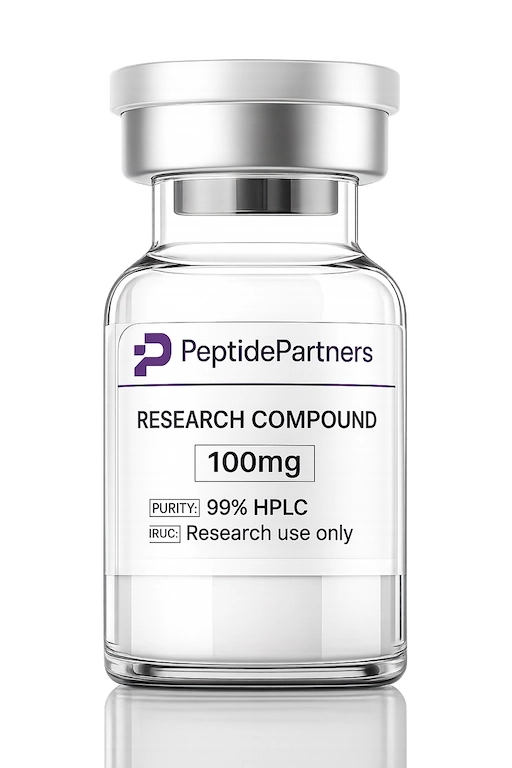
Cagrilintide (10mg (10,000 mcg) vials)

At-Home Blood Test
Research Supplies
Tirzepatide Vials
Once-weekly dosing, titrated upward. A 10 mg (10,000 mcg) vial holds four 2.5 mg (2,500 mcg) doses or one 10 mg (10,000 mcg) dose. It cannot supply a full 15 mg (15,000 mcg) dose. 30 mg (30,000 mcg) vials are common at maintenance.
| Cycle length | Planning note |
|---|---|
16 weeks (titration phase) At least 8 x 10 mg (10,000 mcg) vials | 2.5 → 5 → 7.5 mg (2,500 → 5,000 → 7,500 mcg) weekly through Week 16; ~80 mg (80,000 mcg) total used. |
24 weeks (full titration) At least 6 x 30 mg (30,000 mcg) or 17 x 10 mg (10,000 mcg) vials | 170 mg (170,000 mcg) total through week 24; count is by total amount. |
48 weeks (titration + maintenance) At least 53 x 10 mg (10,000 mcg) or 18 x 30 mg (30,000 mcg) vials | 530 mg (530,000 mcg) total through week 48; count is by total amount. |
Cagrilintide Vials
Cagrilintide starts at Week 9 in the staggered approach. A 10 mg (10,000 mcg) vial covers ~4 weeks at maintenance dose (2.4 mg/week (2,400 mcg/week)).
| Cycle length | Planning note |
|---|---|
16 weeks (cag from Week 9) 1 x 5 mg (5,000 mcg) vial | Only 8 weeks of cagrilintide at low doses; minimal use. |
24 weeks At least 2 x 10 mg (10,000 mcg) vials | 13.8 mg (13,800 mcg) total through week 24; count is by total amount. |
48 weeks At least 8 x 10 mg (10,000 mcg) vials | 71.4 mg (71,400 mcg) total through week 48; count is by total amount. |
Insulin Syringes (U-100)
A 15 mg (15,000 mcg) tirzepatide draw at 10 mg/mL (10,000 mcg/mL) is 1.5 mL (150 units), which exceeds a 1 mL syringe. A 0.3 mL syringe holds up to 30 units; some cagrilintide draws listed above exceed that.
| Cycle length | Planning note |
|---|---|
16 weeks At least 24 syringes | 16 tirzepatide + 8 cagrilintide injections; add more if a draw is split. |
24 weeks ~40 syringes | Two injections per week from Week 9 onward. |
48 weeks At least 88 syringes | 48 tirzepatide + 40 cagrilintide injections; add more if a draw is split. |
Bacteriostatic Water
Each vial is reconstituted separately. Plan around the 28-30 day stability window for both compounds.
| Cycle length | Planning note |
|---|---|
16-48 weeks Calculate from the full vial count | Multiply the number of vials by the BAC water added to each. Allow extra for fresh vials and losses. |
Round up for priming losses, dropped syringes, damaged swabs, and any protocol adjustments. Both vials are stable for 28-30 days at 2-8 °C once reconstituted, so plan vial sizes around 4-week use.
Companion Supplies & Routine Support
Cagrilintide + Tirzepatide Dosage Chart
This Cagrilintide + Tirzepatide dosage chart summarizes the staggered tirzepatide and cagrilintide weekly titration phases shown in the dosing section above.
 UNIVERSITY OF PEPTIDE · RESEARCH REFERENCE
Cagrilintide + Tirzepatide Dosage Chart
| Phase | Weeks | Tirzepatide | Cagrilintide | Notes |
|---|---|---|---|---|
| Tirz initiation | 1-4 | 2.5 mg/week (2,500 mcg/week) | Not started | Confirm tirzepatide GI tolerance first. |
| Tirz escalation 1 | 5-8 | 5.0 mg/week (5,000 mcg/week) | Not started | Continue tirzepatide alone. |
| Cag introduction | 9-12 | 5.0 mg/week (5,000 mcg/week) (hold) | 0.25 mg/week (250 mcg/week) | Add cagrilintide at the lowest dose. Hold tirz steady. |
| Dual escalation 1 | 13-16 | 7.5 mg/week (7,500 mcg/week) | 0.5 mg/week (500 mcg/week) | GI side effects often peak here. |
| Dual escalation 2 | 17-20 | 10.0 mg/week (10,000 mcg/week) | 1.0 mg/week (1,000 mcg/week) | Both compounds step up. |
| Dual escalation 3 | 21-24 | 12.5 mg/week (12,500 mcg/week) | 1.7 mg/week (1,700 mcg/week) | Approach maintenance. |
| Maintenance | 25+ | 15.0 mg/week (15,000 mcg/week) | 2.4 mg/week (2,400 mcg/week) | Full 3-receptor coverage if tolerated. |
Cagrilintide + Tirzepatide Reconstitution Guide
Each vial is reconstituted on its own. The math below mirrors the Tirzepatide protocol page and the Cagrilintide protocol page so the numbers match across the site.
Label every vial
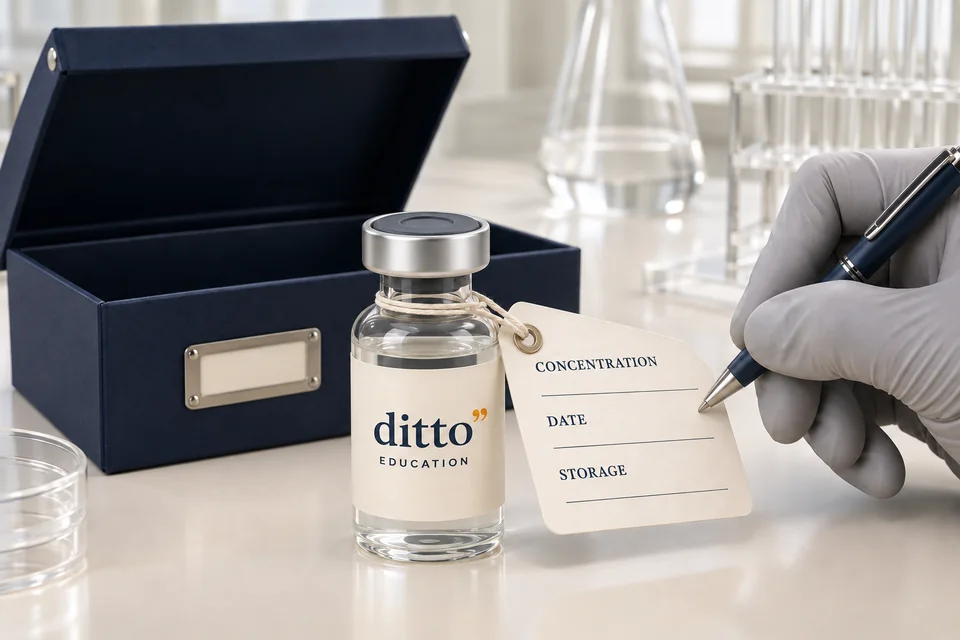
Both compounds use U-100 insulin syringes. A draw error matters - 0.5 mL at tirzepatide 10 mg/mL (10,000 mcg/mL) is 5 mg (5,000 mcg) of tirzepatide. The same volume at cagrilintide 2.5 mg/mL (2,500 mcg/mL) is only 1.25 mg (1,250 mcg) of cagrilintide. The compounds are dosed at very different scales. Label each vial with the compound name, concentration, and reconstitution date.
Tirzepatide Reconstitution Math
Tirzepatide - dose per draw at common vial sizes
| Vial Size | BAC Water | Concentration | 2.5 mg (2,500 mcg) | 5 mg (5,000 mcg) | 10 mg (10,000 mcg) | 15 mg (15,000 mcg) |
|---|---|---|---|---|---|---|
| 5 mg (5,000 mcg) | 1.0 mL | 5 mg/mL (5,000 mcg/mL) | 0.50 mL (50 units) | 1.00 mL (100 units) | N/A | N/A |
| 10 mg (10,000 mcg) | 2.0 mL | 5 mg/mL (5,000 mcg/mL) | 0.50 mL (50 units) | 1.00 mL (100 units) | 2.00 mL (200 units*) | N/A |
| 10 mg (10,000 mcg) | 1.0 mL | 10 mg/mL (10,000 mcg/mL) | 0.25 mL (25 units) | 0.50 mL (50 units) | 1.00 mL (100 units) | N/A |
| 30 mg (30,000 mcg) | 3.0 mL | 10 mg/mL (10,000 mcg/mL) | 0.25 mL (25 units) | 0.50 mL (50 units) | 1.00 mL (100 units) | 1.50 mL (150 units*) |
* Volumes above 100 units exceed a standard 1 mL insulin syringe.
Cagrilintide Reconstitution Math
Cagrilintide - dose per draw at common vial sizes
| Vial Size | BAC Water | Concentration | 0.25 mg (250 mcg) | 0.5 mg (500 mcg) | 1.0 mg (1,000 mcg) | 2.4 mg (2,400 mcg) |
|---|---|---|---|---|---|---|
| 5 mg (5,000 mcg) | 2.0 mL | 2.5 mg/mL (2,500 mcg/mL) | 0.10 mL (10 units) | 0.20 mL (20 units) | 0.40 mL (40 units) | 0.96 mL (96 units) |
| 10 mg (10,000 mcg) | 2.0 mL | 5.0 mg/mL (5,000 mcg/mL) | 0.05 mL (5 units) | 0.10 mL (10 units) | 0.20 mL (20 units) | 0.48 mL (48 units) |
| 10 mg (10,000 mcg) | 1.0 mL | 10.0 mg/mL (10,000 mcg/mL) | 0.025 mL (2.5 units) | 0.05 mL (5 units) | 0.10 mL (10 units) | 0.24 mL (24 units) |
Cagrilintide is sensitive - inject BAC water down the vial wall and swirl gently. Do not shake.
Math verification
Tirzepatide 10 mg (10,000 mcg) vial + 1.0 mL BAC → 10 mg/mL (10,000 mcg/mL). One 10 mg (10,000 mcg) vial cannot supply a 15 mg (15,000 mcg) dose. A 5 mg (5,000 mcg) dose = 0.50 mL (50 units). Cagrilintide 5 mg (5,000 mcg) vial + 2.0 mL BAC → 2.5 mg/mL (2,500 mcg/mL). A 2.4 mg (2,400 mcg) dose = 0.96 mL (96 units). 30 mg (30,000 mcg) tirzepatide vial + 3.0 mL BAC → 10 mg/mL (10,000 mcg/mL). A 15 mg (15,000 mcg) dose = 1.50 mL (150 units).
Pre-Blended Vials (Less Common)
A few suppliers sell pre-blended cag/tirz vials, usually at a 5 mg (5,000 mcg) cag + 5 mg (5,000 mcg) tirz ratio (10 mg (10,000 mcg) total) or similar. Pre-blends simplify handling but lock the ratio. Always verify the actual mg breakdown on the vial label before reconstituting - supplier brand names vary. For a 5/5 mg blend reconstituted with 2.0 mL BAC water, you get 2.5 mg/mL (2,500 mcg/mL) of each compound, so a 0.20 mL draw delivers 0.5 mg (500 mcg) cag + 0.5 mg (500 mcg) tirz.
Reconstituted Stability
Stability windows for both compounds
| Compound | Lyophilized | Reconstituted (2-8 °C) | Notes |
|---|---|---|---|
| Tirzepatide | 12+ months at -20 °C | 28-30 days | Standard for incretin-class peptides. |
| Cagrilintide | 12+ months at -20 °C | 28-30 days | Do not shake (amyloid fibril risk). Discard cloudy solution. |
Standard 7-Step Reconstitution
An illustrated reading aid for the product instructions. Confirm the exact formulation, diluent and handling method first. A research-only vial is not an approved medicine.

Check preparation conditions
Check the product instructions for the required preparation temperature. Do not warm a vial or change storage conditions based on a generic peptide guide.
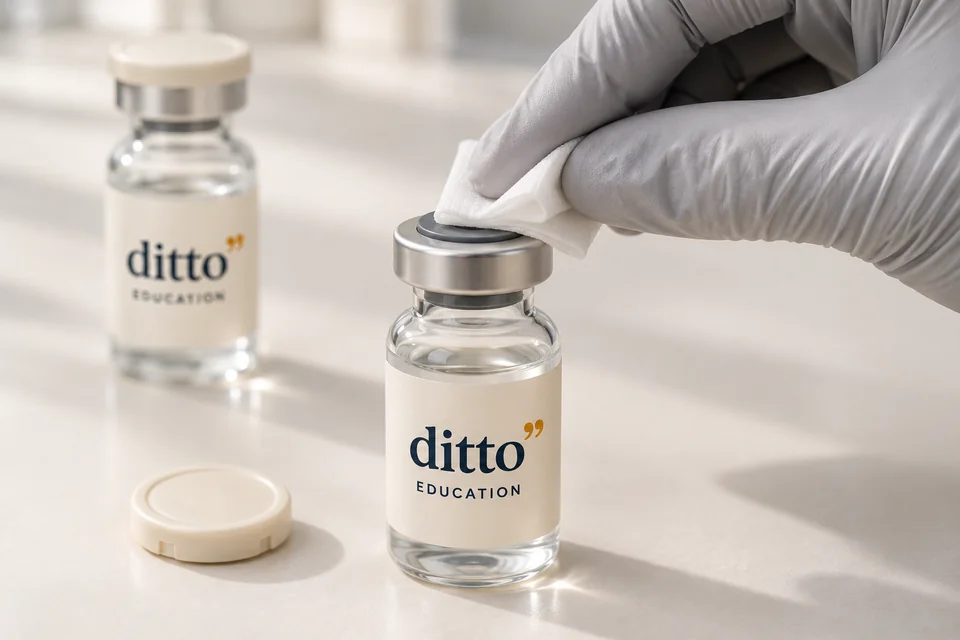
Clean the stopper
If the product instructions call for vial access, disinfect the exposed rubber stopper with a fresh alcohol swab and let it dry. Avoid touching it afterward; use sterile equipment for each access.
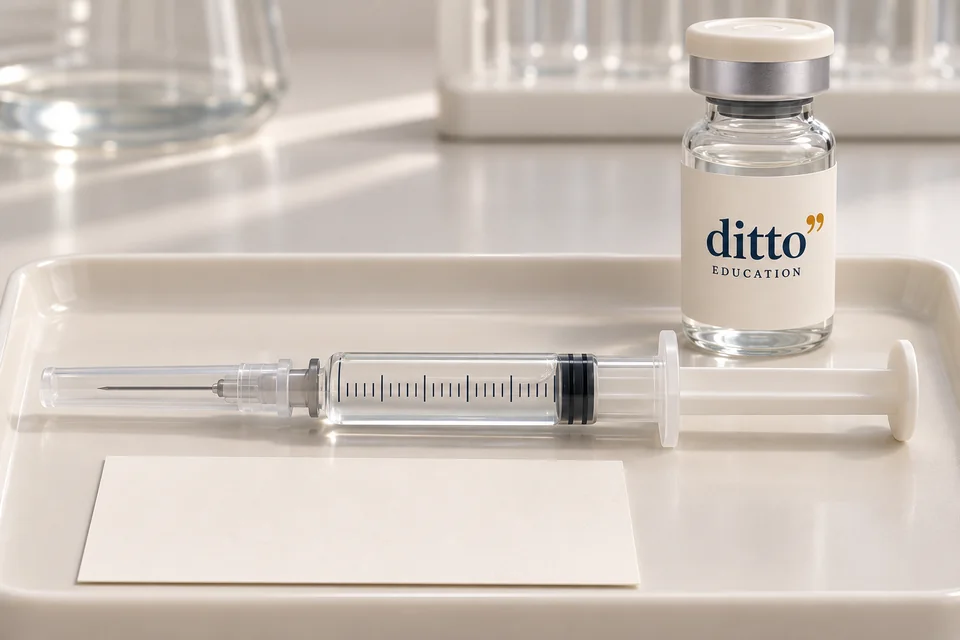
Measure the specified diluent
Confirm the diluent type and volume in the product instructions. Measure that volume using the correct syringe scale. A concentration calculation cannot establish that a diluent is compatible.
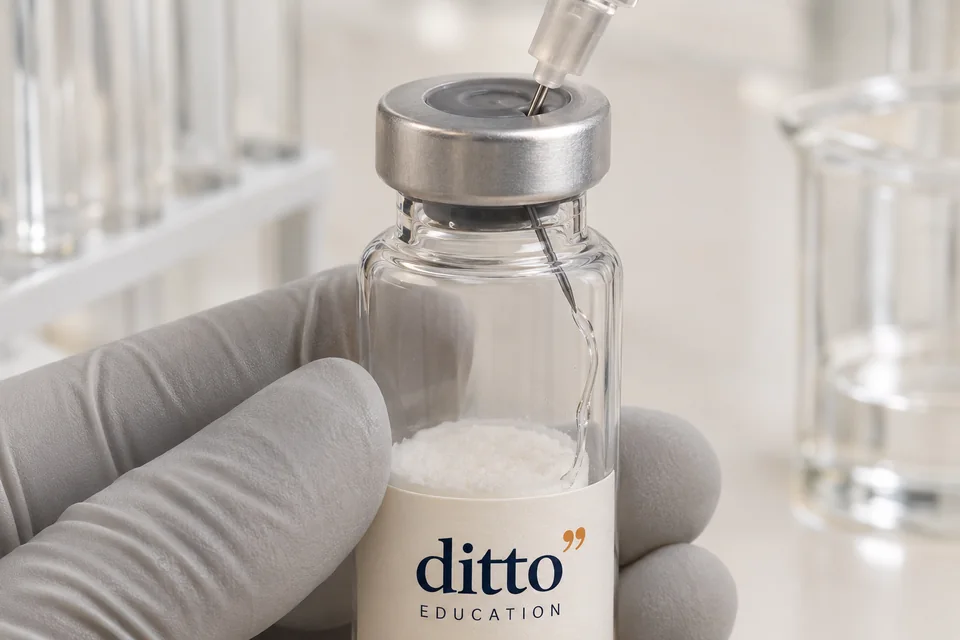
Add as instructed
Follow the product-specific addition method. Where slow addition along the vial wall is specified, keep the flow gentle. Do not infer a preparation method from a dose table or combine separate compounds in one vial.
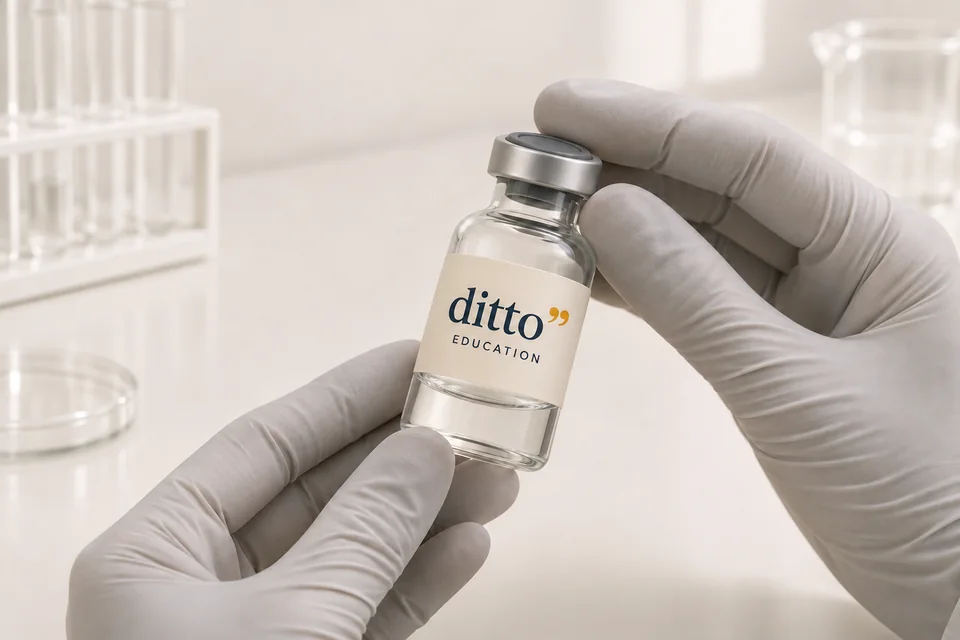
Mix and inspect
Use the mixing method specified for the product; some require gentle swirling rather than shaking. Compare the appearance with the instructions. Do not use a preparation with unexpected particles, discoloration or suspected contamination.
Mix and inspect
Use the mixing method specified for the product; some require gentle swirling rather than shaking. Compare the appearance with the instructions. Do not use a preparation with unexpected particles, discoloration or suspected contamination.
Record and store
Record the preparation date and calculated concentration in mg/mL and mcg/mL. Follow the exact storage conditions and discard time on the product instructions. There is no universal refrigerated shelf life for all peptides.
AI-generated educational scenes with Ditto-inspired concept labels; not photographs of supplied products. CDC preparation and equipment principles · Check your calculation
Calculator
Running two-compound math with different mg scales? Use the University of Peptide calculator and enter each compound separately for exact unit conversions.
Cagrilintide + Tirzepatide Side Effects & Safety
Each compound has its own safety profile. Tirzepatide has extensive Phase 3 and post-marketing safety data through Mounjaro and Zepbound. Cagrilintide has Phase 2 and CagriSema Phase 3 data. The exact combination has not been tested in humans, so the combined picture is built by adding each compound's known signals together.
Combined and Amplified Concerns
- Stacked GI side effects. Both compounds independently cause nausea, vomiting, diarrhea, and constipation - especially during dose increases. Running them together is expected to make these effects more frequent and more intense during the co-escalation phase (roughly weeks 9-20 in the staggered protocol). The staggered schedule is built to manage this; the archived review’s guide covers Supplier research references for GLP-1 users.
- Severely slowed digestion (gastroparesis risk). Both compounds slow gastric emptying through different pathways. Layering both can slow digestion more than either one alone. Reported signals include prolonged fullness, bloating, or worsening acid reflux after the second compound is added. This is the most important theoretical risk of this specific stack.
- Injection-site reactions. More commonly tied to cagrilintide than tirzepatide. Rotate sites consistently across abdomen, thigh, and flank.
- Gallbladder events. Rapid weight loss raises gallstone risk regardless of which compounds drive the loss. Persistent upper-right abdominal pain after eating should be evaluated by a clinician.
- Pancreatitis (class warning). Tirzepatide carries a standard GLP-1 class warning about pancreatitis. Severe, persistent abdominal pain - especially pain that radiates to the back - is a reason to stop and seek medical attention.
- Sourcing quality. Tirzepatide can be obtained as an FDA-approved prescription drug (Mounjaro / Zepbound) or as research-use material. Cagrilintide is research-use only. Sourcing both from research-grade suppliers raises contamination and label-accuracy risk. Verify both vials against a third-party COA when using research-grade supply. See the COA reading worksheet.
Common Community-Reported Side Effects
- Nausea, vomiting, diarrhea, constipation (worst during escalation steps).
- Injection-site redness or transient irritation (more common with cagrilintide).
- Mild fatigue during early titration.
- Strong appetite suppression - usually a feature, sometimes uncomfortable.
- Bloating or feeling overly full after small meals (delayed gastric emptying).
Contraindication Signals
Standard conservative practice excludes anyone with active gastrointestinal disease, type 1 diabetes, prior pancreatitis, medullary thyroid carcinoma history, or active cancer from any tirzepatide protocol. Adding cagrilintide raises the GI tolerance bar further.
When to reassess
If GI symptoms worsen instead of improving over the first 2-3 weeks of a step, if you cannot keep food down, or if you have severe persistent abdominal pain (especially with back radiation), pause and consult a qualified clinician. For broader stacking-safety context see the Evidence library.
Cagrilintide + Tirzepatide Clinical Evidence Context
Direct stack evidence
No published human trial has tested cagrilintide + tirzepatide together. One preclinical study (Valdecantos et al., ADA 2024) showed combination benefit in obese rats. Beyond that, the evidence is per-compound plus the CagriSema (cag + sema) Phase 3 data as the closest human analog.
Tirzepatide
FDA-approved as Mounjaro for type 2 diabetes (2022) and Zepbound for obesity (2023). SURMOUNT-1 (Jastreboff et al., NEJM 2022) reported 22.5% body weight loss at 72 weeks at the 15 mg (15,000 mcg) dose. REDEFINE-4 reported about 25.5% at 84 weeks in a head-to-head trial. This is the strongest single-agent obesity drug currently approved.
See the Tirzepatide protocol page for the standalone reference.
Cagrilintide
Phase 2 monotherapy (Lau et al., Lancet 2021) reported about 10.8% weight loss at 26 weeks at 4.5 mg (4,500 mcg). Phase 3 CagriSema (Garvey et al., NEJM 2025; REDEFINE-1) reported about 22.7% weight loss at 68 weeks when paired with semaglutide. CagriSema's NDA was filed with FDA in December 2025.
See the Cagrilintide protocol page for the standalone reference.
Preclinical Combination Data
Valdecantos et al. (Diabetes 2024; 73 Suppl 1: 300-OR) gave cagrilintide and tirzepatide together to obese rats. At sub-maximal doses, the combination produced greater weight reduction than either compound alone. Some metabolic markers also improved. This is the only direct combination evidence published as of June 2026.
Combined Stack
In plain terms, this stack hits weight loss from three directions: reduced appetite (GLP-1), better insulin signaling (GIP), and stronger fullness (amylin). It covers more pathways than CagriSema (which is missing GIP) but fewer than cag + retatrutide (which adds glucagon). The combination has one preclinical synergy paper but no human trial data of its own.
Cagrilintide + Tirzepatide Storage & Handling
Storage Reference (Both Compounds)
| State | Tirzepatide | Cagrilintide |
|---|---|---|
| Lyophilized (long-term) | -4 °F (-20 °C), 12+ months | -4 °F (-20 °C), 12+ months |
| Lyophilized (short-term) | 35.6-46.4 °F (2-8 °C), several months | 35.6-46.4 °F (2-8 °C), several months |
| Reconstituted (liquid) | 35.6-46.4 °F (2-8 °C), 28-30 days | 35.6-46.4 °F (2-8 °C), 28-30 days |
| Color when reconstituted | Clear, colorless | Clear, colorless |
| Shake? | No - standard peptide handling | No - amyloid fibril risk |
| Light protection | Yes | Yes |
| Oral viable | No | No |
Both compounds share similar refrigerator windows. Cagrilintide is the more handling-sensitive of the two - never shake, and discard any cloudy solution.
Cagrilintide + Tirzepatide vs CagriSema vs Cagrilintide + Retatrutide
The two most common alternatives are CagriSema (the evidence-backed combination of cagrilintide + semaglutide) and cagrilintide + retatrutide (a broader but more speculative option). The table below shows how all three compare.
Receptor key: AMY = amylin receptors (fullness signaling). GLP-1R = appetite suppression. GIPR = insulin sensitivity / metabolic efficiency. GCGR = glucagon receptor (energy burn and fat oxidation).
How the cagrilintide + tirzepatide stack compares
| Feature | Cagrilintide + Tirzepatide | CagriSema (Cag + Sema) | Cagrilintide + Retatrutide |
|---|---|---|---|
| Components | Cagrilintide + Tirzepatide | Cagrilintide + Semaglutide | Cagrilintide + Retatrutide |
| Receptor coverage | AMY + GLP-1R + GIPR (3 families) | AMY + GLP-1R (2 families) | AMY + GLP-1R + GIPR + GCGR (4 families) |
| Combination clinical data | Preclinical only (Valdecantos 2024) | Phase 3 REDEFINE-1: ~22.7% at 68 weeks | None (fully speculative) |
| Best monotherapy result | Tirzepatide: 25.5% at 84 weeks | Semaglutide: ~14.9% at 68 weeks | Retatrutide: 28.7% at 68 weeks |
| GIP receptor | Yes (tirzepatide) | No | Yes (retatrutide) |
| Glucagon receptor | No | No | Yes (retatrutide) |
| Dysesthesia risk | No | No | Yes (retatrutide) |
| FDA-approved component | Yes (tirzepatide as Mounjaro / Zepbound) | Semaglutide approved; cag not | Neither approved |
| Injections per week | 2 (separate vials) | 1 or 2 | 2 (separate) or 1 (pre-blend) |
| Estimated grey-market cost | $500-$1,000/month | $500-$900/month | $600-$1,200/month |
Cost ranges reflect typical research-grade pricing as of June 2026 - verify supplier pricing before ordering. Tirzepatide cost varies a lot between research-grade and prescription Mounjaro / Zepbound channels.
Decision Guidance
- Choose cagrilintide + tirzepatide when you want the strongest single-agent base (tirzepatide is FDA-approved and outperforms semaglutide head-to-head) plus amylin layering. Good middle-ground option between CagriSema and cag + reta.
- Choose CagriSema when you want the strongest combination evidence. CagriSema is the only stack here with Phase 3 combo data and a pending FDA decision.
- Choose cagrilintide + retatrutide when you want maximum receptor coverage (four pathways instead of three) and you accept higher complexity and cost.
- Looking for a non-cagrilintide pairing? The retatrutide + MOTS-c stack swaps amylin satiety for mitochondrial AMPK support.
FAQ
Q1: Can you take cagrilintide and tirzepatide together?
Yes, but not on the same starting day. Standard community protocols run tirzepatide alone for the first 8 weeks (2.5 → 5 mg/week (2,500 → 5,000 mcg/week)) to confirm GI tolerance, then add cagrilintide at 0.25 mg/week (250 mcg/week) starting Week 9. Both compounds are once weekly. From Week 9 onward, most users dose both on the same day at different injection sites.
Q2: How much cagrilintide do you take with tirzepatide?
Most community protocols start cagrilintide at 0.25 mg/week (250 mcg/week) once tirzepatide is established, then step up every 4 weeks to 0.5, 1.0, 1.7, and 2.4 mg/week (2,400 mcg/week). Tirzepatide titrates separately from 2.5 mg (2,500 mcg) up to 15 mg/week (15,000 mcg/week). The full staggered schedule is in the dosing section.
Q3: How far apart should I inject cagrilintide and tirzepatide?
Most users inject both on the same day, a few minutes apart at different sites. There is no required time gap. Same day is simpler, but some users split them - tirzepatide Monday and cagrilintide Thursday - to spread out GI side effects during titration. Both compounds have half-lives around 5-8 days, so splitting by a few days does not change overall coverage much.
Q4: Can I inject cagrilintide and tirzepatide at the same port (same injection site)?
No. Use different injection sites for each compound - for example, tirzepatide in the abdomen and cagrilintide in the thigh or upper arm. Different sites reduce local irritation, lower the risk of stacked injection-site reactions, and help you tell which compound is causing any reaction. Never mix the two compounds in one syringe.
Q5: Can I inject cagrilintide and tirzepatide at the same time?
Yes - same time on the same day at different sites is the standard pattern. Most users inject one right after the other. There is no need to wait between injections.
Q6: Can I add cagrilintide after my second dose of tirzepatide?
Most community protocols wait longer than that - typically 8 weeks of tirzepatide alone before adding cagrilintide. Two doses is only 2 weeks in, which is not enough time to confirm GI tolerance or to settle into your titration step. Adding the second compound too early often leads to intense nausea and a forced step-down on one or both compounds.
Q7: When does cagrilintide appetite suppression kick in?
Cagrilintide has a long half-life (about 7-8 days), so it takes time to build up. Most users report noticeable appetite suppression by Week 2-3 after starting it. Some report changes within the first week. At the starting 0.25 mg/week (250 mcg/week) dose, effects are usually mild. Stronger satiety effects typically appear after stepping up to 0.5-1.0 mg/week (500-1,000 mcg/week).
Q8: What is in a 5 mg (5,000 mcg) / 5 mg (5,000 mcg) cag/tirz blend vial?
A typical 5/5 pre-blend contains 5 mg (5,000 mcg) cagrilintide + 5 mg (5,000 mcg) tirzepatide = 10 mg (10,000 mcg) total in one vial. Reconstituted with 2.0 mL bacteriostatic water, this gives 2.5 mg/mL (2,500 mcg/mL) of each compound. A 0.20 mL draw delivers 0.5 mg (500 mcg) cag + 0.5 mg (500 mcg) tirz. Pre-blends are less common for this stack than for cag/reta - separate vials are the standard.
Q9: How do you reconstitute cagrilintide and tirzepatide?
Reconstitute each vial separately with bacteriostatic water. A common setup is tirzepatide 10 mg (10,000 mcg) + 1.0 mL BAC (= 10 mg/mL (10,000 mcg/mL); a 5 mg (5,000 mcg) dose = 0.50 mL = 50 units on a U-100 syringe) and cagrilintide 5 mg (5,000 mcg) + 2.0 mL BAC (= 2.5 mg/mL (2,500 mcg/mL); a 1 mg (1,000 mcg) dose = 0.40 mL = 40 units). Inject BAC water slowly down the vial wall and swirl gently - never shake cagrilintide. Use the University of Peptide calculator for any custom vial size.
Q10: Is there any combination data for cagrilintide + tirzepatide?
Yes - one preclinical study. Valdecantos et al. (Diabetes 2024) gave both compounds to obese rats. The combination produced greater weight loss than either compound alone at sub-maximal doses. No human trial has tested the combination as of June 2026. CagriSema (cagrilintide + semaglutide) is the closest human analog with Phase 3 data.
Q11: How does this stack compare to CagriSema?
CagriSema pairs cagrilintide with semaglutide (a GLP-1-only drug). It has Phase 3 REDEFINE-1 data showing about 22.7% weight loss at 68 weeks, and an NDA was filed with FDA in December 2025. Cagrilintide + tirzepatide swaps semaglutide for tirzepatide, which adds GIP receptor activity. The cag + tirz combination covers three pathways instead of two, but it has no human trial data of its own.
Q12: What are the side effects of the cagrilintide + tirzepatide stack?
The biggest one is stacked GI side effects - nausea, vomiting, diarrhea, and constipation - because both compounds slow digestion. Cagrilintide is more likely to cause injection-site reactions. Tirzepatide carries a standard GLP-1 class warning for pancreatitis. Rapid weight loss raises gallstone risk. See the side effects section for the full breakdown.
Q13: How long should I run this stack?
Most community protocols use a 24-week staggered titration to reach maintenance, then run open-ended at maintenance with periodic re-evaluation. Tirzepatide trials (SURMOUNT-1) lasted 72 weeks. Some users cycle 16-24 weeks on, 4-8 weeks off. No validated cycle length exists for the combination specifically.
Q14: Can I use prescription Mounjaro or Zepbound with research-grade cagrilintide?
Theoretically yes - tirzepatide is the same active ingredient whether it is prescription (Mounjaro / Zepbound) or research-use. Some users pair their prescription tirzepatide with research-grade cagrilintide. This is an off-label combination that has not been studied directly. Talk to a qualified clinician before doing this, especially if your tirzepatide is prescribed for a specific condition.
Q15: Can I combine this stack with semaglutide, retatrutide, or pramlintide?
Generally no. Tirzepatide already covers GLP-1 (so semaglutide adds redundancy). Retatrutide also covers GLP-1 and GIP (the same receptors tirzepatide hits), so it overlaps. Pramlintide is a short-acting amylin analog, which cagrilintide already covers as a long-acting version. None of these adds new pathway coverage - they just stack side effects.
Q16: Is this medical advice?
No. Everything on this page is for educational and research-reference purposes only. Tirzepatide is FDA-approved (Mounjaro 2022, Zepbound 2023), but this specific combination with cagrilintide is not. Cagrilintide is investigational only as of June 2026. Consult a qualified healthcare provider before pursuing any peptide protocol.
Sources & Research
- Valdecantos P, Rada P, Ghosh S, Rondinone CM, Valverde AM. 300-OR: Beneficial Effect of the Combination Therapy of Cagrilintide, a Dual Amylin/Calcitonin Agonist, and Tirzepatide, a Dual GLP-1/GIP Agonist, on Body Weight Loss in Obese Rats. Diabetes (2024)
- Garvey WT, et al. Coadministered Cagrilintide and Semaglutide in Adults with Overweight or Obesity. New England Journal of Medicine (2025)
- Jastreboff AM, Aronne LJ, Ahmad NN, et al. Tirzepatide Once Weekly for the Treatment of Obesity. New England Journal of Medicine (2022)
- Lau DCW, Erichsen L, Francisco AM, et al. Once-weekly cagrilintide for weight management in people with overweight and obesity. The Lancet (2021)
- Enebo LB, Berthelsen KK, Kankam M, et al. Safety, tolerability, pharmacokinetics, and pharmacodynamics of concomitant administration of multiple doses of cagrilintide with semaglutide 2.4 mg. The Lancet (2021)
- Kruse T, Dahl K, Schaffer L, et al. Development of Cagrilintide, a Long-Acting Amylin Analogue. Journal of Medicinal Chemistry (2021)
- Garvey WT, Frias JP, Jastreboff AM, et al. Tirzepatide once weekly for the treatment of obesity in people with type 2 diabetes (SURMOUNT-2). The Lancet (2023)
- Dutta D, et al. Efficacy and Safety of Cagrilintide Alone and in Combination with Semaglutide as Anti-Obesity Medications: A Systematic Review and Meta-Analysis. Indian Journal of Endocrinology and Metabolism (2024)
- U.S. Food and Drug Administration FDA Approves New Medication for Chronic Weight Management (Zepbound / tirzepatide). FDA.gov (2023)
- Fletcher MM, et al. Structural and dynamic features of cagrilintide binding to calcitonin and amylin receptors. Nature Communications (2025)
- ClinicalTrials.gov REDEFINE 1 - Cagrilintide and Semaglutide in Adults with Overweight or Obesity. NCT05567796. ClinicalTrials.gov (2025)
- ClinicalTrials.gov SURMOUNT-1 - Tirzepatide Once Weekly in Adults with Obesity. NCT04184622. ClinicalTrials.gov (2022)
Related Dosing Protocols
Reconstitution calculator
Enter your own values. This tool calculates quantities, not a recommended dose.
Check the concentration
Changing the unit keeps the entered mass equivalent. 1 milligram (mg) = 1,000 micrograms (mcg). This tool does not choose a target amount.
Biological IU (optional, product-specific)
Only enter a potency explicitly stated as IU per mg on the exact product label or reference. Do not enter the 100 from a U-100 syringe. No factor is assumed for any peptide.
Your result will appear here
Enter the mass, final solution volume and target mass, or load a fictional example.
Assumes accurate masses, final solution volume and even distribution. Blend arithmetic does not establish whether substances can be mixed. Read the formulas and assumptions.
Study findings, reported examples and supplier statements have different levels of evidence. Follow the citations and check the formulation, population and date before interpreting a number.
Editorial standards and corrections