On this page
TOOLS FOR THIS GUIDE
Work with Cagrilintide
The guide name carries across. Amounts, dates and instructions remain yours to enter; opening a tool saves nothing.
Worked examples: calculations, records and source checks
Fictional arithmetic, unrelated to a recommended amount of Cagrilintide: 10 mg (10,000 mcg) in a final 2 mL is 5 mg/mL (5,000 mcg/mL). A target mass of 0.25 mg (250 mcg) corresponds to 0.05 mL, or 5 U-100 syringe markings. Biological IU cannot be inferred from these inputs. Neither the mass nor the liquid is a preparation recommendation.
Open the arithmetic example- Supply example: two 10 mg (10,000 mcg) vials start at 20 mg (20,000 mcg). Four recorded entries of 0.25 mg (250 mcg) leave a theoretical 19 mg (19,000 mcg), before losses or expiry. Skipped entries do not deduct stock.
- Measurement example: enter “Sleep duration”, “7.5”, “hours” and the date. Keep the same unit and note changing conditions. A trend does not prove a treatment effect.
- Source example: record “rat study” when rats were studied, even when the headline describes recovery. Keep the exact paper and its limitations.
The planner accepts mg and mcg. Biological IU/USP units, sprays, drops and variable mixtures need product-specific instructions; they cannot be inferred from a generic mass calculator. For stacks, record each known ingredient separately.
FDA: why concentration and unit errors matterEvidence & source checks
Did the specified two-drug treatment reduce weight compared with placebo?
Under the treatment-policy analysis, mean weight reduction was 20.4% with the combination and 3.0% with placebo. Gastrointestinal adverse events affected 79.6% versus 39.9% and were mainly transient and mild to moderate.
Limit: A controlled trial of this specified combination does not validate self-designed mixtures or additional stack ingredients.
Did this amylin analogue reduce weight when studied on its own?
In the analysis estimating continued treatment, mean weight reductions ranged from 6.0% to 10.8% across cagrilintide groups versus 3.0% with placebo. Gastrointestinal events and injection-site reactions were common.
Limit: The treatment period was short for a chronic condition.
What to verify before filling a plan
- Identity and formulation: match the name, sequence or active ingredient, route and strength. A related molecule or branded medicine is not automatically equivalent.
- Instruction source: obtain the actual amount, frequency and duration from qualified medical instructions. A community table or trial protocol does not establish an individual regimen.
- Units and product details: keep mass, liquid volume and biological activity units separate. Record batch, storage and discard instructions from the actual product; the tools cannot determine sterility or stability.
- Review and follow-up: list medicines and supplements, unresolved interactions and questions. Agree on relevant observations and actions with a qualified professional; normal measurements do not prove safety.
Selected source context, not a systematic review or medical approval. Study cards checked 24 November 2026; guide source notes checked 25 November 2026. Research references and citations appear below.
Guide summary
REFERENCE SUMMARY- Compound
- Cagrilintide (AM833 / NN9838)
- Class
- Long-acting amylin analogue (DACRA)
- Common format
- Lyophilized 5 mg (5,000 mcg) or 10 mg (10,000 mcg) vials, subcutaneous
- Regulatory status
- Investigational; not FDA-approved
Cagrilintide Quick Start
Cagrilintide is a once-weekly research peptide developed by Novo Nordisk. It is a long-acting analogue of amylin, the hormone the pancreas releases with insulin to signal fullness after eating. In plain English, cagrilintide is studied because it is designed to make people feel full sooner, stay full longer, and slow how fast the stomach empties.
This page focuses on cagrilintide-only research planning. The common standalone ladder starts at 0.25 mg (250 mcg) once weekly, escalates every 4 weeks, and reaches a 2.4 mg (2,400 mcg) weekly research-target dose from week 17 onward. The cagrilintide + semaglutide combination is covered separately on the CagriSema stack page.
- Route
- Subcutaneous injection, once weekly, on the same day each week.
- Half-life
- About 159 to 195 hours (~7 to 8 days), which is why it is dosed weekly.
- Vial sizes
- Most research suppliers list 5 mg (5,000 mcg) or 10 mg (10,000 mcg) lyophilized vials.
- Reconstitute
- BAC water added per vial; concentration depends on volume chosen.
- Research status
- Phase 3 complete for monotherapy and CagriSema; standalone not FDA-approved.
Disclaimer
This page is an educational research reference and is not medical advice. Cagrilintide is investigational. No content here should be interpreted as a treatment recommendation or as a substitute for qualified clinical care.
This page helps with dose planning, vial math, timing, and storage. For the wider research view, see the Cagrilintide guide on how it works, study results, side effects, and legal status.
Cagrilintide Dosing Protocol & Schedule
The cagrilintide-only dosing schedule below keeps the amylin analogue separate from CagriSema combination dosing. It uses a 16-week escalation ladder so tolerability can be reviewed before the 2.4 mg (2,400 mcg) weekly research-target dose.
Cagrilintide 16-Week Titration Schedule
| Phase | Weeks | Cagrilintide Dose | Purpose |
|---|---|---|---|
| Initiation | Weeks 1-4 | 0.25 mg/week (250 mcg/week) | GI adaptation; lowest tolerated dose |
| Step 2 | Weeks 5-8 | 0.5 mg/week (500 mcg/week) | Dose escalation |
| Step 3 | Weeks 9-12 | 1.0 mg/week (1,000 mcg/week) | GI side effects often peak here |
| Step 4 | Weeks 13-16 | 1.7 mg/week (1,700 mcg/week) | Approaching maintenance |
| Maintenance | Weeks 17+ | 2.4 mg/week (2,400 mcg/week) | Target dose used in late-stage study protocols |
Each step lasts 4 weeks. Researchers commonly hold a step longer if GI side effects are not tolerated rather than skip ahead. This cagrilintide-only table does not include semaglutide.
Earlier Phase 2 monotherapy work also studied higher weekly doses up to 4.5 mg (4,500 mcg), but the cagrilintide-only schedule above matches the 2.4 mg (2,400 mcg) weekly target shown throughout this page. For the cagrilintide + semaglutide combination, see the CagriSema stack.
Cycle Guidelines
Common Cagrilintide Research Cycle Lengths
| Approach | Duration | Review Point | Notes |
|---|---|---|---|
| Short cycle | 16 weeks | Week 16 | Ends before the week-17 maintenance dose. |
| Standard cycle | 26-32 weeks | Week 26 / 32 | Matches Phase 2 trial durations |
| Long cycle | 68 weeks | Week 68 | Matches REDEFINE 1 and REDEFINE 2 endpoints |
Cycle length is a research planning choice, not a treatment recommendation. Longer cycles match the published trial endpoints used to estimate weight-loss outcomes.
Missed dose: Because cagrilintide has a 7- to 8-day half-life, published label guidance describes taking a missed dose as soon as possible if the next scheduled dose is more than 3 days away, or skipping the missed dose if the next dose is closer than 3 days.
Need exact units for a custom vial size, BAC volume, or dose? Use the University of Peptide calculator.
Cagrilintide Supplies Needed
Counts follow the titration schedule above, with 2.4 mg (2,400 mcg) weekly from week 17. Vial counts are minimums by total amount.
Recommended Supply
Choose your region
Use discount code PEPPAL at Peptide Partners checkout. See why we love Peptide Partners.
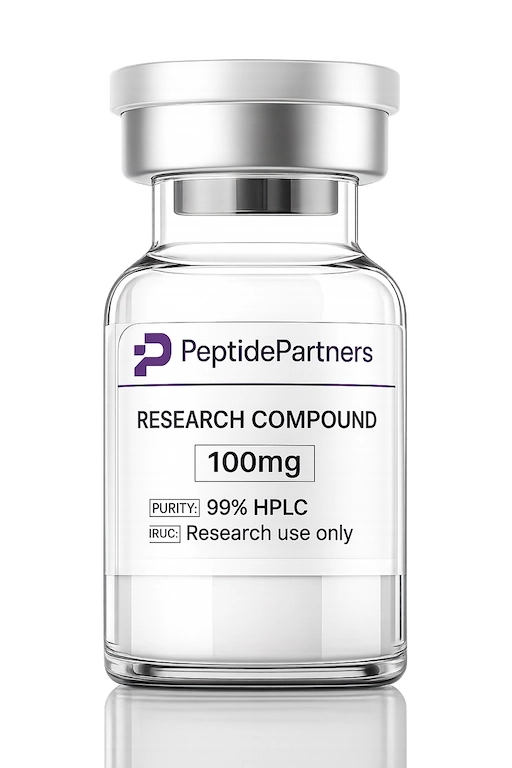
Cagrilintide (10mg (10,000 mcg) vials)

At-Home Blood Test
Research Supplies
Peptide Vials (5 mg (5,000 mcg) vial, 2.4 mg/week (2,400 mcg/week) target)
Each 5 mg (5,000 mcg) vial holds 2 full 2.4 mg (2,400 mcg) draws before losses. Counts below use the total amount across all titration steps.
| Cycle length | Planning note |
|---|---|
16 weeks At least 3 vials | 13.8 mg (13,800 mcg) total through week 16. |
26 weeks At least 8 vials | 37.8 mg (37,800 mcg) total through week 26. |
32 weeks At least 11 vials | 52.2 mg (52,200 mcg) total through week 32. |
68 weeks At least 28 vials | 138.6 mg (138,600 mcg) total through week 68. |
Peptide Vials (10 mg (10,000 mcg) vial, 2.4 mg/week (2,400 mcg/week) target)
Each 10 mg (10,000 mcg) vial holds 4 full 2.4 mg (2,400 mcg) draws before losses. Counts below use the total amount across all titration steps.
| Cycle length | Planning note |
|---|---|
16 weeks At least 2 vials | 13.8 mg (13,800 mcg) total through week 16. |
26 weeks At least 4 vials | 37.8 mg (37,800 mcg) total through week 26. |
32 weeks At least 6 vials | 52.2 mg (52,200 mcg) total through week 32. |
68 weeks At least 14 vials | 138.6 mg (138,600 mcg) total through week 68. |
Insulin Syringes (U-100, 1 mL)
One syringe per weekly injection. 1 mL syringe is preferred at 2.4 mg (2,400 mcg) with 2.5 mg/mL (2,500 mcg/mL) since 0.5 mL syringes cap below the 0.96 mL draw.
| Cycle length | Planning note |
|---|---|
16 weeks 16 syringes | 1 syringe per weekly injection |
26 weeks 26 syringes | 1 syringe per weekly injection |
32 weeks 32 syringes | 1 syringe per weekly injection |
68 weeks 68 syringes | 1 box of 100 covers a long cycle |
Bacteriostatic Water (10 mL bottles)
Volume totals use 2.0 mL per 5 mg (5,000 mcg) vial or 3.0 mL per 10 mg (10,000 mcg) vial, following the minimum vial counts above.
| Cycle length | Planning note |
|---|---|
16 weeks 1 x 10 mL bottle | 6 mL for 5 mg (5,000 mcg) vials; 6 mL for 10 mg (10,000 mcg) vials. |
26 weeks 2 x 10 mL bottles | 16 mL for 5 mg (5,000 mcg) vials; 12 mL for 10 mg (10,000 mcg) vials. |
32 weeks 3 bottles (5 mg (5,000 mcg)) / 2 bottles (10 mg (10,000 mcg)) | 22 mL for 5 mg (5,000 mcg) vials; 18 mL for 10 mg (10,000 mcg) vials. |
68 weeks 6 bottles (5 mg (5,000 mcg)) / 5 bottles (10 mg (10,000 mcg)) | 56 mL for 5 mg (5,000 mcg) vials; 42 mL for 10 mg (10,000 mcg) vials. |
Total-amount minima do not guarantee full draws from individual vials or usable storage life. Allow extra for leftover material, losses, and product-specific discard limits.
Companion Supplies & Routine Support
Cagrilintide Reconstitution Guide
Reconstitution is the process of mixing the lyophilized cagrilintide powder with bacteriostatic water (BAC water) so it becomes injectable. The volume of BAC water added decides the final concentration in mg/mL, which in turn decides the syringe draw volume for any target dose.
Common Cagrilintide Reconstitution Setups
| Vial Size | BAC Water | Concentration | 0.6 mg (600 mcg) Draw | 1.2 mg (1,200 mcg) Draw | 2.4 mg (2,400 mcg) Draw | 4.5 mg (4,500 mcg) Draw |
|---|---|---|---|---|---|---|
| 5 mg (5,000 mcg) | 2.0 mL | 2.5 mg/mL (2,500 mcg/mL) | 0.24 mL / 24 units | 0.48 mL / 48 units | 0.96 mL / 96 units | 1.80 mL / 180 units* |
| 5 mg (5,000 mcg) | 3.0 mL | 1.67 mg/mL (1,670 mcg/mL) | 0.36 mL / 36 units | 0.72 mL / 72 units | 1.44 mL / 144 units* | 2.70 mL / 270 units* |
| 10 mg (10,000 mcg) | 2.0 mL | 5.0 mg/mL (5,000 mcg/mL) | 0.12 mL / 12 units | 0.24 mL / 24 units | 0.48 mL / 48 units | 0.90 mL / 90 units |
| 10 mg (10,000 mcg) | 3.0 mL | 3.33 mg/mL (3,330 mcg/mL) | 0.18 mL / 18 units | 0.36 mL / 36 units | 0.72 mL / 72 units | 1.35 mL / 135 units* |
*Draws above 1.0 mL exceed standard 1 mL U-100 syringe capacity and may require a larger syringe or split injections. Units shown for U-100 insulin syringes.
7-Step Reconstitution Process
An illustrated reading aid for the product instructions. Confirm the exact formulation, diluent and handling method first. A research-only vial is not an approved medicine.

Check preparation conditions
Check the product instructions for the required preparation temperature. Do not warm a vial or change storage conditions based on a generic peptide guide.

Clean the stopper
If the product instructions call for vial access, disinfect the exposed rubber stopper with a fresh alcohol swab and let it dry. Avoid touching it afterward; use sterile equipment for each access.
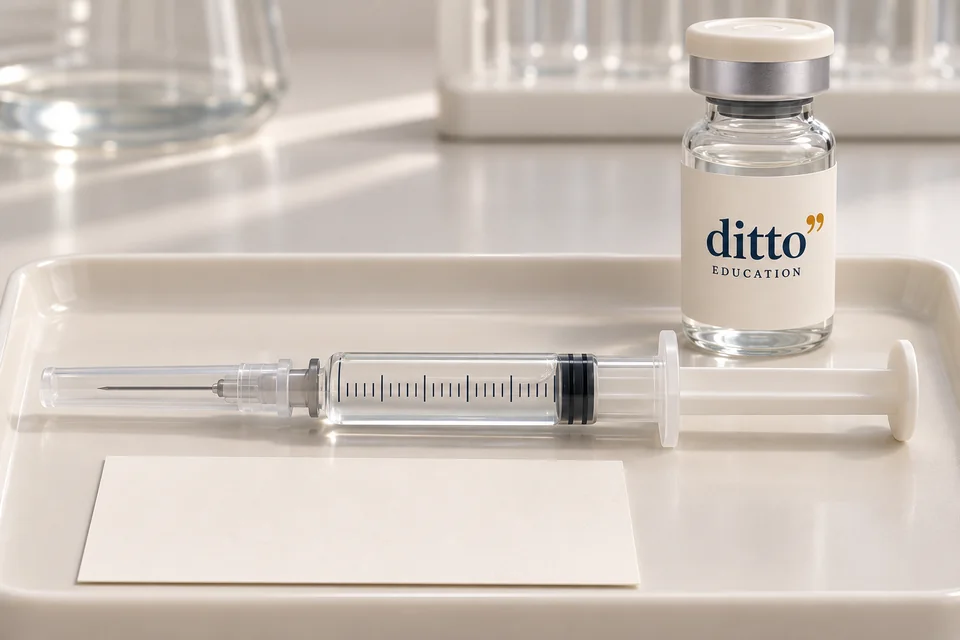
Measure the specified diluent
Confirm the diluent type and volume in the product instructions. Measure that volume using the correct syringe scale. A concentration calculation cannot establish that a diluent is compatible.

Add as instructed
Follow the product-specific addition method. Where slow addition along the vial wall is specified, keep the flow gentle. Do not infer a preparation method from a dose table or combine separate compounds in one vial.
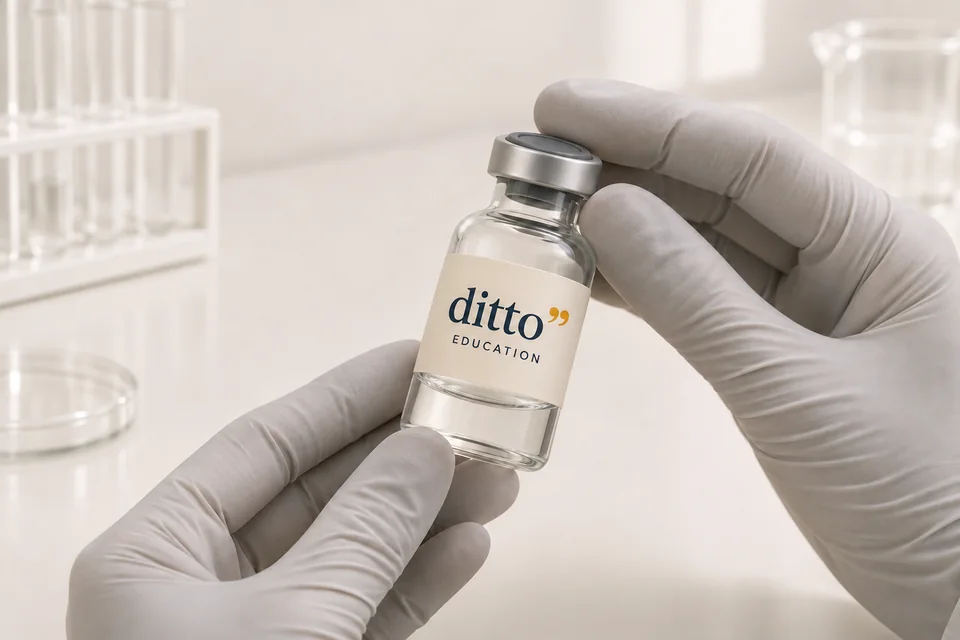
Mix and inspect
Use the mixing method specified for the product; some require gentle swirling rather than shaking. Compare the appearance with the instructions. Do not use a preparation with unexpected particles, discoloration or suspected contamination.
Mix and inspect
Use the mixing method specified for the product; some require gentle swirling rather than shaking. Compare the appearance with the instructions. Do not use a preparation with unexpected particles, discoloration or suspected contamination.
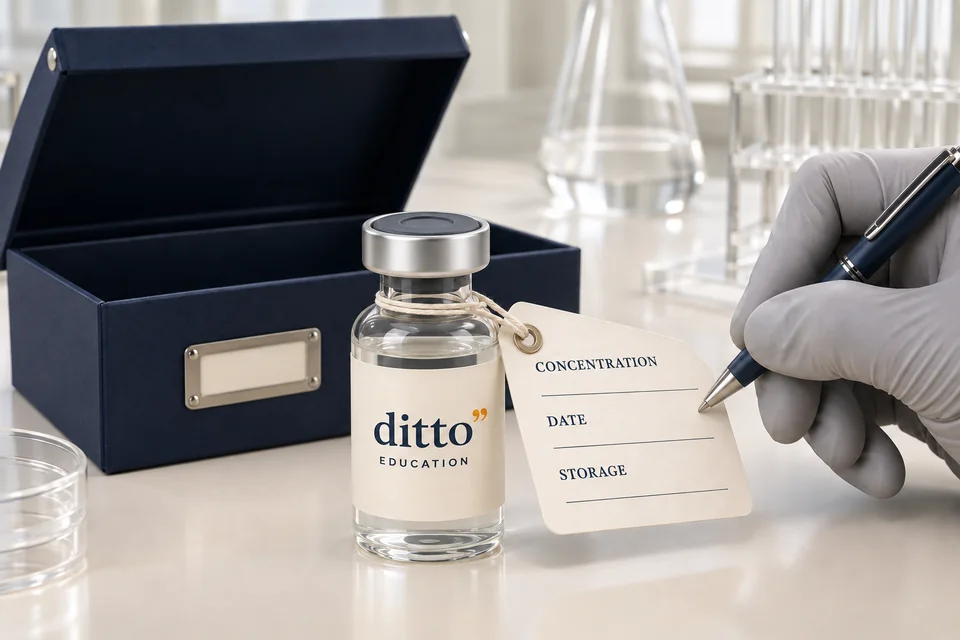
Record and store
Record the preparation date and calculated concentration in mg/mL and mcg/mL. Follow the exact storage conditions and discard time on the product instructions. There is no universal refrigerated shelf life for all peptides.
AI-generated educational scenes with Ditto-inspired concept labels; not photographs of supplied products. CDC preparation and equipment principles · Check your calculation
Need exact syringe units?
Use the University of Peptide calculator for any vial size, BAC volume, or target dose. Doses over 1.0 mL exceed the standard 1 mL U-100 syringe.
Cagrilintide Dosage Chart
This cagrilintide dosage chart summarizes the standalone 16-week titration ladder from 0.25 mg (250 mcg) weekly to the 2.4 mg (2,400 mcg) weekly research-target dose.
 UNIVERSITY OF PEPTIDE · RESEARCH REFERENCE
Cagrilintide Dosage Chart
| Phase | Weeks | Cagrilintide Dose | Purpose |
|---|---|---|---|
| Initiation | Weeks 1-4 | 0.25 mg/week (250 mcg/week) | GI adaptation; lowest tolerated dose |
| Step 2 | Weeks 5-8 | 0.5 mg/week (500 mcg/week) | Dose escalation |
| Step 3 | Weeks 9-12 | 1.0 mg/week (1,000 mcg/week) | GI side effects often peak here |
| Step 4 | Weeks 13-16 | 1.7 mg/week (1,700 mcg/week) | Approaching maintenance |
| Maintenance | Weeks 17+ | 2.4 mg/week (2,400 mcg/week) | Target dose used in late-stage study protocols |
How Cagrilintide Works
Cagrilintide mimics amylin, a hormone the pancreas releases with insulin to tell the brain that the body is full. The compound is engineered to last about 7-8 days in the body so it can be dosed once a week, instead of needing multiple injections like the natural hormone.
Pharmacologically, cagrilintide is a dual amylin and calcitonin receptor agonist (DACRA) — meaning it activates two related receptor systems at once.
Amylin Receptors (Brain): Satiety and Appetite
Amylin receptors are concentrated in brain regions that handle fullness signals, including the area postrema and hypothalamus. When cagrilintide activates them, appetite drops and the sensation of fullness lasts longer between meals. Animal evidence suggests this pathway also helps preserve lean mass during weight reduction, although the human data is still maturing.
Calcitonin Receptor (Gut): Slowed Gastric Emptying
The calcitonin receptor adds a second effect. It slows gastric emptying — meaning food leaves the stomach more slowly — which extends post-meal fullness. It is also linked to lower glucagon release after meals, which can improve glycemic stability.
Why Cagrilintide Pairs With GLP-1 Drugs
GLP-1 drugs (semaglutide, tirzepatide) act on a different receptor system that overlaps but is not identical to amylin signaling. Stacking the two creates additive appetite suppression rather than redundant signaling. This is the pharmacological basis for CagriSema: in REDEFINE 1, the combination produced 20.4% mean weight loss versus 11.8% for cagrilintide alone and 14.9% for semaglutide alone.
Who Cagrilintide Is For and Who Should Avoid It
Cagrilintide is investigational. It is studied in adults with overweight or obesity (BMI 27 or higher in REDEFINE 1) and in adults with type 2 diabetes (REDEFINE 2 and REIMAGINE 2). The published trials excluded several populations and conditions; that exclusion list is the most useful guide to who research planning should not include.
Excluded or Cautioned Populations in Phase 3 Trials
Phase 3 REDEFINE/REIMAGINE protocols typically excluded participants with: Type 1 diabetes; history of pancreatitis; severe gastroparesis; pregnancy or breastfeeding; recent major cardiovascular events; active malignancy; severe renal or hepatic impairment; personal or family history of medullary thyroid carcinoma or MEN2 (a class-level GLP-1 caution that may extend to combination products).
Medication Conflicts
Because cagrilintide slows gastric emptying, it can change how oral medications are absorbed. Drugs with narrow therapeutic windows (warfarin, levothyroxine, oral contraceptives, certain seizure medications) deserve clinician oversight. Insulin and other glucose-lowering drugs may need adjustment to reduce hypoglycemia risk.
Clinician oversight
Cagrilintide is not approved for individual self-administration. Anyone with metabolic, cardiac, GI, hepatic, or renal disease — or who is pregnant, breastfeeding, or planning pregnancy — should not consider it without licensed clinical care.
Cagrilintide Side Effects & Safety
Most side effects reported in cagrilintide trials are gastrointestinal and dose-dependent. They typically peak during dose escalation and ease as the body adapts to a stable dose.
Observed Side Effects (From Clinical Trials)
In the Lancet 2021 Phase 2 trial (n=706), at the highest 4.5 mg/week (4,500 mcg/week) dose, 88% of participants reported at least one side effect and 63% reported a GI-specific event. Across all doses, GI events were reported in 41-63% of cagrilintide groups versus 32% with placebo.
Phase 2 Side-Effect Frequencies at 4.5 mg/week (4,500 mcg/week) (Lancet 2021)
| Side Effect | Incidence at 4.5 mg/week (4,500 mcg/week) |
|---|---|
| Nausea | 47% |
| Injection-site reactions | 43% |
| Constipation | 21% |
| Fatigue | 20% |
| Allergic reactions (any) | 10% |
| Vomiting | 8% |
| Loose stools | 7% |
| Headache | 7% |
| Indigestion | 4% |
Incidence was lower at lower doses. Discontinuation due to adverse events was about 4% across all dose groups.
Less Common but Notable Findings
Gallstones
One Phase 2 participant at 4.5 mg/week (4,500 mcg/week) developed acute cholelithiasis (gallstones). Gallstone risk is a known class-level signal with rapid weight loss.
Anti-cagrilintide antibodies
46-73% of Phase 2 participants developed anti-cagrilintide antibodies by week 26. Phase 2 datasets did not show a clear effect on weight-loss efficacy or safety.
Cardiovascular safety
A thorough QT study found no clinically relevant QTc prolongation, even at supratherapeutic doses. Long-term cardiovascular outcomes are still being evaluated in REDEFINE 3.
Injection-site reactions
Mild redness or swelling at the injection site is common, especially during early titration. Rotating sites each week reduces local irritation.
Theoretical and Class-Level Risks
These have not been confirmed in cagrilintide trials but are flagged because they appear in related amylin or GLP-1 class data: pancreatitis, gallbladder disease, severe hypoglycemia (mainly when combined with insulin or sulfonylureas), and acute kidney injury secondary to dehydration from severe nausea or vomiting.
Cagrilintide Timeline & What to Monitor
Trial endpoints help set realistic expectations for what cagrilintide does and when. Most published outcomes are measured at 26 weeks (Phase 2) or 68 weeks (Phase 3 REDEFINE).
Trial-Reported Endpoints by Phase
| Trial | Duration | Population | Mean Weight Loss |
|---|---|---|---|
| Lancet 2021 Phase 2 | 26 weeks | Overweight/obese, no T2D (n=706) | 10.8% at 4.5 mg (4,500 mcg) vs 3.0% placebo |
| Lancet 2023 Phase 2 | 32 weeks | T2D + obesity (n=92) | 8.1% cagrilintide alone; 15.6% with semaglutide |
| REDEFINE 1 (NEJM 2025) | 68 weeks | Obesity, no T2D (n=3,417) | 11.8% cagrilintide alone; 20.4% CagriSema |
| REDEFINE 2 (NEJM 2025) | 68 weeks | T2D + BMI ≥27 (n=1,206) | 13.7% CagriSema vs 3.4% placebo; HbA1c down 1.91 pp |
Most trials report mean differences. Individual response varies widely.
What to Monitor During a Cycle
GI tolerance
Nausea, vomiting, constipation, diarrhea — most common during weeks 1-12 of escalation.
Body weight
Trial endpoints used weekly or monthly weights with a standardized scale.
Blood pressure
Both REDEFINE 1 and 2 reported reductions in systolic blood pressure.
Glycemic markers (if T2D)
Fasting glucose and HbA1c improved meaningfully in CagriSema arms; isolated cagrilintide had a smaller effect.
Gallbladder symptoms
Right upper-quadrant pain, especially after rapid weight loss, warrants clinical evaluation.
Injection-site condition
Lipodystrophy or persistent redness suggests rotating sites more aggressively.
Cagrilintide Clinical Evidence Context
Cagrilintide has unusually strong human evidence for a research-use peptide. The development program runs from Phase 1b through three completed Phase 3 readouts, with several more ongoing.
REDEFINE 1 (Phase 3a, NEJM 2025)
Garvey et al., n=3,417, 68 weeks. Cagrilintide monotherapy: 11.8% mean weight loss vs 2.3% placebo. CagriSema: 20.4% vs semaglutide 14.9%. Trial-product estimand.
REDEFINE 2 (Phase 3a, NEJM 2025)
Davies et al., n=1,206, 68 weeks, T2D + BMI ≥27. CagriSema: 13.7% body-weight reduction and 1.91 percentage-point HbA1c reduction vs placebo.
REDEFINE 4 (Phase 3, Feb 2026 readout)
Open-label vs tirzepatide. CagriSema: 23.0% at 84 weeks vs tirzepatide 15 mg (15,000 mcg): 25.5%. Noninferiority endpoint not met.
Lancet 2021 Phase 2 (monotherapy)
Lau et al., n=706, 26 weeks. Cagrilintide 0.3-4.5 mg (300-4,500 mcg) vs liraglutide 3 mg/day (3,000 mcg/day). 4.5 mg (4,500 mcg) arm: 10.8% mean loss; 2.4 mg (2,400 mcg) arm: 9.7%; liraglutide: 9.0%; placebo: 3.0%.
Lancet 2021 Phase 1b (cagri + sema)
Enebo et al., n=96, 20 weeks. Established additive effect of cagrilintide + semaglutide vs semaglutide alone (17.1% vs 9.8%).
Lancet 2023 Phase 2 (T2D)
Frias et al., n=92, 32 weeks. CagriSema: 15.6% weight loss and 2.2 pp HbA1c reduction. Cagrilintide alone: 8.1%. Semaglutide alone: 5.1%.
Mechanism and pharmacology
Kruse et al. (J Med Chem 2021) characterized the C-20 fatty diacid spacer that extends the half-life. Fletcher et al. (Nature Communications 2025) mapped cagrilintide binding to amylin and calcitonin receptors structurally.
Cardiovascular signal
Gabe et al. (Diabetes Obes Metab 2024) found no clinically relevant QTc prolongation. REDEFINE 3 cardiovascular outcomes trial is ongoing (~7,000 participants).
Evidence Gap
Long-term (multi-year) outcomes data is still maturing. The cardiovascular outcomes endpoint (REDEFINE 3) is event-driven and has not yet reported. Direct head-to-head data against tirzepatide showed CagriSema underperforming the highest tirzepatide dose at 84 weeks — meaning monotherapy claims of comparable efficacy are not supported by current Phase 3 evidence.
Cagrilintide Storage & Handling
Cagrilintide Storage Reference
| State | Storage | Duration |
|---|---|---|
| Lyophilized (powder) | -4F (-20C) freezer | Up to 24 months |
| Lyophilized (short-term) | 35.6-46.4F (2-8C) refrigerator | Acceptable for shipping or short storage |
| Reconstituted (liquid) | 35.6-46.4F (2-8C) refrigerator | 28-30 days; do not freeze |
Use the supplier's stability data if it is more conservative than the values above.
Cagrilintide shows the same clumping sensitivity seen with many amylin-class peptides. Avoid vigorous shaking during reconstitution, minimize moisture exposure of the lyophilized vial, protect the vial from light, and avoid repeated freeze-thaw cycles. Discard the vial if the solution becomes cloudy, discolored, or develops visible particles.
Cagrilintide Protocol Mistakes & Troubleshooting
Most cagrilintide issues are practical: missed doses, unclear vials, or GI side effects during titration. Below is a short list of the most common scenarios.
Missed dose, more than 3 days before next scheduled dose
Published label guidance describes taking a missed dose as soon as possible, then resuming the regular weekly schedule. Cagrilintide's 7- to 8-day half-life keeps blood levels relatively stable.
Missed dose, fewer than 3 days before next scheduled dose
Published label guidance describes skipping the missed dose and resuming the regular schedule rather than double-dosing to make up for it.
Cloudy or discolored vial after reconstitution
Discard the vial. Cagrilintide should be a clear, colorless solution. Cloudiness suggests aggregation or contamination.
Wrong BAC volume added
Recalculate concentration with the actual volume used. The amount of cagrilintide is unchanged; what changes is the draw volume per target dose.
Severe nausea or vomiting during escalation
Published trials held the dose rather than skipping titration steps, commonly maintaining the current dose for an additional 4 weeks before stepping up. If severe symptoms persist or worsen, qualified medical care is warranted.
Persistent injection-site redness or hardness
Site rotation is standard clinical guidance for persistent injection-site reactions; a clinician should evaluate ongoing irritation.
Right upper-quadrant abdominal pain
Gallstone risk increases with rapid weight loss. Persistent pain in the right upper abdomen requires medical evaluation, not protocol adjustment.
Cagrilintide Regulatory Status
As of June 2026, cagrilintide is investigational and is not FDA-approved in any form. Novo Nordisk filed a New Drug Application for the CagriSema combination (cagrilintide 2.4 mg (2,400 mcg) + semaglutide 2.4 mg (2,400 mcg)) in December 2025, with an FDA decision anticipated in late 2026. Cagrilintide as a standalone monotherapy is being evaluated in the RENEW Phase 3 program; no NDA has been filed for monotherapy at this time.
Internationally, similar regulatory timelines apply. The European Medicines Agency has not approved cagrilintide. Some Phase 3 trial sites are in Asia (REDEFINE 5, REDEFINE 6) but no regulatory approvals have been announced as of June 2026.
Research-use status: Cagrilintide is sold by research peptide suppliers as a lyophilized powder for in-vitro and laboratory research only. It is not approved for human use, compounding through 503A/503B pharmacies, or any clinical purpose outside of registered trials.
Status changes quickly
Regulatory status can change at any time. Verify the current FDA approval status before any research planning by checking the FDA website and ClinicalTrials.gov for the most recent CagriSema and cagrilintide entries.
Cagrilintide vs Semaglutide vs Tirzepatide vs Retatrutide
These compounds all reduce body weight, but they target different receptor systems and produce different magnitudes of effect. They are not interchangeable.
Side-by-Side Comparison
| Parameter | Cagrilintide | Semaglutide | Tirzepatide | Retatrutide |
|---|---|---|---|---|
| Receptors | AMY1R/2R/3R + CTR | GLP-1R | GLP-1R + GIPR | GLP-1R + GIPR + Glucagon-R |
| Half-life | ~7-8 days | ~7 days | ~5 days | ~6 days |
| Dosing frequency | Once weekly | Once weekly | Once weekly | Once weekly |
| Max studied dose | 4.5 mg/week (4,500 mcg/week) (mono) | 2.4 mg/week (2,400 mcg/week) | 15 mg/week (15,000 mcg/week) | 12 mg/week (12,000 mcg/week) |
| Peak monotherapy weight loss | 11.8% at 68 wk | 14.9-17% at 68 wk | 22.5% at 72 wk | ~24% at 48 wk |
| FDA status (June 2026) | Investigational | Approved (2021) | Approved (2023) | Investigational |
| HbA1c reduction (T2D) | ~0.9 pp mono; 1.91 pp CagriSema | 1.5-1.8 pp | 2.0-2.4 pp | 1.6-2.0 pp |
| Notable differentiator | Amylin pathway; additive with GLP-1 | Established CV outcomes | Highest single-agent obesity efficacy | Triple-agonist mechanism |
Numbers reflect published Phase 3 endpoints where available. CagriSema (cagrilintide + semaglutide) reached 20.4% in REDEFINE 1 and 23.0% in REDEFINE 4.
Cagrilintide alone trails semaglutide and tirzepatide in weight-loss magnitude. Its strongest practical use case is combination with semaglutide as CagriSema, where the amylin pathway adds to GLP-1 effects and the combined regimen reached 20.4% weight loss in REDEFINE 1. However, REDEFINE 4 (Feb 2026) found CagriSema did not meet noninferiority versus tirzepatide 15 mg (15,000 mcg) at 84 weeks.
For non-peptide oral options, see the tesofensine protocol, a centrally acting monoamine reuptake inhibitor used in some research-context fat-loss protocols. For the GLP-1 comparison head-to-heads, see the semaglutide protocol, tirzepatide protocol, and retatrutide protocol.
Cagrilintide Blood Tests & Monitoring
Cagrilintide is an amylin-analog research compound usually discussed in weight-loss and metabolic contexts. Monitoring focuses on glucose trends, kidney/liver context, lipids, and symptoms tied to reduced intake or GI effects.
Blood test markers to discuss with a clinician
| Marker | Why it matters | Timing |
|---|---|---|
| A1c | Shows the longer-term blood sugar trend before interpreting weight-loss or appetite changes. | Baseline |
| Fasting glucose | Helps review current glucose control, especially when appetite or food intake changes. | Follow-up |
| Comprehensive metabolic panel (CMP) | Reviews kidney function, liver enzymes, electrolytes, and glucose, which matter when GI symptoms or dehydration occur. | Baseline |
| Lipid panel | Tracks cholesterol and triglyceride changes during weight-loss phases. | Follow-up |
| Blood pressure and resting heart rate | Adds cardiovascular context during body-weight and appetite changes. | Optional |
Monitoring guidance is trial-informed and pathway-based because cagrilintide is not an approved stand-alone medication with a mature clinical monitoring label.
At-home blood test option
Easy at home option to monitor core metrics during research cycles.
Simple timing framework
- Baseline
- Discuss baseline labs before starting or escalating, especially with diabetes, kidney disease, gallbladder history, eating-disorder history, or major calorie restriction.
- Follow-up
- Repeat metabolic markers after 8-12 weeks or sooner if appetite, hydration, vomiting, or glucose symptoms change.
- Longer term
- For longer protocols, review metabolic and kidney trends every 3-6 months with a clinician.
How to interpret the labs
- GI symptoms and lower intake can affect hydration, electrolytes, and medication needs.
- Diabetes medications may need clinician review if glucose levels change with reduced intake.
- Routine labs do not replace review of abdominal pain, vomiting, gallbladder symptoms, or nutrition status.
Do not wait for routine labs
Severe or persistent abdominal pain, especially with vomiting, needs medical review. Signs of dehydration, fainting, confusion, or inability to keep fluids down should not wait for routine labs.
FAQ
Q1: What is the starting dose of cagrilintide?
It depends on the protocol format. CagriSema-style escalation starts at 0.25 mg (250 mcg) per week with semaglutide and steps up every 4 weeks (0.5, 1.0, 1.7, 2.4 mg (500, 1,000, 1,700, 2,400 mcg)) over 16 weeks. Monotherapy protocols are commonly initiated at 0.6 mg (600 mcg) per week and escalated to a maximum studied dose of 4.5 mg (4,500 mcg) as tolerated.
Q2: What is cagrilintide's half-life?
Plasma half-life is about 159-195 hours, or roughly 6.6-8.1 days. Around the 2.4 mg (2,400 mcg) dose, values near 184 hours have been reported in program summaries. This long half-life is what makes once-weekly dosing possible.
Q3: How much weight loss is reported with cagrilintide?
In REDEFINE 1 (NEJM 2025, n=3,417, 68 weeks), cagrilintide monotherapy at 2.4 mg (2,400 mcg) produced 11.8% mean body-weight reduction versus 2.3% with placebo. CagriSema (cagrilintide + semaglutide) reached 20.4% in the same trial. In Phase 2, monotherapy at 4.5 mg/week (4,500 mcg/week) reached 10.8% at 26 weeks. Individual response varies.
Q4: How do you reconstitute cagrilintide?
Reconstitute lyophilized cagrilintide with bacteriostatic water by injecting slowly down the inside wall of the vial, then gently swirl until the solution is clear. Do not shake. Common setups are a 5 mg (5,000 mcg) vial with 2.0 mL BAC water (2.5 mg/mL (2,500 mcg/mL)) or a 10 mg (10,000 mcg) vial with 3.0 mL (3.33 mg/mL (3,330 mcg/mL)). For exact unit conversion, use the University of Peptide calculator.
Q5: Is cagrilintide FDA-approved?
No. As of June 2026, cagrilintide is not FDA-approved in any form. Novo Nordisk filed an NDA for the CagriSema combination in December 2025, with an FDA decision anticipated in late 2026. Standalone cagrilintide (RENEW program) has no NDA filing yet.
Q6: What are the most common cagrilintide side effects?
The most common effects are gastrointestinal and dose-dependent. In the Lancet 2021 Phase 2 trial at 4.5 mg/week (4,500 mcg/week), nausea occurred in 47% of participants, injection-site reactions in 43%, constipation in 21%, and vomiting in 8%. Most events were mild to moderate and improved as the dose stabilized.
Q7: How does cagrilintide compare to semaglutide and tirzepatide?
Cagrilintide acts on amylin and calcitonin receptors; semaglutide acts on GLP-1; tirzepatide acts on GLP-1 and GIP. Monotherapy weight-loss magnitude follows tirzepatide (22.5%) > semaglutide (~17%) > cagrilintide (11.8%). Cagrilintide's strongest use is in combination — CagriSema (with semaglutide) reached 20.4% in REDEFINE 1, but did not reach noninferiority versus tirzepatide 15 mg (15,000 mcg) in REDEFINE 4.
Q8: What vial sizes are available for cagrilintide?
Most research suppliers list 5 mg (5,000 mcg) and 10 mg (10,000 mcg) lyophilized vials. At 2.4 mg/week (2,400 mcg/week), a 5 mg (5,000 mcg) vial covers about 2 weekly doses and a 10 mg (10,000 mcg) vial covers about 4, before accounting for priming losses.
Q9: How much bacteriostatic water should be added to a cagrilintide vial?
Volume depends on target concentration. Common reconstitutions are 5 mg (5,000 mcg) + 2.0 mL (2.5 mg/mL (2,500 mcg/mL)), 10 mg (10,000 mcg) + 3.0 mL (3.33 mg/mL (3,330 mcg/mL)), or 10 mg (10,000 mcg) + 2.0 mL (5.0 mg/mL (5,000 mcg/mL)). Use the University of Peptide calculator for exact unit conversions at any concentration.
Q10: What is the maximum cagrilintide dose studied?
The highest monotherapy dose studied is 4.5 mg (4,500 mcg) per week (Lancet 2021 Phase 2). The Phase 3 CagriSema program (REDEFINE 1, 2, REIMAGINE 2) capped cagrilintide at 2.4 mg (2,400 mcg) per week. REDEFINE 11, initiated June 2025, is exploring extended duration and re-escalation strategies.
Q11: How should reconstituted cagrilintide be stored?
Refrigerate at 2-8 degrees Celsius (35.6-46.4 degrees Fahrenheit), protected from light, and use within 28-30 days. Do not freeze the reconstituted solution. Discard the vial if it becomes cloudy, discolored, or develops particles.
Q12: What is the missed-dose rule for cagrilintide?
Because cagrilintide has a 7- to 8-day half-life, published label guidance describes taking a missed dose as soon as possible if the next scheduled dose is more than 3 days away, or skipping it if the next dose is closer than 3 days.
Q13: What is the current cagrilintide clinical trial program?
REDEFINE (obesity) and REIMAGINE (T2D) are the main Phase 3 programs, with REDEFINE 1, 2, and 4 already reported. REDEFINE 3 evaluates cardiovascular outcomes (~7,000 participants, event-driven). REDEFINE 11, initiated June 2025, tests extended treatment duration. RENEW is the planned monotherapy Phase 3 program.
Q14: Where can I calculate reconstitution and syringe units?
Use the University of Peptide calculator for any vial size, BAC volume, or target dose conversion to U-100 syringe units.
Q15: Where can I compare research peptide suppliers?
Browse our supplier reviews for current supplier listings, COA verification status, and discount codes.
Sources & Research
- Garvey WT, Blüher M, Osorto Contreras CK, et al. Coadministered Cagrilintide and Semaglutide in Adults with Overweight or Obesity (REDEFINE 1). New England Journal of Medicine (2025)
- Davies MJ, Bajaj HS, Broholm C, et al. Cagrilintide-Semaglutide in Adults with Overweight or Obesity and Type 2 Diabetes (REDEFINE 2). New England Journal of Medicine (2025)
- Lau DCW, Erichsen L, Francisco AM, et al. Once-weekly cagrilintide for weight management in people with overweight and obesity: a Phase 2 trial. The Lancet (2021)
- Enebo LB, Berthelsen KK, Kankam M, et al. Safety, tolerability, pharmacokinetics, and pharmacodynamics of cagrilintide with semaglutide for weight management: a Phase 1b trial. The Lancet (2021)
- Frias JP, Deenadayalan S, Erichsen L, et al. Efficacy and safety of co-administered once-weekly cagrilintide 2.4 mg with semaglutide 2.4 mg in type 2 diabetes: a Phase 2 trial. The Lancet (2023)
- Kruse T, Hansen JL, Dahl K, et al. Development of Cagrilintide, a Long-Acting Amylin Analogue. Journal of Medicinal Chemistry (2021)
- Fletcher MM, Belousoff MJ, Harikumar KG, et al. Structural and dynamic features of cagrilintide binding to calcitonin and amylin receptors. Nature Communications (2025)
- Dehestani B, Stratford NR, le Roux CW. Amylin as a Future Obesity Treatment. Journal of Obesity & Metabolic Syndrome (2021)
- Dutta D, Nagendra L, Harish BG, et al. Efficacy and Safety of Cagrilintide Alone and in Combination with Semaglutide (CagriSema) as Anti-Obesity Medications: A Systematic Review and Meta-Analysis. Indian Journal of Endocrinology and Metabolism (2024)
- D'Ascanio AM, Mullally JA, Frishman WH. Cagrilintide: A Long-Acting Amylin Analog for the Treatment of Obesity. Cardiology in Review (2024)
- Novo Nordisk (press release). CagriSema 2.4 mg / 2.4 mg demonstrated 22.7% mean weight reduction in adults with overweight or obesity in REDEFINE 1, published in NEJM. PR Newswire (2025)
- Novo Nordisk (press release). Novo Nordisk files for FDA approval of CagriSema (December 18, 2025). PR Newswire (2025)
- ClinicalTrials.gov. REDEFINE 1 (NCT05567796), REDEFINE 2 (NCT05394519), REDEFINE 3 (NCT05669755), REDEFINE 4 (NCT06131437), REDEFINE 11 (NCT07011667), REIMAGINE 2 (NCT06065540). U.S. National Library of Medicine (2026)
Related Dosing Protocols
Reconstitution calculator
Enter your own values. This tool calculates quantities, not a recommended dose.
Check the concentration
Changing the unit keeps the entered mass equivalent. 1 milligram (mg) = 1,000 micrograms (mcg). This tool does not choose a target amount.
Biological IU (optional, product-specific)
Only enter a potency explicitly stated as IU per mg on the exact product label or reference. Do not enter the 100 from a U-100 syringe. No factor is assumed for any peptide.
Your result will appear here
Enter the mass, final solution volume and target mass, or load a fictional example.
Assumes accurate masses, final solution volume and even distribution. Blend arithmetic does not establish whether substances can be mixed. Read the formulas and assumptions.
Study findings, reported examples and supplier statements have different levels of evidence. Follow the citations and check the formulation, population and date before interpreting a number.
Editorial standards and corrections