On this page
TOOLS FOR THIS GUIDE
Work with Tirzepatide
The guide name carries across. Amounts, dates and instructions remain yours to enter; opening a tool saves nothing.
Worked examples: calculations, records and source checks
Fictional arithmetic, unrelated to a recommended amount of Tirzepatide: 10 mg (10,000 mcg) in a final 2 mL is 5 mg/mL (5,000 mcg/mL). A target mass of 0.25 mg (250 mcg) corresponds to 0.05 mL, or 5 U-100 syringe markings. Biological IU cannot be inferred from these inputs. Neither the mass nor the liquid is a preparation recommendation.
Open the arithmetic example- Supply example: two 10 mg (10,000 mcg) vials start at 20 mg (20,000 mcg). Four recorded entries of 0.25 mg (250 mcg) leave a theoretical 19 mg (19,000 mcg), before losses or expiry. Skipped entries do not deduct stock.
- Measurement example: enter “Sleep duration”, “7.5”, “hours” and the date. Keep the same unit and note changing conditions. A trend does not prove a treatment effect.
- Source example: record “rat study” when rats were studied, even when the headline describes recovery. Keep the exact paper and its limitations.
The planner accepts mg and mcg. Biological IU/USP units, sprays, drops and variable mixtures need product-specific instructions; they cannot be inferred from a generic mass calculator. For stacks, record each known ingredient separately.
FDA: why concentration and unit errors matterEvidence & source checks
What happened when the two medicines were compared within the same trial?
Mean weight reduction was 20.2% with tirzepatide and 13.7% with semaglutide. Waist circumference also fell more with tirzepatide. Gastrointestinal adverse events were common in both groups.
Limit: Participants and investigators knew which drug was assigned.
How did weight change and tolerability compare with placebo?
Mean weight reductions across the tirzepatide groups ranged from 15.0% to 20.9%, compared with 3.1% with placebo. Gastrointestinal events were most common, mainly during escalation. Adverse events caused discontinuation more often in the active-treatment groups.
Limit: This is a placebo comparison, not evidence that tirzepatide outperforms every alternative.
What to verify before filling a plan
- Identity and formulation: match the name, sequence or active ingredient, route and strength. A related molecule or branded medicine is not automatically equivalent.
- Instruction source: obtain the actual amount, frequency and duration from qualified medical instructions. A community table or trial protocol does not establish an individual regimen.
- Units and product details: keep mass, liquid volume and biological activity units separate. Record batch, storage and discard instructions from the actual product; the tools cannot determine sterility or stability.
- Review and follow-up: list medicines and supplements, unresolved interactions and questions. Agree on relevant observations and actions with a qualified professional; normal measurements do not prove safety.
Selected source context, not a systematic review or medical approval. Study cards checked 24 November 2026; guide source notes checked 25 November 2026. Research references and citations appear below.
Guide summary
REFERENCE SUMMARY- Compound
- Tirzepatide (LY3298176)
- Class
- Dual GIP / GLP-1 receptor agonist
- Common format
- Subcutaneous, once weekly
- Regulatory status
- FDA-approved (Mounjaro, Zepbound)
Tirzepatide Quick Start
Disclaimer
This page is an educational research and dosing reference. It is not medical advice and does not replace guidance from a licensed clinician. Tirzepatide carries a boxed warning for thyroid C-cell tumors. Tirzepatide is contraindicated in people with a personal or family history of medullary thyroid carcinoma or MEN 2.
Tirzepatide is a once-weekly injection that activates two appetite and blood-sugar hormones at the same time: GIP and GLP-1. The single-target competitor most people know is semaglutide (Ozempic, Wegovy), which only activates GLP-1. Retatrutide goes one step further by adding glucagon receptor activity, but it remains investigational. Tirzepatide activates both GIP and GLP-1, which is why it is called a dual agonist.
Mounjaro and Zepbound contain tirzepatide, but their prescribing instructions differ. Mounjaro is approved for type 2 diabetes from age 10 and to reduce major cardiovascular events in adults with type 2 diabetes at high risk. Zepbound is approved for adult weight reduction and long-term maintenance, and for moderate-to-severe obstructive sleep apnea (OSA) in adults with obesity. Use the label for the exact brand, indication, and age group.
- Route
- Subcutaneous (under-the-skin) injection, once per week, on the same day each week.
- Dose ladder
- Adult Zepbound example: 2.5 → 5 → 7.5 → 10 → 12.5 → 15 mg (2,500 → 5,000 → 7,500 → 10,000 → 12,500 → 15,000 mcg) weekly. Later increases are optional, with at least 4 weeks at the current dose.
- Measure
- At an assumed 20 mg/mL (20,000 mcg/mL), 1 mg (1,000 mcg) equals 0.05 mL or 5 U-100 units. This is research-vial arithmetic, not a preparation or prescribing instruction.
- Supplies
- Research-vial supply totals are arithmetic only. Actual quantities depend on validated product-specific storage, discard dates, and losses.
- Research status
- FDA-approved drug as Mounjaro/Zepbound. Lyophilized research-use vials are a separate, non-FDA grey-market supply.
Mounjaro vs Zepbound at a glance
Tirzepatide labels by product and patient group (October 2026)
Active drug
Mounjaro
Tirzepatide
Zepbound
Tirzepatide
FDA indication
Mounjaro
Type 2 diabetes from age 10; major cardiovascular-event risk reduction in high-risk adults with T2D
Zepbound
Adult weight reduction and long-term maintenance; moderate-to-severe OSA in adults with obesity
First approved
Mounjaro
May 2022
Zepbound
November 2023
Dose selection
Mounjaro
Start at 2.5 mg (2,500 mcg) weekly; increase by 2.5 mg (2,500 mcg) after at least 4 weeks if additional glycemic control is needed
Zepbound
2.5 mg (2,500 mcg) weekly for 4 weeks, then 5 mg (5,000 mcg); further 2.5 mg (2,500 mcg) increases after at least 4 weeks as needed
Maintenance and maximum
Mounjaro
Adult maximum 15 mg (15,000 mcg) weekly; ages 10–17 maximum 10 mg (10,000 mcg) weekly. Adult maintenance is not restricted to 5/10/15 mg
Zepbound
Weight: 5, 10, or 15 mg (15,000 mcg) weekly. OSA: 10 or 15 mg (10,000 or 15,000 mcg) weekly. Adult maximum 15 mg (15,000 mcg)
| Mounjaro | Zepbound | |
|---|---|---|
| Active drug | Tirzepatide | Tirzepatide |
| FDA indication | Type 2 diabetes from age 10; major cardiovascular-event risk reduction in high-risk adults with T2D | Adult weight reduction and long-term maintenance; moderate-to-severe OSA in adults with obesity |
| First approved | May 2022 | November 2023 |
| Dose selection | Start at 2.5 mg (2,500 mcg) weekly; increase by 2.5 mg (2,500 mcg) after at least 4 weeks if additional glycemic control is needed | 2.5 mg (2,500 mcg) weekly for 4 weeks, then 5 mg (5,000 mcg); further 2.5 mg (2,500 mcg) increases after at least 4 weeks as needed |
| Maintenance and maximum | Adult maximum 15 mg (15,000 mcg) weekly; ages 10–17 maximum 10 mg (10,000 mcg) weekly. Adult maintenance is not restricted to 5/10/15 mg | Weight: 5, 10, or 15 mg (15,000 mcg) weekly. OSA: 10 or 15 mg (10,000 or 15,000 mcg) weekly. Adult maximum 15 mg (15,000 mcg) |
Sources: current Lilly Mounjaro and Zepbound prescribing information. Zepbound’s maintenance choices do not define Mounjaro dosing, and the adult maximum does not apply to pediatric Mounjaro use.
Tirzepatide Dosing Protocol & Schedule
The table below is an adult Zepbound example showing the earliest possible timing of each step. It is not a requirement to reach 15 mg (15,000 mcg). Zepbound starts at 2.5 mg (2,500 mcg) weekly for 4 weeks, then 5 mg (5,000 mcg); later 2.5 mg (2,500 mcg) increases may occur after at least 4 weeks at the current dose, based on response and tolerability. Weight-reduction maintenance is 5, 10, or 15 mg (15,000 mcg); OSA maintenance is 10 or 15 mg (10,000 or 15,000 mcg). The adult maximum is 15 mg (15,000 mcg) weekly. Zepbound prescribing information, sections 2.1–2.2.
Tirzepatide Dosing Schedule
The first tab summarizes adult Zepbound labeling. The second is separate nominal research-vial arithmetic; it does not transfer an approved regimen to a research product.
Open a format reference below.
Fda pen format reference
Earliest escalation example for adults prescribed Zepbound; later increases depend on clinical response and tolerability.
Adult Zepbound escalation example (earliest timing)
| Step | Earliest weeks | Weekly dose | Label context |
|---|---|---|---|
| Phase 1 — Initiation | Weeks 1–4 | 2.5 mg (2,500 mcg) once weekly | Initiation dose; not an approved Zepbound maintenance dose. |
| Phase 2 — 5 mg (2,000 — 5,000 mcg) step | Weeks 5–8 | 5 mg (5,000 mcg) once weekly | Weight-reduction maintenance option; not an OSA maintenance dose. |
| Phase 3 — Mid escalation | Weeks 9–12 | 7.5 mg (7,500 mcg) once weekly | Optional escalation step after at least 4 weeks at 5 mg (5,000 mcg). |
| Phase 4 — 10 mg (4,000 — 10,000 mcg) step | Weeks 13–16 | 10 mg (10,000 mcg) once weekly | Maintenance option for weight reduction and OSA. |
| Phase 5 — High escalation | Weeks 17–20 | 12.5 mg (12,500 mcg) once weekly | Optional escalation step after at least 4 weeks at 10 mg (10,000 mcg). |
| Phase 6 — Maximum dose | Weeks 21+ | 15 mg (15,000 mcg) once weekly | Adult maximum; maintenance option for weight reduction and OSA. |
Each increase after 5 mg (5,000 mcg) is optional and requires at least 4 weeks at the current dose. Weight maintenance: 5/10/15 mg; OSA: 10/15 mg. Mounjaro has separate indication and age-specific guidance. These are prescribing-information examples, not research-vial instructions.
Missed dose
Per the Mounjaro and Zepbound prescribing information, if a dose is missed it should be administered as soon as possible within 4 days (96 hours). After that window, skip the missed dose and resume on the next regularly scheduled day. Do not double up.
Research vial format reference
Nominal mass-to-volume conversions only. Research powders are not established as equivalent to Mounjaro or Zepbound.
For an arithmetic example, a nominal 40 mg (40,000 mcg) in a final 2.0 mL gives 20 mg/mL (20,000 mcg/mL). The reference amounts below do not establish a human regimen, appropriate diluent, sterile preparation, or product equivalence. Research-grade powders are not FDA-approved medicines.
Mg → Units (40 mg (40,000 mcg) vial + 2.0 mL BAC water = 20 mg/mL (20,000 mcg/mL))
| Reference amount | Calculated volume | U-100 volume units |
|---|---|---|
| 2.5 mg (2,500 mcg) | 0.125 mL | 12.5 units |
| 5 mg (5,000 mcg) | 0.25 mL | 25 units |
| 7.5 mg (7,500 mcg) | 0.375 mL | 37.5 units |
| 10 mg (10,000 mcg) | 0.50 mL | 50 units |
| 12.5 mg (12,500 mcg) | 0.625 mL | 62.5 units |
| 15 mg (15,000 mcg) | 0.75 mL | 75 units |
At this concentration, the 12.5 mg (12,500 mcg) and 15 mg (15,000 mcg) calculated volumes exceed a 0.5 mL syringe. U-100 units measure volume, not drug potency; this table is not administration guidance.
Calculator
For any vial size or BAC-water volume, use the University of Peptide calculator. Enter vial mg, water volume, and target dose to get exact syringe units.
Research-use only
Research-grade vials are sold for laboratory research, not for human use. An FDA-approved indication does not make a research-grade vial approved or suitable for treatment.
Tirzepatide weight-loss dose-tier guide
SURMOUNT-1 primary treatment-regimen results (obesity without diabetes, 72 weeks)
| Weekly dose | Average weight loss | Plain-English read |
|---|---|---|
| 5 mg (5,000 mcg) | −15.0% | 5 mg (5,000 mcg) assigned target; not a prediction for an individual. |
| 10 mg (10,000 mcg) | −19.5% | 10 mg (10,000 mcg) assigned target; not a required escalation step. |
| 15 mg (15,000 mcg) | −20.9% | 15 mg (15,000 mcg) assigned target; adult label maximum. |
Source: Jastreboff et al., NEJM 2022 (SURMOUNT-1), primary treatment-regimen estimand, which includes outcomes regardless of treatment discontinuation. These group averages do not determine an individual’s dose.
Steady state
Tirzepatide has a 5-day half-life. With weekly dosing, blood levels build up over about 4 weeks before stabilizing at roughly 1.6× a single dose. That is why each phase lasts at least 4 weeks, allowing the body time to adjust before a new dose's effect can be judged.
Tirzepatide Supplies Needed
These theoretical mass-only minima assume four weeks each at 2.5, 5, 7.5, 10, 12.5, and 15 mg (15,000 mcg), using nominal 40 mg (40,000 mcg) vials and 2.0 mL per vial. This fixed ladder is only a calculation example. It does not establish research-product equivalence, a treatment plan, or usable life; actual counts depend on validated discard dates and losses.
Recommended Supply
Choose your region
Use discount code PEPPAL at Peptide Partners checkout. See why we love Peptide Partners.
GLP-2 Tirzepatide (40mg (40,000 mcg) vials)

Pharmacy Grade Tirzepatide

At-Home Blood Test
Research Supplies
Tirzepatide Vials (40 mg (40,000 mcg), reconstituted to 20 mg/mL (20,000 mcg/mL))
A 40 mg (40,000 mcg) vial contains eight 5 mg (5,000 mcg) amounts, four 10 mg (10,000 mcg) amounts, or two complete 15 mg (15,000 mcg) amounts before losses. This is mass arithmetic, not a usable-life claim.
| Calculation period | Arithmetic note |
|---|---|
4 weeks (Phase 1, 2.5 mg (1,000, 2,500 mcg)), 8 weeks (through 5 mg (5,000 mcg)) 1 x 40 mg (40,000 mcg) vial (mass-only minimum) | 4 weeks (Phase 1, 2.5 mg (1,000, 2,500 mcg)): 4 × 2.5 mg (2,500 mcg) = 10 mg (10,000 mcg) total; one 40 mg (40,000 mcg) vial is the mass-only minimum.; 8 weeks (through 5 mg (5,000 mcg)): 30 mg (30,000 mcg) total. One 40 mg (40,000 mcg) vial is the mass-only minimum, not permission to use one opened vial for 8 weeks. |
12 weeks (through 7.5 mg (7,500 mcg)) 2 x 40 mg (40,000 mcg) vials (mass-only minimum) | 60 mg (60,000 mcg) total; two 40 mg (40,000 mcg) vials are the mass-only minimum. |
16 weeks (through 10 mg (10,000 mcg)) 3 x 40 mg (40,000 mcg) vials (mass-only minimum) | 100 mg (100,000 mcg) total; three 40 mg (40,000 mcg) vials are the mass-only minimum. |
24 weeks (full ladder to 15 mg (15,000 mcg)) 6 x 40 mg (40,000 mcg) vials (mass-only minimum) | 210 mg (210,000 mcg) total; six 40 mg (40,000 mcg) vials are the mass-only minimum. Different dose timing changes this total. |
Insulin Syringes (U-100)
One syringe per weekly injection. Use 0.5 mL syringes for ≤50 unit draws and 1 mL syringes for higher doses.
| Calculation period | Arithmetic note |
|---|---|
4 weeks 4 syringes | 1 per weekly injection. |
12 weeks 12 syringes | 1 box of 100 covers a full ladder. |
24 weeks 24 syringes | Add a few extras for dropped or damaged syringes. |
Bacteriostatic Water
Volume arithmetic assumes 2.0 mL per nominal 40 mg (40,000 mcg) vial. Bottle count also depends on the manufacturer’s post-opening discard period and any additional vials needed after discard or loss.
| Calculation period | Arithmetic note |
|---|---|
4 weeks 2 mL total | One mass-only vial minimum × 2 mL. This does not establish how long an opened water bottle is usable. |
24 weeks 12 mL total | Six mass-only vial minima × 2 mL = 12 mL. Bottle count must also account for post-opening discard dates. |
Vial counts are theoretical mass-only minima. Determine product-specific discard dates and unused remnants separately; no generic research-vial beyond-use period is established here. Water-bottle counts also depend on post-opening discard instructions.
Companion Supplies & Routine Support
Tirzepatide Reconstitution Guide
These nominal research-vial calculations use mass divided by final solution volume. They are separate from approved product instructions and do not validate a preparation method, diluent, stability, or suitability for human use.
Tirzepatide reconstitution by vial size (units assume U-100 insulin syringes)
| Vial | Example final volume | Concentration | 2.5 mg (2,500 mcg) | 5 mg (5,000 mcg) | 7.5 mg (7,500 mcg) | 10 mg (10,000 mcg) | 15 mg (15,000 mcg) |
|---|---|---|---|---|---|---|---|
| 5 mg (5,000 mcg) | 1.0 mL | 5 mg/mL (5,000 mcg/mL) | 0.50 mL / 50 u | 1.00 mL / 100 u | Exceeds total vial content | Exceeds total vial content | Exceeds total vial content |
| 10 mg (10,000 mcg) | 1.0 mL | 10 mg/mL (10,000 mcg/mL) | 0.25 mL / 25 u | 0.50 mL / 50 u | 0.75 mL / 75 u | 1.00 mL / 100 u | Exceeds total vial content |
| 10 mg (10,000 mcg) | 2.0 mL | 5 mg/mL (5,000 mcg/mL) | 0.50 mL / 50 u | 1.00 mL / 100 u | 1.50 mL / 150 u; exceeds 1 mL capacity | 2.00 mL / 200 u; exceeds 1 mL capacity | Exceeds total vial content |
| 15 mg (15,000 mcg) | 1.5 mL | 10 mg/mL (10,000 mcg/mL) | 0.25 mL / 25 u | 0.50 mL / 50 u | 0.75 mL / 75 u | 1.00 mL / 100 u | 1.50 mL / 150 u; exceeds 1 mL capacity |
| 40 mg (40,000 mcg) | 2.0 mL | 20 mg/mL (20,000 mcg/mL) | 0.125 mL / 12.5 u | 0.25 mL / 25 u | 0.375 mL / 37.5 u | 0.50 mL / 50 u | 0.75 mL / 75 u |
| 40 mg (40,000 mcg) | 3.0 mL | 13.33 mg/mL (13,330 mcg/mL) | 0.188 mL / 18.8 u | 0.375 mL / 37.5 u | 0.563 mL / 56.3 u | 0.75 mL / 75 u | 1.125 mL / 112.5 u; exceeds 1 mL capacity |
| 60 mg (60,000 mcg) | 3.0 mL | 20 mg/mL (20,000 mcg/mL) | 0.125 mL / 12.5 u | 0.25 mL / 25 u | 0.375 mL / 37.5 u | 0.50 mL / 50 u | 0.75 mL / 75 u |
U-100 units measure volume: 100 units = 1 mL. Vial capacity is product-specific. Amounts exceeding vial content or syringe capacity cannot be treated as a single draw; this table does not specify administration or splitting.
Follow the arithmetic with your own verified product values. These illustrations do not instruct you to alter a ready-to-use medicine.
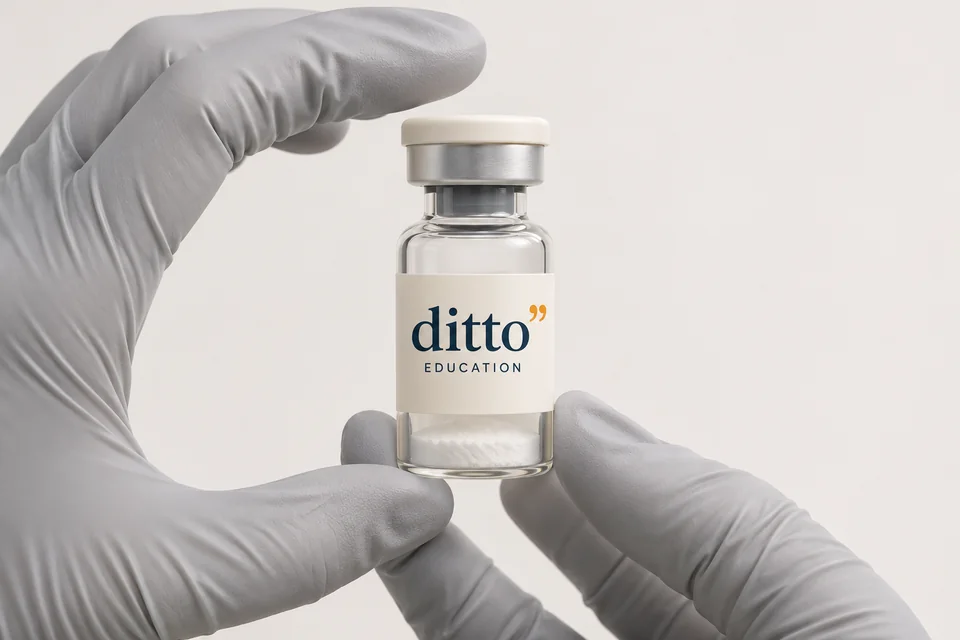
Identify the product
Approved finished products, compounded preparations, and research powders have different instructions. A nominal vial label does not establish equivalence.
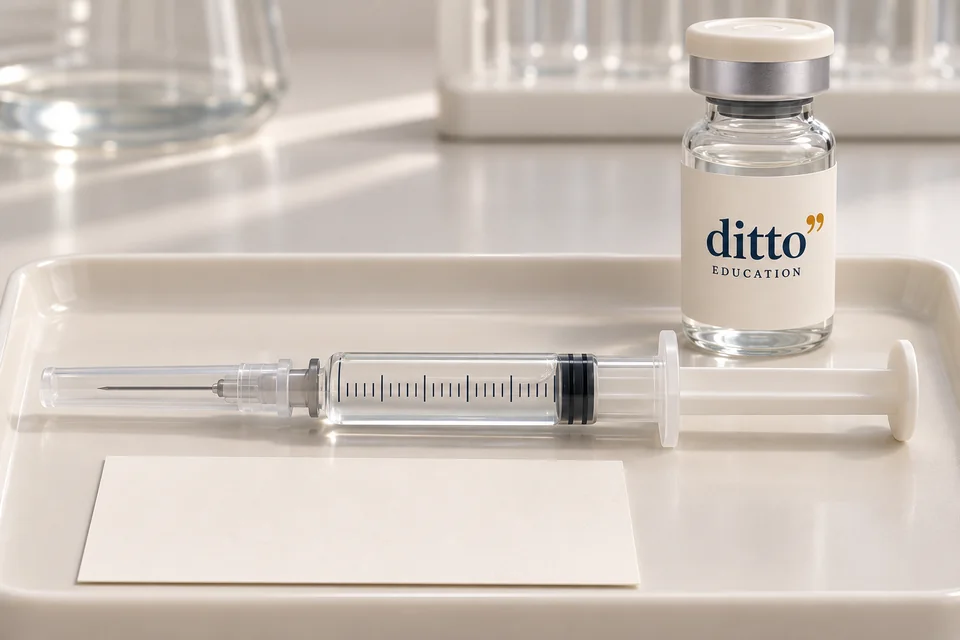
Record mass and final volume
For the example, use 40 mg (40,000 mcg) and a final volume of 2.0 mL. These are arithmetic assumptions, not mixing instructions.
Calculate concentration
40 mg (40,000 mcg) divided by 2.0 mL equals 20 mg/mL (20,000 mcg/mL).
Convert a reference amount
At 20 mg/mL (20,000 mcg/mL), 5 mg (5,000 mcg) equals 0.25 mL. On a U-100 scale, 0.25 mL equals 25 units.
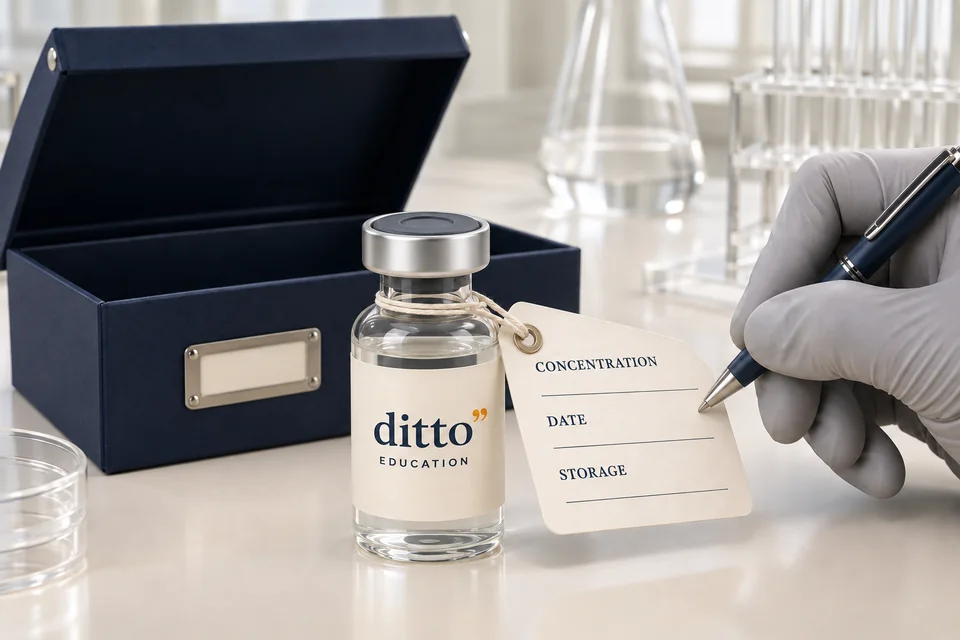
Check capacity and storage separately
Vial content, syringe capacity, sterility, and a product-specific discard date cannot be inferred from this calculation.
AI-generated educational scenes with Ditto-inspired concept labels; not photographs of supplied products. CDC preparation and equipment principles · Check your calculation
Need a different ratio?
Use the University of Peptide calculator for any vial-and-water pairing. Enter vial mg, water volume, and target dose to get exact syringe units.
Tirzepatide Dosage Chart
This chart mirrors the adult Zepbound example in the dosing table. It shows the earliest timing if each increase is needed and tolerated, including the 12.5 mg (12,500 mcg) step at weeks 17–20. The maximum is not a required target.
 UNIVERSITY OF PEPTIDE · RESEARCH REFERENCE
Tirzepatide Dosage Chart
| Step | Earliest weeks | Weekly dose | Label context |
|---|---|---|---|
| Phase 1 — Initiation | Weeks 1–4 | 2.5 mg (2,500 mcg) once weekly | Initiation dose; not an approved Zepbound maintenance dose. |
| Phase 2 — 5 mg (2,000 — 5,000 mcg) step | Weeks 5–8 | 5 mg (5,000 mcg) once weekly | Weight-reduction maintenance option; not an OSA maintenance dose. |
| Phase 3 — Mid escalation | Weeks 9–12 | 7.5 mg (7,500 mcg) once weekly | Optional escalation step after at least 4 weeks at 5 mg (5,000 mcg). |
| Phase 4 — 10 mg (4,000 — 10,000 mcg) step | Weeks 13–16 | 10 mg (10,000 mcg) once weekly | Maintenance option for weight reduction and OSA. |
| Phase 5 — High escalation | Weeks 17–20 | 12.5 mg (12,500 mcg) once weekly | Optional escalation step after at least 4 weeks at 10 mg (10,000 mcg). |
| Phase 6 — Maximum dose | Weeks 21+ | 15 mg (15,000 mcg) once weekly | Adult maximum; maintenance option for weight reduction and OSA. |
How Tirzepatide Works
Tirzepatide is a 39-amino-acid synthetic peptide with a fatty-acid attachment. The fatty acid is what lets it bind to blood proteins and stay in circulation long enough for once-weekly dosing — its half-life is roughly 5 days. Once in circulation, it activates two receptors that the gut normally talks to after a meal: GIP and GLP-1.
GIP pathway
Tirzepatide activates GIP (glucose-dependent insulinotropic polypeptide) receptors at full strength, comparable to natural GIP. This helps the pancreas release insulin in response to food, improves how the body processes fat, and sends appetite-reducing signals to brain regions that GLP-1-only drugs do not reach.
GLP-1 pathway
Tirzepatide activates GLP-1 (glucagon-like peptide-1) receptors at about one-fifth the potency of natural GLP-1. This slows gastric emptying (so meals feel filling for longer), helps the pancreas tune insulin release, and suppresses appetite through brain signaling.
Why the combination matters
Adding GIP activation is what separates tirzepatide from semaglutide. In the head-to-head SURMOUNT-5 trial (NEJM, 2025), tirzepatide produced −20.2% body weight loss vs −13.7% for semaglutide at 72 weeks, with similar side-effect profiles. The dual approach also improved insulin sensitivity beyond what GLP-1 monotherapy delivered in SURPASS-2.
Who Tirzepatide Is For and Who Should Avoid It
Tirzepatide indications depend on the product and age group. A contraindication means the medicine should not be used; it is not waived by clinician supervision.
Approved patient groups
FDA-approved indications (current labels, October 2026)
| Brand | Indication | Population |
|---|---|---|
| Mounjaro | Type 2 diabetes | Adults and children age 10 or older, as an adjunct to diet and exercise; pediatric maximum 10 mg (10,000 mcg) weekly. |
| Mounjaro | Reduction of major cardiovascular events | Adults with type 2 diabetes at high cardiovascular risk; follow the current Mounjaro label. |
| Zepbound | Chronic weight management | Adults with obesity (BMI ≥30) or overweight (BMI ≥27) plus at least one weight-related condition. |
| Zepbound | Obstructive sleep apnea | Adults with moderate-to-severe OSA who also have obesity. |
Who should not use tirzepatide
Personal or family history of medullary thyroid carcinoma (MTC) or MEN 2
Boxed warning. Rodent studies showed thyroid C-cell tumors. Tirzepatide is contraindicated in this group.
History of pancreatitis
Pancreatitis has been reported. Patients with prior episodes should avoid tirzepatide unless a clinician decides the benefit clearly outweighs the risk.
Pregnancy
Tirzepatide may cause fetal harm. Discuss pregnancy plans and stopping treatment with the prescriber. Zepbound should be discontinued when pregnancy is recognized; do not transfer semaglutide’s two-month instruction to tirzepatide.
Severe gastrointestinal disease (gastroparesis, severe IBD)
Tirzepatide slows gastric emptying. Patients with pre-existing severe motility issues may experience worse symptoms.
Type 1 diabetes
Tirzepatide is not a substitute for insulin. It is not approved for type 1 diabetes or for diabetic ketoacidosis.
Children and adolescents
Mounjaro is approved for type 2 diabetes from age 10; the maximum for ages 10–17 is 10 mg (10,000 mcg) weekly. Zepbound labeling is for adults. Do not apply the 15 mg (15,000 mcg) adult maximum to pediatric Mounjaro use.
People using oral contraceptives
Slowed gastric emptying can reduce oral contraceptive absorption when starting tirzepatide. Backup contraception is recommended for the first 4 weeks of dosing and after every dose increase.
Tirzepatide Side Effects & Safety
Most tirzepatide side effects are digestive: nausea, diarrhea, vomiting, reduced appetite, and indigestion. They are usually worst during the weeks when the dose goes up and improve once the body adjusts. Below are the rates reported across the SURPASS and SURMOUNT trial programs.
Common side effects (SURPASS meta-analysis and SURMOUNT-1 reporting)
| Side effect | Approx. rate on tirzepatide | Pattern |
|---|---|---|
| Nausea | 17–22% | Worst during dose escalation; improves at stable dose. |
| Diarrhea | 13–16% | Mild to moderate; rarely leads to discontinuation. |
| Vomiting | 6–10% | More common at 10 mg (10,000 mcg) and 15 mg (15,000 mcg). |
| Decreased appetite | 7–9% | Often reported as a desired effect for weight loss. |
| Indigestion | ~7% | Often paired with slower digestion. |
| Injection-site reactions | 3–7% | Redness, mild itching, or local irritation. |
| Resting heart rate increase | +2–4 bpm | Modest. Larger increases are uncommon. |
Source: meta-analyses across SURPASS; SURMOUNT-1 (NEJM 2022). Rates differ by trial and dose.
Side effects by dose
A meta-analysis of 10 trials (6,836 participants) found total GI event rates of 39% at 5 mg (5,000 mcg), 46% at 10 mg (10,000 mcg), and 49% at 15 mg (15,000 mcg). Discontinuation due to side effects ran from about 5% at 5 mg (5,000 mcg) to about 10% at 15 mg (15,000 mcg).
Serious risks and warnings
Boxed warning: thyroid C-cell tumors
Rodent studies showed dose-dependent C-cell tumors. The clinical relevance in humans is uncertain, but use is contraindicated in patients with MTC history or MEN 2.
Pancreatitis
Acute pancreatitis has been reported. Stop tirzepatide if pancreatitis is suspected (severe abdominal pain that radiates to the back).
Gallbladder disease
Cholelithiasis and cholecystitis have been reported, consistent with rapid weight loss generally.
Hypoglycemia
Tirzepatide alone rarely causes low blood sugar, but the risk rises sharply when combined with insulin or sulfonylureas. Dose adjustments to those drugs are usually needed.
Acute kidney injury
Severe nausea and vomiting can lead to dehydration and AKI. Stay hydrated, especially during dose escalation. For practical support, review Supplier research references.
Hypersensitivity
Anaphylaxis and angioedema have been reported. Discontinue if a serious allergic reaction occurs.
Tirzepatide Timeline & What to Monitor
Tirzepatide builds up gradually. Because the half-life is about 5 days, with weekly dosing blood levels rise for the first 4 weeks before stabilizing. That is also why each dose step lasts at least 4 weeks; anything sooner evaluates the new dose before it has fully accumulated.
What people typically notice across the ladder
| Timeframe | What is reported | What the trials measured |
|---|---|---|
| Week 1–2 (2.5 mg (2,500 mcg)) | Mild appetite reduction; some early nausea. | Baseline labs; no efficacy endpoint expected. |
| Week 4–8 (2.5 → 5 mg (2,500 → 5,000 mcg)) | Steadier appetite suppression; first weight changes. | Early HbA1c shift in T2D; modest weight loss in obesity arms. |
| Week 12–16 (5 → 10 mg (5,000 → 10,000 mcg)) | Most pronounced appetite and weight changes. | Roughly 10–15% weight loss in obesity arms by week 24. |
| Week 24+ (10 → 15 mg (10,000 → 15,000 mcg)) | Weight loss plateaus or continues slowly. | −19.5% (10 mg (10,000 mcg)) and −20.9% (15 mg (15,000 mcg)) at 72 weeks (SURMOUNT-1). |
SURMOUNT-1 values use the primary treatment-regimen estimand. These population averages do not determine an individual’s dose or result.
What is reasonable to monitor
Weight and waist circumference
Trial endpoints. Weekly weight and monthly waist measurements are simple at-home markers.
HbA1c (for T2D users)
Standard glycemic marker. SURPASS-2 showed up to −2.30% from baseline at 40 weeks.
Blood pressure
Tirzepatide modestly lowers systolic BP (~5 mmHg in SUMMIT). Patients on antihypertensives should track BP during escalation.
Resting heart rate
A 2–4 bpm rise is common. Larger sustained increases warrant a clinician check.
Symptoms of pancreatitis or gallbladder problems
Severe abdominal pain, back pain, fever, jaundice — stop and seek medical care.
Hydration and kidney symptoms
Especially during heavy nausea or vomiting.
Tirzepatide Clinical Evidence Context
Tirzepatide has one of the largest clinical trial programs of any incretin drug. The SURPASS program (type 2 diabetes) enrolled more than 19,000 participants across 10 trials. The SURMOUNT program (obesity) added thousands more, including the head-to-head SURMOUNT-5 trial against semaglutide. The summary below pulls the headline numbers from each pivotal study.
Pivotal Phase 3 trials
| Trial | Population | Headline result |
|---|---|---|
| SURMOUNT-1 (NEJM 2022) | 2,539 adults, obesity, no diabetes; 72 weeks | Primary treatment-regimen estimand: −20.9% at 15 mg (15,000 mcg), −19.5% at 10 mg (10,000 mcg), and −15.0% at 5 mg (5,000 mcg). |
| SURMOUNT-5 (NEJM 2025) | 751 adults, obesity, no diabetes; head-to-head vs semaglutide; 72 weeks | Tirzepatide −20.2% vs semaglutide −13.7% (P<0.001). |
| SURPASS-2 (NEJM 2021) | 1,879 adults with T2D vs semaglutide 1 mg (1,000 mcg); 40 weeks | All tirzepatide doses superior. HbA1c up to −2.30%; up to 92% reached HbA1c <7%. |
| SURPASS-1 (Lancet 2021) | 478 adults with T2D, monotherapy vs placebo; 40 weeks | Up to 52% achieved HbA1c <5.7% (non-diabetic range). |
| SURPASS-5 (JAMA 2022) | 475 adults with T2D + insulin glargine; 40 weeks | HbA1c −2.11% to −2.34%; weight loss 5.4–8.8 kg. |
| SUMMIT (NEJM 2024) | 731 patients with HFpEF + obesity; 104 weeks median | 38% reduction in CV death or worsening heart failure (HR 0.62). |
| SURMOUNT-OSA (NEJM 2024) | 469 adults with moderate-to-severe OSA + obesity; 52 weeks | AHI reduced by 25.3–29.3 events/hour; weight loss ~45–50 lbs. |
The current Mounjaro label includes major cardiovascular-event risk reduction in high-risk adults with type 2 diabetes; see its indication and clinical-study sections for product-specific evidence.
Strongest weight-loss evidence
SURMOUNT-1 and the head-to-head SURMOUNT-5 are the gold-standard data points for tirzepatide weight loss. Both are large, multicenter, randomized, placebo- or semaglutide-controlled.
Strongest glycemic evidence
SURPASS-2 is the most cited head-to-head against semaglutide for HbA1c reduction in type 2 diabetes.
Cardiovascular evidence
SUMMIT studied cardiovascular death or worsening heart failure in adults with HFpEF and obesity. Separately, the current Mounjaro label includes major cardiovascular-event risk reduction in adults with type 2 diabetes at high cardiovascular risk. These are different populations and endpoints.
Evidence gaps
Long-term (5+ year) outcomes data is still being collected. Post-discontinuation weight regain has been observed in trial extensions; tirzepatide is treated as a chronic therapy.
Tirzepatide Storage & Handling
Storage instructions are product-specific
| Product | Use these instructions | Important limit |
|---|---|---|
| Mounjaro or Zepbound finished product | The exact presentation’s current carton, Instructions for Use, and prescribing information | Room-temperature and after-opening limits differ by product; do not apply one pen’s rule to another product. |
| Compounded preparation | The dispensing pharmacy’s product-specific storage and beyond-use date | The brand label does not validate a compounded preparation’s stability. |
| Research powder or solution | Validated product-specific stability and handling data | No generic 28-day, shipping, refrigerated, or frozen-storage allowance is established here. |
| Bacteriostatic water | Manufacturer’s label and post-opening discard instructions | The water bottle’s discard date is separate from the peptide solution’s date. |
Mass arithmetic, a preservative, and clear appearance do not establish sterility or stability.
Tirzepatide Protocol Mistakes & Troubleshooting
Missed a weekly dose
The prescribing information states that when less than 4 days (96 hours) have passed, a missed dose may be taken and the regular weekly schedule resumed. After more than 4 days, the missed dose is skipped and dosing returns on the regular day without doubling up.
Cloudy, particulate, or off-color vial
Reconstituted tirzepatide should be clear, colorless to slightly yellow, and free of visible particles. If the solution is cloudy or has floaters, do not inject. Discard and reconstitute a new vial.
Wrong BAC water volume
If you added more water than planned (e.g., 3 mL into a 40 mg (40,000 mcg) vial instead of 2 mL), recalculate the new concentration (in this case 13.33 mg/mL (13,330 mcg/mL)) and adjust the syringe units. Use the University of Peptide calculator. That changes the nominal concentration; it does not establish stability or suitability for use.
Severe nausea on a new dose
Trial protocols allowed the current dose to be held for an additional 4 weeks before escalation was attempted again. Hydration, smaller meals, and avoiding fatty or spicy foods are commonly reported supportive measures.
Injection-site lump or redness
Label guidance describes rotating sites between the abdomen, thigh, and upper arm and avoiding the same spot in consecutive weeks. Persistent or worsening reactions warrant a clinician check.
Vial left at room temperature
Do not infer usability from a generic time limit. Use the exact product’s temperature-excursion instructions or ask its dispensing pharmacist or manufacturer. Research powders and solutions have no validated room-temperature allowance on this page.
Confused about Mounjaro vs Zepbound dose
Check the brand, indication, and age group. Zepbound weight-reduction maintenance is 5/10/15 mg; OSA maintenance is 10/15 mg. Mounjaro dose increases depend on glycemic need, with adult maximum 15 mg (15,000 mcg) and pediatric maximum 10 mg (10,000 mcg) weekly.
Severe abdominal pain, jaundice, or unrelenting vomiting
Stop the next dose and seek qualified medical care. These symptoms can signal pancreatitis, gallbladder disease, or dehydration-driven kidney injury.
Tirzepatide Regulatory Status
Current U.S. labels reviewed October 14, 2026 distinguish two tirzepatide brands. Mounjaro is indicated for type 2 diabetes from age 10 and major cardiovascular-event risk reduction in high-risk adults with type 2 diabetes. Zepbound is indicated for adult weight reduction and long-term maintenance, and moderate-to-severe OSA in adults with obesity. Approval applies to those finished products, not research powders.
Branded supply
Mounjaro and Zepbound are FDA-approved finished drug products from Eli Lilly. Available presentations and their handling instructions are listed in the current product-specific prescribing information.
Compounded supply
Compounded tirzepatide was widely available during the FDA-recognized shortage that ended in late 2024. Outside an active shortage, large-scale compounding is restricted; access depends on state pharmacy rules and 503A/503B compounding pathways. Quality and concentration vary by compounder.
Research-grade vials
Lyophilized research-grade tirzepatide is sold by laboratory chemical suppliers in 5/10/15/40/60 mg vials, labeled for research use only and not for human consumption. This is a separate, non-FDA supply chain.
Oral tirzepatide
There is no FDA-approved oral tirzepatide as of June 2026. "Tirzepatide pills" or "tirzepatide tablets" sold online are not FDA-approved formulations and lack established bioavailability data.
International status
Tirzepatide is approved in the EU, UK, Japan, and other markets under the Mounjaro and Zepbound names. The UK BNF lists it for both T2D and weight management.
Tirzepatide vs Semaglutide vs Retatrutide
Three incretin-class compounds dominate the conversation: tirzepatide (dual GIP/GLP-1), semaglutide (GLP-1 only, sold as Ozempic and Wegovy), and retatrutide (triple agonist GLP-1 + GIP + glucagon, still investigational). The table below puts them side by side on the points that matter most to dosing decisions.
Side-by-side compound comparison
Receptor targets
Tirzepatide
GLP-1 + GIP (dual)
Semaglutide
GLP-1 only
Retatrutide
GLP-1 + GIP + Glucagon (triple)
Half-life
Tirzepatide
~5 days
Semaglutide
~7 days
Retatrutide
~6 days
Dosing frequency
Tirzepatide
Once weekly
Semaglutide
Once weekly
Retatrutide
Once weekly
Dose context
Tirzepatide
15 mg/week (15,000 mcg/week) adult maximum; pediatric Mounjaro maximum 10 mg (10,000 mcg)
Semaglutide
Optional Wegovy 7.2 mg/week (7,200 mcg/week) only for adult weight reduction under label conditions
Retatrutide
12 mg/week (12,000 mcg/week) highest target in initial TRIUMPH trials
Selected trial results; separate studies
Tirzepatide
−20.9% (SURMOUNT-1, 72 wk; treatment-regimen estimand)
Semaglutide
−14.9% (STEP-1, 68 wk; treatment-policy estimand)
Retatrutide
−24.2% (Phase 2, 48 wk)
FDA status (June 2026)
Tirzepatide
Approved (T2D, obesity, OSA)
Semaglutide
Approved (T2D, obesity, CV risk)
Retatrutide
Investigational — Phase 3
Head-to-head
Tirzepatide
−20.2% vs semaglutide −13.7% (SURMOUNT-5)
Semaglutide
—
Retatrutide
Not yet head-to-head vs tirzepatide
HFpEF benefit
Tirzepatide
Yes (SUMMIT, HR 0.62)
Semaglutide
Yes (STEP-HFpEF)
Retatrutide
Not yet studied
Unique advantage
Tirzepatide
Best-in-class FDA-approved efficacy; 3 indications
Semaglutide
Longest track record; CV outcomes data
Retatrutide
Highest weight loss in early data
| Tirzepatide | Semaglutide | Retatrutide | |
|---|---|---|---|
| Receptor targets | GLP-1 + GIP (dual) | GLP-1 only | GLP-1 + GIP + Glucagon (triple) |
| Half-life | ~5 days | ~7 days | ~6 days |
| Dosing frequency | Once weekly | Once weekly | Once weekly |
| Dose context | 15 mg/week (15,000 mcg/week) adult maximum; pediatric Mounjaro maximum 10 mg (10,000 mcg) | Optional Wegovy 7.2 mg/week (7,200 mcg/week) only for adult weight reduction under label conditions | 12 mg/week (12,000 mcg/week) highest target in initial TRIUMPH trials |
| Selected trial results; separate studies | −20.9% (SURMOUNT-1, 72 wk; treatment-regimen estimand) | −14.9% (STEP-1, 68 wk; treatment-policy estimand) | −24.2% (Phase 2, 48 wk) |
| FDA status (June 2026) | Approved (T2D, obesity, OSA) | Approved (T2D, obesity, CV risk) | Investigational — Phase 3 |
| Head-to-head | −20.2% vs semaglutide −13.7% (SURMOUNT-5) | — | Not yet head-to-head vs tirzepatide |
| HFpEF benefit | Yes (SUMMIT, HR 0.62) | Yes (STEP-HFpEF) | Not yet studied |
| Unique advantage | Best-in-class FDA-approved efficacy; 3 indications | Longest track record; CV outcomes data | Highest weight loss in early data |
These compounds are not interchangeable. Cross-trial results differ in population, duration, and estimand; they do not establish a ranking. Research-vial calculations do not establish equivalence to approved or trial products.
For an oral, non-incretin alternative, see the tesofensine protocol. For dedicated guides, see the semaglutide protocol and retatrutide protocol.
Tirzepatide Blood Tests & Monitoring
Tirzepatide is an approved GIP/GLP-1 receptor agonist used in diabetes and weight-management contexts. Monitoring focuses on glucose control, kidney context, lipids, GI symptoms, gallbladder/pancreas symptoms, and thyroid-history cautions.
Blood test markers to discuss with a clinician
| Marker | Why it matters | Timing |
|---|---|---|
| A1c | Shows longer-term glucose control and helps track metabolic response over time. | Baseline |
| Fasting glucose | Gives a current glucose snapshot, especially when appetite and diabetes medication needs change. | Follow-up |
| Comprehensive metabolic panel (CMP) | Reviews kidney function, liver enzymes, electrolytes, and glucose, which matter with GI symptoms or dehydration. | Baseline |
| Lipid panel | Tracks cardiometabolic changes during weight-loss or diabetes-management phases. | Follow-up |
| Blood pressure and resting heart rate | Adds cardiovascular context during weight loss, medication changes, and hydration shifts. | Optional |
Monitoring guidance is label-informed for tirzepatide and supported by incretin-class clinical monitoring considerations.
At-home blood test option
Easy at home option to monitor core metrics during research cycles.
Beyond Whoosh
Pharmacy Grade Tirzepatide
Prescription-grade peptide care through Beyond Whoosh. Whoosh prescribes after a clinician reviews your eligibility.
Simple timing framework
- Baseline
- Discuss baseline labs before starting or changing dose, especially with diabetes, kidney disease, pancreatitis history, gallbladder history, thyroid cancer history, or major calorie restriction.
- Follow-up
- Repeat glucose and CMP-related markers after 4-12 weeks or sooner if vomiting, dehydration, or glucose symptoms occur.
- Longer term
- For ongoing use, review metabolic and kidney trends every 3-6 months with a clinician.
How to interpret the labs
- Diabetes medications may need clinician review if glucose drops with reduced intake.
- Severe abdominal pain, gallbladder symptoms, and persistent vomiting require symptom-based review.
- Personal or family history of medullary thyroid carcinoma or MEN2 is an important label-based caution.
Do not wait for routine labs
Severe abdominal pain, persistent vomiting, signs of dehydration, fainting, allergic symptoms, or severe low-glucose symptoms need medical review. A neck mass, trouble swallowing, or persistent hoarseness should be discussed with a clinician.
FAQ
Q1: What is the starting dose of tirzepatide?
For adult Zepbound use, the label starts at 2.5 mg (2,500 mcg) once weekly for 4 weeks, then 5 mg (5,000 mcg). Later 2.5 mg (2,500 mcg) increases are optional after at least 4 weeks at the current dose, based on response and tolerability. The current Mounjaro label starts at 2.5 mg (2,500 mcg) weekly and links increases to the need for additional glycemic control. Product, indication, and age group matter; the adult Zepbound table is not a universal tirzepatide schedule.
Q2: What is the highest dose of tirzepatide / Zepbound?
The adult maximum for Mounjaro and Zepbound is 15 mg (15,000 mcg) once weekly. For Mounjaro in children ages 10–17 with type 2 diabetes, the maximum is 10 mg (10,000 mcg) weekly. Zepbound maintenance is 5, 10, or 15 mg (15,000 mcg) for weight reduction and 10 or 15 mg (10,000 or 15,000 mcg) for OSA. These are product-label limits, not required targets or instructions for research powders.
Q3: What is tirzepatide's half-life?
Tirzepatide's half-life is approximately 5 days (about 120 hours). This is what supports once-weekly dosing. With weekly injections, blood levels build up over about 4 weeks before reaching steady state at roughly 1.6× a single dose. That is why each ladder step lasts at least 4 weeks — the body needs that time to fully adjust.
Q4: How do you convert tirzepatide mg to insulin units?
U-100 markings measure volume: 1 mL = 100 units. For a nominal arithmetic example, 40 mg (40,000 mcg) in a final 2.0 mL gives 20 mg/mL (20,000 mcg/mL). This does not establish preparation instructions or human use. At that concentration: 2.5 mg (2,500 mcg) = 12.5 units, 5 mg (5,000 mcg) = 25 units, 7.5 mg (7,500 mcg) = 37.5 units, 10 mg (10,000 mcg) = 50 units, 12.5 mg (12,500 mcg) = 62.5 units, 15 mg (15,000 mcg) = 75 units. For any other vial-and-water pairing, use the University of Peptide calculator.
Q5: How much weight can you lose on tirzepatide?
In SURMOUNT-1 (NEJM 2022, 2,539 adults with obesity), the primary treatment-regimen estimand showed average weight changes of −20.9% at 15 mg (15,000 mcg), −19.5% at 10 mg (10,000 mcg), and −15.0% at 5 mg (5,000 mcg) over 72 weeks. In the head-to-head SURMOUNT-5 trial (NEJM 2025), tirzepatide produced −20.2% weight loss vs −13.7% for semaglutide. These are population averages over 72 weeks, not promises for any individual.
Q6: How do you reconstitute tirzepatide?
This page gives nominal research-vial calculations, not validated preparation instructions. For example, 40 mg (40,000 mcg) in a final 2.0 mL equals 20 mg/mL (20,000 mcg/mL). Approved products and compounded preparations follow their own instructions. The calculation does not establish identity, sterility, stability, or equivalence to Mounjaro or Zepbound. Use the University of Peptide calculator for arithmetic only.
Q7: Is tirzepatide FDA-approved?
Yes, as specific finished products. The current Mounjaro label covers type 2 diabetes from age 10 and major cardiovascular-event risk reduction in high-risk adults with type 2 diabetes. Zepbound covers adult weight reduction and long-term maintenance, and moderate-to-severe OSA in adults with obesity. Research-grade tirzepatide powders are not FDA-approved medicines.
Q8: What is the difference between Mounjaro and Zepbound?
Both contain tirzepatide. Mounjaro is approved for type 2 diabetes from age 10 and major cardiovascular-event risk reduction in high-risk adults with type 2 diabetes. Zepbound is approved for adult weight reduction and long-term maintenance, and moderate-to-severe OSA in adults with obesity. Maintenance choices and age-specific maximum doses differ; follow the exact product label.
Q9: What are the most common tirzepatide side effects?
Gastrointestinal effects dominate: nausea (17–22%), diarrhea (13–16%), vomiting (6–10%), decreased appetite (7–9%), and indigestion (~7%). Most are mild to moderate, hit hardest during dose escalation, and improve at stable doses. Discontinuation due to side effects ranged from ~5% at 5 mg (5,000 mcg) to ~10% at 15 mg (15,000 mcg) in trials. Tirzepatide also carries a boxed warning for thyroid C-cell tumors and is contraindicated with MTC or MEN 2 history.
Q10: How does tirzepatide compare to semaglutide?
Tirzepatide is a dual GIP/GLP-1 agonist; semaglutide activates GLP-1 only. In the head-to-head SURMOUNT-5 trial (NEJM 2025), tirzepatide produced −20.2% weight loss vs −13.7% for semaglutide at 72 weeks. In SURPASS-2 (T2D), all tirzepatide doses showed superior HbA1c and weight reductions vs semaglutide 1 mg (1,000 mcg). GI side-effect profiles were broadly similar.
Q11: What if I miss a tirzepatide dose?
Per the Mounjaro and Zepbound prescribing information, take the missed dose as soon as possible if it is within 4 days (96 hours). After that window, skip it and resume on the next regularly scheduled day. Do not double up. The day of the week can be changed as long as the last dose was at least 3 days earlier.
Q12: Who should not take tirzepatide?
Tirzepatide is contraindicated with a personal or family history of medullary thyroid carcinoma, MEN 2, or a serious hypersensitivity reaction to tirzepatide or its ingredients. Severe gastroparesis, pancreatitis concerns, pregnancy, and other conditions require product-specific clinician review. Zepbound should be discontinued when pregnancy is recognized. It is not a substitute for insulin in type 1 diabetes.
Q13: What vial sizes are available for research-grade tirzepatide?
Research suppliers list nominal 5, 10, 15, 40, and 60 mg (60,000 mcg) vials. Vial mass affects concentration and theoretical amount counts; it does not establish identity, sterility, usable life, or equivalence to Mounjaro or Zepbound.
Q14: How is reconstituted tirzepatide stored?
No generic storage or beyond-use period for research-vial tirzepatide is established here. Use validated instructions for the exact material. A compounded preparation follows the dispensing pharmacy’s label; Mounjaro and Zepbound finished products follow their own current presentation-specific instructions. An opened water bottle has a separate discard date.
Q15: Is compounded tirzepatide the same as branded Mounjaro or Zepbound?
Compounded tirzepatide is a tirzepatide product mixed by a compounding pharmacy, not the FDA-approved Lilly pen. During the 2023–2024 shortage, large-scale compounding was permitted; outside that shortage, access is restricted and depends on state and federal compounding rules. Compounded products vary in concentration, formulation, and quality. They are not bioequivalent to Mounjaro or Zepbound by FDA standards.
Q16: Can tirzepatide be taken orally?
Not currently. As of June 2026 there is no FDA-approved oral tirzepatide. Oral incretin therapies do exist for semaglutide (Rybelsus), but tirzepatide is only FDA-approved as a subcutaneous injection. "Tirzepatide tablets" sold online are not FDA-approved formulations.
Sources & Research
- Jastreboff AM, Aronne LJ, Ahmad NN, et al. Tirzepatide Once Weekly for the Treatment of Obesity (SURMOUNT-1). New England Journal of Medicine (2022)
- Aronne LJ, Horn DB, le Roux CW, et al. Tirzepatide as Compared with Semaglutide for the Treatment of Obesity (SURMOUNT-5). New England Journal of Medicine (2025)
- Frias JP, Davies MJ, Rosenstock J, et al. Tirzepatide versus Semaglutide Once Weekly in Patients with Type 2 Diabetes (SURPASS-2). New England Journal of Medicine (2021)
- Rosenstock J, Wysham C, Frias JP, et al. Efficacy and safety of a novel dual GIP and GLP-1 receptor agonist tirzepatide in patients with type 2 diabetes (SURPASS-1). Lancet (2021)
- Dahl D, Onishi Y, Norwood P, et al. Effect of Subcutaneous Tirzepatide vs Placebo Added to Titrated Insulin Glargine on Glycemic Control in Patients With Type 2 Diabetes (SURPASS-5). JAMA (2022)
- Packer M, Zile MR, Kramer CM, et al. Tirzepatide for Heart Failure with Preserved Ejection Fraction and Obesity (SUMMIT). New England Journal of Medicine (2024)
- Malhotra A, Grunstein RR, Fietze I, et al. Tirzepatide for the Treatment of Obstructive Sleep Apnea and Obesity (SURMOUNT-OSA). New England Journal of Medicine (2024)
- U.S. Food and Drug Administration Mounjaro (tirzepatide) injection — Prescribing Information (revised August 2026). Eli Lilly / FDA-approved prescribing information (2026)
- U.S. Food and Drug Administration Zepbound (tirzepatide) injection — Prescribing Information (revised August 2026). Eli Lilly / FDA-approved prescribing information (2026)
- Sinha R, Papamargaritis D, Sargeant JA, Davies MJ. Efficacy and Safety of Tirzepatide in Type 2 Diabetes and Obesity Management (narrative review). Journal of Obesity & Metabolic Syndrome (2023)
- Coskun T, Sloop KW, Loghin C, et al. LY3298176, a novel dual GIP and GLP-1 receptor agonist for the treatment of type 2 diabetes mellitus: From discovery to clinical proof of concept. Molecular Metabolism (2018)
- ClinicalTrials.gov A Study of Tirzepatide (LY3298176) on Cardiovascular Events in Participants With Type 2 Diabetes (SURPASS-CVOT, NCT04255433). ClinicalTrials.gov (2026)
Related Dosing Protocols
Reconstitution calculator
Enter your own values. This tool calculates quantities, not a recommended dose.
Check the concentration
Changing the unit keeps the entered mass equivalent. 1 milligram (mg) = 1,000 micrograms (mcg). This tool does not choose a target amount.
Biological IU (optional, product-specific)
Only enter a potency explicitly stated as IU per mg on the exact product label or reference. Do not enter the 100 from a U-100 syringe. No factor is assumed for any peptide.
Your result will appear here
Enter the mass, final solution volume and target mass, or load a fictional example.
Assumes accurate masses, final solution volume and even distribution. Blend arithmetic does not establish whether substances can be mixed. Read the formulas and assumptions.
Study findings, reported examples and supplier statements have different levels of evidence. Follow the citations and check the formulation, population and date before interpreting a number.
Editorial standards and corrections