On this page
TOOLS FOR THIS GUIDE
Work with Kisspeptin
The guide name carries across. Amounts, dates and instructions remain yours to enter; opening a tool saves nothing.
Worked examples: calculations, records and source checks
Fictional arithmetic, unrelated to a recommended amount of Kisspeptin: 10 mg (10,000 mcg) in a final 2 mL is 5 mg/mL (5,000 mcg/mL). A target mass of 0.25 mg (250 mcg) corresponds to 0.05 mL, or 5 U-100 syringe markings. Biological IU cannot be inferred from these inputs. Neither the mass nor the liquid is a preparation recommendation.
Open the arithmetic example- Supply example: two 10 mg (10,000 mcg) vials start at 20 mg (20,000 mcg). Four recorded entries of 0.25 mg (250 mcg) leave a theoretical 19 mg (19,000 mcg), before losses or expiry. Skipped entries do not deduct stock.
- Measurement example: enter “Sleep duration”, “7.5”, “hours” and the date. Keep the same unit and note changing conditions. A trend does not prove a treatment effect.
- Source example: record “rat study” when rats were studied, even when the headline describes recovery. Keep the exact paper and its limitations.
The planner accepts mg and mcg. Biological IU/USP units, sprays, drops and variable mixtures need product-specific instructions; they cannot be inferred from a generic mass calculator. For stacks, record each known ingredient separately.
FDA: why concentration and unit errors matterEvidence & source checks
Kisspeptin: source check
A trial with 32 male completers with low sexual desire found altered brain responses and arousal measures during kisspeptin-54 infusion.
Limit: Short supervised kisspeptin-54 infusions do not validate repeated kisspeptin-10 injections or long-term outcomes.
Question to resolve: Which kisspeptin length, administration route and population does the source describe?
Source and reading scope
Effects of Kisspeptin on Sexual Brain Processing and Penile Tumescence in Men With Hypoactive Sexual Desire Disorder: A Randomized Clinical Trial.
PubMed abstract; not an independent clinical review. Checked 25 November 2026.
What to verify before filling a plan
- Identity and formulation: match the name, sequence or active ingredient, route and strength. A related molecule or branded medicine is not automatically equivalent.
- Instruction source: obtain the actual amount, frequency and duration from qualified medical instructions. A community table or trial protocol does not establish an individual regimen.
- Units and product details: keep mass, liquid volume and biological activity units separate. Record batch, storage and discard instructions from the actual product; the tools cannot determine sterility or stability.
- Review and follow-up: list medicines and supplements, unresolved interactions and questions. Agree on relevant observations and actions with a qualified professional; normal measurements do not prove safety.
Selected source context, not a systematic review or medical approval. Study cards checked 24 November 2026; guide source notes checked 25 November 2026. Research references and citations appear below.
Guide summary
REFERENCE SUMMARY- Compound
- Kisspeptin (kisspeptin-10, kisspeptin-54)
- Class
- Reproductive neuropeptide / GPR54 agonist
- Common format
- Lyophilized powder, subcutaneous injection
- Regulatory status
- Not FDA-approved
Kisspeptin Quick Start
Kisspeptin is a signaling peptide that helps turn on the reproductive hormone pathway. It tells the brain to release GnRH, which tells the pituitary gland to release LH and FSH. In men, LH can then tell the testes to make testosterone. In women, LH and FSH help control ovulation and fertility signals.
Most research-use suppliers stock kisspeptin-10. Many human studies used kisspeptin-54. The difference matters because kisspeptin-10 clears fast, with a half-life of about 4 minutes in blood after IV dosing. Kisspeptin-54 lasts longer, with a half-life of about 28 minutes after subcutaneous dosing.
- Route
- Subcutaneous (SC), meaning under the skin, in research-use protocols. IV infusion is used in clinical trials only.
- Form choice
- Kisspeptin-10 is shorter-acting; kisspeptin-54 is the form used in human trials.
- Measure
- Use vial concentration (mg/mL) and U-100 syringe units for the dose.
- Testosterone pathway
- Kisspeptin may raise testosterone indirectly by raising LH first. It does not act like testosterone itself.
- Cycle structure
- Use short pulses or short cycles. Continuous exposure can make the signal fade, a problem called desensitization.
- Research status
- Not FDA-approved. Research-use only.
Disclaimer
This page is an educational research reference and is not medical advice. No kisspeptin product is FDA-approved. Information is for research-context planning only.
Kisspeptin Dosing Protocol & Schedule
Choose the form that matches the vial being researched. Kisspeptin-10 and kisspeptin-54 are not interchangeable. They last for different amounts of time, and the dose math is different. The schedules below are research-planning ranges, not personal medical advice.
Kisspeptin Protocol Formats
Choose the form you are researching to see route-specific notes.
Open a format reference below.
Kisspeptin 10 format reference
SC means subcutaneous, or under the skin. This is the shorter-acting form most often stocked by research-use suppliers.
Kisspeptin-10 acts fast and clears fast. After IV dosing, its blood half-life is about 4 minutes. A subcutaneous shot may stretch the effect a little, but the LH and FSH signal is still short. That is why research-use protocols usually use small once-daily or twice-daily SC doses instead of long exposure.
Kisspeptin-10 — Common Research-Context Dosing Ranges
| Approach | Typical Range | Frequency | Notes |
|---|---|---|---|
| Low-dose pulse | 50-100 mcg (0.05-0.1 mg) | Once daily SC | SC means under the skin. Often timed before sleep in research-use planning. |
| Standard pulse | 100-200 mcg (0.1-0.2 mg) | Once daily SC | Common community research range, based partly on kisspeptin-54 trial data. |
| Split dose | 100 mcg (0.1 mg) | Twice daily SC | Used when the research plan calls for more frequent LH pulses. |
These ranges come from published research and research-use community planning. Human data shows kisspeptin-10 can raise LH in men. Longer exposure may also raise testosterone, but that depends on the testes being able to respond to LH.
Tachyphylaxis with chronic dosing
Continuous exposure can make the LH signal fade. That signal fade is called desensitization or tachyphylaxis. This is why kisspeptin research usually uses short pulses or short cycles instead of nonstop exposure.
Kisspeptin 54 format reference
Full-length form. Used in most human clinical trials.
Kisspeptin-54 lasts longer than kisspeptin-10. After subcutaneous dosing, its blood half-life is about 28 minutes, and LH can stay higher for several hours. This is the form used in many IVF trigger and low-desire clinical studies. Trial doses are often listed as nmol/kg, so they do not convert neatly to a simple mcg dose.
Kisspeptin-54 — Reported Trial-Context Dosing
| Trial Context | Dose Studied | Route | Source/Notes |
|---|---|---|---|
| IVF oocyte maturation trigger (high OHSS risk) | 3.2-12.8 nmol/kg single bolus | Subcutaneous | Phase 2 trial in 60 women, Hammersmith Hospital, 2013-2014 |
| IVF oocyte maturation trigger (proof-of-concept) | 1.6-12.8 nmol/kg single bolus | Subcutaneous | 53-women trial; LH peaked at ~5 hours and returned to pre-trigger by 12-14 hours |
| Hypothalamic amenorrhea (chronic SC, twice weekly) | 6.4 nmol/kg | Subcutaneous, twice weekly | Reduced response over time consistent with desensitization |
| HSDD modulation (women, men) | 1 nmol/kg/h IV infusion | Intravenous, 75-minute infusion | Imperial College / Hammersmith trials, 2021-2023 |
These are trial protocols, not dosing recommendations. Dose conversion depends on body weight. For example, 6.4 nmol/kg of kisspeptin-54 is about 2.85 mg (2,850 mcg) for a 70 kg subject.
Cycle structure and desensitization
Kisspeptin Cycle Guidelines
| Approach | Active Length | Off Period | Reasoning |
|---|---|---|---|
| Short pulse cycle | 2-4 weeks | 2-4 weeks | Limits desensitization; aligned with most acute research data |
| Standard cycle | 4-6 weeks | 4 weeks | Most-cited community window; longer cycles risk fading LH response |
| Diagnostic single use | Single dose | N/A | Mirrors clinical use as an LH/FSH stimulation test or IVF trigger |
Avoid nonstop exposure. When the kisspeptin signal is pushed too long, LH response can fade.
Kisspeptin Supplies Needed
Plan based on a simple kisspeptin-10 setup: one 100 mcg (0.1 mg) subcutaneous dose per day from a 10 mg (10,000 mcg) vial mixed with 2 mL bacteriostatic water. At that mix, the vial is 5 mg/mL (5,000 mcg/mL), so 2 units on a U-100 insulin syringe gives 100 mcg (0.1 mg). If your vial size, water amount, or dose is different, redo the math before drawing.
Recommended Supply
Choose your region
Use discount code PEPPAL at Peptide Partners checkout. See why we love Peptide Partners.
Peptide Partners Shop

Pharmacy Grade Kisspeptin

At-Home Blood Test
Research Supplies
Peptide Vials (10 mg (10,000 mcg) kisspeptin-10)
Each 10 mg (10,000 mcg) vial reconstituted with 2 mL gives 5 mg/mL (5,000 mcg/mL); one vial supports approximately 100 doses at 100 mcg (0.1 mg).
| Cycle length | Planning note |
|---|---|
2-8 weeks 1 vial | 2 weeks: 14 doses needed; one vial provides about 100 planned draws before losses; 4 weeks: 28 doses needed; one vial provides about 100 planned draws before losses; 6 weeks: 42 doses needed; one vial provides a large margin for priming losses; 8 weeks: 56 doses needed; one vial still leaves margin for losses and schedule adjustments |
Insulin Syringes (U-100, 0.3 mL)
One syringe per injection. 0.3 mL barrel preferred for accurate small draws.
| Cycle length | Planning note |
|---|---|
2 weeks 14 syringes | 1 syringe per dose |
4 weeks 28 syringes | 1 syringe per dose |
6 weeks 42 syringes | 1 syringe per dose |
8 weeks 56 syringes | 1 syringe per dose |
Bacteriostatic Water
Use 2 mL per 10 mg (10,000 mcg) vial. One 10 mL bottle covers five vials by volume before losses.
| Cycle length | Planning note |
|---|---|
2-8 weeks 1 x 10 mL bottle | 1 vial uses 2 mL |
Round up for priming losses, dropped syringes, damaged swabs, and any protocol adjustments. If you are using kisspeptin-54 instead of kisspeptin-10, the trial-context doses are higher in absolute mass and one vial covers fewer doses — recalculate before ordering.
Companion Supplies & Routine Support
Kisspeptin Dosage Chart
This Kisspeptin dosage chart summarizes the kisspeptin-10 and kisspeptin-54 research-context dose ranges shown in the dosing section above.
 UNIVERSITY OF PEPTIDE · RESEARCH REFERENCE
Kisspeptin Dosage Chart
| Trial Context | Dose Studied | Route | Source/Notes |
|---|---|---|---|
| IVF oocyte maturation trigger (high OHSS risk) | 3.2-12.8 nmol/kg single bolus | Subcutaneous | Phase 2 trial in 60 women, Hammersmith Hospital, 2013-2014 |
| IVF oocyte maturation trigger (proof-of-concept) | 1.6-12.8 nmol/kg single bolus | Subcutaneous | 53-women trial; LH peaked at ~5 hours and returned to pre-trigger by 12-14 hours |
| Hypothalamic amenorrhea (chronic SC, twice weekly) | 6.4 nmol/kg | Subcutaneous, twice weekly | Reduced response over time consistent with desensitization |
| HSDD modulation (women, men) | 1 nmol/kg/h IV infusion | Intravenous, 75-minute infusion | Imperial College / Hammersmith trials, 2021-2023 |
Kisspeptin Reconstitution Guide
Kisspeptin ships as a lyophilized (freeze-dried) powder in single-use vials. Reconstitute with bacteriostatic water (BAC water) before drawing any dose. The volume you add determines your final concentration, and that determines how many syringe units equal your target dose.
Common Reconstitution Math (Kisspeptin-10, 10 mg (10,000 mcg) vial)
| BAC Water Added | Final Concentration | Volume for 100 mcg (0.1 mg) | U-100 Units |
|---|---|---|---|
| 1.0 mL | 10 mg/mL (10,000 mcg/mL) | 0.01 mL | 1 unit |
| 1.5 mL | 6.67 mg/mL (6,670 mcg/mL) | 0.015 mL | 1.5 units |
| 2.0 mL | 5 mg/mL (5,000 mcg/mL) | 0.02 mL | 2 units |
| 2.5 mL | 4 mg/mL (4,000 mcg/mL) | 0.025 mL | 2.5 units |
The 2 mL option is the default assumption on this page because it stays under a 3 mL vial limit and keeps 100 mcg (0.1 mg) equal to 2 syringe units. Smaller draws require careful measurement.
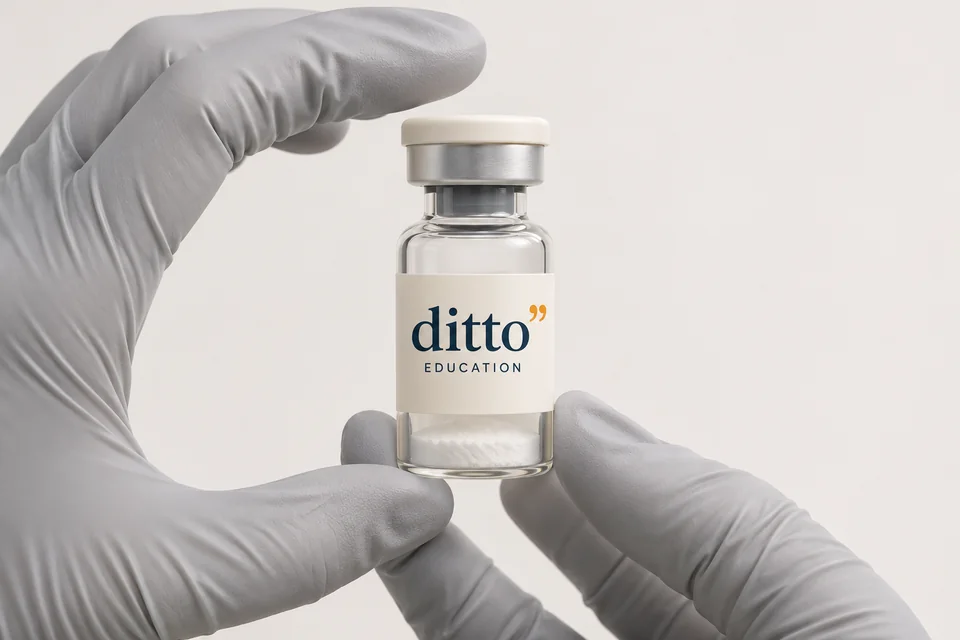
An illustrated reading aid for the product instructions. Confirm the exact formulation, diluent and handling method first. A research-only vial is not an approved medicine.
Check the exact product
Read the label, formulation, vial content, expiry and preparation instructions. Check the vial and closure for damage. Appearance alone cannot establish identity, purity or sterility.

Measure the specified diluent
Confirm the diluent type and volume in the product instructions. Measure that volume using the correct syringe scale. A concentration calculation cannot establish that a diluent is compatible.

Clean the stopper
If the product instructions call for vial access, disinfect the exposed rubber stopper with a fresh alcohol swab and let it dry. Avoid touching it afterward; use sterile equipment for each access.
Measure the specified diluent
Confirm the diluent type and volume in the product instructions. Measure that volume using the correct syringe scale. A concentration calculation cannot establish that a diluent is compatible.

Add as instructed
Follow the product-specific addition method. Where slow addition along the vial wall is specified, keep the flow gentle. Do not infer a preparation method from a dose table or combine separate compounds in one vial.

Mix and inspect
Use the mixing method specified for the product; some require gentle swirling rather than shaking. Compare the appearance with the instructions. Do not use a preparation with unexpected particles, discoloration or suspected contamination.

Record and store
Record the preparation date and calculated concentration in mg/mL and mcg/mL. Follow the exact storage conditions and discard time on the product instructions. There is no universal refrigerated shelf life for all peptides.
AI-generated educational scenes with Ditto-inspired concept labels; not photographs of supplied products. CDC preparation and equipment principles · Check your calculation
Use a calculator
Reconstitution math is the most common source of dosing errors. A peptide reconstitution calculator is the easiest way to confirm your numbers before drawing.
How Kisspeptin Works
Kisspeptin works near the top of the hormone chain. The brain releases kisspeptin, which turns on GnRH. GnRH then tells the pituitary gland to release LH and FSH. In men, LH tells the testes to make testosterone. FSH helps support sperm production. In women, LH and FSH help control ovulation and follicle growth.
The main receptor is called GPR54, also called KISS1R. A receptor is like a lock on a cell. Kisspeptin is the key that turns that lock. When this signal works, the body can send a stronger LH and FSH message. When this pathway is broken, puberty and fertility signals can fail.
For testosterone research, the key point is simple: kisspeptin does not replace testosterone. It tries to make the body send more LH first. If the testes can respond to LH, testosterone may rise. If the pituitary or testes cannot respond, kisspeptin is unlikely to fix that problem.
Who Kisspeptin Is For and Who Should Avoid It
Human kisspeptin research has focused on healthy adult men, premenopausal women, women with missing periods from low hormone signaling, IVF trigger studies, and men and women with low sexual desire disorder. Outside those research settings, evidence is still limited.
- Pregnancy and lactation: Kisspeptin is tied to pregnancy and reproductive cycling. There is no good safety data for use during pregnancy or breastfeeding.
- Hormone-sensitive cancers: Kisspeptin can affect sex-hormone signaling. That matters for breast, ovarian, or prostate cancer history.
- Active fertility treatment outside a clinical trial: Do not try to copy an IVF trigger protocol without clinical monitoring. Timing, labs, and ultrasound checks matter.
- Primary hypogonadism: This means the testes or ovaries are the main problem. Kisspeptin works upstream, so it may not help if the gonads cannot respond.
- Pituitary disease: Kisspeptin needs a working pituitary gland to raise LH and FSH.
- Pediatric or adolescent use: Kisspeptin is part of puberty timing. It should not be used casually in children or teens.
- Heart or vascular concerns: FDA reviewers flagged animal data that may matter for heart and blood-vessel risk. Human relevance is still unclear.
Not a TRT replacement or PCT solution
Kisspeptin is not testosterone replacement. It may raise testosterone indirectly if LH rises and the testes respond, but that is not the same as TRT. Human evidence for post-cycle therapy or fertility restart is still limited.
Kisspeptin Side Effects & Safety
In published human studies, kisspeptin-10 and kisspeptin-54 were generally well tolerated when used short term. The low-desire studies reported no treatment-related serious adverse events. IVF trigger studies reported minor events, but no severe drug-related events clearly tied to kisspeptin-54.
Reported effects from clinical and research-context use
- Mild flushing or warmth shortly after dosing
- Mild injection-site redness or irritation
- Transient headache
- Brief mild nausea
- Short LH and FSH rise, usually followed by a return toward baseline
- Possible testosterone rise after longer exposure in men, if the testes respond to LH
Theoretical and chronic-use risks
- Signal fade with repeated or nonstop exposure. This is called desensitization or tachyphylaxis.
- Disruption of normal GnRH pulse timing. GnRH is the brain signal that starts LH and FSH release.
- Possible heart or blood-vessel concern based on animal data. Human risk is not clear.
- Unknown effects on hormone-sensitive tissues with long-term exposure.
- Product quality risk. No kisspeptin product is FDA-approved, and FDA reviewers flagged limited public data on kisspeptin-10 impurities.
Regulatory safety context
In October 2024, an FDA advisory committee voted against adding kisspeptin-10 to the 503A Bulks List. The review pointed to limited safety and effectiveness data, no approved product anywhere in the world, no major pharmacy-standard monograph, signal fade with chronic dosing, and concerning animal findings.
Kisspeptin Timeline & What to Monitor
Kisspeptin usually produces a fast LH and FSH signal. LH and FSH are pituitary hormones. LH is the main signal that can tell the testes to make testosterone. In IVF trigger studies, one subcutaneous kisspeptin-54 dose raised LH for several hours. Kisspeptin-10 is faster and shorter.
Reported Response Windows
| Form | Onset | Peak | Return to baseline |
|---|---|---|---|
| Kisspeptin-10 (IV bolus) | Minutes | ~10-30 min | <1 hour |
| Kisspeptin-10 (SC bolus) | <30 min | ~30-60 min | Several hours |
| Kisspeptin-54 (SC bolus) | ~30 min | ~5 hours (LH) | 12-14 hours |
| Kisspeptin-54 (IV infusion) | Minutes | Varies with rate | Within ~4 hours of stopping |
These windows are based on published LH response data. Testosterone, when it changes, usually lags behind LH.
What is reasonable to monitor
- Total testosterone (men): check before a cycle, then again on a steady schedule if testosterone response is the research question.
- LH and FSH: these show whether the brain-pituitary signal is responding.
- Estradiol: this estrogen marker can affect LH response, especially in women.
- SHBG and free testosterone: useful context when total testosterone changes.
- Sleep, mood, libido, and sexual-function notes: useful subjective markers, especially because kisspeptin has been studied in low-desire research.
Stopping or review points
If LH or FSH response fades during a cycle, that may be desensitization. If testosterone does not change even when LH rises, the issue may be downstream at the testes. More kisspeptin is not always the answer.
Kisspeptin Clinical Evidence Context
Kisspeptin has more human research than many research-use peptides. Still, the studies are narrow. Most focus on fertility, missing menstrual cycles from low hormone signaling, IVF triggering, and low sexual desire. The evidence is much thinner for general hormone optimization or post-cycle therapy.
IVF oocyte maturation trigger (kisspeptin-54)
IVF studies used kisspeptin-54 to help eggs mature before collection. In these studies, kisspeptin-54 triggered egg maturation and may have lowered OHSS risk compared with hCG. OHSS is ovarian hyperstimulation syndrome, a serious IVF complication.
Hypoactive sexual desire disorder (HSDD)
HSDD means low sexual desire that causes distress. In small men and women studies, IV kisspeptin-54 changed sexual brain response and some arousal measures compared with placebo.
Hypothalamic amenorrhea
Hypothalamic amenorrhea means missing periods because the brain is not sending enough hormone signal. Subcutaneous kisspeptin-54 has helped restore LH pulses in this setting, but repeated dosing can make the response fade.
Direct HPG-axis pharmacology in healthy adults
Direct head-to-head studies compared IV kisspeptin-10, IV kisspeptin-54, and IV GnRH in healthy men. GnRH raised LH more strongly, while kisspeptin-10 and kisspeptin-54 produced similar short-term LH responses.
Testosterone effect in men
In one healthy-men study, longer kisspeptin-10 infusion raised LH and also raised testosterone. Shorter 75-minute kisspeptin-54 studies raised LH/FSH but did not show a testosterone rise during that short window.
What has not been done
There is no completed Phase 3 trial, no FDA-approved kisspeptin product, and no strong long-term safety dataset. Claims about testosterone optimization, PCT, or long-term hormone support are still extrapolations.
Kisspeptin Storage & Handling
Storage Conditions
| State | Storage | Notes |
|---|---|---|
| Lyophilized (powder form) | -4 F (-20 C) long-term | Use supplier label and stability data. |
| Reconstituted (liquid form) | 35.6-46.4 F (2-8 C) | Refrigerate immediately after reconstitution; respect supplier beyond-use limits. |
| Travel / short-term transport | Cool, dry, dark | Avoid direct light, freeze-thaw cycles, and elevated temperatures. |
Do not freeze reconstituted solution. Discard if the solution becomes cloudy, develops particulates, or smells off.
Kisspeptin Protocol Mistakes & Troubleshooting
Missed dose
Research protocols generally skip a missed dose and continue with the next planned dose rather than double-dosing. More kisspeptin does not always mean a stronger or longer signal.
Cloudy or floating particles
Discard the vial. Cloudiness, floating material, or color change can mean contamination or peptide breakdown.
Wrong BAC water volume added
Recalculate the new concentration with a calculator and adjust the draw volume. The main issue is the math.
Dose feels too high or side effects appear
A lower dose is generally favored over extending the cycle in research planning, with clinician review warranted when side effects appear. Brief flushing and mild headache are reported in trials but should not be prolonged.
Injection-site reaction
Rotate sites, use a fresh swab, and let the alcohol fully dry before injection. Persistent or worsening reactions warrant stopping the protocol.
LH/FSH not changing on labs
Confirm dose, form, and lab timing. Kisspeptin-10 can peak and fade quickly, so next-morning labs may miss the signal. The pituitary and gonads still need to work for kisspeptin to have an effect.
Storage mistake
If reconstituted vial sat at room temperature briefly, stability is variable and depends on time and temperature. If unfrozen powder spent extended time at room temperature, contact the supplier for stability data.
Form confusion
Always confirm whether the vial is kisspeptin-10 or kisspeptin-54. They are not interchangeable on a 1:1 mass basis — kisspeptin-54 is the larger molecule, has a longer half-life, and is dosed differently in research.
When to seek qualified medical care
Stop the protocol and seek qualified medical care for chest pain, severe shortness of breath, severe headache, signs of an allergic reaction, or any abrupt change in vision or neurological symptoms.
Kisspeptin Regulatory Status
As of June 2026, no kisspeptin product is FDA-approved for any use. Kisspeptin is also not approved as a drug in the European Union or Japan. There is no major pharmacy-standard monograph for kisspeptin-10 or kisspeptin-54.
On October 29, 2024, the FDA's Pharmacy Compounding Advisory Committee reviewed kisspeptin-10 for the 503A Bulks List. That list affects what compounding pharmacies may use. The committee voted against adding kisspeptin-10. FDA reviewers pointed to limited safety and effectiveness data, no approved product anywhere in the world, limited public quality data, signal fade with chronic dosing, and animal safety concerns.
The peptide regulatory picture changed again in 2026, but that did not make kisspeptin-10 an approved drug. For this page, the practical takeaway is simple: kisspeptin remains research-use only unless the FDA position changes.
Research-use only
Kisspeptin is sold in the U.S. by research-supply companies for research-use only. It is not a supplement, not a compounded medication under FDA-endorsed pathways for the proposed indication, and not an approved drug.
Kisspeptin vs hCG vs Clomiphene vs GnRH
Kisspeptin sits high in the hormone pathway. hCG, clomiphene, GnRH, and testosterone work at different spots. They are not interchangeable.
Where Each Compound Acts
| Compound | Site of Action | Use Context | Key Difference vs Kisspeptin |
|---|---|---|---|
| Kisspeptin-10 / -54 | Brain signal before GnRH | Research; IVF trigger; HSDD trials | Starts high in the pathway; not FDA-approved |
| GnRH / GnRH analogs | Pituitary LH/FSH release | Some FDA-approved; fertility, prostate cancer | One step lower in the pathway; longer clinical track record |
| Clomiphene / SERMs | Estrogen feedback signal | FDA-approved for ovulation induction; off-label male hypogonadism | Oral drug; different mechanism |
| hCG | Testes/ovaries (LH receptor) | FDA-approved IVF trigger; off-label TRT support | Bypasses hypothalamus entirely; OHSS risk in IVF |
| Exogenous testosterone (TRT) | Direct testosterone replacement | FDA-approved hypogonadism | Replaces testosterone directly; kisspeptin does not |
FDA approval status reflects U.S. positioning as of June 2026.
Kisspeptin Blood Tests & Monitoring
Kisspeptin is usually discussed in reproductive-hormone signaling research. Monitoring focuses on LH/FSH signaling, sex hormones, pregnancy context, and symptoms tied to hormone shifts.
Blood test markers to discuss with a clinician
| Marker | Why it matters | Timing |
|---|---|---|
| LH, FSH, estradiol, and progesterone | Reviews reproductive-axis signaling and hormone status in people with ovarian-cycle context. | Baseline |
| Total and free testosterone | Reviews androgen status when testosterone, libido, fertility, or male reproductive function is part of the context. | Baseline |
| Prolactin | Elevated prolactin can affect reproductive hormones and libido. | Optional |
| Pregnancy test | Pregnancy status matters before reproductive-axis experimentation in people who can become pregnant. | Baseline |
| TSH and free T4 | Thyroid status can affect menstrual patterns, fertility, libido, and energy. | Optional |
Monitoring guidance is reproductive-axis pathway-based and should be interpreted with cycle timing and clinician context.
At-home blood test option
Easy at home option to monitor core metrics during research cycles.
Beyond Whoosh
Pharmacy Grade Kisspeptin
Prescription-grade peptide care through Beyond Whoosh. Whoosh prescribes after a clinician reviews your eligibility.
Simple timing framework
- Baseline
- Discuss baseline hormone labs before starting, especially with fertility goals, menstrual changes, testosterone therapy, pituitary history, or endocrine medication use.
- Follow-up
- Repeat relevant hormone markers after 4-8 weeks or after protocol changes.
- Longer term
- For ongoing fertility or hormone protocols, review trends with a clinician at planned intervals.
How to interpret the labs
- Hormone labs are timing-sensitive, especially in people with menstrual cycles.
- Fertility goals, contraception, testosterone therapy, and pituitary history should be reviewed clinically.
- Single hormone results can be misleading without timing, symptoms, and medication context.
Do not wait for routine labs
Severe pelvic pain, unexpected heavy bleeding, severe headaches, vision changes, or pregnancy symptoms need medical review.
FAQ
Q1: What is kisspeptin?
Kisspeptin is a signaling peptide that helps start the reproductive hormone pathway. It tells the brain to release GnRH. GnRH then tells the pituitary gland to release LH and FSH. In men, LH can tell the testes to make testosterone. In women, LH and FSH help support ovulation and fertility signals.
Q2: What is the typical kisspeptin dosage?
Typical research-context kisspeptin-10 dosing is 50-200 mcg (0.05-0.2 mg) subcutaneously, once or twice daily. Subcutaneous means under the skin. Trial-context kisspeptin-54 doses are usually written as nmol/kg, so they are harder to compare to simple mcg dosing. These are research-context numbers, not personal dosing recommendations.
Q3: What is the difference between kisspeptin-10 and kisspeptin-54?
Kisspeptin-10 is the shorter form. Kisspeptin-54 is the longer form. Both work on the same receptor, but they do not last the same amount of time. Kisspeptin-10 has a half-life of about 4 minutes in blood after IV dosing. Kisspeptin-54 lasts longer, about 28 minutes after subcutaneous dosing. Kisspeptin-10 is usually easier to find from research suppliers.
Q4: How is kisspeptin reconstituted?
Kisspeptin ships as a lyophilized powder. You add bacteriostatic water and gently swirl until clear. The volume you add determines the final concentration. For a 10 mg (10,000 mcg) vial reconstituted with 2 mL, the final concentration is 5 mg/mL (5,000 mcg/mL), so 2 units on a U-100 syringe equals 0.02 mL or 100 mcg (0.1 mg). This page avoids assumptions above 3 mL because many research vials cannot hold more than that.
Q5: What is a typical kisspeptin cycle length?
Research-context cycles are usually 2-6 weeks on, with 2-4 weeks off. Continuous, uninterrupted dosing is avoided because kisspeptin causes desensitization — the LH response fades over time when the receptor is overstimulated. A diagnostic single use (mimicking a clinical LH/FSH stimulation test or an IVF trigger) is also used in clinical settings.
Q6: Is kisspeptin FDA-approved?
No. As of June 2026, no kisspeptin product is FDA-approved for any indication, in the U.S. or anywhere else. There is no USP, EU, or Japanese Pharmacopoeia monograph for kisspeptin-10 or kisspeptin-54. The FDA's Pharmacy Compounding Advisory Committee voted in October 2024 against adding kisspeptin-10 to the 503A Bulks List for compounding for secondary male hypogonadism.
Q7: What are the main kisspeptin side effects?
Reported effects from clinical trials include mild flushing, headache, short nausea, and minor injection-site irritation. The main research concern is signal fade with repeated or nonstop dosing. This is called tachyphylaxis or desensitization. The FDA also flagged animal data that may matter for heart and blood-vessel risk, but human risk is not clear.
Q8: Can kisspeptin be used as TRT or for post-cycle therapy?
Kisspeptin is not testosterone replacement. It may raise testosterone indirectly by raising LH first, if the testes can respond. But community use for TRT, post-cycle therapy, or general hormone optimization is ahead of the human evidence. There is no completed Phase 3 trial supporting kisspeptin as a TRT alternative or PCT tool.
Q9: What supplies are needed for a kisspeptin protocol?
A typical 4-week SC kisspeptin-10 cycle at 100 mcg (0.1 mg) daily needs one 10 mg (10,000 mcg) vial, about 28 U-100 insulin syringes (0.3 mL barrel preferred), one 10 mL bottle of bacteriostatic water (you only use about 2 mL per vial), and roughly 56 alcohol swabs. Round up to allow for priming losses and any dropped or damaged supplies.
Q10: How does kisspeptin compare to hCG?
Kisspeptin and hCG work at different levels. Kisspeptin starts higher up in the brain pathway and tries to trigger the body's own GnRH, LH, and testosterone signal. hCG acts more like LH directly at the testes or ovaries. hCG has FDA approval for IVF triggering; kisspeptin does not. In IVF research, kisspeptin-54 may have a lower OHSS risk than hCG.
Q11: Is this kisspeptin protocol page medical advice?
No. This page is an educational research reference. It summarizes published trial protocols, research-context community planning, and FDA regulatory documents. It is not a personal dosing recommendation. Consult a licensed physician for any decisions about your own hormone status, fertility, or sexual health.
Sources & Research
- Jayasena CN, Abbara A, Comninos AN, et al. Kisspeptin-54 triggers egg maturation in women undergoing in vitro fertilization. Journal of Clinical Investigation (2014)
- Abbara A, Jayasena CN, Christopoulos G, et al. Efficacy of Kisspeptin-54 to Trigger Oocyte Maturation in Women at High Risk of OHSS During IVF Therapy. Journal of Clinical Endocrinology & Metabolism (2015)
- Comninos AN, Demetriou L, Wall MB, et al. Effects of Kisspeptin Administration in Women With Hypoactive Sexual Desire Disorder: A Randomized Clinical Trial. JAMA Network Open (2022)
- Thurston L, Hunjan T, Ertl N, et al. Effects of Kisspeptin on Sexual Brain Processing and Penile Tumescence in Men With Hypoactive Sexual Desire Disorder: A Randomized Clinical Trial. JAMA Network Open (2023)
- George JT, Veldhuis JD, Roseweir AK, et al. Kisspeptin-10 Is a Potent Stimulator of LH and Increases Pulse Frequency in Men. Journal of Clinical Endocrinology & Metabolism (2011)
- Narayanaswamy S, Prague JK, Jayasena CN, et al. Direct comparison of the effects of intravenous kisspeptin-10, kisspeptin-54 and GnRH on gonadotrophin secretion in healthy men. Human Reproduction (2015)
- Abbara A, Eng PC, Phylactou M, et al. Kisspeptin: a novel physiological trigger for oocyte maturation in IVF treatment (Lancet 2014 trial). The Lancet (2014)
- Trevisan CM, Montagna E, de Oliveira R, et al. Role of Kisspeptin on Hypothalamic-Pituitary-Gonadal Pathology and Its Effect on Reproduction. PMC review (2021)
- Plant TM The neurobiological mechanism underlying hypothalamic GnRH pulse generation: the role of kisspeptin neurons in the arcuate nucleus. Journal of Endocrinology (2019)
- Hu KL, Chang HM, Zhao HC, et al. The Role of Kisspeptin in the Control of the Hypothalamic-Pituitary-Gonadal Axis and Reproduction. Frontiers in Endocrinology (2022)
- Abbara A, Jayasena CN, Comninos AN, et al. Use of kisspeptin to trigger oocyte maturation during in vitro fertilisation (IVF) treatment. Frontiers in Endocrinology (2022)
- U.S. Food and Drug Administration FDA Briefing Document, Pharmacy Compounding Advisory Committee Meeting — Kisspeptin-10 (review against inclusion on 503A Bulks List). FDA (2024)
- U.S. Food and Drug Administration Summary Minutes, October 29, 2024 PCAC Meeting (kisspeptin-10 vote). FDA (2024)
- Skorupskaite K, George JT, Anderson RA The kisspeptin-GnRH pathway in human reproductive health and disease. Journal of Endocrinology (review) (2016)
- George JT, Veldhuis JD, Roseweir AK, et al. Subcutaneous infusion of kisspeptin-54 stimulates gonadotrophin release in women and the response correlates with basal oestradiol levels. Clinical Endocrinology (2017)
Related Dosing Protocols
Reconstitution calculator
Enter your own values. This tool calculates quantities, not a recommended dose.
Check the concentration
Changing the unit keeps the entered mass equivalent. 1 milligram (mg) = 1,000 micrograms (mcg). This tool does not choose a target amount.
Biological IU (optional, product-specific)
Only enter a potency explicitly stated as IU per mg on the exact product label or reference. Do not enter the 100 from a U-100 syringe. No factor is assumed for any peptide.
Your result will appear here
Enter the mass, final solution volume and target mass, or load a fictional example.
Assumes accurate masses, final solution volume and even distribution. Blend arithmetic does not establish whether substances can be mixed. Read the formulas and assumptions.
Study findings, reported examples and supplier statements have different levels of evidence. Follow the citations and check the formulation, population and date before interpreting a number.
Editorial standards and corrections