On this page
TOOLS FOR THIS GUIDE
Work with Survodutide
The guide name carries across. Amounts, dates and instructions remain yours to enter; opening a tool saves nothing.
Worked examples: calculations, records and source checks
Fictional arithmetic, unrelated to a recommended amount of Survodutide: 10 mg (10,000 mcg) in a final 2 mL is 5 mg/mL (5,000 mcg/mL). A target mass of 0.25 mg (250 mcg) corresponds to 0.05 mL, or 5 U-100 syringe markings. Biological IU cannot be inferred from these inputs. Neither the mass nor the liquid is a preparation recommendation.
Open the arithmetic example- Supply example: two 10 mg (10,000 mcg) vials start at 20 mg (20,000 mcg). Four recorded entries of 0.25 mg (250 mcg) leave a theoretical 19 mg (19,000 mcg), before losses or expiry. Skipped entries do not deduct stock.
- Measurement example: enter “Sleep duration”, “7.5”, “hours” and the date. Keep the same unit and note changing conditions. A trend does not prove a treatment effect.
- Source example: record “rat study” when rats were studied, even when the headline describes recovery. Keep the exact paper and its limitations.
The planner accepts mg and mcg. Biological IU/USP units, sprays, drops and variable mixtures need product-specific instructions; they cannot be inferred from a generic mass calculator. For stacks, record each known ingredient separately.
FDA: why concentration and unit errors matterEvidence & source checks
Did cardiovascular events remain within the trial's prespecified safety margin?
The composite cardiovascular outcome met the non-inferiority criterion: hazard ratio 0.89, 95% confidence interval 0.67 to 1.18. Gastrointestinal events and related treatment discontinuations were more frequent with survodutide.
Limit: Non-inferiority within a prespecified margin does not prove that cardiovascular events were reduced.
What to verify before filling a plan
- Identity and formulation: match the name, sequence or active ingredient, route and strength. A related molecule or branded medicine is not automatically equivalent.
- Instruction source: obtain the actual amount, frequency and duration from qualified medical instructions. A community table or trial protocol does not establish an individual regimen.
- Units and product details: keep mass, liquid volume and biological activity units separate. Record batch, storage and discard instructions from the actual product; the tools cannot determine sterility or stability.
- Review and follow-up: list medicines and supplements, unresolved interactions and questions. Agree on relevant observations and actions with a qualified professional; normal measurements do not prove safety.
Selected source context, not a systematic review or medical approval. Study cards checked 24 November 2026; guide source notes checked 25 November 2026. Research references and citations appear below.
Guide summary
REFERENCE SUMMARY- Compound
- Survodutide (BI 456906)
- Class
- Dual GLP-1 / glucagon receptor agonist
- Common format
- Once-weekly subcutaneous injection
- Regulatory status
- Investigational; not FDA-approved
Survodutide Quick Start
Survodutide is a 29-amino-acid peptide developed by Boehringer Ingelheim with Zealand Pharma. Its research code is BI 456906. It is a once-weekly subcutaneous peptide, meaning it is injected under the skin. It acts on two targets at the same time: the GLP-1 receptor and the glucagon receptor.
Researchers study Survodutide for weight loss because GLP-1 can lower appetite and glucagon may help the body burn more energy. The same glucagon effect is why researchers also study Survodutide for MASH, a serious fatty liver disease.
Survodutide is investigational. As of June 2026, it is not FDA-approved and is not sold by licensed U.S. pharmacies. The newest trial results (SYNCHRONIZE-1) were announced on April 28, 2026, with full data due at the American Diabetes Association 2026 Scientific Sessions in June.
- Mechanism
- Dual GLP-1 + glucagon receptor agonist. This is different from tirzepatide, which targets GLP-1 + GIP.
- Route
- Subcutaneous injection, once weekly.
- Trial top dose
- 4.8 mg (4,800 mcg) once weekly in the Phase 2 obesity trial, after a 20-week escalation.
- Phase 3 result
- 16.6% body weight loss at 76 weeks vs 3.2% on placebo (SYNCHRONIZE-1).
- Status
- Not FDA-approved as of June 2026.
Investigational, not a treatment plan
This page is an educational research-context summary, not medical advice and not a treatment plan. Survodutide is not FDA-approved and is not available by prescription. Any peptide use should be discussed with a qualified clinician.
Survodutide Dosing Protocol & Schedule
All dosing information on this page comes from published clinical trial protocols. Survodutide has no FDA-approved label, so there is no consumer dose to copy. The tables below show what researchers studied in Phase 2 and Phase 3 trials.
Trial-studied dose escalation (Phase 2)
The Phase 2 obesity trial included 387 adults with a BMI of 27 or higher and no diabetes. People received 0.6 mg (600 mcg), 2.4 mg (2,400 mcg), 3.6 mg (3,600 mcg), or 4.8 mg (4,800 mcg) of Survodutide once weekly, or placebo, for 46 weeks. The dose went up during the first 20 weeks, then stayed steady for the next 26 weeks.
Phase 2 trial: weight loss by survodutide arm at 46 weeks
| Arm | Average weight loss | Note |
|---|---|---|
| Placebo | -2.8% | Reference arm. |
| 0.6 mg (600 mcg) once weekly | -6.2% | Lowest studied dose. |
| 2.4 mg (2,400 mcg) once weekly | -12.5% | Mid dose. |
| 3.6 mg (3,600 mcg) once weekly | -13.2% | Mid-high dose. |
| 4.8 mg (4,800 mcg) once weekly | -14.9% in the main analysis | Top dose; people who completed the trial reached around 18.7%. This is not a dosing recommendation. |
From the Phase 2 trial. Most people who stopped treatment did so during the fast 20-week dose increase. This is trial reporting only and not a dosing recommendation.
Phase 3 SYNCHRONIZE-1 topline result (April 28, 2026)
In the Phase 3 SYNCHRONIZE-1 trial, 725 adults with obesity or overweight and no type 2 diabetes were treated for 76 weeks. The dose increase was slower and more flexible than in Phase 2.
Phase 3 SYNCHRONIZE-1 topline result at 76 weeks
| Endpoint | Survodutide | Placebo |
|---|---|---|
| Average body weight change | -16.6% | -3.2% |
| ≥5% body weight loss | 85.1% of participants | 38.8% of participants |
| Average absolute weight loss | Up to ~17.8 kg (~39.2 lb) | Smaller change |
Topline result reported by Boehringer Ingelheim on April 28, 2026. Full results are due at the ADA 2026 Scientific Sessions in June. This is not a dosing recommendation.
Phase 3 LIVERAGE trials are studying Survodutide for MASH, a serious fatty liver disease. These trials include people with moderate to advanced liver scarring, including cirrhosis. Results are expected later in 2026.
Not a dosing recommendation
The dose ranges above come from clinical trial protocols. Survodutide is investigational, not FDA-approved, and not available by prescription as of June 2026. Do not use this table to plan personal dosing.
Survodutide Supplies Needed
Affiliate disclosure: University of Peptide may earn a commission when you use eligible supplier links, at no extra cost to you. Math below assumes once-weekly subcutaneous use and the two most common research vial sizes (6 mg (6,000 mcg) and 10 mg (10,000 mcg)).
Recommended Supply
Choose your region
Use discount code SAVE10 at Peptira checkout. See why we love Peptira.
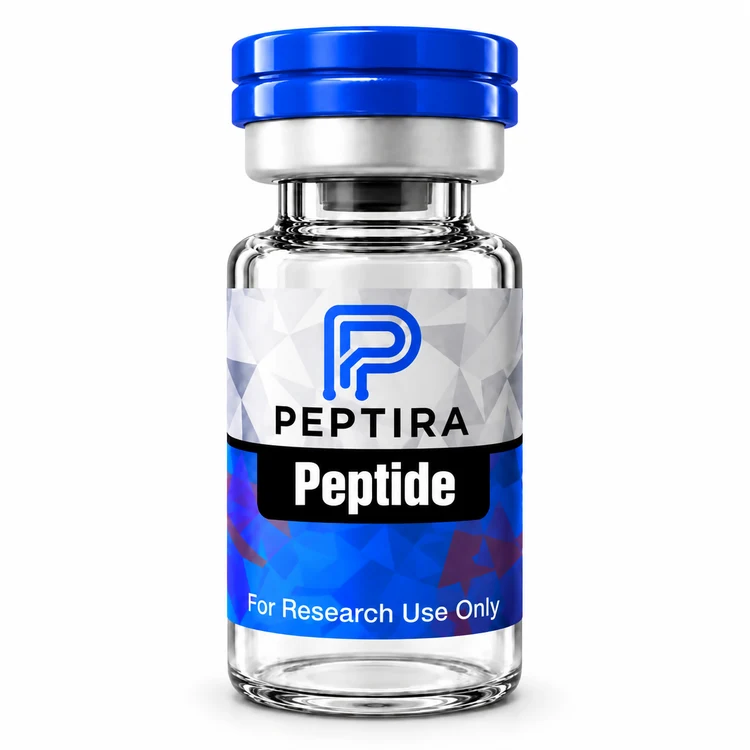
Survodutide

At-Home Blood Test
Research Supplies
Peptide Vials (research-grade)
Vial counts depend on the weekly amount and vial size. The periods below do not specify a dose or escalation schedule.
| Cycle length | Planning note |
|---|---|
4-12 weeks Depends on the weekly amount | Calculate from the amount used, vial size, full draws, and storage limits. |
Insulin Syringes (U-100)
A 0.3 mL syringe holds 30 units and a 0.5 mL syringe holds 50 units. The listed 4.8 mg (4,800 mcg) amount at 3 mg/mL (3,000 mcg/mL) is 1.6 mL (160 units), exceeding both and a 1 mL syringe. Counts below show weekly administrations, not a complete syringe count.
| Cycle length | Planning note |
|---|---|
4 weeks 4 weekly administrations | Syringe needs depend on the draw volume and device capacity. |
8 weeks 8 weekly administrations | Syringe needs depend on the draw volume and device capacity. |
12 weeks 12 weekly administrations | Syringe needs depend on the draw volume and device capacity. |
Bacteriostatic Water
The examples use 1.0 to 2.0 mL per vial. Total water depends on the actual vial count; bottle counts also depend on storage limits.
| Cycle length | Planning note |
|---|---|
4-12 weeks Calculate from the actual vial count | Multiply the vial count by 1.0–2.0 mL per vial; allow for losses and storage limits. |
Allow extra for losses, damaged supplies, and changes to the research plan. Confirm exact vial size and current pricing on the supplier page before ordering.
Companion Supplies & Routine Support
Survodutide Dosage Chart
This Survodutide dosage chart summarizes the Phase 2 and Phase 3 once-weekly trial dose arms shown in the dosing section above.
 UNIVERSITY OF PEPTIDE · RESEARCH REFERENCE
Survodutide Dosage Chart
Survodutide dosage chart summarizing Phase 2 and Phase 3 once-weekly trial dose arms.
Survodutide Reconstitution Guide
Research-use Survodutide is usually sold as a dry, freeze-dried powder. Before it can be drawn into a syringe, the powder is mixed with bacteriostatic water (BAC water). The two common research vial sizes are 6 mg (6,000 mcg) and 10 mg (10,000 mcg). The math below covers both.
Reconstitution math for common Survodutide research vial sizes
| Vial size | BAC water added | Concentration | 1 unit (U-100) equals |
|---|---|---|---|
| 6 mg (6,000 mcg) | 1.0 mL | 6.0 mg/mL (6,000 mcg/mL) | 0.060 mg (60 mcg) |
| 6 mg (6,000 mcg) | 2.0 mL | 3.0 mg/mL (3,000 mcg/mL) | 0.030 mg (30 mcg) |
| 10 mg (10,000 mcg) | 1.0 mL | 10.0 mg/mL (10,000 mcg/mL) | 0.100 mg (100 mcg) |
| 10 mg (10,000 mcg) | 2.0 mL | 5.0 mg/mL (5,000 mcg/mL) | 0.050 mg (50 mcg) |
Choose a volume that puts your planned weekly dose on an easy-to-read unit mark.
An illustrated reading aid for the product instructions. Confirm the exact formulation, diluent and handling method first. A research-only vial is not an approved medicine.
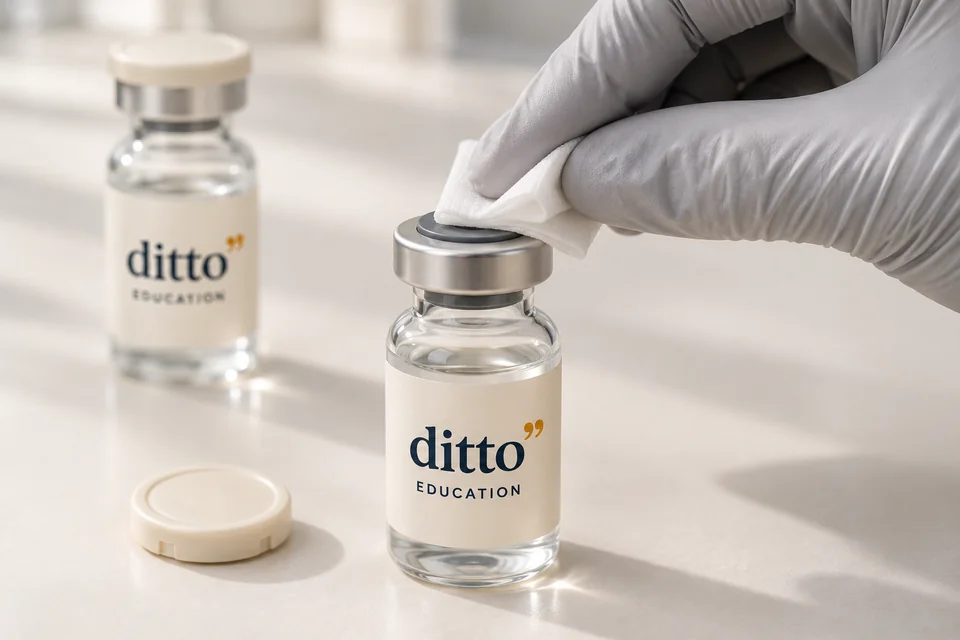
Clean the stopper
If the product instructions call for vial access, disinfect the exposed rubber stopper with a fresh alcohol swab and let it dry. Avoid touching it afterward; use sterile equipment for each access.
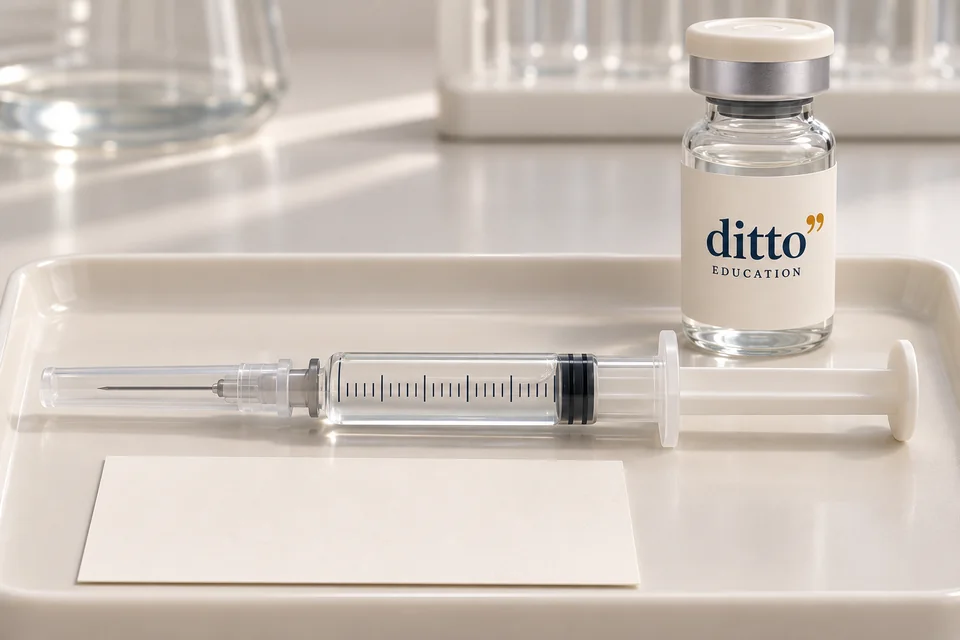
Measure the specified diluent
Confirm the diluent type and volume in the product instructions. Measure that volume using the correct syringe scale. A concentration calculation cannot establish that a diluent is compatible.
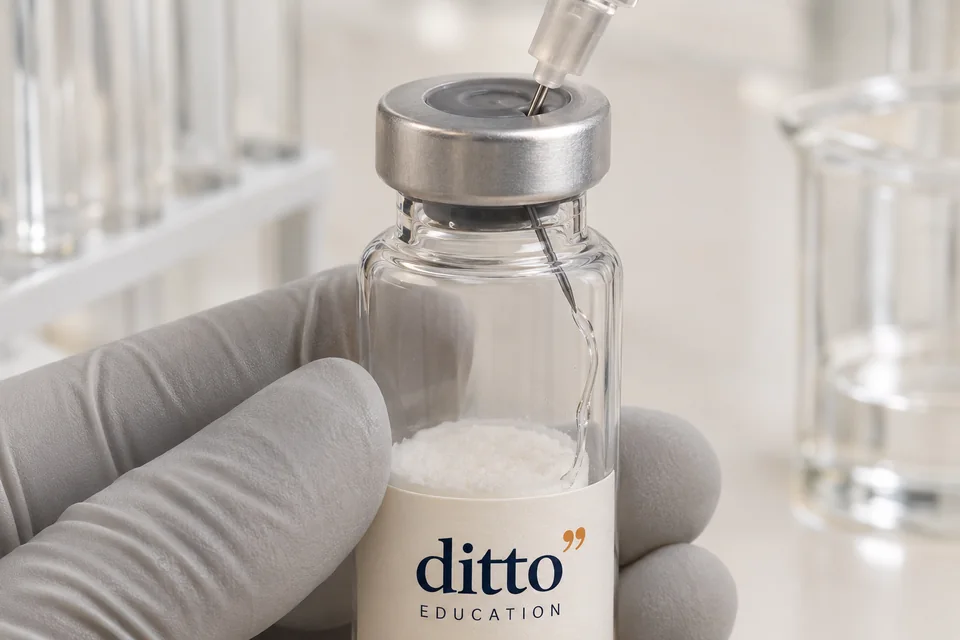
Add as instructed
Follow the product-specific addition method. Where slow addition along the vial wall is specified, keep the flow gentle. Do not infer a preparation method from a dose table or combine separate compounds in one vial.
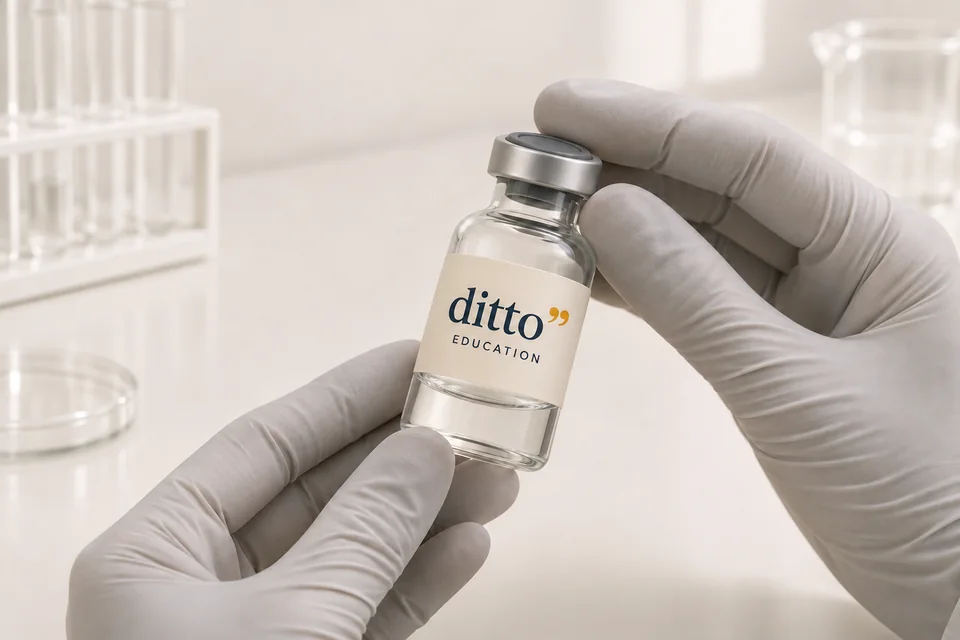
Mix and inspect
Use the mixing method specified for the product; some require gentle swirling rather than shaking. Compare the appearance with the instructions. Do not use a preparation with unexpected particles, discoloration or suspected contamination.
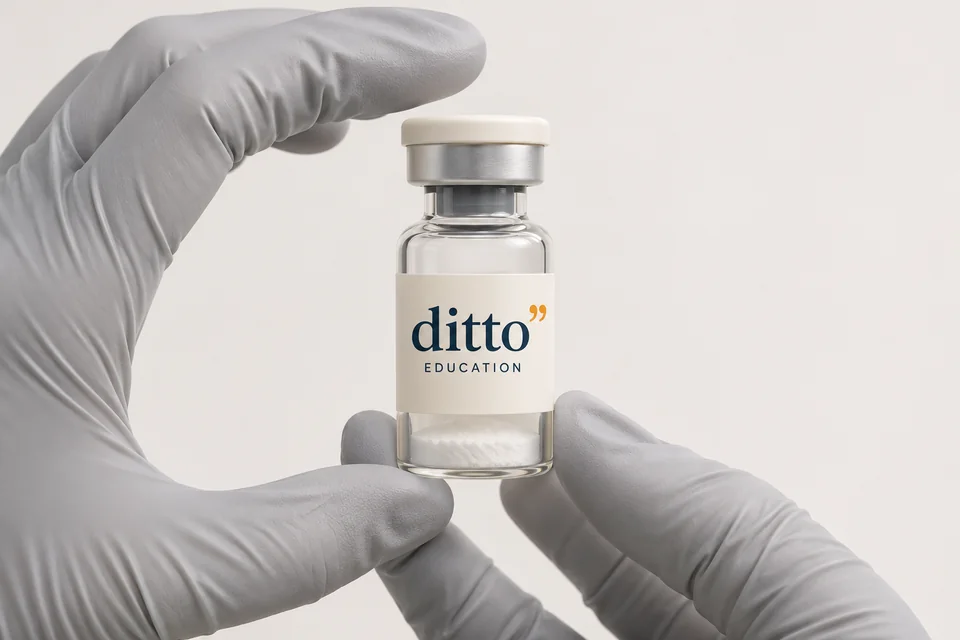
Check the exact product
Read the label, formulation, vial content, expiry and preparation instructions. Check the vial and closure for damage. Appearance alone cannot establish identity, purity or sterility.
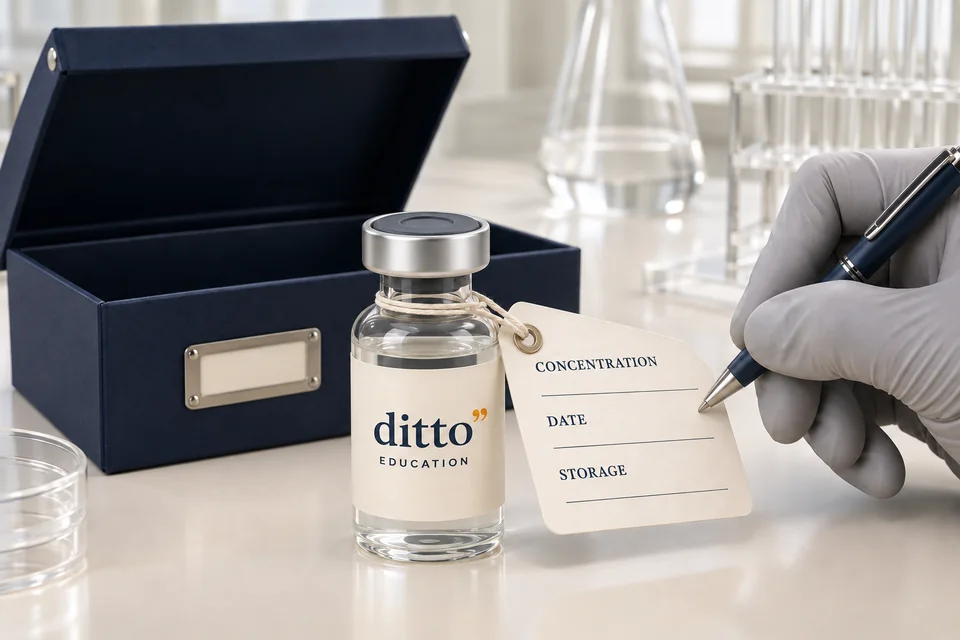
Record and store
Record the preparation date and calculated concentration in mg/mL and mcg/mL. Follow the exact storage conditions and discard time on the product instructions. There is no universal refrigerated shelf life for all peptides.
Check the quantity calculation
Use the labeled mass and final liquid volume in the calculator. Read mg and mcg together, then check the mL and U-100 markings. Biological IU requires the exact product potency; the calculator does not choose a dose.
AI-generated educational scenes with Ditto-inspired concept labels; not photographs of supplied products. CDC preparation and equipment principles · Check your calculation
Need custom vial math?
If your vial size, BAC water volume, or target dose is different, use the University of Peptide calculator for exact unit conversions.
How Survodutide Works
Survodutide acts on two targets at the same time: the GLP-1 receptor and the glucagon receptor. That is why it is grouped with newer obesity peptides like tirzepatide and retatrutide, but it is not the same as either one.
In plain English: GLP-1 may lower appetite and slow how fast food leaves the stomach. Glucagon may raise energy use, meaning the body may burn more calories at rest. Glucagon also acts in the liver, which is why Survodutide is being studied for MASH.
In research papers, Survodutide is called a dual agonist because one peptide molecule turns on both receptors. It also has a fatty-acid tail, similar to semaglutide, which helps it last long enough for once-weekly dosing.
Lowers appetite (GLP-1 arm)
In Phase 2, around 16.6% of survodutide participants reported decreased appetite vs 3.4% on placebo.
Raises energy expenditure (glucagon arm)
Preclinical work showed Survodutide raised energy use in animal models and lowered liver fat.
Targets liver tissue
Glucagon receptors are common in the liver, which is why Survodutide is also being tested in MASH and MASH-cirrhosis trials.
Who Survodutide Is For and Who Should Avoid It
Survodutide is still being studied. It has no FDA-approved use, so there is no official patient label. The list below is based on who was left out of trials and on common GLP-1 drug warnings.
- Pregnancy and breastfeeding: not studied in these groups. Avoid.
- Personal or family history of medullary thyroid cancer or MEN 2: this is a common warning for GLP-1 drugs.
- History of pancreatitis: GLP-1 drugs carry a pancreas inflammation warning.
- Severe stomach or gut disease: nausea, vomiting, diarrhea, and constipation are common with Survodutide.
- Diabetes treated with insulin or sulfonylureas: blood sugar may need close medical adjustment.
- Children and teenagers: no pediatric data exists.
- Known peptide allergies: one Phase 2 participant had angioedema, a serious swelling reaction.
If any of these apply, Survodutide should only be considered inside a formal clinical trial.
Survodutide Side Effects & Safety
Survodutide side effects in trials were mostly stomach and gut related, similar to GLP-1 drugs. Nausea, vomiting, diarrhea, and constipation were most common while the dose was going up, then often improved once the dose stayed steady.
Phase 2 obesity trial reported rates
- Any stomach or gut side effect: 75% on Survodutide vs 42% on placebo.
- Stopped because of side effects: 25% on Survodutide vs 4% on placebo. This was mostly during the fast 20-week dose increase.
- Serious side effects: 4.2% on Survodutide vs 6.5% on placebo.
- Notable single events: one case of dehydration with kidney failure and one case of angioedema, a serious swelling reaction.
Phase 2 MASH trial reported rates
- Nausea: 66% on survodutide vs 23% on placebo.
- Diarrhea: 49% on survodutide vs 23% on placebo.
- Vomiting: 41% on survodutide vs 4% on placebo.
- Stopped because of side effects: 20% on Survodutide vs 3% on placebo. Most were stomach and gut side effects during dose increase.
Phase 3 SYNCHRONIZE-1 safety signal
Boehringer reported that stomach and gut side effects in SYNCHRONIZE-1 were mild to moderate and most common while the dose was going up. No new safety concerns were reported in the topline release. Full safety data is due at ADA 2026 in June.
GLP-1 class cautions
- Pancreatitis: GLP-1 drugs carry a pancreas inflammation warning.
- Medullary thyroid cancer: GLP-1 drugs carry a thyroid cancer warning based on animal data.
- Heart rate: a small heart-rate increase was reported with survodutide.
- Hypoglycemia: higher risk if combined with insulin or sulfonylureas.
Survodutide Timeline & What to Monitor
The timeline below shows when changes were reported in trials. These are research reference points, not personal health targets.
- Weeks 0–20: dose-increase phase in Phase 2. Most stomach and gut side effects appeared during this window.
- Weeks 20–46: steady-dose phase in Phase 2. Weight loss continued and most side effects faded.
- Weeks 46–76: extended exposure in Phase 3 SYNCHRONIZE-1. Average weight loss reached 16.6% at 76 weeks.
- Body composition: Boehringer's initial Phase 3 analysis described most of the weight loss as fat tissue, with only a small share from lean mass. Waist circumference also dropped.
Trial-style tracking often includes weight, waist size, blood pressure, heart rate, fasting glucose, HbA1c for people with diabetes, and basic liver labs. These are research markers, not personal lab orders.
Survodutide Clinical Evidence Context
Survodutide has more human trial data than many research peptides in this class. Published studies include Phase 2 trials for obesity and MASH, a Phase 2 type 2 diabetes trial, and a 2025 meta-analysis. Phase 3 SYNCHRONIZE-1 topline data was released on April 28, 2026, with full data due at ADA 2026 in June.
Phase 3 obesity (SYNCHRONIZE-1)
725 adults, 76 weeks, average 16.6% weight loss vs 3.2% placebo. 85.1% reached ≥5% loss. Topline reported by Boehringer Ingelheim, April 28, 2026.
Phase 2 obesity (Le Roux et al., Lancet Diabetes & Endocrinology, 2024)
387 adults, 46 weeks, with more weight loss at higher weekly doses. The 4.8 mg (4,800 mcg) arm reached around 14.9% loss in the main analysis, or about 18.7% among people who completed the trial.
Phase 2 MASH (NEJM, 2024)
295 adults with MASH and liver scarring. More people on Survodutide improved than on placebo, but stomach and gut side effects were common.
Phase 2 type 2 diabetes (Blüher et al., Diabetologia, 2023)
Compared to placebo and open-label semaglutide. Survodutide reduced HbA1c by ~1.5% versus placebo, comparable to 1.0 mg/week (1,000 mcg/week) semaglutide.
Systematic review and meta-analysis (PMC, 2025)
A pooled review of randomized Survodutide trials in obesity. It supported the dose-related weight-loss finding and the stomach-and-gut side-effect pattern.
Key gaps: long-term heart outcome data is still missing, head-to-head trials against tirzepatide and retatrutide have not been run, and the LIVERAGE Phase 3 MASH program has not yet reported results.
Survodutide Storage & Handling
Survodutide can be damaged by heat and light. Storage rules are similar to other long-acting GLP-1 peptides.
Survodutide storage temperatures
| Form | Temperature | Note |
|---|---|---|
| Dry powder (sealed vial, long-term) | -4 °F (-20 °C) or colder | Best for long storage. Keep dark and dry. |
| Dry powder (short-term) | 35.6 to 46.4 °F (2 to 8 °C) | Acceptable for short transit and short holds. |
| Reconstituted (in BAC water) | 35.6 to 46.4 °F (2 to 8 °C) | Refrigerate. Use within the BAC water shelf window. |
| Appearance | Clear after mixing | Cloudy or particulate solution means stop using it. |
Avoid repeated freezing and thawing. Let frozen vials reach room temperature before opening to reduce moisture on the vial.
Survodutide Protocol Mistakes & Troubleshooting
Missed weekly dose
Survodutide remains investigational. In GLP-1-class trial protocols, a missed dose was generally taken only within a short window of the original day; after that window, it was skipped and the next dose occurred on the regular schedule without doubling up. This is trial-protocol reporting, not personal guidance.
The vial looks cloudy after mixing
Stop. Cloudy liquid can mean the peptide broke down, the vial is contaminated, or powder did not fully dissolve. Survodutide should be clear after mixing.
Nausea is severe during escalation
Most people who stopped in Phase 2 did so during the fast 20-week dose increase. Phase 3 SYNCHRONIZE used a slower, more flexible increase, which seemed easier to tolerate.
I added the wrong amount of BAC water
Recalculate the concentration. The vial is now at a different mg/mL, so your unit math also changes. Use the calculator before the next draw.
I forgot to refrigerate the reconstituted vial
If it sat at room temperature for more than a few hours, treat the vial as compromised.
I am trying to compare to retatrutide or tirzepatide
See the comparison section below. These are not interchangeable, the receptor targets are different, and only tirzepatide is FDA-approved among this group.
Survodutide Regulatory Status
As of June 2026, Survodutide is not FDA-approved for any human use. It is still an investigational drug. Boehringer Ingelheim has not yet submitted Survodutide for FDA approval, and more Phase 3 results are still expected during 2026.
Phase 3 status (June 2026): SYNCHRONIZE-1, the obesity trial, reported positive topline results on April 28, 2026. Full data is scheduled for the ADA 2026 Scientific Sessions in June. The LIVERAGE MASH trials are still ongoing, with results expected later in 2026.
FDA designations: Survodutide received FDA Fast Track designation for MASH, formerly called NASH.
Research-use-only market: Survodutide is sold to research labs by some suppliers under research-use-only labels. These products are not regulated as drugs and are not sold as prescription medicine. Quality and purity depend on the supplier.
Status checked June 2026
Regulatory status can change quickly. Confirm current FDA approval and submission status on FDA.gov and on Boehringer Ingelheim's investigator relations page before relying on this paragraph for planning.
Survodutide vs Retatrutide vs Tirzepatide vs Semaglutide
Survodutide is part of a fast-moving group of obesity peptides. They all use GLP-1 in some way, but each one pairs it with a different second or third target.
Dual and multi-receptor obesity peptide comparison (June 2026)
| Peptide | Receptor targets | Top reported weight loss | Route | FDA status |
|---|---|---|---|---|
| Survodutide (BI 456906) | GLP-1 + Glucagon | 16.6% (Phase 3 SYNCHRONIZE-1, 76 weeks) | Subcutaneous, once weekly | Investigational |
| Retatrutide | GLP-1 + GIP + Glucagon (triple) | 24.2% (Phase 2, 48 weeks) | Subcutaneous, once weekly | Investigational |
| Tirzepatide (Mounjaro / Zepbound) | GLP-1 + GIP | 20.9% (SURMOUNT-1, 72 weeks) | Subcutaneous, once weekly | FDA-approved (T2D and obesity) |
| Semaglutide (Ozempic / Wegovy / Rybelsus) | GLP-1 only | 14.9% (STEP 1, 68 weeks) | Subcutaneous, once weekly (oral Rybelsus daily) | FDA-approved (T2D and obesity) |
| CagriSema (cagrilintide + semaglutide) | GLP-1 + Amylin | 22.7% (REDEFINE-1 Phase 3) | Subcutaneous, once weekly | Investigational |
Numbers are from each peptide's primary trial. These are not interchangeable and the side-effect profiles differ. This is not a clinical recommendation.
Key differences in plain English: Survodutide is GLP-1 plus glucagon. Retatrutide is the triple agonist: GLP-1, GIP, and glucagon. Tirzepatide and semaglutide are FDA-approved. CagriSema pairs GLP-1 with amylin instead of glucagon or GIP.
FAQ
Q1: What is Survodutide?
Survodutide is a 29-amino-acid peptide developed by Boehringer Ingelheim with Zealand Pharma. Its research code is BI 456906. It acts on both the GLP-1 receptor and the glucagon receptor, which is why it is called a dual agonist.
Q2: Is Survodutide FDA-approved?
No. As of June 2026, survodutide is investigational and is not FDA-approved for any human use. The Phase 3 SYNCHRONIZE-1 trial reported positive topline results on April 28, 2026, and full data is due at the ADA 2026 Scientific Sessions in June.
Q3: How much weight did people lose with Survodutide?
In the Phase 3 SYNCHRONIZE-1 trial, adults with obesity or overweight without type 2 diabetes lost an average of 16.6% of body weight at 76 weeks, versus 3.2% on placebo. 85.1% of survodutide participants reached at least a 5% weight loss versus 38.8% on placebo.
Q4: How is Survodutide dosed in clinical trials?
The Phase 2 obesity trial used once-weekly subcutaneous arms of 0.6 mg (600 mcg), 2.4 mg (2,400 mcg), 3.6 mg (3,600 mcg), or 4.8 mg (4,800 mcg), with a 20-week dose escalation followed by 26 weeks of maintenance. Phase 3 SYNCHRONIZE-1 used an extended, more flexible escalation. This is trial-protocol reporting, not a dosing recommendation.
Q5: Can I buy Survodutide?
Survodutide is not available by prescription in the United States as of June 2026. Some research suppliers sell it under research-use-only labels, but those products are not regulated as prescription drugs and are not intended for human use. Always confirm current FDA status before drawing conclusions.
Q6: How does Survodutide compare to Retatrutide?
Both are investigational once-weekly subcutaneous peptides. Survodutide targets GLP-1 and glucagon. Retatrutide targets GLP-1, GIP, and glucagon. In headline trials, retatrutide reported higher top-arm weight loss than Survodutide, but the two have not been compared head-to-head.
Q7: How does Survodutide compare to Tirzepatide?
Tirzepatide is GLP-1 plus GIP. Survodutide is GLP-1 plus glucagon. Tirzepatide is FDA-approved for type 2 diabetes (Mounjaro) and for obesity (Zepbound). Survodutide is still investigational. No head-to-head trial has been published.
Q8: What are the main Survodutide side effects?
The most common Survodutide side effects are nausea, vomiting, diarrhea, and constipation. In the Phase 2 obesity trial, around 75% of Survodutide participants reported a stomach or gut side effect versus 42% on placebo. Most happened during the fast 20-week dose increase. Phase 3 SYNCHRONIZE-1 reported mostly mild to moderate stomach and gut side effects with a slower dose increase.
Q9: Who should avoid Survodutide?
Groups that should avoid Survodutide outside a clinical trial include pregnant or breastfeeding people, people with a personal or family history of medullary thyroid cancer or MEN 2, people with pancreatitis history, people with severe stomach or gut disease, children and teenagers, and anyone with known peptide allergies.
Q10: How is Survodutide reconstituted?
For research-use vials, a common approach is to add 1.0 to 2.0 mL of bacteriostatic water per vial. A 6 mg (6,000 mcg) vial with 1.0 mL of BAC water gives 6.0 mg/mL (6,000 mcg/mL); a 10 mg (10,000 mcg) vial with 1.0 mL gives 10.0 mg/mL (10,000 mcg/mL). On a U-100 insulin syringe, 1 unit equals 0.01 mL. Swirl gently, do not shake, and refrigerate after mixing.
Q11: What is the LIVERAGE program?
LIVERAGE and LIVERAGE-Cirrhosis are Phase 3 Survodutide trials for MASH, a serious fatty liver disease. They include adults with moderate to advanced liver scarring, including cirrhosis. Results are expected later in 2026.
Q12: Is this page medical advice?
No. This page is an educational research-context reference. Survodutide is not FDA-approved and is not available by prescription. Talk to a qualified clinician before considering any peptide.
Sources & Research
- Boehringer Ingelheim. Results from Phase III SYNCHRONIZE-1 obesity trial (press release, April 28, 2026). Boehringer Ingelheim (2026)
- Le Roux CW, Steen O, Lucas KJ, Startseva E, Unseld A, Hennige AM. Glucagon and GLP-1 receptor dual agonist survodutide for obesity: a randomised, double-blind, placebo-controlled, dose-finding phase 2 trial. The Lancet Diabetes & Endocrinology (2024)
- Sanyal AJ, Bedossa P, Fraessdorf M, et al. A Phase 2 Randomized Trial of Survodutide in MASH and Fibrosis. New England Journal of Medicine (2024)
- Blüher M, Rosenstock J, Hoefler J, Manuel R, Hennige AM. Dose-response effects on HbA1c and bodyweight reductions with a dual glucagon/GLP-1 receptor agonist, survodutide, compared with placebo and open-label semaglutide in people with type 2 diabetes: a randomised clinical trial. Diabetologia (2024)
- Zimmermann T, Thomas L, Baader-Pagler T, et al. BI 456906: Discovery and preclinical pharmacology of a novel GCGR/GLP-1R dual agonist with robust anti-obesity efficacy. Molecular Metabolism (2022)
- Authors et al. Evaluating the efficacy and safety of survodutide for obesity: a systematic review and meta-analysis of randomized controlled trials. PMC (peer-reviewed meta-analysis) (2025)
- Mikhail N, Wali S. Survodutide, a promising agent with novel mechanism of action for treatment of obesity and type 2 diabetes. Journal of Endocrinology and Disorders (2024)
- ClinicalTrials.gov. A Study to Test How Well Different Doses of BI 456906 Help People With Overweight or Obesity Lose Weight (NCT04667377, Phase 2). ClinicalTrials.gov (2024)
- ClinicalTrials.gov. A Study to Test Whether Survodutide (BI 456906) Helps People Living With Overweight or Obesity Lose Weight (SYNCHRONIZE-1, NCT06066529). ClinicalTrials.gov (2026)
- U.S. Food and Drug Administration. Drugs@FDA: search for survodutide approval status (no approved product as of June 2026). FDA.gov (2026)
Related Dosing Protocols
Educational use only
This guide is an educational research reference, not medical advice or a treatment plan. Survodutide is investigational and not FDA-approved for human use as of June 2026.
Calculate vial math
Use the calculator for custom vial size, BAC-water volume, and syringe-unit math.
Reconstitution calculator
Enter your own values. This tool calculates quantities, not a recommended dose.
Check the concentration
Changing the unit keeps the entered mass equivalent. 1 milligram (mg) = 1,000 micrograms (mcg). This tool does not choose a target amount.
Biological IU (optional, product-specific)
Only enter a potency explicitly stated as IU per mg on the exact product label or reference. Do not enter the 100 from a U-100 syringe. No factor is assumed for any peptide.
Your result will appear here
Enter the mass, final solution volume and target mass, or load a fictional example.
Assumes accurate masses, final solution volume and even distribution. Blend arithmetic does not establish whether substances can be mixed. Read the formulas and assumptions.
Study findings, reported examples and supplier statements have different levels of evidence. Follow the citations and check the formulation, population and date before interpreting a number.
Editorial standards and corrections